Books from Cyprus
Suggest a book
All genres
Historical Fiction
Literary Fiction
Fantasy
Romance
Horror
Thriller
Non-Fiction
Mystery
Memoir
Classics
History
Sci-Fi
Contemporary Fiction
Science Fiction
Fiction
Poetry
Essays
Family Saga
Magical Realism
Family Drama
Dark Academia
Psychological Fiction
Dark Comedy
Political Writing
Feminist Fiction
Satire
Campus Fiction
Cultural Studies
Biography
Philosophy
Comedy
Drama
Young Adult
Gothic
Dystopia
Crime
Children's Books
Short Stories
Mythology
Cozy
Retellings
Humour
Adventure
All themes
Love & Passion
Adventure & Journey
Identity & Belonging
War & Conflict
Freedom & Resistance
Family & Heritage
Nature & Landscape
Society & Class
Spirituality & Faith
Solitude & Exile
Coming of Age
Revolution & Change
Friendship
History
Immigration
Myths and Retellings
Colonialism
Women & Society
Mental Health
Motherhood
1
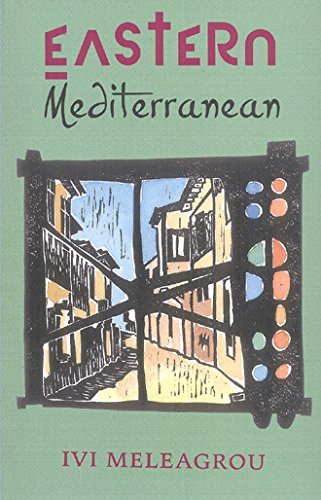
Eastern Mediterranean
Set in Nicosia between 1960 and the beginning of the intercommunal violence in 1963, Eastern Mediterranean portrays Cyprus during the turbulent early years of its independence. Through a cast of interconnected characters, Ivi Meleagrou explores a society caught between hopes for a new national future and the growing tensions threatening to tear it apart.
At the centre of the novel is Margarita, whose relationship with her homeland reflects the emotional and political uncertainty of the period. As the island struggles to define its identity following British colonial rule, longstanding divisions between Greek Cypriots and Turkish Cypriots deepen. Political ideals collide with personal loyalties, while ordinary people find their relationships and everyday lives increasingly shaped by forces beyond their control.
Alongside its portrayal of political upheaval, the novel examines romantic disappointment, marital alienation, and the struggle to preserve one’s sense of self amid collective uncertainty. Meleagrou connects the private lives of her characters with the wider fate of Cyprus, showing how historical events enter homes, reshape relationships, and challenge deeply held beliefs.
First published in Greek in 1969, this landmark work of Cypriot literature offers a nuanced portrait of a society approaching a critical historical turning point. It is particularly significant for its exploration of national identity, political division, and the fragile hopes surrounding independence.
1969
2
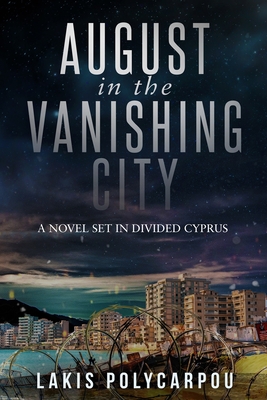
August in the Vanishing City
Set in Cyprus in the mid-1990s, August in the Vanishing City follows Petros, a young Greek Cypriot soldier struggling with love, loss, and the consequences of living on a divided island. Two decades after the Turkish invasion of 1974, the coastal city of Varosha, once a glamorous holiday destination, lies abandoned behind barbed wire and military barriers. For those who were forced to flee, it remains a painful reminder of the homes and lives they lost.
When Petros discovers that Joanna, the woman he has loved since childhood, has fallen for his best friend Elias, he becomes desperate to win her back. His plan leads him to attempt a dangerous journey into Varosha to retrieve a personal keepsake connected to their shared past. Crossing into the restricted city means risking his life, as the area remains under military control.
As Petros navigates the ruins of a vanished world, he must confront not only the dangers surrounding him but also his own ideas about love, loyalty, and what is worth fighting for. His personal struggle unfolds against the broader tensions between Greek and Turkish Cypriots, revealing how political conflict shapes relationships and individual choices.
Combining romance, suspense, and historical context, Polycarpou’s novel explores the meaning of home, the wounds of displacement, and the enduring effects of war on ordinary people. Varosha itself becomes a powerful symbol of interrupted lives and memories that refuse to disappear.
2015
3

The Traitors' Club
In Cyprus, even ordering a coffee can become a political statement. In The Traitors’ Club, Marina Christofides recounts the experiences of a group of friends from both sides of the island’s division who refuse to define themselves solely as Greek Cypriots or Turkish Cypriots. Instead, they choose to identify as Cypriots, united by their belief that people from both communities can live together in peace.
Gathering over coffee in an Ottoman courtyard in divided Nicosia, the friends share stories that are often funny, sometimes harrowing, and always deeply personal. Their conversations reveal the lasting effects of British colonial rule, intercommunal violence, the 1974 Turkish invasion, and the partition of Cyprus. Through their memories, the political history of the island becomes an intimate story of families, friendships, displacement, and the struggle to coexist.
The group calls itself the Traitors’ Club because, in a society shaped by competing national loyalties, friendship across the divide can be viewed as an act of betrayal. Yet their willingness to listen to one another challenges the divisions that politicians and historical conflicts have reinforced.
Moving between memories of an idyllic childhood, the trauma of fleeing during wartime, and the everyday realities of living in a divided country, Christofides offers a personal perspective on the Cyprus conflict. The memoir celebrates the courage of ordinary people who refuse to let political boundaries determine whom they can love, trust, or call their own.
2017
4
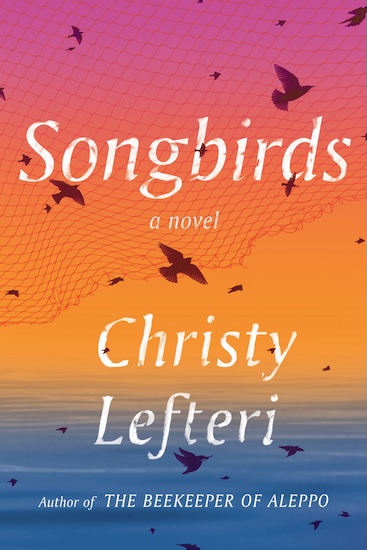
Songbirds
Set in Nicosia, Cyprus, Songbirds explores the lives of migrant domestic workers whose sacrifices and struggles often remain invisible to the society they serve.
Nisha, a young woman from Sri Lanka, has left her little daughter behind with relatives so she can work abroad and send money home. Employed as a nanny and housekeeper by Petra, a wealthy widow, Nisha has become an indispensable part of the household, forming a close bond with Petra’s young daughter, Aliki. Yet while she cares for someone else’s child, she is separated from her own, communicating with her daughter through video calls whenever she can.
Nisha’s secret relationship with Yiannis, a man who makes his living poaching protected songbirds, offers the possibility of a different future. He dreams of marrying her and leaving his dangerous work behind. But when Nisha mysteriously disappears one evening, both Yiannis and Petra are left searching for answers. When the police show little interest in investigating the disappearance of a migrant worker, Petra takes matters into her own hands, gradually uncovering the precarious realities of Nisha’s life and the exploitation faced by other migrant women.
Inspired by the real-life disappearances of migrant women in Cyprus, Lefteri’s novel draws parallels between the songbirds trapped along migration routes and people who leave their homelands in search of a better life, only to find themselves vulnerable to exploitation. Through the intertwined stories of Nisha, Petra, and Yiannis, the novel examines motherhood, social inequality, belonging, and the human cost of migration.
2021
5
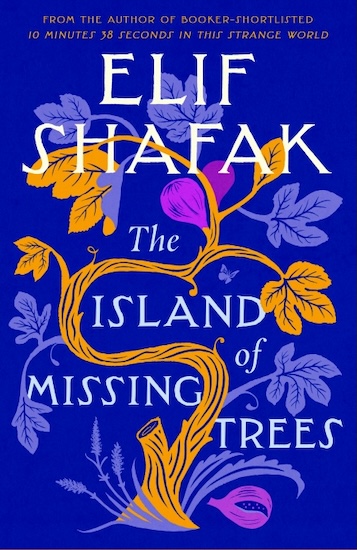
The Island of Missing Trees
A Greek Cypriot boy and a Turkish Cypriot girl fall in love in 1970s Cyprus, meeting secretly beneath a fig tree in a tavern as ethnic tensions threaten to tear their world apart. Decades later, in London, their daughter Ada struggles with grief and a past her parents have never fully revealed. As family secrets emerge, a fig tree growing in their garden becomes a living connection to a homeland left behind. Narrated partly through the tree itself, this moving novel explores displacement, inherited trauma, forbidden love, and the fragile bonds between people, nature, and memory.
2021
6
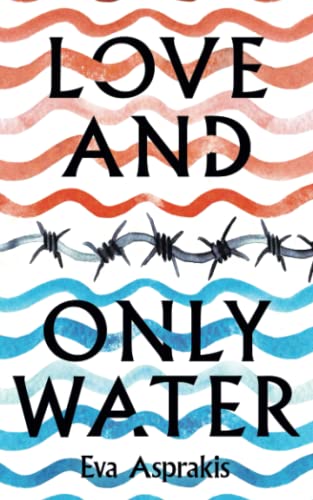
Love and Only Water
Can you be whole when your world is in halves?
Twenty-one-year-old Daniela travels from England to Cyprus in search of her roots and a stronger sense of identity. Staying at her grandparents’ home, she becomes increasingly aware of the pain her family carries from Turkey’s 1974 invasion of northern Cyprus. The island’s division is not merely political: it has shaped family memories, personal relationships, and the ways people understand their own histories.
When Daniela’s aunt invites her across the border for a picnic, Daniela unexpectedly encounters Beyza, her former girlfriend. Five years earlier, the two women had lived in London, sharing a connection that seemed possible beyond the boundaries of their cultural backgrounds. Now, with Daniela in the Greek Cypriot south and Beyza in the Turkish Cypriot north, their reunion forces them to confront the religious, cultural, and political differences that separate them.
As Daniela navigates her feelings for Beyza and the complicated history of her family, she begins to question what it means to belong to a place, a culture, or another person. Through the parallel divisions of a family and an island, Love and Only Water explores sexuality, cultural identity, inherited trauma, and the uncertainty of living between worlds.
2022
7
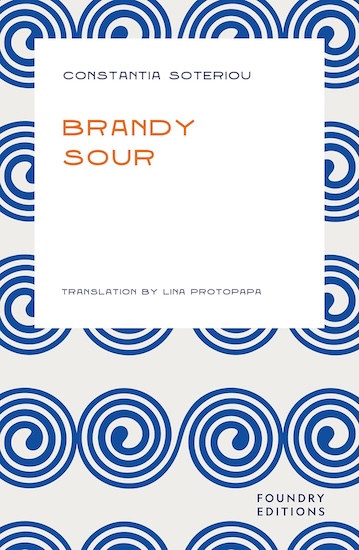
Brandy Sour
Set in Cyprus during the twentieth century, Brandy Sour explores the island’s turbulent history through the lives of people connected to the iconic Ledra Palace Hotel in Nicosia. Built in the 1950s as a symbol of a modern, independent Cyprus, the hotel becomes a meeting place for people whose personal stories reflect the island’s political upheavals, cultural divisions, and uncertain future.
Through a series of interconnected vignettes, Soteriou introduces a diverse cast of characters, including King Farouk of Egypt, a hotel porter who secretly cultivates roses from his village, a United Nations officer struggling with the heat and political deception, and a housekeeper who carries holy water wherever she goes. Each character has a distinct relationship with the hotel and the world beyond its walls, revealing how history shapes even the most ordinary aspects of daily life.
Food, drinks, memories, and personal rituals become powerful symbols of cultural identity and belonging. As political tensions deepen between Greek Cypriots and Turkish Cypriots, the hotel stands as a witness to the hopes, disappointments, and divisions that have shaped the island.
Written in a fragmented, evocative style, Brandy Sour transforms the history of Cyprus into an intimate portrait of ordinary people caught in extraordinary circumstances. The novel explores how collective memory is preserved through individual lives, and how a country’s past continues to influence its present. The book won Cyprus’s National Book Prize in 2023.
2024