Books from Austria
Suggest a book
All genres
Historical Fiction
Literary Fiction
Fantasy
Romance
Horror
Thriller
Non-Fiction
Mystery
Memoir
Classics
History
Sci-Fi
Contemporary Fiction
Science Fiction
Fiction
Poetry
Essays
Family Saga
Magical Realism
Family Drama
Dark Academia
Psychological Fiction
Dark Comedy
Political Writing
Feminist Fiction
Satire
Campus Fiction
Cultural Studies
Biography
Philosophy
Comedy
Drama
Young Adult
Gothic
Dystopia
Crime
Children's Books
Short Stories
Mythology
Cozy
Retellings
Humour
Adventure
All themes
Love & Passion
Adventure & Journey
Identity & Belonging
War & Conflict
Freedom & Resistance
Family & Heritage
Nature & Landscape
Society & Class
Spirituality & Faith
Solitude & Exile
Coming of Age
Revolution & Change
Friendship
History
Immigration
Myths and Retellings
Colonialism
Women & Society
Mental Health
Motherhood
1
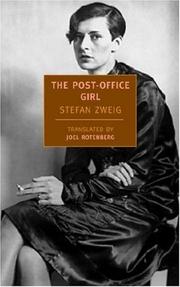
The Post-Office Girl
Set in Austria after the First World War, The Post-Office Girl follows Christine Hoflehner, a young woman working in a small post office in a provincial town. Trapped in poverty and burdened by the responsibility of caring for her sick mother, Christine leads a life marked by exhaustion and limited possibilities. Her circumstances change unexpectedly when she receives an invitation to visit her wealthy aunt in Switzerland, where she experiences luxury, freedom, and a world previously beyond her imagination. However, her brief escape exposes the deep divisions between social classes and makes returning to her former life almost unbearable. When Christine encounters Ferdinand, a disillusioned war veteran, they begin to imagine a different future together. Zweig portrays the psychological consequences of poverty, the fragility of hope, and the crushing effects of social inequality in a society struggling to recover from war.
1982
2
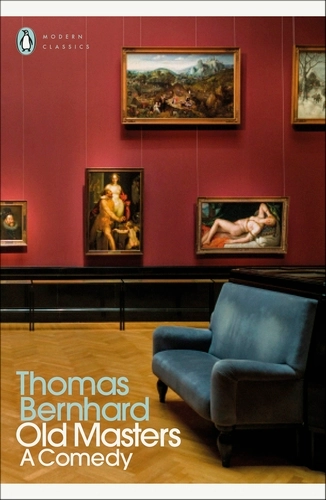
Old Masters: A Comedy
For more than thirty years, music critic Reger has returned to the same bench in Vienna’s Kunsthistorisches Museum to contemplate a painting by Tintoretto. But he is not there simply to admire art: he studies masterpieces in search of their imperfections, convinced that nothing created by human hands can be truly flawless. Through his friend Atzbacher, we encounter Reger’s fiercely critical mind, his grief over the death of his wife, and his contempt for the hypocrisies of Austrian society. Over the course of a single day, art becomes the starting point for a merciless examination of culture, philosophy, nationalism, and the absurdities of human existence. Darkly comic and deliberately provocative, Bernhard’s novel challenges the reverence we attach to great artists and celebrated institutions, suggesting that sometimes the only honest response to perfection is to question it.
1985
3
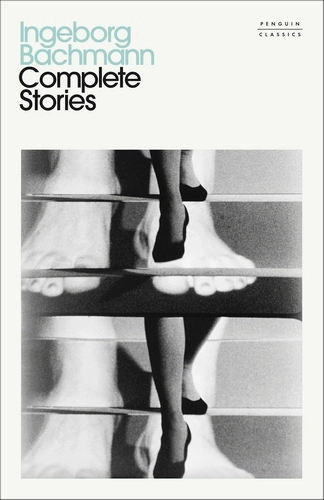
Complete Stories
What if the most intimate relationships in our lives were also where power, violence, and oppression began? Ingeborg Bachmann’s Complete Stories brings together the short fiction of one of the most important German-language writers of the twentieth century. Across stories set in Vienna, Rome, Paris, and beyond, Bachmann portrays women and men caught in relationships shaped by obsession, shame, silence, and unequal power. Lovers struggle to communicate, women confront the invisible restrictions imposed by patriarchal society, and ordinary lives reveal the lingering wounds of European fascism. With lyrical precision and psychological intensity, Bachmann explores the limits of language and the difficulty of telling the truth about ourselves and others. Both intimate and political, these stories reveal how history’s deepest structures of domination can persist in private life, long after the events that created them have passed.
2026