Books from Austria
Suggest a book
All genres
Historical Fiction
Literary Fiction
Fantasy
Romance
Horror
Thriller
Non-Fiction
Mystery
Memoir
Classics
History
Sci-Fi
Contemporary Fiction
Science Fiction
Fiction
Poetry
Essays
Family Saga
Magical Realism
Family Drama
Dark Academia
Psychological Fiction
Dark Comedy
Political Writing
Feminist Fiction
Satire
Campus Fiction
Cultural Studies
Biography
Philosophy
Comedy
Drama
Young Adult
Gothic
Dystopia
Crime
Children's Books
Short Stories
Mythology
Cozy
Retellings
Humour
Adventure
All themes
Love & Passion
Adventure & Journey
Identity & Belonging
War & Conflict
Freedom & Resistance
Family & Heritage
Nature & Landscape
Society & Class
Spirituality & Faith
Solitude & Exile
Coming of Age
Revolution & Change
Friendship
History
Immigration
Myths and Retellings
Colonialism
Women & Society
Mental Health
Motherhood
1
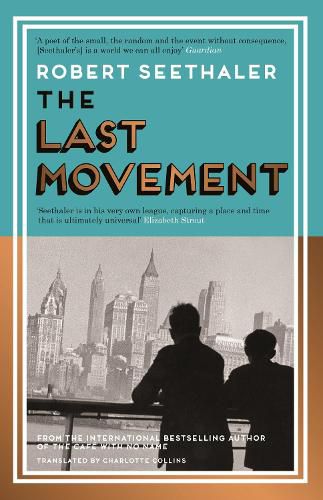
The Last Movement
In the spring of 1911, the celebrated composer and conductor Gustav Mahler boards a ship in New York, beginning his final journey back to Europe. Gravely ill and aware that his life is drawing to a close, he spends much of the voyage wrapped in blankets on deck, watching the vast ocean and revisiting memories of the past. His thoughts move between the musical triumphs that made him famous, the summers he spent in the mountains, the devastating death of his young daughter Maria, and his complicated relationship with his wife, Alma. Once the great love of his life, Alma has fallen for the young architect Walter Gropius, leaving Mahler struggling with jealousy, regret, and the painful realisation that love cannot be commanded. Through fleeting memories and quiet moments of reflection, Robert Seethaler creates an intimate portrait of a brilliant artist confronting mortality. Poignant and restrained, the novel meditates on love, loss, artistic ambition, and what remains when a life approaches its final note.
2026
2
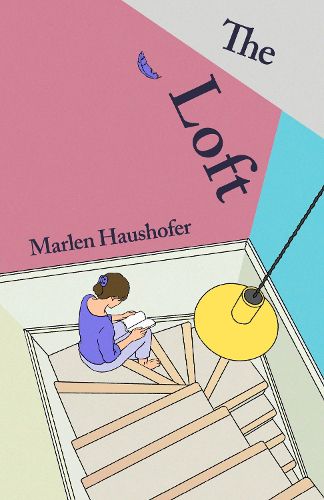
The Loft
In The Loft, an Austrian housewife finds refuge from her monotonous domestic life in an attic where she draws birds, insects and other creatures. Her marriage to Hubert, a dissatisfied lawyer, has settled into emotional distance, while her grown-up children have left home. Although her days appear ordinary, the narrator carries memories of a disturbing episode from twenty years earlier, when a sudden loss of hearing led her husband to send her to a remote cottage to recover. One day, mysterious packages arrive containing extracts from her old diary, forcing her to confront an experience she has tried to forget. As the past intrudes upon her carefully ordered present, the boundaries between memory, repression and self-understanding begin to shift. With quiet psychological intensity, Haushofer examines the loneliness hidden within conventional family life, the constraints placed on women, and the private spaces people create to preserve their individuality. The attic becomes both a sanctuary and a symbol of the narrator’s struggle to understand herself beyond the roles imposed upon her.
2011
3
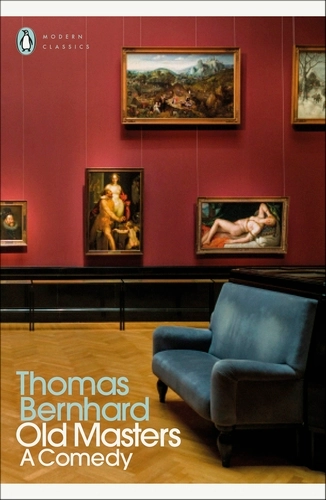
Old Masters: A Comedy
For more than thirty years, music critic Reger has returned to the same bench in Vienna’s Kunsthistorisches Museum to contemplate a painting by Tintoretto. But he is not there simply to admire art: he studies masterpieces in search of their imperfections, convinced that nothing created by human hands can be truly flawless. Through his friend Atzbacher, we encounter Reger’s fiercely critical mind, his grief over the death of his wife, and his contempt for the hypocrisies of Austrian society. Over the course of a single day, art becomes the starting point for a merciless examination of culture, philosophy, nationalism, and the absurdities of human existence. Darkly comic and deliberately provocative, Bernhard’s novel challenges the reverence we attach to great artists and celebrated institutions, suggesting that sometimes the only honest response to perfection is to question it.
1985