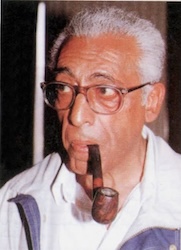
Abd al-Rahman Munif

Abd al-Rahman Munif

Saudi Arabia

About

Abd al-Rahman Munif (1933–2004) was a prominent Arab novelist, economist, and political thinker, widely regarded as one of the most important writers of modern Arabic literature. Born in Amman, Jordan, to a Saudi father and an Iraqi mother, he spent much of his life moving between Arab countries and living in exile. Trained as an economist, Munif initially worked in the oil industry, an experience that profoundly influenced his fiction. His best-known work, the Cities of Salt trilogy (1984–1989), explores the dramatic transformation of Arabian societies following the discovery of oil, examining the effects of modernization, foreign influence, and authoritarian power on traditional communities. Other notable works include East of the Mediterranean (1975), which addresses political repression and imprisonment in the Arab world. Through expansive narratives and vivid social portraits, Munif examined the relationship between economic power, political authority, and cultural identity. His work remains influential for its critical portrayal of the modern Arab state and the human costs of rapid social change.

Books on TheBookRoads
1
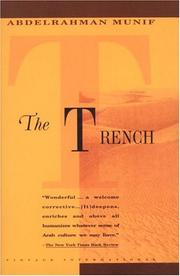
The Trench
The Trench
The Trench is the second novel in Abdul Rahman Munif’s Cities of Salt quintet, which explores the transformation of the Arabian Peninsula following the discovery of oil. Set in the fictional emirate of Harran, the novel follows the growing power of the ruling elite as oil wealth reshapes society, politics, and everyday life. Foreign interests, local rulers, and emerging institutions compete for influence, while ordinary people struggle to understand and adapt to a rapidly changing world. Through vivid characters and a broad social panorama, Munif examines how economic modernization can deepen inequality, weaken traditional communities, and concentrate power in the hands of a privileged few. The novel offers a critical portrait of a society caught between inherited customs and the disruptive forces of global capitalism, exposing the human costs behind promises of progress.
1991 Saudi Arabia
2
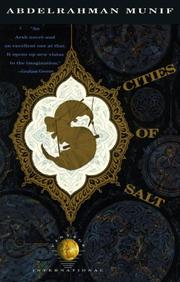
Cities of Salt
Cities of Salt
Cities of Salt is the first novel in Abdul Rahman Munif’s celebrated quintet exploring the transformation of the Arabian Peninsula following the discovery of oil. Set in a fictional oasis community in the Arabian Gulf, the story begins when foreign oil companies arrive and begin exploiting the region’s natural resources. Their presence disrupts the traditional way of life, forcing local inhabitants to confront unfamiliar technologies, new economic structures, and the growing influence of foreign powers. Through the experiences of villagers, merchants, tribal leaders, and migrant workers, Munif portrays the profound social and cultural upheaval caused by rapid modernisation. As oil wealth transforms the landscape, longstanding relationships and communal traditions begin to fracture, while new hierarchies of power emerge. The novel examines the consequences of economic exploitation, environmental destruction, and political domination, revealing how entire communities can be reshaped by forces beyond their control. With its expansive narrative and collective cast of characters, Cities of Salt offers a powerful reflection on the human costs of oil-driven development and the disappearance of traditional ways of life.
1984 Saudi Arabia
Rajaa Alsanea
Rajaa Alsanea
1 book