Nawal El Saadawi

Nawal El Saadawi

Egypt

About

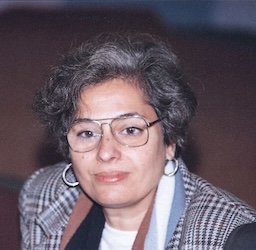
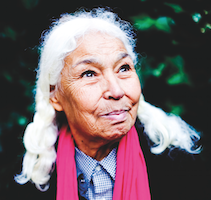
Nawal El Saadawi (1931–2021) was an Egyptian physician, psychiatrist, novelist, and feminist activist whose work challenged patriarchal traditions, religious authority, and gender inequality in the Arab world. Born in the village of Kafr Tahla, Egypt, she studied medicine at Cairo University and worked as a doctor in rural communities, where she witnessed the social and health consequences of women’s oppression. These experiences profoundly influenced her writing, which addresses female sexuality, bodily autonomy, political repression, and the relationship between gender and power. Her best-known novel, Woman at Point Zero (1975), tells the story of a woman sentenced to death whose life reveals the intersecting forces of poverty, violence, and patriarchal control. Other influential works include The Hidden Face of Eve (1977), a nonfiction examination of women’s lives and oppression in Arab societies. Saadawi’s outspoken criticism of established institutions led to censorship, imprisonment, and periods of exile. Her legacy continues to influence feminist thought and literature across the world.

Books on TheBookRoads
1
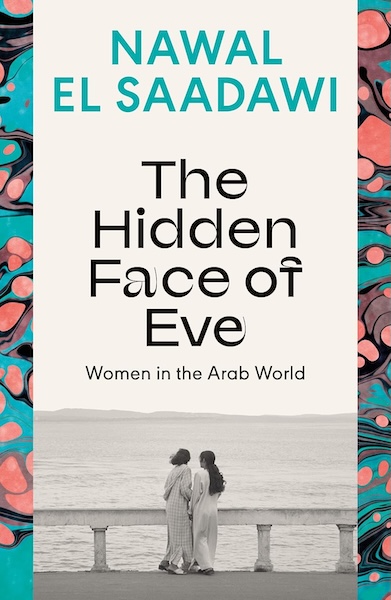
The Hidden Face of Eve
What lies beneath the traditions, laws, and social expectations that have shaped women’s lives for generations? Drawing on her experience as a physician and feminist activist, Nawal El Saadawi examines the realities of women’s lives across the Arab world. She confronts subjects often pushed into silence, including female genital mutilation, sexual violence, honour killings, reproductive rights, and legal inequality. Combining personal testimony, historical analysis, and cultural criticism, El Saadawi challenges the patriarchal structures used to justify women’s oppression. She also recovers the histories of women who resisted restrictive gender roles, questioning the boundaries between tradition, religion, and power. First published in Arabic in 1977, this uncompromising work remains a landmark of Arab feminist writing and a powerful call for women’s freedom and equality.
1977 Egypt
2
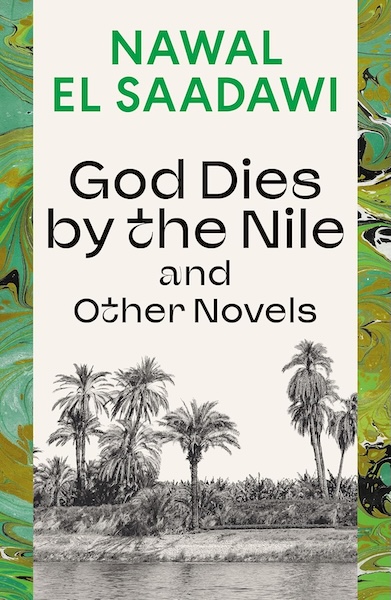
God Dies by the Nile and Other Novels
What lies beneath the traditions, laws, and social expectations that have shaped women’s lives for generations? In The Hidden Face of Eve, Egyptian writer, physician, and feminist Nawal El Saadawi examines the realities of women’s lives across the Arab world, drawing on her medical work in rural Egypt and her experiences as a women’s rights activist. She confronts subjects often pushed into silence, including female genital mutilation, sexual violence, honour killings, reproductive rights, and legal inequality. Moving between personal testimony, historical analysis, religion, and cultural criticism, El Saadawi challenges the social structures used to justify women’s oppression. She also explores the historical contributions of Arab women and the struggles of those who have resisted restrictive gender roles. Passionate and uncompromising, this influential work asks readers to question the boundaries between tradition, faith, and patriarchal power. First published in Arabic in 1977, The Hidden Face of Eve remains a landmark of Arab feminist writing and a powerful call for women’s freedom and equality.
1977 Egypt
3
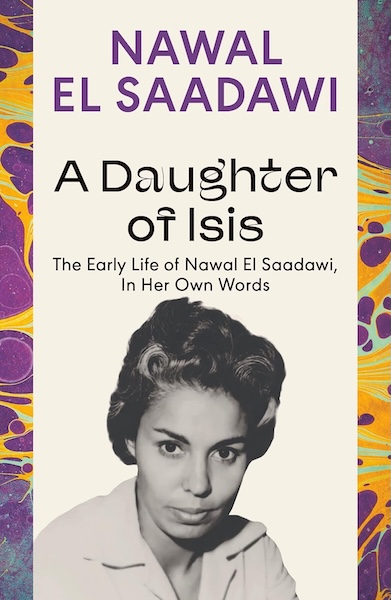
A Daughter of Isis
A Daughter of Isis
Long before she became one of the Arab world’s most outspoken feminist voices, Nawal El Saadawi was a young girl growing up in a village beside the Nile, questioning the rules that governed women’s lives. In A Daughter of Isis, El Saadawi revisits her childhood and early adulthood, tracing the experiences that shaped her determination to challenge injustice. She recalls her family, her education, the restrictions imposed on girls, and her growing awareness of the contradictions between religious teachings, social expectations, and women’s lived realities. With characteristic candour, she recounts the beginnings of her journey as a physician, writer, and activist, revealing how personal rebellion gradually became a lifelong commitment to equality. Her story is also a portrait of twentieth-century Egypt, where changing political and social landscapes shaped the possibilities available to women. Intimate, defiant, and deeply reflective, this memoir illuminates the experiences behind El Saadawi’s revolutionary ideas and celebrates the courage required to forge an independent life.
1999 Egypt