Orhan Pamuk
TürkiyeAbout
Turkish novelist and Nobel laureate (born 1952) whose work bridges East and West, exploring Istanbul's history and Turkey's cultural identity. He has faced legal prosecution in Turkey for statements about the Armenian genocide and Kurdish deaths.
Books on TheBookRoads
All genres
Historical Fiction
Literary Fiction
Romance
Non-Fiction
Mystery
Memoir
Fiction
Essays
Family Saga
1
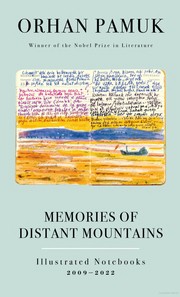
Memories of Distant Mountains
Memories of Distant Mountains is a collection of illustrated notebooks and personal reflections by Nobel Prize-winning author Orhan Pamuk, offering an intimate glimpse into his creative and everyday life. Combining handwritten notes, sketches, paintings, and observations, Pamuk moves between memories of his childhood in Istanbul, reflections on his family, and thoughts about the places, people, and experiences that have shaped his imagination.
The book reveals the relationship between writing and visual art in Pamuk’s creative process, showing how drawings and brief observations can capture moments that conventional storytelling might overlook. His notebooks also explore solitude, memory, urban life, and the passage of time, often returning to Istanbul as both a physical place and an enduring source of inspiration. Blending autobiography, travel writing, and artistic meditation, the collection offers readers access to the private world behind Pamuk’s novels. It is a reflection on how creativity emerges from paying attention to ordinary experiences and transforming fleeting impressions into lasting forms of expression.
2022
Türkiye
2
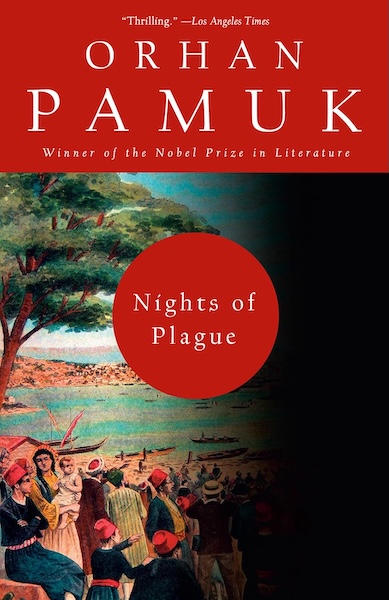
Nights of Plague
In 1901, a deadly plague reaches Mingheria, a fictional island in the eastern Mediterranean and the twenty-ninth province of the declining Ottoman Empire. Home to both Muslim and Greek Orthodox communities, the island is already divided by religious tensions and political rivalries. As the epidemic spreads, the Ottoman authorities send experts to impose quarantine measures, but suspicion, resistance, and competing loyalties threaten to undermine every attempt to contain the disease.
When a mysterious murder complicates the crisis, the island descends into a struggle involving religious leaders, government officials, scientists, and ordinary people desperate to survive. As the Ottoman administration loses control, the epidemic becomes a catalyst for rebellion and the emergence of a new national identity.
Blending historical epic, detective story, and political satire, Nights of Plague explores how fear reshapes societies and how crises expose the fragility of authority. Through an imagined history of an Ottoman island, Pamuk examines nationalism, religious conflict, scientific reasoning, and the human tendency to choose ideology over evidence.
2021
Türkiye
3
The Red-Haired Woman
In the mid-1980s, teenage Cem leaves Istanbul to work as an apprentice to Mahmut, an experienced well-digger. Together, they travel to a small town outside the city, where they labour to find water in the dry earth. As they work, Mahmut becomes a father figure to Cem, teaching him practical skills and sharing stories that shape the young man’s understanding of the world.
One summer, Cem encounters a mysterious red-haired woman performing with a travelling theatre troupe. Fascinated by her, he becomes entangled in an experience that will haunt him for decades. A terrible incident at the well changes the course of his life, and years later, when Cem has become a successful businessman, the past returns with consequences he could never have anticipated.
Drawing on the ancient myths of Oedipus and Rostam and Sohrab, The Red-Haired Woman explores fathers and sons, guilt, authority, and the forces that shape our destinies. It is a compact, unsettling novel about the stories we inherit and whether we can ever escape them.
2016
Türkiye
4
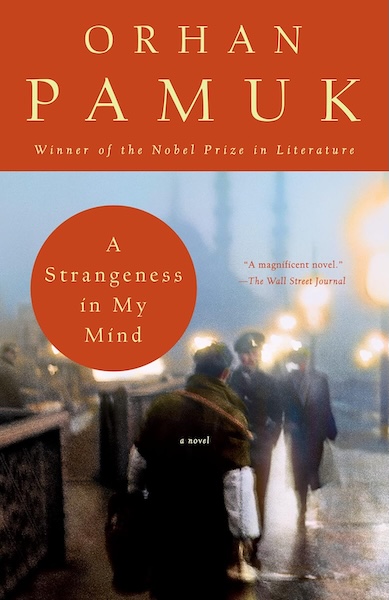
A Strangeness in My Mind
In 1969, twelve-year-old Mevlut leaves his village in central Anatolia and arrives in Istanbul, a city expanding so rapidly that familiar streets and entire neighbourhoods seem to disappear almost overnight. Hoping to build a better life, he works alongside his father selling boza, a traditional fermented drink, on the city’s streets. Over the years, he takes on different jobs, falls in love, marries, and raises a family while watching Istanbul transform around him.
Mevlut is neither a great success nor a complete failure. While others grow wealthy from the city’s rapid development, he remains an outsider in a place he has called home for decades. Even as his life changes, he continues to wonder about the peculiar feeling inside him—a sense that the world he inhabits never quite matches the world he imagines.
Spanning more than forty years, A Strangeness in My Mind is a sweeping portrait of urban migration, ordinary working lives, and the transformation of modern Istanbul. Through Mevlut’s quiet resilience, Pamuk explores love, social mobility, and the search for belonging in a city that is always becoming something new.
2014
Türkiye
5
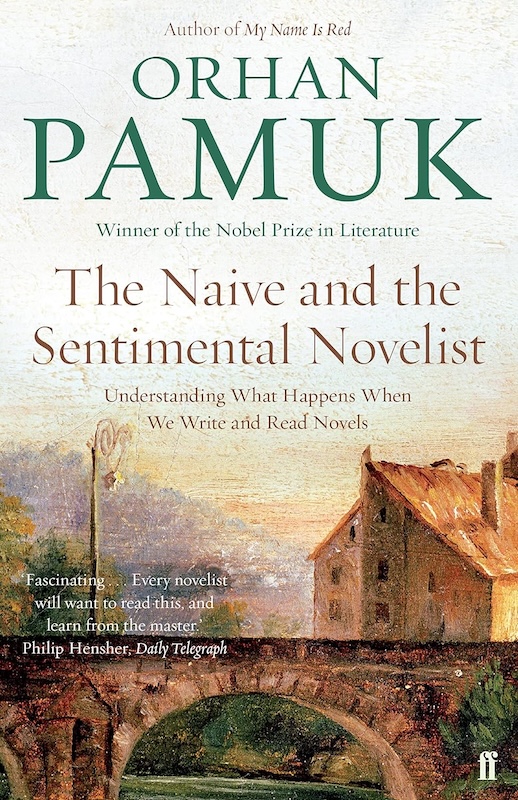
The Naive and the Sentimental Novelist
The Naive and the Sentimental Novelist explores how novels work and why reading fiction can transform our understanding of ourselves and the world. Drawing on his experience as a novelist and his lifelong engagement with literature, Orhan Pamuk examines the relationship between writers, readers, and the fictional worlds they create. Inspired by Friedrich Schiller’s distinction between naive and sentimental poetry, Pamuk considers two approaches to storytelling: one that emerges naturally from experience and another that consciously reflects on its own methods and meanings.
Through examples from writers such as Tolstoy, Dostoevsky, and Thomas Mann, Pamuk discusses character, plot, setting, symbolism, and the delicate balance between imagination and observation. He also explores the pleasure readers find in entering a novel’s world, visualising its landscapes, and identifying with its characters. Blending literary criticism with personal reflection, the book offers an intimate account of the novelist’s craft and the reader’s experience. Ultimately, Pamuk suggests that the power of fiction lies in its ability to make imagined worlds feel as vivid and meaningful as reality itself.
2010
Türkiye
6
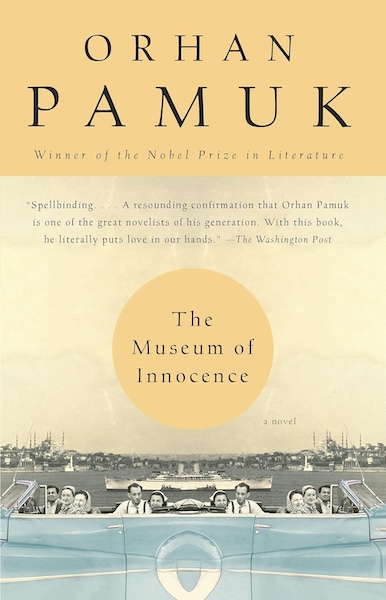
The Museum of Innocence
Istanbul, 1975. Kemal, the privileged son of a wealthy family, is preparing to marry Sibel, a woman who belongs to his own sophisticated social circle. But a chance encounter with Füsun, a beautiful young shop assistant and distant relative, sets his carefully ordered life on an unexpected course. Their passionate affair soon becomes complicated by social conventions, class divisions, and the expectations placed on women in a rapidly modernising Turkey.
When Füsun disappears from his life, Kemal begins collecting objects connected to her: earrings, hair clips, cigarette butts, and countless other seemingly insignificant things. Each item becomes a vessel for memory, allowing him to preserve moments that time would otherwise erase. Over the years, his collection grows into an extraordinary personal museum, reflecting both his devotion and his inability to let go.
Spanning decades of Istanbul’s social and cultural transformation, The Museum of Innocence is a richly layered exploration of love, obsession, memory, and longing. Nobel Prize-winning author Orhan Pamuk transforms ordinary objects into fragments of a vanished world, asking whether preserving the past can bring happiness—or merely keep us imprisoned within it.
2008
Türkiye
7
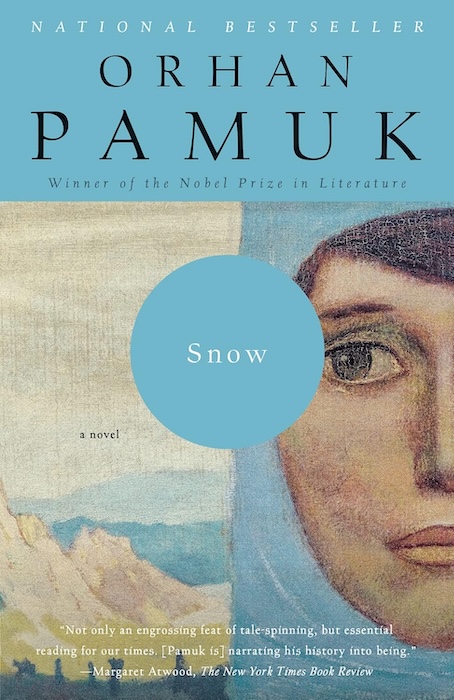
Snow
Snow follows Ka, a Turkish poet returning from political exile in Germany to the remote city of Kars. Officially, he is investigating a series of young women’s suicides, but he is also drawn into the city’s complicated political and religious tensions. As a severe snowstorm isolates Kars from the outside world, Ka becomes entangled with secular intellectuals, Islamists, Kurdish activists, and military authorities. His renewed feelings for İpek, a woman he once knew, offer the possibility of personal happiness amid the surrounding instability. However, a theatrical performance and a military coup intensify the conflict between competing ideological groups. Pamuk examines secularism, religious belief, censorship, and the difficulties of individual freedom in a deeply divided society. Through Ka’s experiences, the novel explores how political convictions shape private lives and how difficult it can be to remain independent when every side demands allegiance.
2005
Türkiye
8
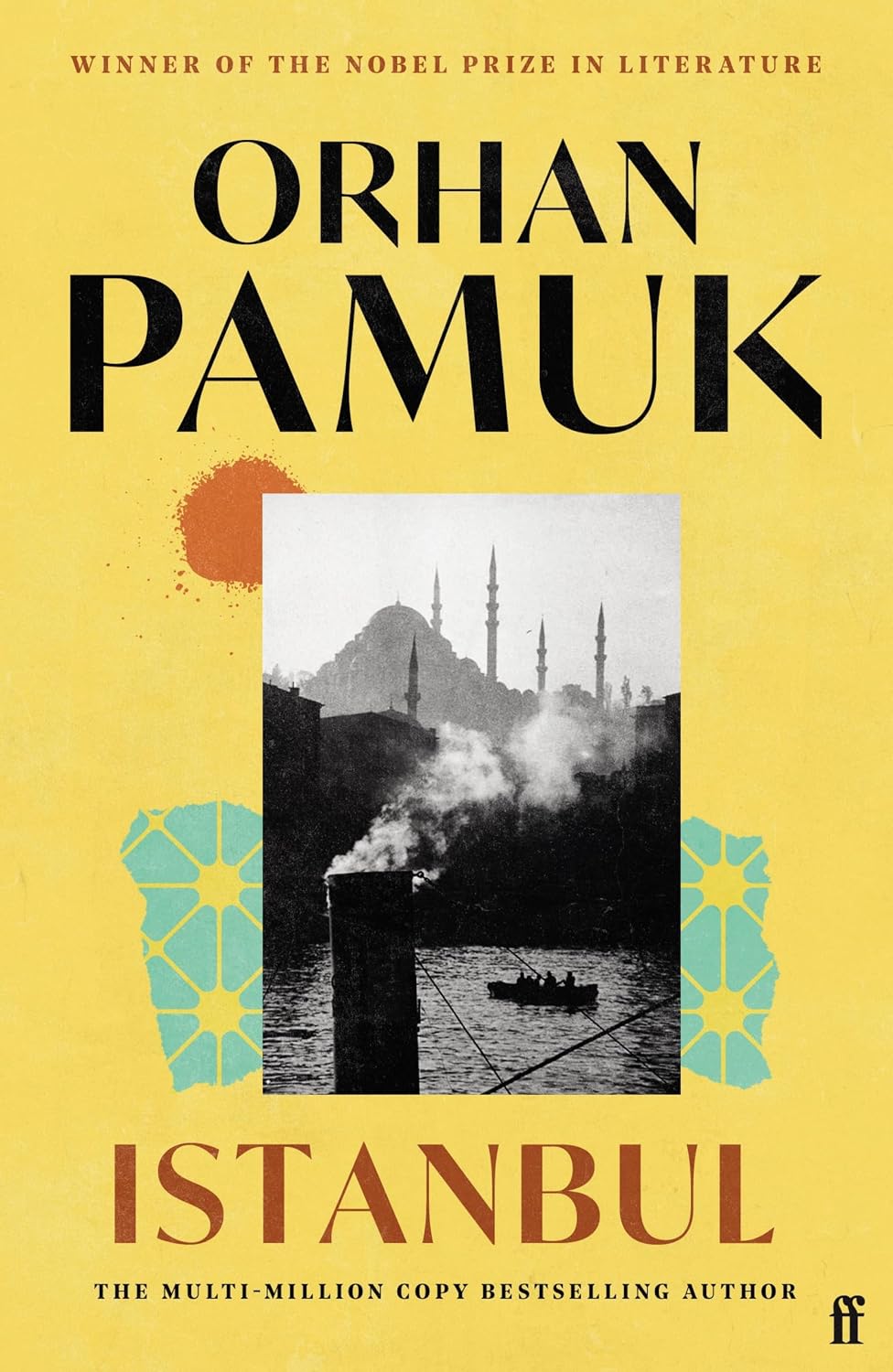
Istanbul: Memories and the City
Istanbul: Memories and the City is a memoir in which Orhan Pamuk reflects on his childhood, his family, and his lifelong relationship with Istanbul. Blending personal recollections with historical observations and literary reflections, he portrays a city shaped by the fading grandeur of the Ottoman Empire and the uncertainties of modernisation. Pamuk describes the melancholy that permeates Istanbul’s streets, abandoned mansions, waterfronts, and neighbourhoods, connecting this atmosphere to the Turkish concept of hüzün, a collective sense of sorrow and loss. His memories of family life, artistic ambition, and the changing urban landscape reveal how individual identity becomes inseparable from the place in which it develops. The book explores belonging, cultural memory, and the relationship between past and present, offering both an intimate portrait of the author and a meditation on a city searching for its place between East and West.
2003
Türkiye
9
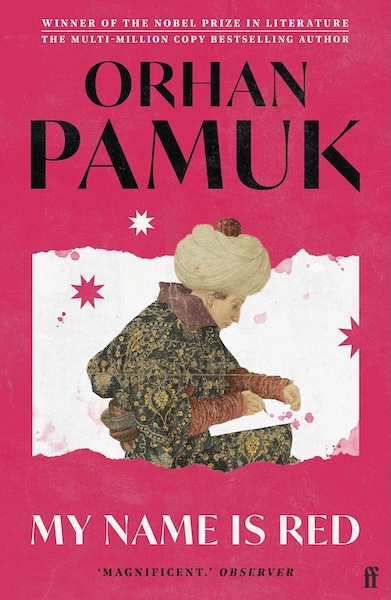
My Name Is Red
Set in sixteenth-century Istanbul during the Ottoman Empire, My Name Is Red follows a group of miniature painters commissioned to create an illustrated book for the sultan. Their work becomes controversial because it incorporates European artistic techniques that challenge traditional Islamic approaches to representation. When one of the artists is murdered, the investigation exposes rivalries, jealousy, and competing ideas about art, religion, and cultural identity. The story unfolds through multiple narrators, including artists, objects, and even a corpse, creating a complex picture of a society caught between established traditions and new influences. Pamuk explores the relationship between artistic expression and political authority, asking whether adopting foreign ideas represents progress or the loss of cultural heritage. The novel combines a murder mystery with a philosophical examination of how people understand themselves through art and tradition.
2002
Türkiye
10
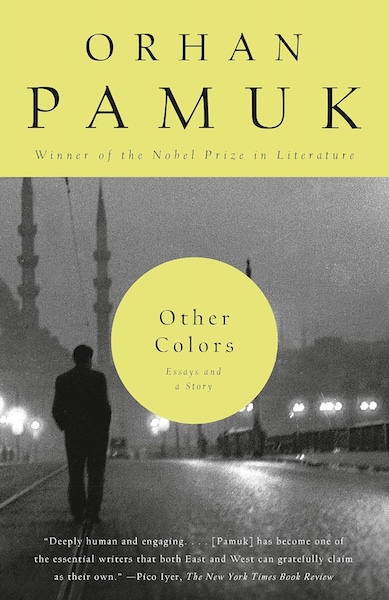
Other Colors: Essays and a Story
What does it mean to be a writer, to belong to a city, or to live between different cultural worlds? In Other Colors, Orhan Pamuk opens a window into his creative life through a collection of essays, interviews, diary entries, literary reflections, and personal recollections written over more than two decades.
Pamuk writes about his childhood in Istanbul, the pleasures and anxieties of everyday life, his relationship with his daughter, and the books and writers who shaped his imagination. He reflects on the art of writing novels, the relationship between Eastern and Western literary traditions, and the political and cultural tensions that have influenced modern Turkey. The collection also includes the short story Looking Out the Window, offering a glimpse of his fiction through a different lens.
Intimate, curious, and often provocative, Other Colors reveals the ideas and experiences behind Pamuk’s celebrated novels. It is both a portrait of a writer at work and a meditation on literature, memory, politics, and the complexities of belonging.
1999
Türkiye
11
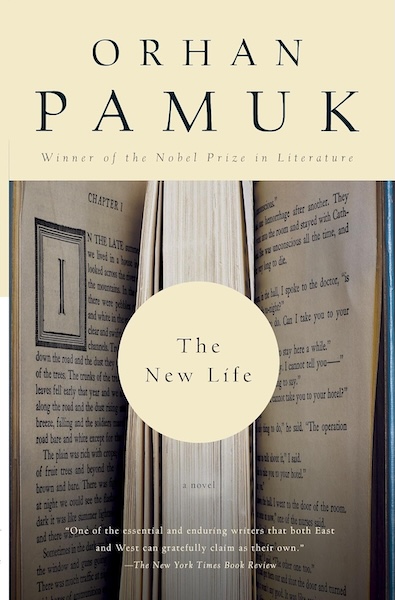
The New Life
“One day I read a book, and my whole life changed.”
With this extraordinary declaration, university student Osman begins a journey that will pull him away from everything familiar. After reading a mysterious book, he becomes convinced that its pages contain the promise of another existence—a hidden world waiting just beyond the boundaries of ordinary life. Captivated by its message, Osman abandons his studies and sets out to discover the transformation it promises.
He is joined in his search by Canan, a fellow student who has also been profoundly affected by the book. Their journey takes them across Turkey on endless bus rides through provincial towns and anonymous highways, where strange encounters and sudden accidents blur the line between reality and illusion. As Osman searches for the book’s secrets, his quest becomes increasingly entangled with love, obsession, and the possibility that his old identity is disappearing.
Part philosophical mystery and part surreal road novel, The New Life explores the power of literature to transform—and sometimes consume—the lives of its readers. Pamuk questions whether we can truly escape our former selves or whether the search for a new life is itself another form of illusion.
1994
Türkiye
12
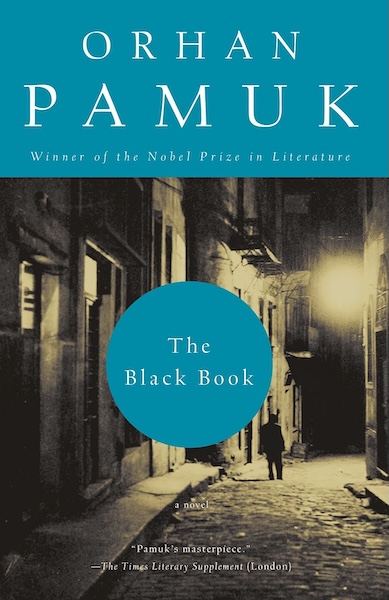
The Black Book
On a snowy day in Istanbul, lawyer Galip discovers that his wife, Rüya, has disappeared. Unable to understand why she has left, he begins searching the city’s crowded streets, old neighbourhoods, and hidden corners for clues. His investigation becomes even more mysterious when he discovers that Rüya’s half-brother, Celâl, a famous newspaper columnist, has vanished too.
As Galip follows the traces they have left behind, he becomes immersed in Celâl’s newspaper columns, which explore Istanbul’s history, its forgotten stories, and the secrets concealed beneath everyday life. The search gradually transforms into something more profound: a journey through the city’s collective memory and Galip’s own uncertain identity.
Blending mystery, philosophical reflection, and a vivid portrait of Istanbul, The Black Book explores the desire to become someone else and the difficulty of knowing who we really are. Pamuk transforms the city into a labyrinth of stories in which the search for a missing person becomes a search for the self.
1990
Türkiye