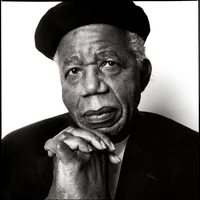
Chimamanda Ngozi Adichie
NigeriaAbout
Nigerian novelist and essayist (born 1977) known for her nuanced portrayals of contemporary African life, gender, and identity. Her 2009 TED Talk "The Danger of a Single Story" has been viewed over 30 million times.
Books on TheBookRoads
1

Purple Hibiscus
Purple Hibiscus follows fifteen-year-old Kambili Achike, who grows up in a wealthy Nigerian family ruled by her father, Eugene, a respected businessman and devout Catholic. In public, Eugene is admired for his generosity and outspoken opposition to political corruption. At home, however, his rigid religious beliefs and authoritarian behaviour create an atmosphere of fear and violence. Kambili and her brother, Jaja, learn to remain silent and obedient to avoid their father’s anger.
Their lives begin to change when they visit their aunt Ifeoma, a university lecturer who raises her children in a household filled with debate, laughter, and intellectual freedom. Through this experience, Kambili gradually discovers her own voice and begins to question the beliefs that have shaped her childhood. Set against the political instability of postcolonial Nigeria, the novel explores religious fanaticism, domestic abuse, freedom, and the courage required to challenge authority. With sensitivity and psychological depth, Adichie portrays a family’s struggle to break free from fear and rediscover the possibility of love and independence.
1980
Nigeria
2
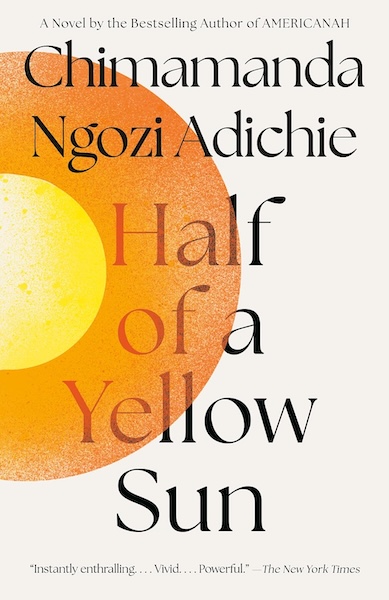
Half of a Yellow Sun
Half of a Yellow Sun is set in Nigeria during the 1960s, as the country moves from independence toward the devastating Biafran War. The novel follows three interconnected characters: Ugwu, a young houseboy who enters the service of a university professor; Olanna, the professor’s educated and politically engaged partner; and Richard, a British writer fascinated by Igbo culture who becomes involved with Olanna’s twin sister, Kainene. Through their experiences, Adichie portrays a society filled with intellectual ambition, political hope, and personal relationships that are gradually torn apart by ethnic tensions and conflict.
As the war intensifies and the independent state of Biafra struggles to survive, the characters face displacement, hunger, violence, and profound moral dilemmas. Their private lives become inseparable from the wider tragedy unfolding around them. Blending intimate storytelling with historical detail, the novel examines colonial legacies, ethnic identity, loyalty, and the devastating human cost of war. The title refers to the half-sun symbol on Biafra’s flag, representing a nation whose hopes for independence were ultimately shattered by conflict.
2007
Nigeria
3
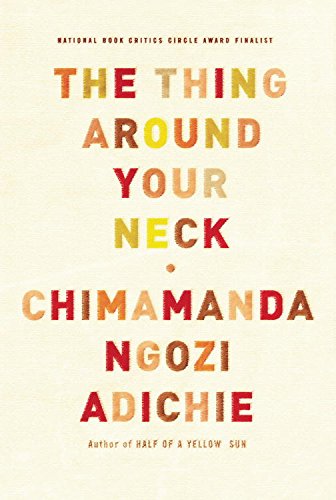
The Thing Around Your Neck
The Thing Around Your Neck is a collection of twelve short stories exploring the experiences of Nigerians living both at home and abroad, particularly in the United States. Adichie portrays characters negotiating cultural expectations, family obligations, gender inequality, political instability, and the complicated realities of immigration. In the title story, a young Nigerian woman moves to America, where her hopes for a better life are challenged by loneliness, financial insecurity, and the feeling of being misunderstood. Other stories examine strained marriages, religious divisions, family secrets, and the gap between how people perceive Nigeria and how Nigerians experience their own country. With emotional precision and understated humour, Adichie explores the tension between tradition and modernity, revealing how migration and cultural encounters can transform people’s understanding of themselves and their relationships.
2010
Nigeria
4
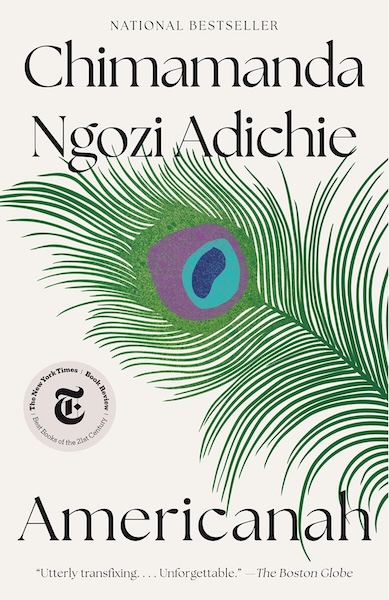
Americanah
Americanah follows Ifemelu and Obinze, two young Nigerians whose love story unfolds across continents as they navigate migration, race, and the search for belonging. As a university student, Ifemelu moves to the United States, where she confronts the realities of being Black in a society that forces her to reconsider her identity. Through her experiences with relationships, work, and cultural differences, she develops a popular blog examining race and everyday life in America. Meanwhile, Obinze hopes to build a future in Britain but encounters a very different set of obstacles as an undocumented immigrant.
Years later, Ifemelu returns to Nigeria, bringing with her a transformed understanding of home and the person she has become. As the two reconnect, they must confront the ways their experiences have changed them and consider whether their relationship can survive the passage of time. Blending romance with sharp social commentary, Chimamanda Ngozi Adichie explores race, immigration, class, cultural identity, and the complex meaning of home in an interconnected world.
2013
Nigeria
5
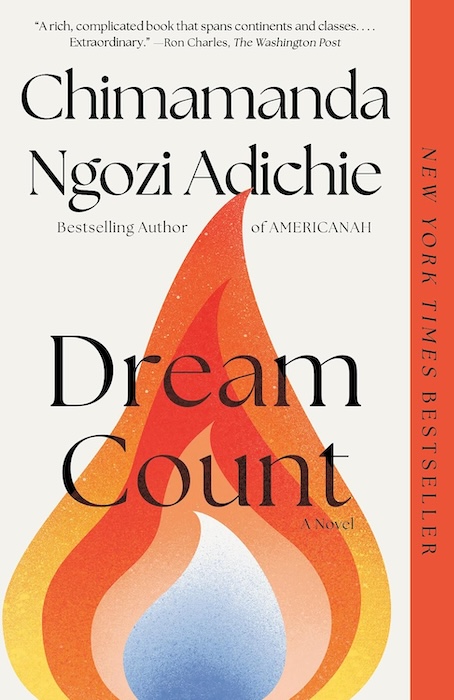
Dream Count
Chiamaka is a Nigerian travel writer living in America. Alone in the midst of the pandemic, she recalls her past lovers and grapples with her choices and regrets. Zikora, her best friend, has been successful at everything until—betrayed and brokenhearted—she must turn to the person she thought she needed least. Chiamaka’s bold, outspoken cousin Omelogor is a financial powerhouse in Nigeria who begins to question how well she knows herself. And Kadiatou, Chiamaka’s housekeeper, is proudly raising her daughter in America—but faces an unthinkable hardship that threatens all she has worked to achieve.
Dream Count is Chimamanda Ngozi Adichie’s searing, unforgettable story of these four women—a sparkling, transcendent novel that takes up the very nature of love itself.
2026
Nigeria