About
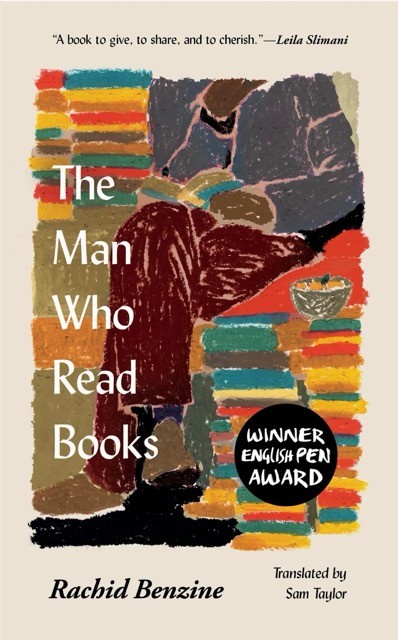
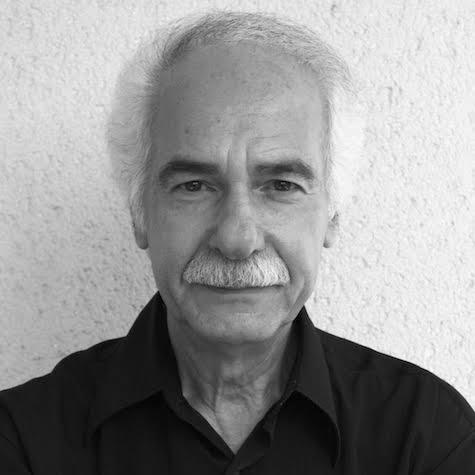
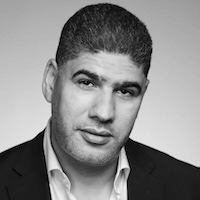
Rachid Benzine (born in 1971) is a French-Moroccan writer, political scientist, Islamic studies scholar, and playwright whose work explores faith, migration, memory, and the human consequences of political conflict. Born in Kénitra, Morocco, he moved to France with his family at the age of seven and grew up in Trappes, near Paris. His experience of growing up between Moroccan heritage and French society has informed his interest in cultural identity, belonging, and dialogue between different religious and cultural traditions. Benzine is a specialist in Qur’anic interpretation and contemporary Islamic thought. Alongside his academic work, he has devoted much of his career to encouraging dialogue between Muslims, Christians, and Jews. His nonfiction books examine how religious texts can be understood in their historical context and how faith traditions can engage with the challenges of modern society. His collaborative book Des mille et une façons d’être juif ou musulman, written with Rabbi Delphine Horvilleur, explores the diversity of Jewish and Muslim identities through conversation and reflection. He has also established himself as a novelist and playwright. His works include Lettres à Nour, a play exploring religious radicalisation and family relationships, and Voyage au bout de l’enfance, which examines the experience of a child taken to territory controlled by ISIS. His fiction often approaches political and religious questions through intimate human stories, focusing on people whose lives are shaped by forces beyond their control. His novel The Man Who Read Books (L’Homme qui lisait des livres, 2025) follows an elderly bookseller in Gaza who uses literature to make sense of a lifetime marked by displacement, imprisonment, love, and loss. Through the books that accompany the protagonist’s memories, Benzine reflects on the power of storytelling to preserve dignity and empathy amid devastation. His writing consistently returns to a central question: how can we continue to recognise one another’s humanity, even when history and violence threaten to obscure it?