Jennifer Nansubuga Makumbi

Jennifer Nansubuga Makumbi

Uganda

About

Jennifer Nansubuga Makumbi, a Ugandan novelist and short story writer, has a PhD from Lancaster University. She is a lecturer in Creative Writing at Lancaster University and lives in Manchester with her husband Damian and son Jordan. Her first novel, Kintu, won the Kwani Manuscript Prize in 2013 and was longlisted for the 2014 Etisalat Prize for Literature. Her story Let's Tell This Story Properly won the 2014 Commonwealth Short Story Prize. In 2018 she was awarded a Windham-Campbell Prize in the fiction category. In 2021, her novel The First Woman won the Jhalak Prize. Makumbi's writing is largely based on oral traditions. She realised that oral traditions were so broad and would be able to frame all her writing regardless of subject, form or genre. She has said she "noticed that using oral forms which were normally perceived as trite and 'tired' brought, ironically, a certain depth to a piece that I could not explain."

Books on TheBookRoads
1
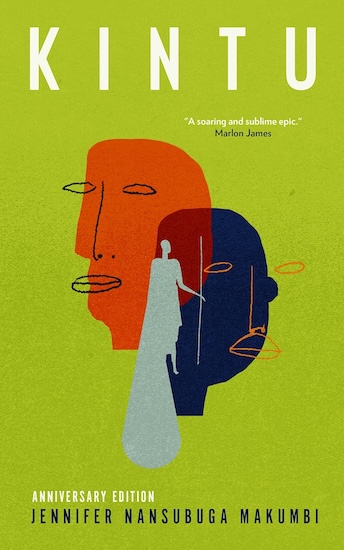
Kintu
Kintu
Set across several centuries of Ugandan history, Kintu is an ambitious family saga that reimagines the history, mythology, and cultural traditions of the Buganda kingdom. The story begins in 1750, when Kintu Kidda, a powerful provincial governor, travels to the capital to pledge allegiance to the new king. During the journey, a tragic incident sets a curse in motion, bringing suffering to his descendants for generations. Centuries later, members of the Kintu family struggle with personal tragedies, fractured relationships, and unexplained misfortunes. As they confront their shared history, they must decide whether their suffering stems from an ancestral curse, historical circumstances, or the unresolved conflicts passed down through generations. Blending Ugandan oral traditions, mythology, spirituality, and historical storytelling, Makumbi challenges conventional approaches to African history. The novel places indigenous Ugandan perspectives at its centre, exploring how colonialism, religious change, and modernisation have transformed cultural identity. It is both a multigenerational family epic and a powerful exploration of the relationship between personal memory and national history.
2014 Uganda
2
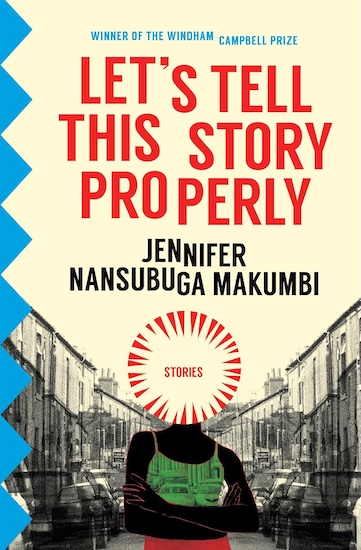
Let's Tell This Story Properly
In Let’s Tell This Story Properly, Jennifer Nansubuga Makumbi explores the experiences of Ugandans living in Britain, examining how migration reshapes identity, family relationships, and the meaning of home. Across a collection of interconnected stories, her characters navigate the challenges of building lives in a country where they may be highly visible as workers and neighbours yet remain socially marginalised. From airport security staff to healthcare workers and families divided between continents, the stories reveal the everyday realities of belonging to more than one place. The title story follows Nnam, a Ugandan woman living in Manchester, who returns to Uganda with her husband’s body for his funeral rites. There, she discovers that the life she thought she understood concealed painful secrets. Other stories explore the difficult adjustment of immigrants, generational tensions within diaspora families, and the ways cultural expectations persist across distance. Characters often find themselves caught between the home they left and the new home they are trying to make, never feeling entirely at ease in either. With emotional depth, sharp observation, and occasional dark humour, Makumbi portrays migration as more than a geographical journey. It is also a process of renegotiating family loyalties, cultural identity, and personal history. The collection asks how far people must travel to find belonging—and what happens when the meaning of home changes while they are away.
2019 Uganda United Kingdom
3
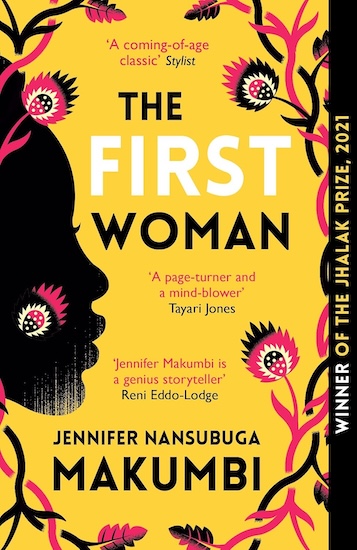
The First Woman
The First Woman
Set in Uganda in the 1970s, during the dictatorship of Idi Amin, The First Woman follows Kirabo, a curious and strong-willed twelve-year-old girl growing up in the rural village of Nattetta. Raised by her grandparents and surrounded by a large extended family, Kirabo enjoys a relatively comfortable childhood, yet she is troubled by one unanswered question: who is her mother, and why did she leave? As she enters adolescence, she also begins to sense a rebellious side of herself that conflicts with the obedient girl her family expects her to be. Determined to uncover the truth about her origins, Kirabo seeks the help of Nsuuta, an older woman regarded by the village as a witch. Through their conversations, Nsuuta introduces her to Baganda folklore and the legend of the “first woman”—an original, independent female spirit that exists before society imposes its restrictions on women. These stories challenge Kirabo’s understanding of femininity and encourage her to question the traditions that govern her life. Blending Ugandan mythology, family secrets, and the realities of life under political dictatorship, Makumbi explores motherhood, female sexuality, cultural identity, and the expectations imposed on women across generations. Kirabo’s journey becomes a powerful coming-of-age story about discovering who she is beyond the roles assigned to her. The novel celebrates women’s resilience, ancestral knowledge, and the possibility of redefining traditions to create a more liberated future.
2020 Uganda
4
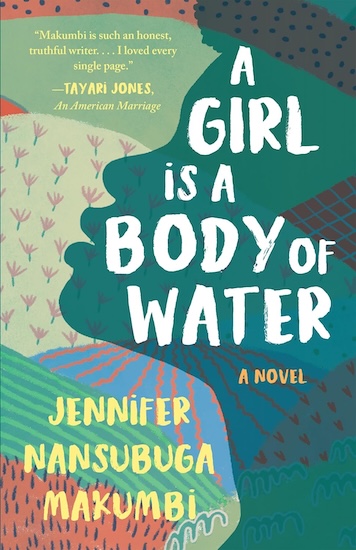
A Girl Is a Body of Water
Set in Uganda during the 1970s, under the rule of Idi Amin, A Girl Is a Body of Water follows Kirabo, a curious and independent twelve-year-old girl growing up in the rural village of Nattetta. Raised by her grandparents and surrounded by a large extended family, she has a comfortable childhood, yet one question haunts her: who is her mother? Although her father occasionally visits from Kampala, nobody in the family is willing to speak openly about the woman who gave birth to her. Determined to uncover the truth, Kirabo turns to Nsuuta, an older woman whom the village regards as a witch. Through their conversations, Nsuuta introduces her to the stories and spiritual traditions of the Baganda people, helping her understand her own rebellious nature. She teaches Kirabo about the idea of the “first woman”—a powerful, independent female state that existed before society imposed restrictions on women’s freedom. As Kirabo grows older, she must reconcile this sense of inner strength with the expectations placed on girls by family, tradition, and community. Blending Ugandan folklore, mythology, and the experiences of women across generations, Makumbi explores motherhood, female identity, and the ways patriarchal traditions shape women’s lives. Against the backdrop of a country experiencing political turmoil, Kirabo’s personal journey becomes a broader exploration of how women preserve their voices and independence in a society that often seeks to silence them. The novel celebrates the power of storytelling, ancestral knowledge, and female solidarity in shaping a different future.
2020 Uganda