About

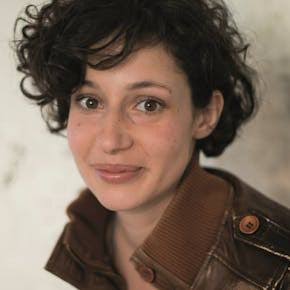
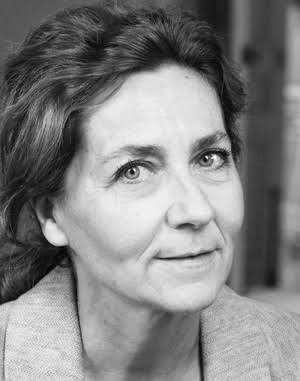
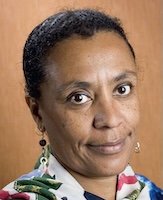
Véronique Tadjo (born in 1955) is an acclaimed Ivorian-French writer, poet, academic, painter, and illustrator whose work explores African history, cultural identity, memory, and social justice. Born in Paris to an Ivorian father and a French mother, she grew up in Abidjan, Côte d’Ivoire, where she developed a lasting connection to African storytelling traditions and cultural heritage. Tadjo studied English at the University of Abidjan before earning a doctorate in African American literature and civilization at the Sorbonne in Paris. In 1983, she received a Fulbright scholarship to conduct research at Howard University in Washington, D.C. She subsequently taught English in Côte d’Ivoire and lectured at the University of Abidjan until 1993, when she devoted herself to writing full-time. She later lived and worked in several countries, including Nigeria, Mexico, Kenya, and South Africa, where she headed the French and Francophone Studies department at the University of the Witwatersrand from 2007 to 2015. She now divides her time between London and Abidjan. Her literary career spans poetry, novels, children’s literature, and illustrated books. She is particularly interested in preserving African oral traditions and reinterpreting myths and legends for contemporary readers. Her notable works include The Shadow of Imana: Travels in the Heart of Rwanda, a reflection on the Rwandan genocide, and Queen Pokou, a reimagining of an important Akan legend. Her novel In the Company of Men, which explores the 2014 Ebola epidemic through interconnected human and natural perspectives, won the 2022 Los Angeles Times Book Prize for Fiction. Tadjo has also received numerous literary honours, including the Grand Prix littéraire d’Afrique noire for Queen Pokou.

Books on TheBookRoads
1
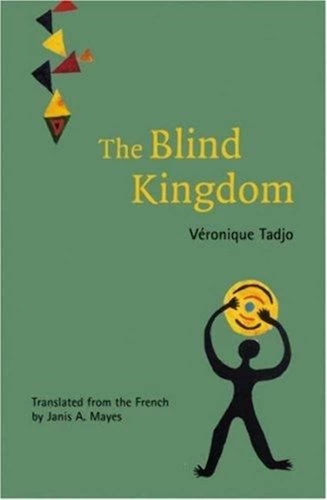
The Blind Kingdom
The Blind Kingdom
In The Blind Kingdom, Véronique Tadjo imagines a society thrown into chaos when a devastating natural disaster shakes the land and an epidemic of blindness takes hold. As the kingdom struggles to survive, its people face fear, uncertainty, and the collapse of the structures that once held their world together. Yet the crisis exposes more than physical suffering: it reveals the moral blindness of those in power and the indifference of a ruler who remains detached from the misery of his subjects. At the centre of the story is a tyrannical king whose obsession with authority prevents him from recognising the suffering around him. His daughter, however, begins to question the kingdom’s injustice and becomes drawn to a man seeking to save the country from oppression. Through this allegorical tale, Tadjo explores dictatorship, social inequality, and the dangers of political leaders who refuse to see the realities faced by ordinary people. Blending novelistic storytelling with poetic and symbolic elements, Tadjo creates a powerful reflection on a society approaching collapse. Although rooted in the political realities of Côte d’Ivoire and wider African experiences, the novel’s themes of authoritarianism, resistance, and collective responsibility resonate far beyond its setting.
1990 Côte d’Ivoire (Ivory Coast)
2
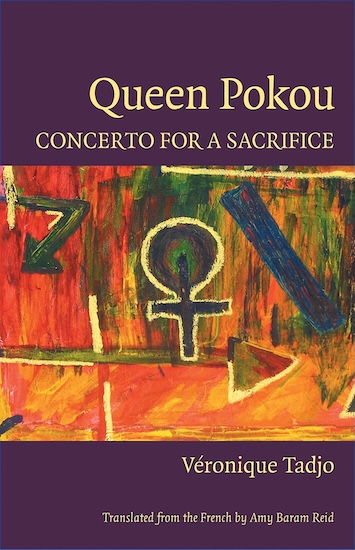
Queen Pokou
Queen Pokou
In Queen Pokou, Véronique Tadjo reimagines the legend of Queen Abraha Pokou, the eighteenth-century Akan leader traditionally credited with founding the Baoulé people of Côte d’Ivoire. According to the legend, as Pokou leads her people away from danger and across the Comoé River, she faces an impossible choice: sacrifice her only son to secure their passage and save her community. Her decision becomes a defining story of collective survival, maternal grief, and the origins of a people. Rather than presenting the legend as one fixed historical truth, Tadjo retells it through multiple imagined possibilities. What if Pokou refused to sacrifice her child? What if grief destroyed her, or her journey led her towards a different fate? These alternative narratives challenge the authority of traditional stories and explore how myths are reshaped by the people who inherit them. Moving between eighteenth-century West Africa and more recent conflicts across the continent, Tadjo connects the queen’s legendary sacrifice to the enduring consequences of war, displacement, and political violence. At its heart, the book asks what communities demand of their leaders—and what individuals must surrender for collective survival. It is both a reimagining of an important African legend and a reflection on motherhood, historical memory, and the human cost of founding a nation.
2009 Côte d’Ivoire (Ivory Coast)
3
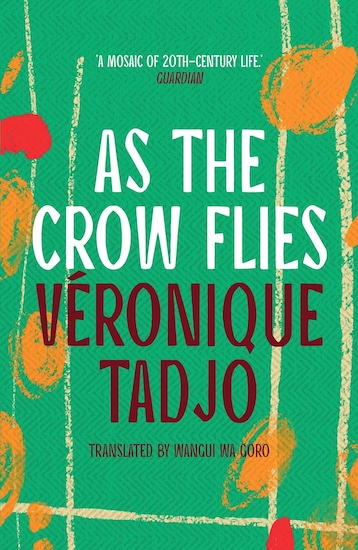
As The Crow Flies
As The Crow Flies
In As the Crow Flies, Véronique Tadjo creates a lyrical, fragmented portrait of human life through a series of interconnected stories, reflections, and poetic vignettes. Rather than following a single plot, the book moves between different voices and experiences, exploring how people meet, fall in love, suffer, separate, and continue searching for meaning. Its characters are often anonymous, representing lives that might otherwise go unnoticed. Through intimate observations, allegories, everyday encounters, and references to ancestral myths, Tadjo reflects on desire, loneliness, loss, and the fragile connections that bind people together. The narrative moves freely across emotional and geographical boundaries, suggesting that individual lives are never entirely separate but continually intersect and influence one another. Blending prose and poetry, the book challenges conventional storytelling, embracing the uncertainty and complexity of human experience. Its central message is that life rarely follows a neat, predictable path: relationships change, people drift apart, and destinies remain unresolved. Like a crow flying across an open landscape, the narrative follows the unpredictable routes through which love and human connection unfold.
2024 Côte d’Ivoire (Ivory Coast)