Driss ben Hamed Charhadi

Driss ben Hamed Charhadi

Morocco

About

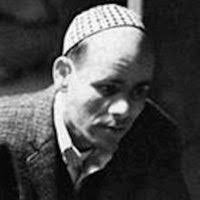
Larbi Layachi (1937–1986) was a Moroccan storyteller who became known internationally under the pseudonym Driss ben Hamed Charhadi. Born into poverty, he was unable to read or write when he met American writer and translator Paul Bowles in Tangier in the early 1960s. Layachi worked as a street vendor and had firsthand experience of the hardships depicted in his writing. His collaboration with Bowles began when he started dictating stories from his life in Moroccan Arabic, known as Moghrebi. Bowles recorded these accounts and translated them into English, preserving much of Layachi’s distinctive oral storytelling style. Their collaboration resulted in A Life Full of Holes, first published in 1964. Layachi’s work is notable for bringing the experiences and voices of ordinary Moroccans into international literature. Although the book was initially marketed as a novel, it draws heavily on Layachi’s own experiences, making it an unusual and important work at the intersection of autobiography, oral storytelling, and fiction.
Books on TheBookRoads

1
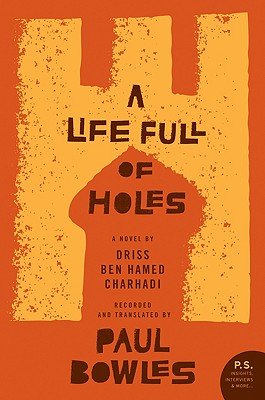
A Life Full of Holes
Set in Morocco during the mid-twentieth century, A Life Full of Holes follows Ahmed, a poor boy growing up in a society marked by poverty, inequality, and the lingering effects of colonialism. After his father disappears from his life and his mother remarries, Ahmed finds himself unwanted in his own home. Forced to fend for himself from an early age, he moves between jobs as a shepherd, labourer, baker’s assistant, and house servant, struggling to secure food, shelter, and a little dignity. As Ahmed grows older, his experiences expose him to exploitation, police brutality, betrayal, and the harsh realities of life on the margins of Moroccan society. His journey is not a conventional story of triumph over adversity; instead, it presents survival as a daily struggle in a world where opportunities are scarce and power belongs to those who can exploit others. The book is particularly distinctive because of its origins. Larbi Layachi dictated his life story in Moroccan Arabic to American writer Paul Bowles, who recorded and translated it into English. First published under the pseudonym Driss ben Hamed Charhadi, the narrative blurs the boundaries between autobiography and fiction, offering an intimate perspective on lives rarely represented in Western literature. Through Ahmed’s experiences, the book explores childhood hardship, social exclusion, and the struggle to preserve one’s humanity in difficult circumstances. Its direct, unembellished storytelling gives readers a vivid portrait of everyday life in Morocco during a period of profound social and historical change.
1964 Morocco