War & Conflict
Narratives shaped by conflict, survival, and the human cost of war.
All countries
Afghanistan
Algeria
Armenia
Bangladesh
Benin
Bosnia and Herzegovina
Cambodia
Canada
China
Congo, Democratic Republic
Côte d’Ivoire (Ivory Coast)
Croatia
Cyprus
Ethiopia
France
Germany
Greece
Indonesia
Iraq
Japan
Kenya
Lebanon
Malaysia
Mexico
Myanmar
Netherlands
Nigeria
North Korea
Pakistan
Palestine
Russia
Rwanda
Senegal
South Korea
Sri Lanka
Syria
Tanzania
Türkiye
Ukraine
United Kingdom
United States
Vietnam
Yemen
1
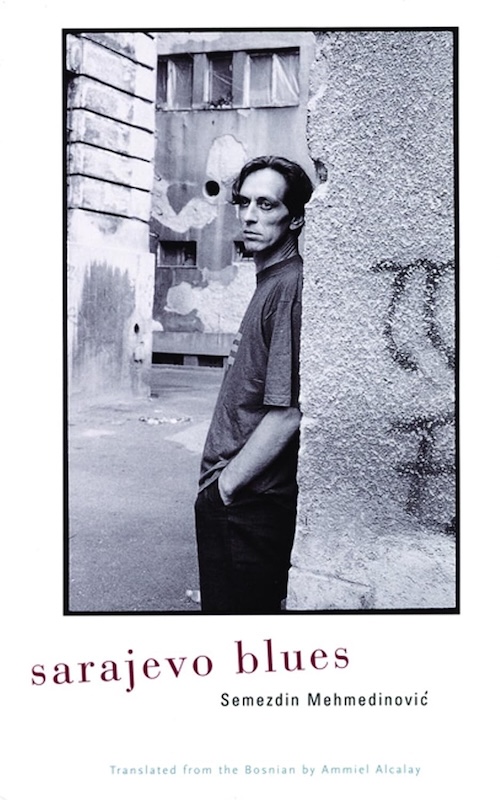
Sarajevo Blues
Sarajevo Blues is a collection of prose poems, fragments, and brief reflections written during the siege of Sarajevo in the Bosnian War. Combining personal observation with documentary detail, Semezdin Mehmedinović captures the daily reality of living in a city under bombardment, where ordinary activities become acts of survival and the boundaries between private life and public catastrophe begin to dissolve.
Rather than presenting a conventional narrative, the book offers an intimate, fragmented account of war through images of empty streets, sudden violence, disrupted routines, and the emotional strain of uncertainty. Mehmedinović’s restrained, lyrical writing resists grand explanations, focusing instead on the human cost of conflict and the persistence of memory. Both a literary response to historical tragedy and a meditation on displacement, fear, and endurance, Sarajevo Blues gives voice to the experience of civilians whose lives are transformed by war.
Bosnia and Herzegovina
1992
2
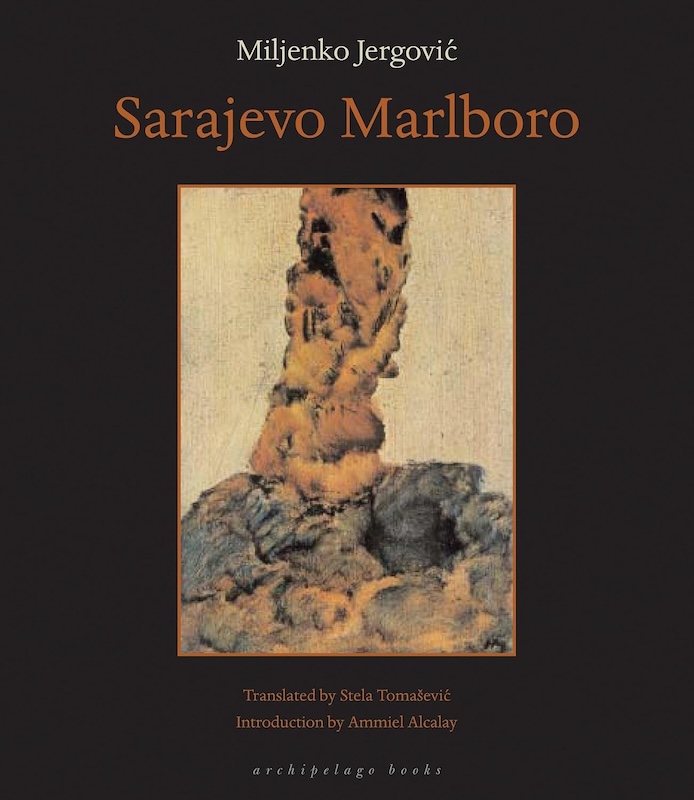
Sarajevo Marlboro
Sarajevo Marlboro is a collection of short stories set during the Bosnian War, portraying the lives of ordinary people caught in the siege of Sarajevo. Rather than focusing on battles or political leaders, Miljenko Jergović turns his attention to the everyday experiences of civilians as familiar routines collapse under the pressure of violence, fear, and uncertainty.
Through intimate portraits of neighbours, families, friends, and strangers, the stories reveal how war transforms relationships, reshapes identities, and exposes both the cruelty and compassion of human nature. Small, seemingly insignificant details—a household object, a remembered conversation, or a fleeting act of kindness—become powerful symbols of a world that is disappearing. Written with restraint, dark humour, and deep humanity, the collection offers a fragmented yet deeply personal portrait of Sarajevo and the lasting emotional consequences of conflict.
Bosnia and Herzegovina
1994
3
Gate of the Sun
Gate of the Sun is an epic novel that explores the Palestinian experience of displacement through the intertwined stories of refugees who fled their villages during the creation of Israel in 1948. Set primarily in a makeshift hospital in a Palestinian refugee camp near Beirut, the novel follows Khalil, a young man who cares for his mentor, Yunes, an ageing resistance fighter lying in a coma. As Khalil speaks to Yunes, he recounts stories of love, loss, resistance, and survival, attempting to keep his mentor alive through memory and storytelling.
At the heart of the narrative is Yunes’s relationship with Nahila, his wife, whom he secretly visits across the border in a cave known as the Gate of the Sun. Their story becomes a symbol of the enduring connection between Palestinians and their lost homeland. Through fragmented memories and multiple voices, Elias Khoury examines exile, identity, political struggle, and the power of storytelling to preserve a history threatened with erasure. Both intimate and sweeping, the novel portrays the human cost of dispossession while exploring how personal memories become part of a people’s collective history.
Lebanon
1998
4
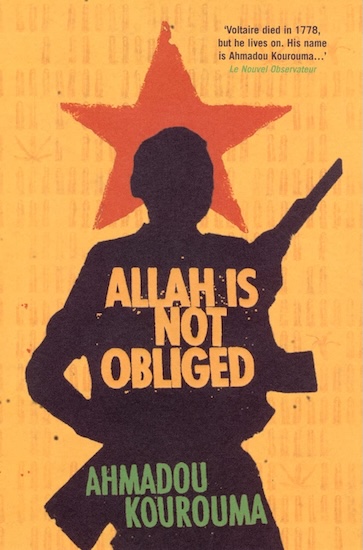
Allah Is Not Obliged
In Allah Is Not Obliged, Ahmadou Kourouma tells the harrowing story of Birahima, an orphaned boy from Côte d’Ivoire who becomes a child soldier during the civil wars that devastated Liberia and Sierra Leone. After his mother dies, Birahima sets out with Yacouba, a cunning sorcerer and confidence trickster, to find his aunt. Their journey takes a terrifying turn when they encounter armed rebel groups, and Birahima is forced into a world of violence, exploitation, and survival.
Narrated in the boy’s blunt, irreverent voice, the novel combines brutal scenes of war with dark humour and sharp satire. Birahima tries to make sense of the chaos around him using street slang, African expressions, and definitions borrowed from dictionaries, exposing the absurdity of the adult world that has stolen his childhood. Through his experiences, Kourouma examines the devastating consequences of civil war, the recruitment of children into armed groups, and the corruption and political struggles that allow such violence to continue. Despite its grim subject, the novel’s dark comedy makes its critique of war and human cruelty especially powerful.
Côte d’Ivoire (Ivory Coast)
2000
5
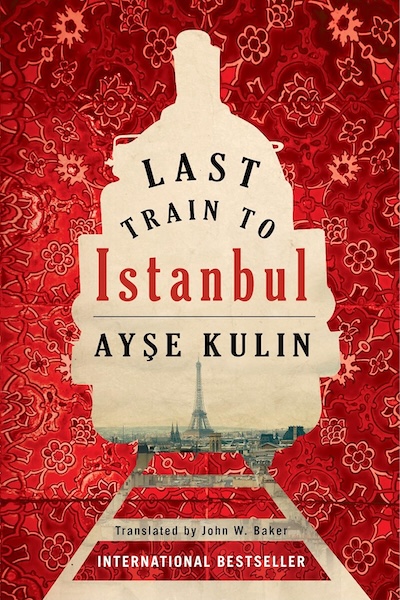
Last Train to Istanbul
As the Second World War threatens to engulf Europe, Selva, the daughter of a prominent Ottoman family, falls in love with Rafael Alfandari, a young Jewish man. Their relationship defies the expectations of both families, forcing them to leave Turkey and begin a new life together in France. But when the Nazis occupy the country, their happiness is overshadowed by the growing danger facing Jewish communities across Europe.
As persecution intensifies, Selva and Rafael find themselves trapped in a hostile world where their love and their young family may not be enough to keep them safe. Meanwhile, Turkish diplomats work behind the scenes to rescue Jewish people stranded in occupied Europe, arranging a perilous journey towards freedom. With time running out, the fate of Selva and Rafael becomes intertwined with the courage of those willing to risk their lives to save strangers.
Moving between Ankara, Istanbul, Paris, and other wartime cities, Last Train to Istanbul combines an intimate family story with a little-known chapter of Holocaust history. Inspired by accounts of Turkish diplomats who helped rescue Jews during the war, the novel explores love across cultural boundaries, moral courage, and the extraordinary acts of humanity that can emerge in the darkest times.
Türkiye
France
2002
6
Algerian White
Algerian White is a deeply personal and reflective work in which Assia Djebar mourns three intellectual friends who were murdered during Algeria’s violent civil conflict of the 1990s. Through memories, literary reflections, and historical commentary, Djebar examines the devastating consequences of political violence on writers, thinkers, and the cultural life of her country. The title refers to the white shroud associated with burial, symbolising both mourning and the silencing of voices lost to violence. Moving between intimate recollections and broader reflections on Algeria’s colonial past and post-independence struggles, Djebar explores the responsibilities of intellectuals in times of crisis and the fragility of freedom of expression. Her writing becomes an act of remembrance, resisting the disappearance of those who challenged oppression through their ideas and words. Blending memoir, essay, and elegy, the book reflects on friendship, loss, memory, and the enduring importance of literature in preserving the lives and convictions of those who have been silenced.
Algeria
2002
7
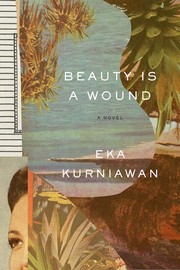
Beauty Is a Wound
In Beauty Is a Wound, Eka Kurniawan tells the extraordinary story of Dewi Ayu, a beautiful Indonesian woman who rises from the dead after twenty-one years in her grave. Set against the turbulent history of Indonesia, from Dutch colonial rule through the Japanese occupation and the political violence that followed independence, the novel follows Dewi Ayu and her four daughters as their lives become entangled in cycles of violence, desire, and revenge. Combining magical realism, dark humor, folklore, and historical fiction, Kurniawan explores the lasting consequences of colonialism, the brutality of war, and the oppression of women in a patriarchal society. Through grotesque imagery and fantastical events, the novel reveals how personal tragedies reflect a nation’s traumatic past, examining the ways violence and historical injustice shape generations of families.
Indonesia
2002
8
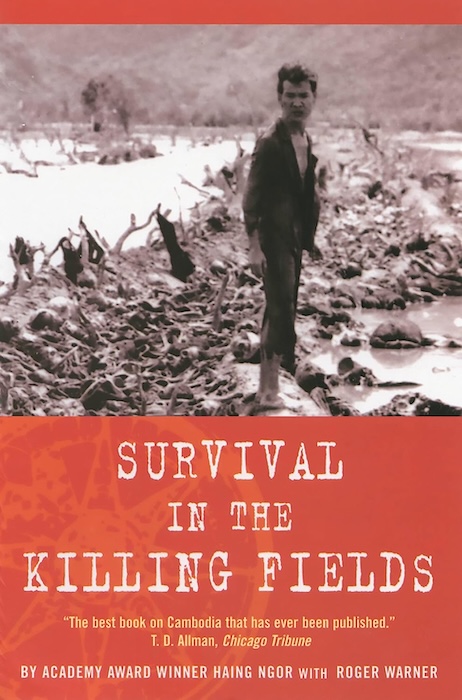
Survival in the Killing Fields
Survival in the Killing Fields is the harrowing memoir of Haing S. Ngor, a Cambodian doctor who survived the brutal rule of the Khmer Rouge between 1975 and 1979. Before the regime took power, Ngor worked as a physician and lived with his wife in Phnom Penh. Under the new government, educated professionals were persecuted, cities were emptied, and millions of Cambodians were forced into labour camps, where starvation, disease, torture, and execution became part of everyday life.
Ngor recounts his experiences of forced labour, imprisonment, and the desperate struggle to stay alive while concealing his medical training. He also describes the devastating loss of his wife and the collapse of the life he had once known. After the Khmer Rouge regime fell, he eventually escaped Cambodia and resettled in the United States.
His memoir offers a firsthand account of one of the darkest periods in Cambodian history. It is both a testimony to the suffering inflicted on ordinary people and a reflection on the resilience required to survive war, persecution, and profound personal loss.
Cambodia
2003
9
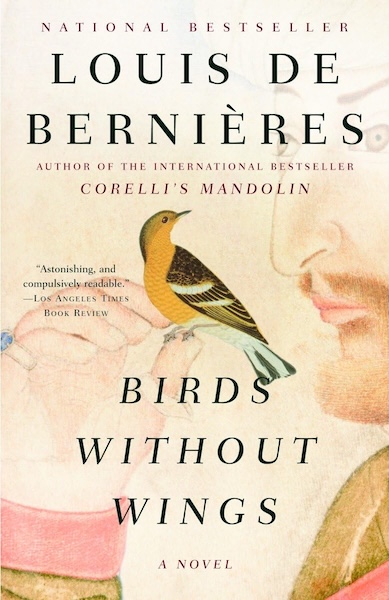
Birds Without Wings
In the small Anatolian village of Eskibahçe, Muslims and Christians have lived side by side for generations, sharing a language, traditions, friendships, and everyday life. At the heart of this close-knit community is the tender love between Philothei, a beautiful Greek Christian girl, and Ibrahim, a Muslim goatherd who has loved her since childhood. Their future seems possible—until the forces of history begin to tear their world apart.
As the Ottoman Empire collapses and modern Turkey emerges, the villagers are swept into the First World War, the rise of nationalism, and the brutal Greek-Turkish conflict. Through the voices of ordinary people, de Bernières creates an expansive portrait of a society destroyed by religious divisions, political ambition, and forced displacement. Both heartbreaking and darkly humorous, Birds Without Wings explores how people who once lived as neighbours can become enemies—and how love and humanity endure even amid extraordinary cruelty.
Türkiye
2004
10
Three Day Road
In this powerful and mesmerizing debut, Joseph Boyden reinvents the tradition of Great War epics like All Quiet on the Western Front and Birdsong. It is 1919 and Niska, an Oji- Cree medicine woman, has left her home in the bush of northern Ontario to retrieve Xavier Bird, her only relation, who has returned from the trenches of Europe. Gravely wounded and addicted to morphine, Xavier recounts how he and his best friend, Elijah Whiskeyjack, prowled the battlefields as snipers of enormous skill—and how the circumstances of their deadly craft led them to very different fates. Told with unblinking focus, this is a stunning tale of brutality, survival, and rebirth that marks the arrival of a prodigious new talent.
Canada
2005
11
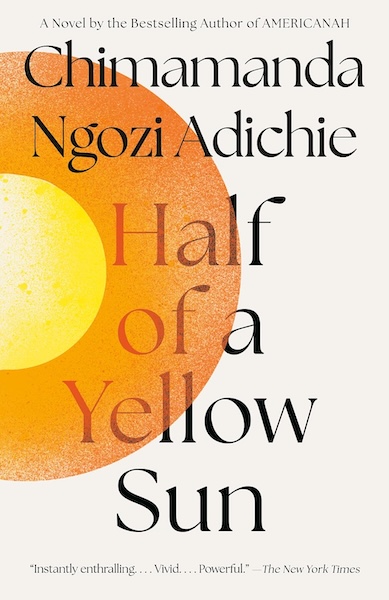
Half of a Yellow Sun
Half of a Yellow Sun is set in Nigeria during the 1960s, as the country moves from independence toward the devastating Biafran War. The novel follows three interconnected characters: Ugwu, a young houseboy who enters the service of a university professor; Olanna, the professor’s educated and politically engaged partner; and Richard, a British writer fascinated by Igbo culture who becomes involved with Olanna’s twin sister, Kainene. Through their experiences, Adichie portrays a society filled with intellectual ambition, political hope, and personal relationships that are gradually torn apart by ethnic tensions and conflict.
As the war intensifies and the independent state of Biafra struggles to survive, the characters face displacement, hunger, violence, and profound moral dilemmas. Their private lives become inseparable from the wider tragedy unfolding around them. Blending intimate storytelling with historical detail, the novel examines colonial legacies, ethnic identity, loyalty, and the devastating human cost of war. The title refers to the half-sun symbol on Biafra’s flag, representing a nation whose hopes for independence were ultimately shattered by conflict.
Nigeria
2007
12
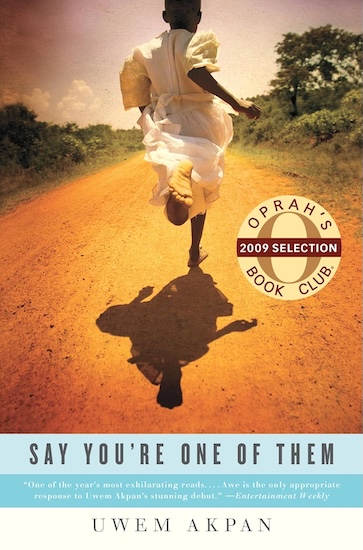
Say You're One of Them
Say You’re One of Them is a collection of five interconnected-in-spirit stories set in different African countries, exploring the lives of children caught in circumstances far beyond their control. Through the eyes of young narrators, Uwem Akpan portrays the devastating effects of poverty, religious conflict, human trafficking, and political violence on families and communities.
Written with emotional intensity and compassion, the collection challenges readers to look beyond headlines and statistics to recognise the individual lives behind Africa’s social and political crises. Rather than reducing its characters to victims, Akpan gives them distinctive voices, relationships, and hopes, creating a powerful portrait of childhood under extreme circumstances.
Benin
Ethiopia
Kenya
Nigeria
Rwanda
2009
About this theme
- Books
- 71
- Countries
- 43
Countries with this theme
Afghanistan
Asia
Algeria
Africa
Armenia
Asia
Bangladesh
Asia
Benin
Africa
Bosnia and Herzegovina
Europe
Cambodia
Asia
Canada
North America
China
Asia
Congo, Democratic Republic
Africa
Côte d’Ivoire (Ivory Coast)
Africa
Croatia
Europe
Cyprus
Asia
Ethiopia
Africa
France
Europe
Germany
Europe
Greece
Europe
Indonesia
Asia
Iraq
Asia
Japan
Asia
Kenya
Africa
Lebanon
Asia
Malaysia
Asia
Mexico
North America
Myanmar
Asia
Netherlands
Europe
Nigeria
Africa
North Korea
Asia
Pakistan
Asia
Palestine
Asia
Russia
Europe
Rwanda
Africa
Senegal
Africa
South Korea
Asia
Sri Lanka
Asia
Syria
Asia
Tanzania
Africa
Türkiye
Asia
Ukraine
Europe
United Kingdom
Europe
United States
North America
Vietnam
Asia
Yemen
Asia