Myths and Retellings
1
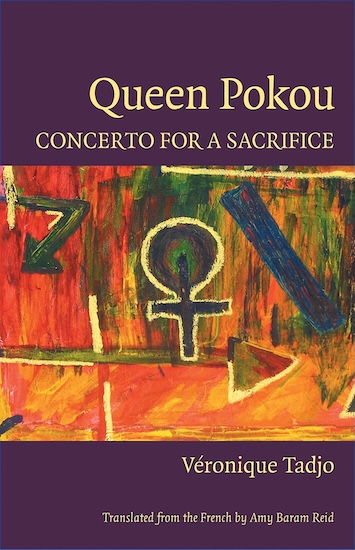
Queen Pokou
In Queen Pokou, Véronique Tadjo reimagines the legend of Queen Abraha Pokou, the eighteenth-century Akan leader traditionally credited with founding the Baoulé people of Côte d’Ivoire. According to the legend, as Pokou leads her people away from danger and across the Comoé River, she faces an impossible choice: sacrifice her only son to secure their passage and save her community. Her decision becomes a defining story of collective survival, maternal grief, and the origins of a people.
Rather than presenting the legend as one fixed historical truth, Tadjo retells it through multiple imagined possibilities. What if Pokou refused to sacrifice her child? What if grief destroyed her, or her journey led her towards a different fate? These alternative narratives challenge the authority of traditional stories and explore how myths are reshaped by the people who inherit them.
Moving between eighteenth-century West Africa and more recent conflicts across the continent, Tadjo connects the queen’s legendary sacrifice to the enduring consequences of war, displacement, and political violence. At its heart, the book asks what communities demand of their leaders—and what individuals must surrender for collective survival. It is both a reimagining of an important African legend and a reflection on motherhood, historical memory, and the human cost of founding a nation.
Côte d’Ivoire (Ivory Coast)
2009
2
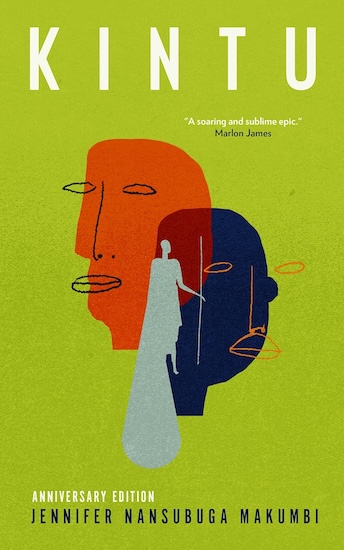
Kintu
Set across several centuries of Ugandan history, Kintu is an ambitious family saga that reimagines the history, mythology, and cultural traditions of the Buganda kingdom. The story begins in 1750, when Kintu Kidda, a powerful provincial governor, travels to the capital to pledge allegiance to the new king. During the journey, a tragic incident sets a curse in motion, bringing suffering to his descendants for generations.
Centuries later, members of the Kintu family struggle with personal tragedies, fractured relationships, and unexplained misfortunes. As they confront their shared history, they must decide whether their suffering stems from an ancestral curse, historical circumstances, or the unresolved conflicts passed down through generations.
Blending Ugandan oral traditions, mythology, spirituality, and historical storytelling, Makumbi challenges conventional approaches to African history. The novel places indigenous Ugandan perspectives at its centre, exploring how colonialism, religious change, and modernisation have transformed cultural identity. It is both a multigenerational family epic and a powerful exploration of the relationship between personal memory and national history.
Uganda
2014
3
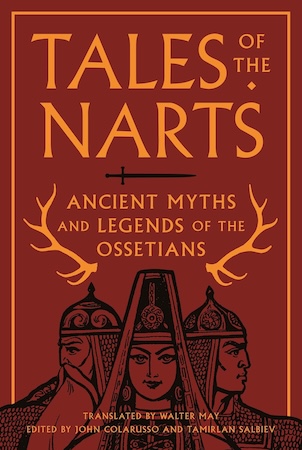
Tales of the Narts: Ancient Myths and Legends of the Ossetians
The Nart sagas are among the great mythological traditions of the Caucasus, preserving the stories, beliefs, and cultural memory of the Ossetian people. In Tales of the Narts, scholars John Colarusso and Tamirlan Salbiev bring together a rich collection of legends featuring the Narts, a mythical race of formidable warriors whose world is filled with heroic feats, supernatural encounters, fierce rivalries, and complicated family relationships.
These stories introduce memorable heroes and heroines, powerful adversaries, giants, monsters, and ancient gods. Although the Narts are celebrated for their courage and strength, they are also capable of jealousy, cruelty, and destructive ambition. Their adventures explore honor, fate, loyalty, conflict, and the consequences of human choices. Rooted in centuries of oral storytelling, the collection offers a window into the cultural heritage of the North Caucasus while revealing intriguing parallels with Greek, Norse, and other ancient mythologies. It is an important introduction to a distinctive literary tradition that has shaped the region’s collective imagination.
Russia
2016
4
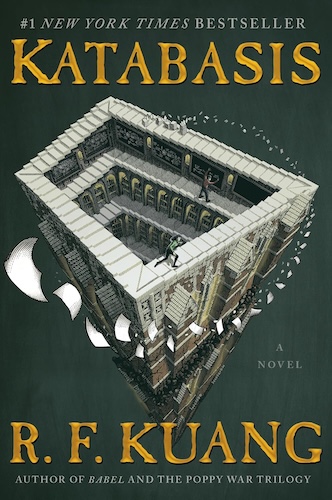
Katabasis
What if the only way to save your future was to journey into Hell?
Alice Law has sacrificed almost everything to become a brilliant scholar of analytic magic at Cambridge University. But when her formidable academic advisor, Professor Jacob Grimes, dies in a magical accident, Alice faces the possibility of losing the career she has worked so hard to build. Determined to retrieve his soul, she descends into the underworld, accompanied by Peter Murdoch, her gifted—and deeply resented—academic rival. Guided by ancient myths and philosophical texts, the pair must navigate a Hell that defies everything they have been taught. As their dangerous journey exposes buried secrets and forces them to confront their complicated relationship with their mentor, Alice begins questioning the ambitions that have defined her life. Blending dark academia, mythology, intellectual rivalry, and biting humour, R. F. Kuang’s fantasy explores the brutal demands of academic ambition and the price of pursuing greatness.
United Kingdom
2025
5
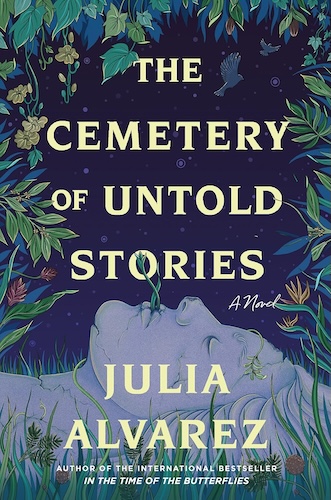
The Cemetery of Untold Stories
What happens to the stories we never tell? When celebrated novelist Alma Cruz retires, she returns to her family’s homeland, the Dominican Republic, and creates an unusual resting place for her unfinished manuscripts: a cemetery where forgotten characters can finally be laid to rest. But the stories refuse to remain buried. As their characters begin speaking back to their creator, hidden histories, family secrets, and forgotten lives emerge from the pages. Blending magical realism with Dominican history, Julia Alvarez explores who gets to tell a story, whose voices are silenced, and whether we ever truly own the stories we create. A moving celebration of the power of storytelling, this novel reminds us that even the tales we try to bury can find their way into the light.
Dominican Republic
2025
About this theme
- Books
- 5
- Countries
- 5
Countries with this theme
Côte d’Ivoire (Ivory Coast)
Africa
Dominican Republic
North America
Russia
Europe
Uganda
Africa
United Kingdom
Europe