Identity & Belonging
Explorations of self, belonging, and what it means to find your place.
All countries
Afghanistan
Albania
Algeria
Argentina
Azerbaijan
Barbados
Belgium
Bosnia and Herzegovina
Botswana
Brazil
Brunei
Bulgaria
Canada
Chile
China
Congo, Democratic Republic
Croatia
Cuba
Cyprus
Czech Republic
Denmark
Djibouti
Dominica
Dominican Republic
Ecuador
Egypt
France
Germany
Ghana
Greece
Guatemala
Iceland
India
Indonesia
Iran
Ireland
Italy
Jamaica
Japan
Kazakhstan
Kenya
Kuwait
Kyrgyzstan
Lebanon
Libya
Luxembourg
Mexico
Morocco
Netherlands
New Zealand
Nigeria
North Macedonia
Norway
Pakistan
Palestine
Panama
Russia
Rwanda
Singapore
Slovenia
Somalia
South Korea
Sudan
Sweden
Taiwan
Tanzania
Türkiye
Ukraine
United Kingdom
United States
Uzbekistan
Zimbabwe
1
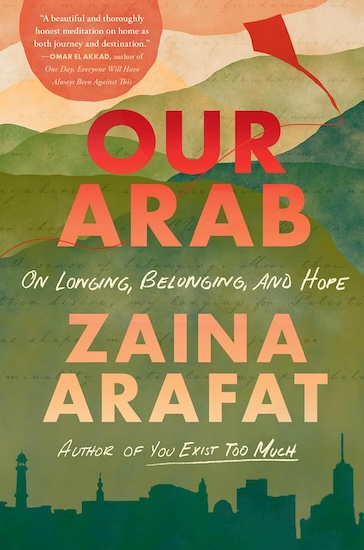
Our Arab
What does it mean to belong to a homeland you may never fully know? In this moving collection of essays, Palestinian-American writer Zaina Arafat explores the complexities of diaspora, inherited memory, and the longing for home. Moving between Nablus, Amman, the Appalachian Mountains, and Manhattan, she weaves together her family’s history, her experiences of identity and motherhood, and the pain of watching Palestine from afar. With tenderness, anger, and sharp insight, Arafat examines what it means to preserve a culture across generations while confronting displacement, erasure, and the shifting meaning of belonging. Our Arab is both an intimate family portrait and a powerful meditation on what it means to be Palestinian today.
Palestine
United States
2026
2
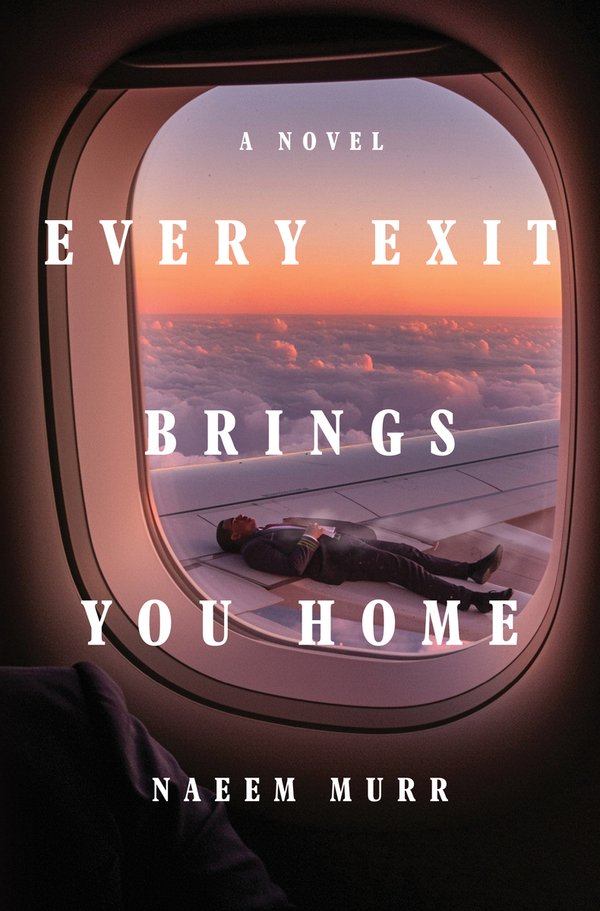
Every Exit Brings You Home
Jamal “Jack” Shaban has built a new life in Chicago, far from the violence that forced him to flee Gaza decades earlier. Now a flight attendant and the unofficial peacemaker of his condominium building, he spends his days resolving neighbours’ disputes while concealing the complicated truths of his own life. His traditional Muslim wife, Dimra, longs for a child, while Jack struggles with the secrets, desires, and regrets that threaten their marriage. When a troubled single mother moves into the building, new tensions awaken memories of a forbidden love affair in Gaza that changed the course of his life. As financial troubles engulf the community and the past resurfaces, Jack must confront the contradictions that define him: devoted husband and restless lover, generous neighbour and troubled survivor. Blending dark humour with heartbreaking reflections on war and displacement, Every Exit Brings You Home explores the meaning of home, the weight of exile, and the extraordinary ways people choose love despite the pain they carry.
Palestine
2026
3
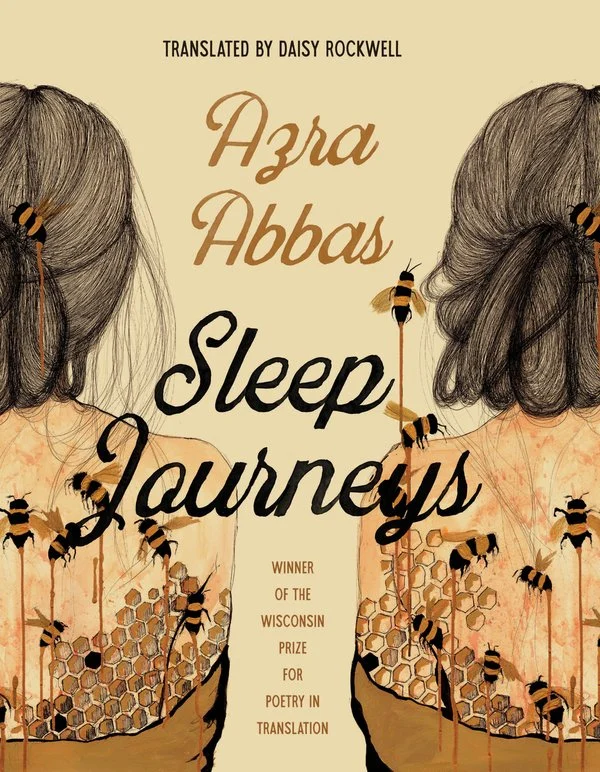
Sleep Journeys
First published in 1981, Sleep Journeys is a groundbreaking long-form prose poem that explores the hidden landscapes of a woman’s inner life. Moving through the shifting territory between sleep and wakefulness, dreams and reality, Azra Abbas examines faith, female desire, sexuality, and the subconscious with startling intimacy. Divided into three cantos, the work unfolds through recurring images, fragmented thoughts, and poetic repetitions rather than a conventional narrative. Its seemingly simple language conceals a complex emotional world in which private fantasies and suppressed desires emerge alongside questions of identity, spirituality, and the constraints placed on women. When Abbas first published the poem, her experimental approach challenged established expectations of Urdu poetry, particularly its traditional forms and conventions. The result is both intimate and radical: a work that gives voice to thoughts and desires rarely expressed openly, transforming the private experience of a woman into a profound meditation on consciousness and freedom. More than four decades after its original publication, Sleep Journeys remains a landmark of modern Urdu feminist literature.
Pakistan
2026
4
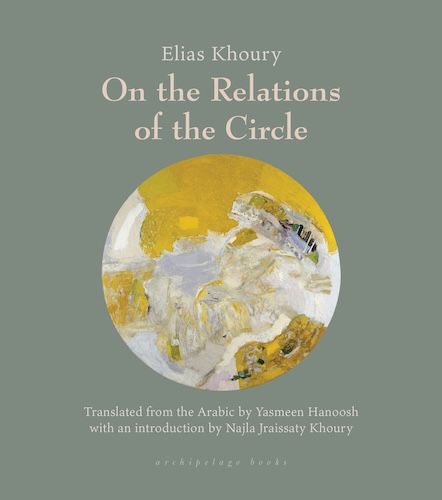
On the Relations of the Circle
In Beirut on the eve of the Lebanese Civil War, a young orphan named Mansour searches for the fragments of his identity: his origins, his family name, and the father he has never known. Yet his journey unfolds in a world where reality and imagination constantly overlap. Birds speak, trees become companions, and ordinary objects seem to possess lives of their own. Through dreamlike episodes, shifting perspectives, and stories that circle back upon themselves, Elias Khoury creates a portrait of a city poised on the edge of catastrophe. Published in 1975, the same year the Lebanese Civil War began, the novel explores how individuals construct their identities amid uncertainty and how storytelling can preserve a sense of belonging when history threatens to destroy it. Both playful and haunting, this experimental work introduces themes that would become central to Khoury’s writing: memory, displacement, fractured identity, and the enduring power of imagination.
Lebanon
2026
5
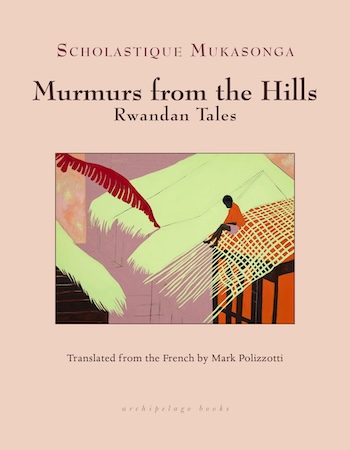
Murmurs from the Hills: Rwandan Tales
Before Rwanda became synonymous with tragedy, its hills held centuries of stories, traditions, and ancestral wisdom. In this evocative collection, Scholastique Mukasonga reaches back into her homeland’s cultural memory, weaving together Rwandan folklore, family recollections, mythology, and the history of colonialism. Rivers carry the echoes of childhood, sacred objects preserve the stories of generations, and the voices of elders bring forgotten worlds back to life. Through tales of kings, village communities, spiritual beliefs, and encounters between African traditions and European influence, Mukasonga creates a rich portrait of a society struggling to preserve its identity amid profound change. The stories move between the intimate and the legendary, revealing how collective memory shapes a people’s understanding of themselves. Both a celebration of Rwanda’s cultural heritage and a meditation on the power of storytelling, this collection seeks to recover a world that history threatened to erase.
Rwanda
2026
6
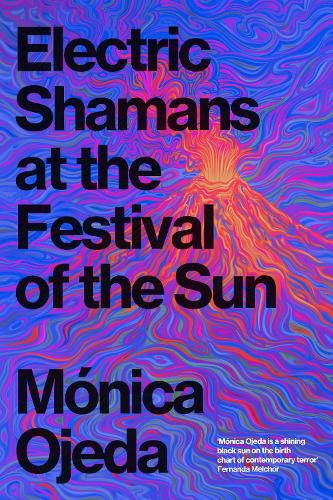
Electric Shamans at the Festival of the Sun
Set in a near-future Ecuador, Electric Shamans at the Festival of the Sun follows Noa and her best friend, Nicole, as they leave the violence and decay of Guayaquil behind to attend Solar Noise, an experimental music festival held in the remote Andean highlands near an active volcano. Amid psychedelic music, ritualistic dances, and a gathering of young people searching for transcendence, the festival becomes a space where the boundaries between the physical and spiritual worlds begin to dissolve.
Noa has a personal reason for making the journey: she hopes to find her father, who abandoned her when she was a child. But after arriving at the festival, she begins experiencing strange transformations, speaking in a voice that seems not to belong to her. As Nicole tries to understand what is happening to her friend, both young women confront their histories of abandonment, violence, and emotional pain.
Blending speculative fiction, psychological horror, Andean mythology, and experimental music culture, Ojeda explores the search for belonging and the relationship between trauma, identity, and transcendence. The novel’s hallucinatory atmosphere evokes a world where ancient spiritual traditions collide with futuristic subcultures, offering a haunting meditation on the desire to escape the past and imagine a different future.
Ecuador
2026
7
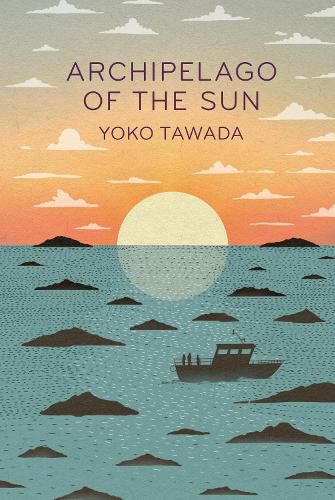
Archipelago of the Sun
In the concluding volume of Yoko Tawada’s imaginative Scattered All Over the Earth trilogy, Hiruko continues her search for her lost homeland, a country that seems to have disappeared from maps and from collective memory. Travelling aboard a mail boat across the Baltic Sea, she is accompanied by an unusual group of companions: Knut, a Danish linguist; Akash, an Indian man exploring gender identity; Nanook, a Greenlander and former sushi chef; Nora, a German museum worker concerned with social justice and the environment; and Susanoo, a mysterious Japanese cook. As the voyage unfolds, unexpected passengers—including figures from literature and mythology—complicate their journey and challenge their understanding of history, nationality and belonging. Blending surrealism, humour and philosophical speculation, Tawada explores how language shapes identity and how people build connections across cultural boundaries. The novel ultimately imagines belonging not as a fixed geographical inheritance, but as something that can emerge through dialogue, storytelling and shared experience.
Japan
2026
8
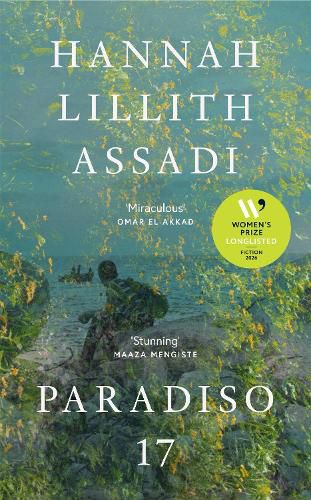
Paradiso 17
Born in Palestine on the eve of the 1948 Nakba, five-year-old Sufien is forced to leave his family’s ancestral home, beginning a lifelong journey shaped by displacement and the search for belonging. From a refugee camp in Syria to the oil-rich deserts of Kuwait, the university streets of Florence, and the crowded neighbourhoods of New York, Sufien moves between countries and cultures, repeatedly attempting to build a home somewhere new. Yet every place offers both the promise of reinvention and the painful reminder of what he has lost.
In Kuwait, he experiences first love and family estrangement. In Italy, he discovers intellectual freedom and the intoxicating possibilities of life beyond his upbringing. Later, in New York, he forms an unlikely friendship with a wealthy Jewish American man and falls in love with a Jewish woman, creating a family of his own. But even as he establishes roots in the United States, the past remains an enduring presence.
Recounted from his deathbed, Sufien’s story moves between memory and reflection, tracing the complicated relationship between exile, identity, and the desire to belong. Inspired by the life of Assadi’s Palestinian father, this lyrical novel explores how displacement reverberates across generations and asks whether home is a place we can recover, a community we create, or an idea we carry within ourselves.
Palestine
2026
9
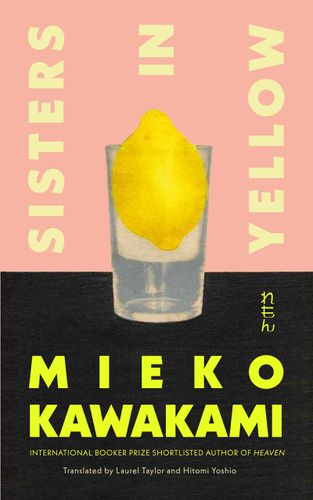
Sisters in Yellow
Fifteen-year-old Hana Ito lives with her young mother in a cramped Tokyo apartment, struggling with poverty and the uncertainty of a life without security. In the late 1990s, when Japan is grappling with economic stagnation, the future seems particularly bleak for those born without privilege. Then Hana meets Kimiko Yoshikawa, an older woman whose confidence and warmth offer her a glimpse of another possible life. Together, they establish Lemon, a modest bar that becomes a refuge for Hana and a place where she begins to imagine a future beyond mere survival.
As the business grows, Hana forms relationships with other young women who, like her, are trying to find their footing in a world that offers them few choices. But financial desperation, dangerous acquaintances, and difficult moral compromises gradually threaten the fragile community they have built. Decades later, news of a shocking criminal case involving Kimiko forces Hana to revisit the past and confront the consequences of decisions she has spent years trying to forget.
Blending crime fiction with an intimate portrait of female relationships, Kawakami explores poverty, ambition, betrayal, and the ways women struggle to protect one another in an unequal society. The novel asks how far people will go to survive—and whether the bonds formed in desperate circumstances can withstand the weight of time and guilt.
Japan
2026
10

Frida Slattery As Herself
When aspiring actress Frida Slattery meets ambitious theatre director John Reddan in a Dublin pub in 2005, neither can imagine how profoundly they will shape each other’s lives. Frida is struggling to establish herself as an actress, while John is beginning to make a name for himself as a writer and director. Recognizing each other’s creative potential, they embark on an artistic partnership that brings them professional success, critical acclaim, and an increasingly complicated personal relationship.
Over the next sixteen years, their intertwined lives carry them from Dublin to London, New York, and Los Angeles. As their careers evolve and their personal lives become more complicated, the boundaries between artistic collaboration, friendship, ambition, and romantic desire grow increasingly difficult to navigate. Success brings new opportunities, but also betrayal, disappointment, and heartbreak. Despite marriages, separations, and the changing circumstances of their lives, Frida and John remain connected in ways neither can fully explain.
With wit and psychological insight, Ana Kinsella explores the relationship between art and identity, examining how creative partnerships can inspire us while also threatening to define us. This expansive literary novel is ultimately a story about love, ambition, artistic expression, and the difficult process of finding one’s own voice.
Ireland
2026
11

My Year As a Fraud
In the remote Swedish village of Bäcken, Cassi has become something of a local celebrity. As the founder of a successful self-help retreat, she offers everything from couples’ therapy to puppy yoga and full-moon rituals. Her clients trust her advice, pay generously for her services, and admire her apparent wisdom. There is just one problem: Cassi is a fraud. Behind her carefully constructed public image is a woman struggling with unemployment, depression, and alcoholism, concealing her own troubles while helping others navigate theirs.
But maintaining a life built on deception becomes increasingly difficult as Cassi forms genuine connections with the people around her. When the truth threatens to emerge, she must confront the distance between the person she pretends to be and the person she really is.
Blending sharp humour with tenderness and emotional depth, this novel explores loneliness, self-deception, and the universal desire to belong. It asks whether someone who has spent years hiding behind a carefully crafted identity can find the courage to be honest—and discover that acceptance is possible even without pretending to have all the answers.
Sweden
2026
12
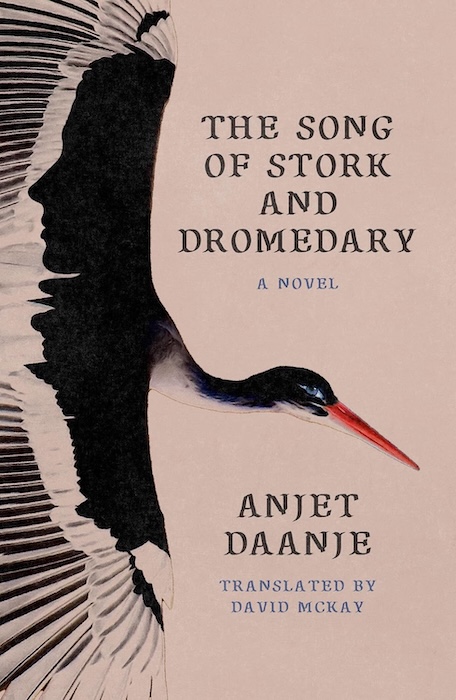
The Song of Stork and Dromedary
Inspired by the lives and literary legacies of the Brontë sisters, The Song of Stork and Dromedary is an intricate literary mystery about an elusive writer whose work continues to fascinate readers long after her death.
In nineteenth-century Yorkshire, Eliza May Drayden and her sisters grow up in relative isolation, finding refuge in their shared passion for literature. When Eliza May finally publishes her only novel, Haeger Mass, it is condemned as disturbing and immoral. Yet, over time, the book acquires a devoted following, and its mysterious author becomes the subject of endless speculation. Who was Eliza May Drayden, and what secrets lie within her strange and unsettling work?
Told across eleven interconnected narratives spanning almost three centuries, the novel unfolds through letters, biographies, personal recollections, mysterious notebooks, and the lives of people touched by Eliza May’s writing. As each perspective reveals new details, conflicting interpretations emerge, making the truth increasingly elusive.
Blending Gothic fiction, historical storytelling, and philosophical mystery, Daanje explores artistic identity, the relationship between an author and her readers, and the human desire to find meaning in stories. Ultimately, the novel reflects on literature’s extraordinary ability to transcend time and mortality.
Denmark
2026
About this theme
- Books
- 196
- Countries
- 72
Countries with this theme
Afghanistan
Asia
Albania
Europe
Algeria
Africa
Argentina
South America
Azerbaijan
Asia
Barbados
North America
Belgium
Europe
Bosnia and Herzegovina
Europe
Botswana
Africa
Brazil
South America
Brunei
Asia
Bulgaria
Europe
Canada
North America
Chile
South America
China
Asia
Congo, Democratic Republic
Africa
Croatia
Europe
Cuba
North America
Cyprus
Asia
Czech Republic
Europe
Denmark
Europe
Djibouti
Africa
Dominica
North America
Dominican Republic
North America
Ecuador
South America
Egypt
Africa
France
Europe
Germany
Europe
Ghana
Africa
Greece
Europe
Guatemala
North America
Iceland
Europe
India
Asia
Indonesia
Asia
Iran
Asia
Ireland
Europe
Italy
Europe
Jamaica
North America
Japan
Asia
Kazakhstan
Asia
Kenya
Africa
Kuwait
Asia
Kyrgyzstan
Asia
Lebanon
Asia
Libya
Africa
Luxembourg
Europe
Mexico
North America
Morocco
Africa
Netherlands
Europe
New Zealand
Oceania
Nigeria
Africa
North Macedonia
Europe
Norway
Europe
Pakistan
Asia
Palestine
Asia
Panama
North America
Russia
Europe
Rwanda
Africa
Singapore
Asia
Slovenia
Europe
Somalia
Africa
South Korea
Asia
Sudan
Africa
Sweden
Europe
Taiwan
Asia
Tanzania
Africa
Türkiye
Asia
Ukraine
Europe
United Kingdom
Europe
United States
North America
Uzbekistan
Asia
Zimbabwe
Africa