Identity & Belonging
Explorations of self, belonging, and what it means to find your place.
All countries
Afghanistan
Albania
Algeria
Argentina
Azerbaijan
Barbados
Belgium
Bosnia and Herzegovina
Botswana
Brazil
Brunei
Bulgaria
Canada
Chile
China
Congo, Democratic Republic
Croatia
Cuba
Cyprus
Czech Republic
Denmark
Djibouti
Dominica
Dominican Republic
Ecuador
Egypt
France
Germany
Ghana
Greece
Guatemala
Iceland
India
Indonesia
Iran
Ireland
Italy
Jamaica
Japan
Kazakhstan
Kenya
Kuwait
Kyrgyzstan
Lebanon
Libya
Luxembourg
Mexico
Morocco
Netherlands
New Zealand
Nigeria
North Macedonia
Norway
Pakistan
Palestine
Panama
Russia
Rwanda
Singapore
Slovenia
Somalia
South Korea
Sudan
Sweden
Taiwan
Tanzania
Türkiye
Ukraine
United Kingdom
United States
Uzbekistan
Zimbabwe
1
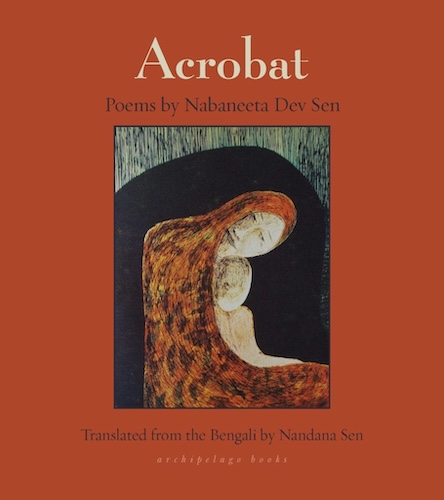
Acrobat
In Acrobat, Nabaneeta Dev Sen transforms the experiences of an ordinary life into an intimate, unflinching exploration of womanhood, love, motherhood, and mortality. This posthumously published poetry collection moves between the exhilaration of first love, the physical and emotional demands of childbirth, the complexities of family relationships, and the inevitable approach of old age. With a voice that can be tender one moment and fiercely rebellious the next, Dev Sen examines the expectations imposed on women and the quiet acts of resistance through which they reclaim their lives. The acrobat becomes a powerful image for the precarious balancing act of being human: navigating intimacy, pain, desire, and loss while attempting to remain upright. Both compassionate and unsparing, these poems celebrate the body and its vulnerabilities, revealing the extraordinary intensity hidden within everyday existence. Translated from Bengali by the author’s daughter, Nandana Dev Sen, the collection also becomes a moving literary dialogue between mother and daughter.
India
2021
2
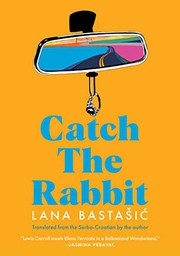
Catch the Rabbit
Catch the Rabbit follows Lejla and Sara, two women who grew up together in Bosnia but became estranged as their lives took different directions. Years later, Lejla calls Sara and asks her to help find Armin, Lejla’s brother, who disappeared after leaving the country. Sara returns from Ireland, where she has built a new life, and the two women embark on a road trip through the former Yugoslavia. Their journey brings back memories of childhood, friendship, and the divisions created by the breakup of their country. As old grievances surface, they must confront the ways their personal histories have been shaped by ethnic identity, political violence, and the stories they tell themselves. Bastašić explores memory, belonging, and the fragility of friendship, revealing how the past can continue to govern the present even when people believe they have escaped it.
Bosnia and Herzegovina
2021
3
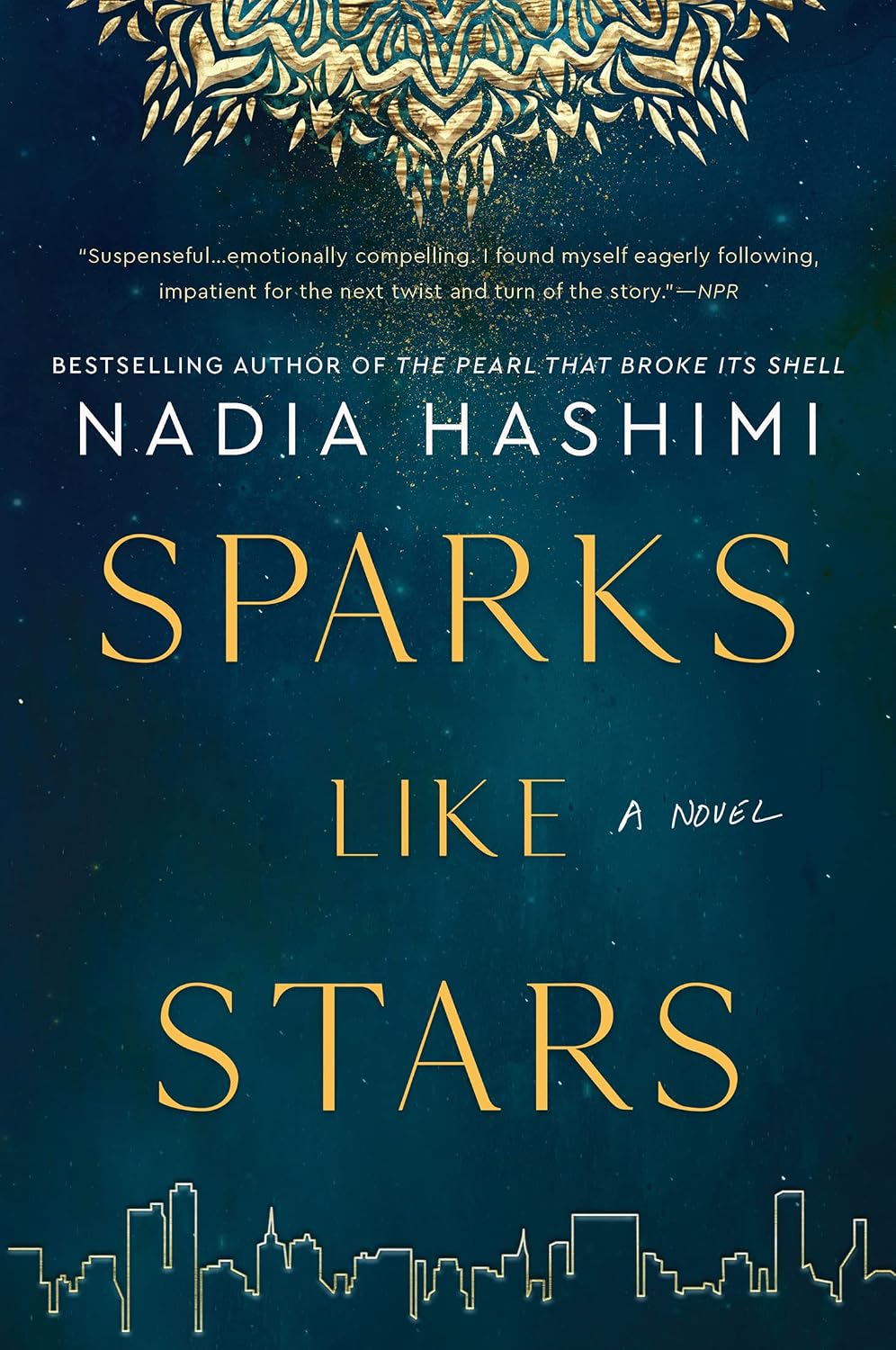
Sparks Like Stars
Sparks Like Stars begins in Kabul in 1978, when ten-year-old Sitara Zamani witnesses the violent overthrow of Afghanistan’s president and the murder of members of his household, including her family. Rescued by an American diplomat, she is taken to the United States and grows up under a new name, attempting to build a life far removed from the trauma of her childhood. Decades later, now a successful doctor in New York, she encounters a man whose appearance brings back memories she has spent years trying to suppress. Determined to uncover the truth about her past, she returns to the history she left behind. Hashimi explores the lasting effects of political violence, the fragility of memory, and the complex relationship between identity and belonging, asking whether confronting painful truths can help someone reclaim a lost part of themselves.
Afghanistan
2021
4
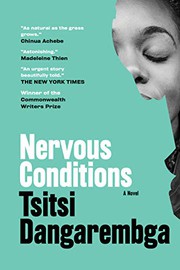
Nervous Conditions
Nervous Conditions follows Tambudzai, a young girl growing up in a poor Shona family in colonial Rhodesia, now Zimbabwe. Determined to escape the limitations imposed on her by poverty and gender, Tambu works hard to obtain an education. When her brother dies, she is given the opportunity to attend the mission school previously reserved for him, opening a path toward a future her family could never have imagined for her.
At school, Tambu becomes increasingly aware of the contradictions between traditional Shona culture and the values promoted by colonial education. Her cousin Nyasha, who has returned from England, struggles with similar tensions, rebelling against the expectations placed on her by her father and society. Through their experiences, Tsitsi Dangarembga explores the psychological effects of colonialism, the restrictions imposed on women, and the complicated relationship between education and liberation. The novel examines how family, culture, and social inequality shape identity, revealing that gaining access to new opportunities does not necessarily mean escaping oppression.
Zimbabwe
2021
5
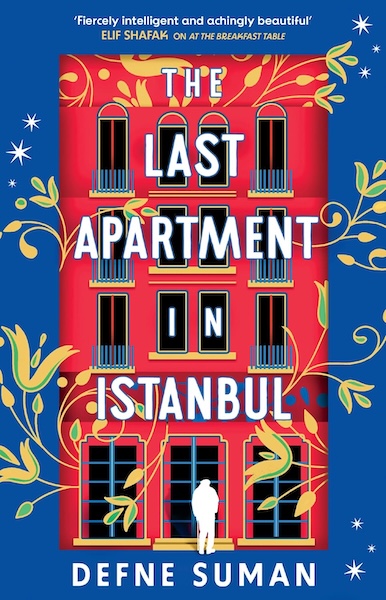
The Last Apartment in Istanbul
Pericles Drakos has lived his entire seventy-five years in Istanbul’s elegant Circle Building, watching the city transform around him. Once home to a thriving, multicultural community, his neighbourhood has gradually changed, its old inhabitants pushed aside by political tensions and gentrification. When the COVID-19 pandemic deepens his isolation, Pericles finds an unexpected connection with Leyla, a younger woman who moves into the building and happens to be a writer.
Drawn to Leyla, Pericles begins writing down the story of his life—not the version others remember, but the complicated truth of the man he once was. Through memories of love, jealousy, betrayal, and loss, he revisits the experiences of a Greek man living in Turkey, where political oppression and hostility have shaped both his personal history and his sense of belonging.
Spanning decades of Istanbul’s turbulent history, The Last Apartment in Istanbul is a poignant exploration of memory, identity, and the fragile coexistence of different communities. Defne Suman brings to life a city where private lives are inseparable from public history, asking what remains of a person when the world they knew disappears.
Türkiye
Greece
2022
6
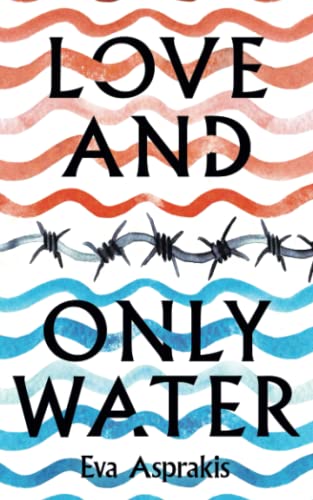
Love and Only Water
Can you be whole when your world is in halves?
Twenty-one-year-old Daniela travels from England to Cyprus in search of her roots and a stronger sense of identity. Staying at her grandparents’ home, she becomes increasingly aware of the pain her family carries from Turkey’s 1974 invasion of northern Cyprus. The island’s division is not merely political: it has shaped family memories, personal relationships, and the ways people understand their own histories.
When Daniela’s aunt invites her across the border for a picnic, Daniela unexpectedly encounters Beyza, her former girlfriend. Five years earlier, the two women had lived in London, sharing a connection that seemed possible beyond the boundaries of their cultural backgrounds. Now, with Daniela in the Greek Cypriot south and Beyza in the Turkish Cypriot north, their reunion forces them to confront the religious, cultural, and political differences that separate them.
As Daniela navigates her feelings for Beyza and the complicated history of her family, she begins to question what it means to belong to a place, a culture, or another person. Through the parallel divisions of a family and an island, Love and Only Water explores sexuality, cultural identity, inherited trauma, and the uncertainty of living between worlds.
Cyprus
2022
7
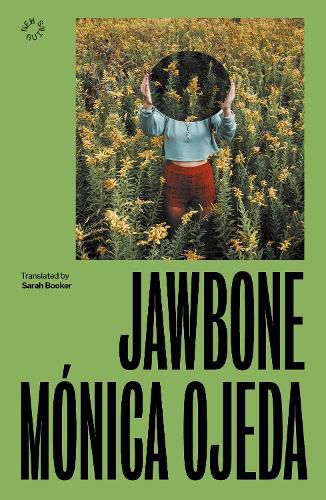
Jawbone
In Jawbone (Mandíbula), Ecuadorian writer Mónica Ojeda explores the disturbing intersection of adolescent desire, female friendship, violence, and fear. The novel opens with Fernanda, a wealthy teenager who has been kidnapped and imprisoned in a remote cabin by her literature teacher, Miss Clara. As the circumstances surrounding the abduction gradually emerge, the story reveals the intense and unsettling relationship between Fernanda and her best friend, Annelise, whose shared fascination with horror, mythology, and the macabre has drawn them into increasingly dangerous territory.
At their elite bilingual school in Guayaquil, Annelise leads a group of girls in elaborate rituals devoted to a fictional deity they have created. Their games blur the boundaries between imagination and reality, intimacy and cruelty, fascination and obsession. Meanwhile, Miss Clara struggles with her own psychological disintegration, haunted by her dead mother and the pressure to maintain control.
Drawing on horror fiction, internet creepypastas, mythology, and literary theory, Ojeda constructs a multilayered narrative that captures the volatility of adolescence. The novel examines how young women negotiate power, sexuality, identity, and belonging in a world where affection can become possessive and fear can transform into desire. Its unsettling atmosphere challenges readers to confront the darker possibilities of growing up.
Ecuador
2022
8
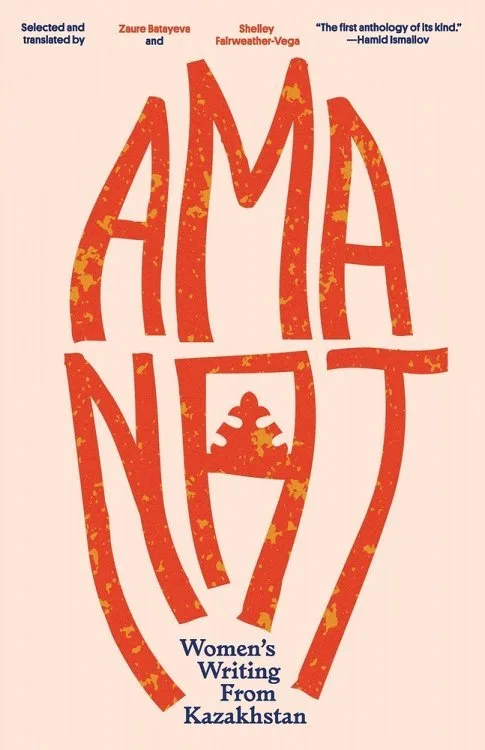
Amanat: Women’s Writing from Kazakhstan
Amanat: Women’s Writing from Kazakhstan is a landmark anthology bringing together 24 short stories and essays by 13 women writers from three generations of Kazakhstani life. Translated from Kazakh and Russian into English, the collection offers an intimate portrait of a country negotiating the complicated legacies of Soviet rule, independence, and rapid social change. Its stories move between rural villages and urban landscapes, family homes and public spaces, exploring the lives of women whose experiences have often remained outside international literary conversations. Some pieces revisit the trauma of Stalinist repression, famine, and political protest, while others examine marriage, motherhood, loneliness, generational conflict, and the uncertainties of contemporary life. Together, the writers reveal a society shaped by competing cultural influences and evolving ideas about identity and belonging. The title, Amanat, evokes a trust, promise, or precious legacy entrusted to another for safekeeping. True to this meaning, the anthology preserves and shares the voices of Kazakhstani women, creating a literary bridge between generations, languages, and cultures.
Kazakhstan
2022
9
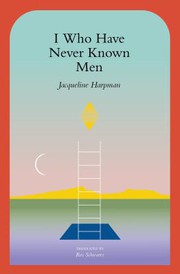
I Who Have Never Known Men
I Who Have Never Known Men follows an unnamed young woman imprisoned underground with thirty-nine other women. Guarded by silent male soldiers, the women live in a confined space, deprived of privacy, freedom, and meaningful knowledge of the outside world. Unlike her fellow prisoners, who remember their lives before captivity, the narrator has no memories of the world beyond the prison and has never experienced ordinary human relationships.
When an unexpected event allows the women to escape, they emerge into an unfamiliar landscape that appears almost entirely devoid of human life. Forced to survive together, they search for answers about their captivity and the fate of humanity, but the world offers few explanations. As time passes, the narrator struggles to understand concepts such as love, sexuality, memory, and death without having experienced them in the ways others have.
Blending dystopian fiction with philosophical reflection, Harpman’s novel explores freedom, loneliness, human nature, and what it means to be human when society and its inherited knowledge have disappeared.
Belgium
2022
10
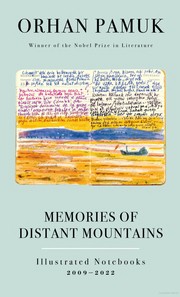
Memories of Distant Mountains
Memories of Distant Mountains is a collection of illustrated notebooks and personal reflections by Nobel Prize-winning author Orhan Pamuk, offering an intimate glimpse into his creative and everyday life. Combining handwritten notes, sketches, paintings, and observations, Pamuk moves between memories of his childhood in Istanbul, reflections on his family, and thoughts about the places, people, and experiences that have shaped his imagination.
The book reveals the relationship between writing and visual art in Pamuk’s creative process, showing how drawings and brief observations can capture moments that conventional storytelling might overlook. His notebooks also explore solitude, memory, urban life, and the passage of time, often returning to Istanbul as both a physical place and an enduring source of inspiration. Blending autobiography, travel writing, and artistic meditation, the collection offers readers access to the private world behind Pamuk’s novels. It is a reflection on how creativity emerges from paying attention to ordinary experiences and transforming fleeting impressions into lasting forms of expression.
Türkiye
2022
11
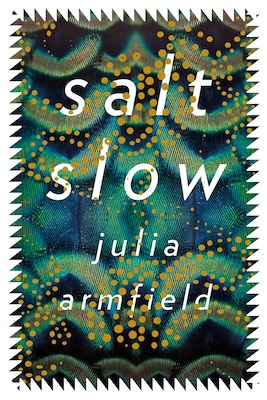
Salt Slow
In her brilliantly inventive and haunting debut collection of stories, Julia Armfield explores bodies and the bodily, mapping the skin and bones of her characters through their experiences of isolation, obsession, love and revenge.
Teenagers develop ungodly appetites, a city becomes insomniac overnight, and bodies are diligently picked apart to make up better ones. The mundane worlds of schools and sleepy sea-side towns are invaded and transformed, creating a landscape which is constantly shifting to hold on to its inhabitants. Blurring the mythic and the gothic with the everyday, salt slow considers characters in motion – turning away, turning back or simply turning into something new entirely.
United Kingdom
2022
12
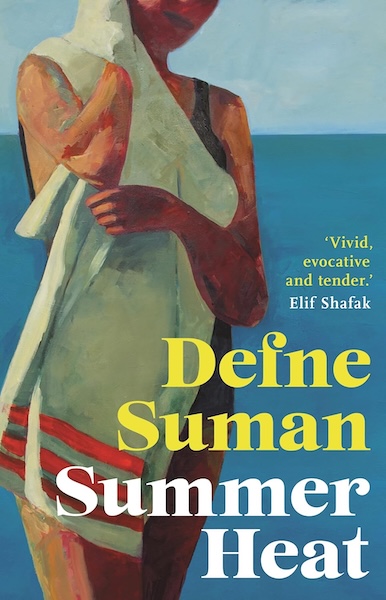
Summer Heat
In 1974, young Melike senses that something is terribly wrong. Her parents’ political gatherings have stopped, and whispered conversations about prison, invasion, and military coups fill the family home in Istanbul. Hoping to escape the growing unrest, the family moves to a quiet village in southern Turkey. For a while, life seems peaceful—until Melike’s beloved father disappears.
Nearly thirty years later, Melike has built a respectable life as an art historian in Istanbul. She has a comfortable home and a devoted husband, yet a persistent dissatisfaction follows her. When she meets Petro, a mysterious and captivating stranger, she believes a new chapter is beginning. But Petro’s concealed identity forces her to confront the past she has spent years trying to leave behind.
Against the backdrop of the 1974 Turkish military intervention in Cyprus and its political aftermath, Summer Heat explores family secrets, desire, and the long shadow of historical violence. It is a story about the identities we construct, the truths we bury, and the past’s power to disrupt even the most carefully arranged lives.
Türkiye
2023
About this theme
- Books
- 196
- Countries
- 72
Countries with this theme
Afghanistan
Asia
Albania
Europe
Algeria
Africa
Argentina
South America
Azerbaijan
Asia
Barbados
North America
Belgium
Europe
Bosnia and Herzegovina
Europe
Botswana
Africa
Brazil
South America
Brunei
Asia
Bulgaria
Europe
Canada
North America
Chile
South America
China
Asia
Congo, Democratic Republic
Africa
Croatia
Europe
Cuba
North America
Cyprus
Asia
Czech Republic
Europe
Denmark
Europe
Djibouti
Africa
Dominica
North America
Dominican Republic
North America
Ecuador
South America
Egypt
Africa
France
Europe
Germany
Europe
Ghana
Africa
Greece
Europe
Guatemala
North America
Iceland
Europe
India
Asia
Indonesia
Asia
Iran
Asia
Ireland
Europe
Italy
Europe
Jamaica
North America
Japan
Asia
Kazakhstan
Asia
Kenya
Africa
Kuwait
Asia
Kyrgyzstan
Asia
Lebanon
Asia
Libya
Africa
Luxembourg
Europe
Mexico
North America
Morocco
Africa
Netherlands
Europe
New Zealand
Oceania
Nigeria
Africa
North Macedonia
Europe
Norway
Europe
Pakistan
Asia
Palestine
Asia
Panama
North America
Russia
Europe
Rwanda
Africa
Singapore
Asia
Slovenia
Europe
Somalia
Africa
South Korea
Asia
Sudan
Africa
Sweden
Europe
Taiwan
Asia
Tanzania
Africa
Türkiye
Asia
Ukraine
Europe
United Kingdom
Europe
United States
North America
Uzbekistan
Asia
Zimbabwe
Africa