History
All countries
Bhutan
Cyprus
Egypt
Ireland
Italy
Pakistan
Palestine
Philippines
Syria
Türkiye
Turkmenistan
United Kingdom
United States
1
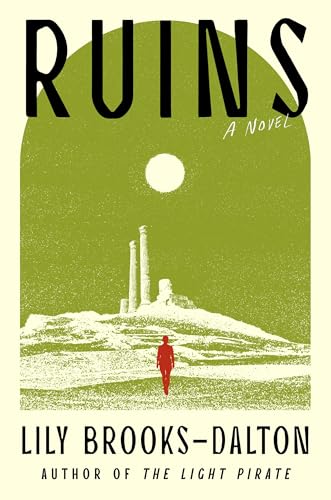
Ruins
What if everything we believed about the origins of civilisation was wrong?
Professor Ember Agni is an ambitious archaeologist whose career has stalled and whose marriage is quietly falling apart. For years, she has pursued evidence of a lost civilisation that the academic world refuses to acknowledge. Just as she begins to abandon her quest, a message arrives from a former student overseas: he may have discovered an extraordinary artefact that could rewrite humanity’s history.
Determined to uncover the truth, Ember risks her reputation and personal life to embark on an expedition into a remote wilderness. But the deeper she ventures into the past, the more complicated her discoveries become. The civilisation she seeks may hold secrets that challenge not only established history, but also the beliefs on which her own world is built.
Blending archaeological mystery, speculative fiction, and adventure, Ruins explores how societies construct their histories—and what happens when the stories we inherit begin to crumble. As Ember searches for the remnants of a forgotten world, she must confront the ruins of her own life and decide what truths are worth sacrificing everything to uncover.
United States
2026
2
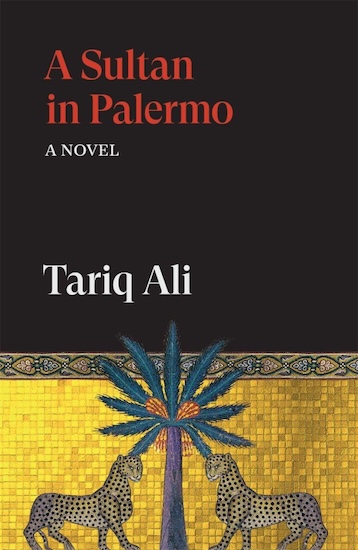
A Sultan in Palermo (The Islam Quintet)
Set in Sicily in 1153, A Sultan in Palermo explores a fascinating period when Norman rulers governed an island deeply shaped by Arab and Muslim culture. Palermo is a flourishing centre of learning, where Arabic language and intellectual traditions remain influential despite the political dominance of Christian rulers. At the heart of the novel is Muhammad al-Idrisi, a celebrated Muslim cartographer and scholar, who serves King Roger II of Sicily, known to his Muslim subjects as Sultan Rujari.
As Idrisi navigates his friendship with the ageing ruler, he becomes increasingly torn between loyalty to the royal court and solidarity with fellow Muslims who are resisting Norman rule or preparing to leave the island. Surrounded by political intrigue, religious tensions, and personal desires, he must confront the moral compromises of life under an increasingly unstable regime. Blending historical figures with imaginative storytelling, Tariq Ali explores cultural coexistence, the struggle for power, and the fragile relationship between political authority and personal conscience. The novel is the fourth book in Ali’s Islam Quintet.
Italy
2026
3
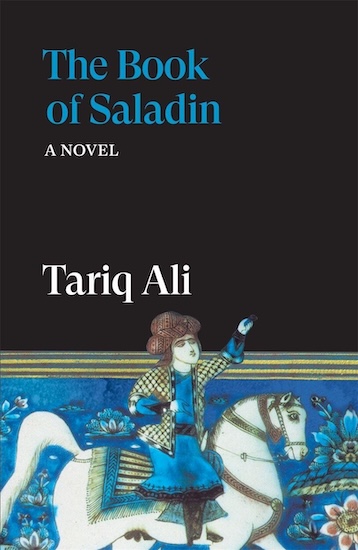
The Book of Saladin (The Islam Quintet)
Set in the twelfth century, The Book of Saladin reimagines the life of Salah al-Din, better known as Saladin, the Kurdish Muslim ruler who united Egypt and Syria and recaptured Jerusalem from the Crusaders in 1187.
The novel takes the form of Saladin’s fictional memoir, dictated to Ibn Yakub, a Jewish scribe tasked with recording the Sultan’s life and achievements. To create a fuller portrait of his subject, Ibn Yakub interviews Saladin’s wives, servants, and companions, revealing the private relationships and personal ambitions behind the public image of a celebrated military leader.
As Saladin rises to power and prepares to reclaim Jerusalem, the narrative explores the political rivalries, religious tensions, and fragile alliances that shape his world. Alongside military campaigns and diplomatic intrigue, the novel delves into the intimate lives of the royal household, including a passionate relationship between Saladin’s favoured wife, Jamila, and another woman in the harem, Halima.
Ali presents a complex portrait of medieval Muslim society, challenging simplified accounts of the Crusades and exploring the contradictions between political ideals and personal desires. Questions of faith, power, loyalty, sexuality, and cultural coexistence run throughout the story, connecting the struggles of the medieval world with conflicts that continue to resonate today.
Egypt
Palestine
Syria
2026
4
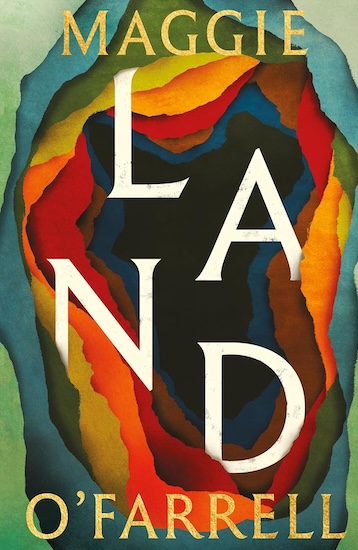
Land
Ireland, 1865. On a windswept peninsula overlooking the Atlantic, Tomás and his ten-year-old son, Liam, work on the ambitious Ordnance Survey project to map the entire country. Still haunted by the devastating Great Hunger, Tomás is determined that his maps will preserve a record of the tragedy that transformed Ireland. But when an unsettling encounter in an ancient woodland disrupts his work and changes his behaviour, Liam finds himself struggling to understand his father while facing the daunting task of completing their mission.
As their family’s story unfolds, buried secrets, lingering ghosts, and the enduring power of the Irish landscape reveal how the past continues to shape the present. Spanning generations and exploring the consequences of colonisation, famine, and displacement, Land is a sweeping historical novel about survival, family, and the profound connections between people and the places they call home. Maggie O’Farrell weaves Irish history with folklore and intimate human drama, creating a meditation on memory, belonging, and the ways landscapes preserve stories that history cannot erase.
Ireland
2026
5
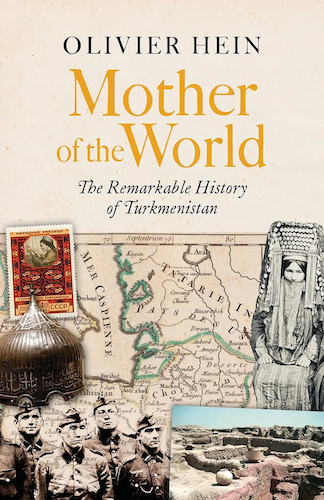
Mother of the World
Often overlooked in accounts of world history, Turkmenistan occupies a remarkable position at the crossroads of civilisations, empires, and religions. In Mother of the World, Olivier Hein brings this fascinating Central Asian country into focus, revealing how its desert landscapes and ancient cities have shaped events far beyond its borders. From the archaeological mysteries of early civilisations to the flourishing Silk Road metropolis of Merv, once among the world’s greatest centres of learning, Hein traces the region’s transformation through centuries of conquest, cultural exchange, and political upheaval. He explores the rise of the Turkmen people, the devastating Mongol invasions, the expansion of the Russian Empire, and the country’s incorporation into the Soviet Union before its emergence as an independent state in 1991. Drawing on historical research and his own experience as a diplomat stationed in Turkmenistan, Hein challenges the perception of the country as an isolated and marginal place. The result is an engaging portrait of a nation whose extraordinary past reveals the interconnectedness of human civilisation.
Turkmenistan
2026
6
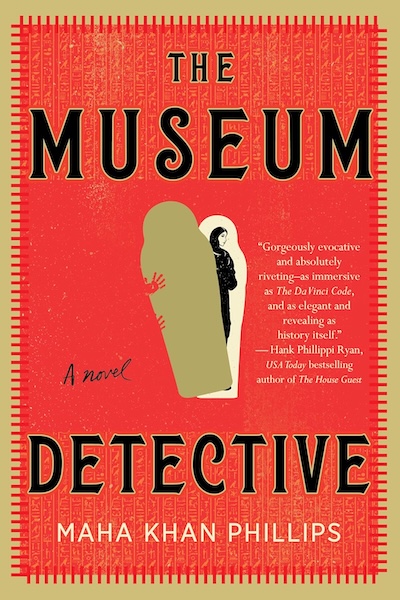
The Museum Detective
A mysterious mummy discovered in a remote Pakistani desert could rewrite history. But the closer archaeologist Gul Delani gets to the truth, the more dangerous her investigation becomes.
Gul is a respected museum curator and one of Pakistan’s leading experts on ancient civilisations. For three years, she has also been haunted by the disappearance of her teenage niece, Mahnaz. When police summon Gul to examine a seemingly authentic mummy discovered during a drug raid, she hopes the unexpected assignment will offer a welcome distraction. Instead, the extraordinary artefact—with symbols linking it to the ancient Persian city of Persepolis—draws her into a world of antiquities smuggling, corruption, and powerful hidden interests.
As the mummy disappears and threats close in, Gul begins to suspect that the archaeological mystery and her niece’s disappearance may be connected. Determined to uncover the truth, she must navigate Karachi’s criminal underworld while confronting painful questions about her own family.
Blending archaeological intrigue with a gripping modern-day mystery, The Museum Detective explores the connections between history, power, and justice—and the lengths one woman will go to uncover what others want buried. Inspired by a real-life antiquities scandal in Pakistan, it launches a crime series featuring a compelling heroine.
Pakistan
2025
7
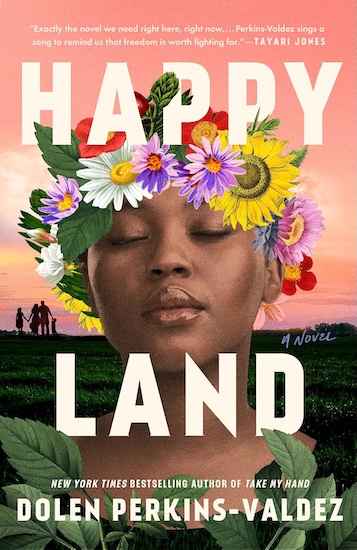
Happy Land
In Happy Land, Dolen Perkins-Valdez uncovers a remarkable chapter of African American history through the story of a family whose identity is deeply rooted in the legacy of a forgotten kingdom.
Nikki Berry has been estranged from her grandmother, Mother Rita, for years. When her grandmother unexpectedly summons her to the mountains of western North Carolina, Nikki hopes to understand the family conflict that has separated generations. Instead, she discovers a story that transforms her understanding of her ancestry: her great-great-great-grandmother, Luella, was the queen of the Kingdom of the Happy Land, a real community established by formerly enslaved people after the American Civil War.
As Nikki learns more about the kingdom and the lives of those who built it, she discovers how her ancestors created a place of independence and belonging in a society that continued to deny Black Americans equality. But the family’s connection to the land faces a new threat when outside interests seek to take it away. Nikki must confront both the secrets that have shaped her family and the responsibility of protecting its inheritance.
Moving between Nikki’s present-day struggles and Luella’s nineteenth-century experiences, Perkins-Valdez weaves together two generations of women whose lives are shaped by the pursuit of freedom, dignity, and self-determination. The novel explores the importance of ancestral memory, the lasting consequences of racial injustice, and the deep connection between land and identity.
Inspired by the historical Kingdom of the Happy Land, the novel celebrates the courage of people who dared to imagine a different future and asks what it means to preserve a legacy for generations to come.
United States
2025
8
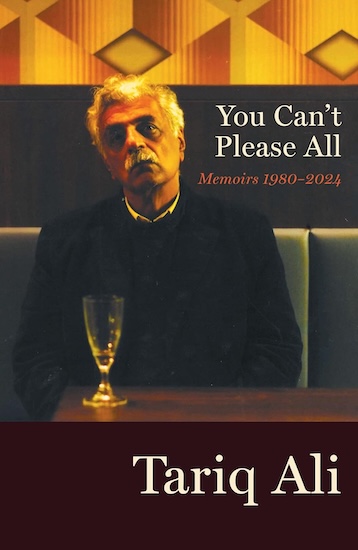
You Can’t Please All
In You Can’t Please All, Tariq Ali reflects on more than four decades of political activism, intellectual debate, and cultural life, continuing the story begun in his earlier memoir, Street Fighting Years. Moving between continents and pivotal historical moments, Ali recounts witnessing the collapse of the Soviet Union, meeting political figures such as Hugo Chávez, and campaigning against the wars in Iraq and Afghanistan as a prominent critic of Western foreign policy.
Combining personal recollections, political commentary, anecdotes, and reflections on literature, theatre, and film, the memoir also offers intimate portraits of influential writers, activists, and friends, including Edward Said and Benazir Bhutto. Ali explores the relationship between personal convictions and public life, tracing the changing fortunes of the political left from the aftermath of the revolutionary movements of the 1960s to the conflicts and ideological struggles of the twenty-first century. The book also looks back at his family’s experiences in the early years of Pakistan, connecting his personal history with the broader political forces that shaped his life.
Pakistan
United Kingdom
2024
9
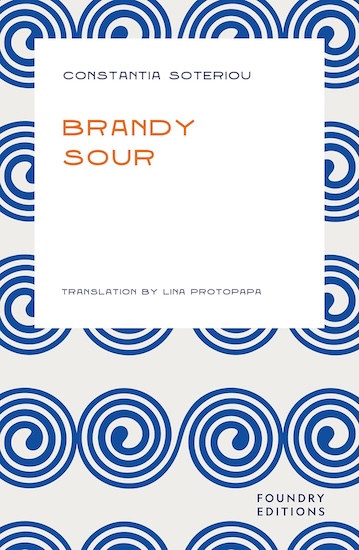
Brandy Sour
Set in Cyprus during the twentieth century, Brandy Sour explores the island’s turbulent history through the lives of people connected to the iconic Ledra Palace Hotel in Nicosia. Built in the 1950s as a symbol of a modern, independent Cyprus, the hotel becomes a meeting place for people whose personal stories reflect the island’s political upheavals, cultural divisions, and uncertain future.
Through a series of interconnected vignettes, Soteriou introduces a diverse cast of characters, including King Farouk of Egypt, a hotel porter who secretly cultivates roses from his village, a United Nations officer struggling with the heat and political deception, and a housekeeper who carries holy water wherever she goes. Each character has a distinct relationship with the hotel and the world beyond its walls, revealing how history shapes even the most ordinary aspects of daily life.
Food, drinks, memories, and personal rituals become powerful symbols of cultural identity and belonging. As political tensions deepen between Greek Cypriots and Turkish Cypriots, the hotel stands as a witness to the hopes, disappointments, and divisions that have shaped the island.
Written in a fragmented, evocative style, Brandy Sour transforms the history of Cyprus into an intimate portrait of ordinary people caught in extraordinary circumstances. The novel explores how collective memory is preserved through individual lives, and how a country’s past continues to influence its present. The book won Cyprus’s National Book Prize in 2023.
Cyprus
2024
10
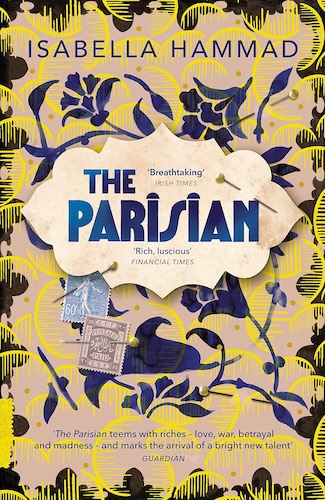
The Parisian
A young Palestinian man leaves home to study in France, believing the world is full of possibilities. But as war reshapes Europe and colonial rule transforms his homeland, Midhat Kamal discovers that belonging is far more complicated than he imagined. Beginning in 1914, this sweeping historical novel follows Midhat from the salons of Montpellier and Paris to Nablus, where British rule and rising nationalist movements challenge everything he thought he knew. Torn between cultures, romantic ideals, and conflicting loyalties, he must find his place in a world on the brink of transformation. Rich in historical detail and intimate human drama, The Parisian explores how personal lives become entangled with the making of nations—and how the past continues to shape the present.
Palestine
2019
11
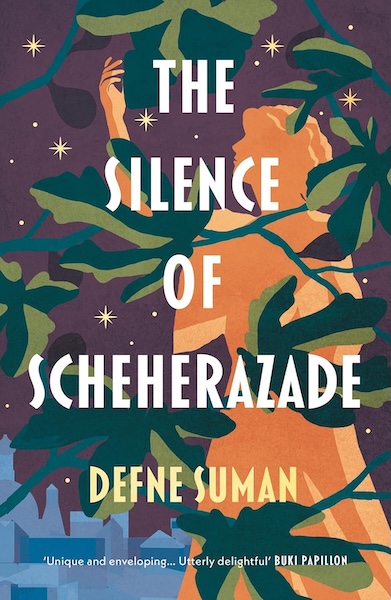
The Silence of Scheherazade
In September 1905, in the cosmopolitan Ottoman port city of Smyrna, a girl named Scheherazade is born as an Indian spy arrives with a secret mission for the British Empire. Their stories unfold alongside those of four families—a Levantine, a Greek, a Turkish, and an Armenian—whose lives are bound together by love, ambition, and the city’s extraordinary cultural diversity.
Over the following seventeen years, the families navigate political upheaval, shifting loyalties, forbidden relationships, and the growing tensions surrounding the decline of the Ottoman Empire. As war transforms the region, the world they know begins to crumble, culminating in the devastating fire that engulfs Smyrna in 1922.
Rich in historical detail and intimate human drama, The Silence of Scheherazade resurrects a lost multicultural world and gives voice to the people caught between competing nationalisms. It is a story of love, displacement, and the silences that history leaves behind.
Türkiye
2016
12
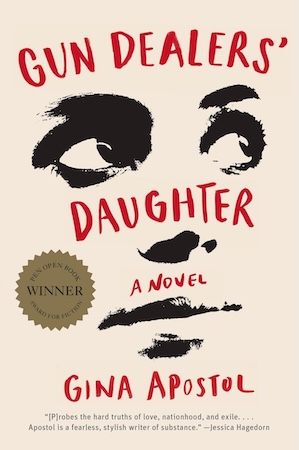
Gun Dealers’ Daughter
A privileged young woman. A revolutionary lover. A past she cannot fully remember.
Growing up in a wealthy family in the Philippines under Ferdinand Marcos’s authoritarian rule, Soledad “Sol” Soliman has lived a sheltered life, far removed from her country’s poverty and political turmoil. But when she enters university in Manila, she falls in with radical student activists and becomes involved in a revolutionary movement. Torn between romantic desire and political conviction, Sol is drawn into a conspiracy with devastating consequences. Years later, living far from home, she attempts to reconstruct her fractured memories and confront the act that continues to haunt her. Blending psychological suspense with political history, Gina Apostol’s award-winning novel explores privilege, rebellion, and the uneasy relationship between personal memory and national history.
Philippines
2013
About this theme
- Books
- 13
- Countries
- 13