Family & Heritage
Sagas of lineage, tradition, and the ties that bind generations.
All countries
Afghanistan
Argentina
Armenia
Australia
Bosnia and Herzegovina
Botswana
Brazil
Canada
Central African Republic
Chile
China
Colombia
Croatia
Cuba
Djibouti
Dominican Republic
Egypt
Ethiopia
France
Georgia
Germany
Hungary
India
Iran
Iraq
Ireland
Italy
Japan
Lebanon
Libya
Mexico
Netherlands
Nigeria
Norway
Oman
Pakistan
Palestine
Poland
Russia
Singapore
South Africa
South Korea
Sweden
Switzerland
Taiwan
Türkiye
United Kingdom
United States
Zambia
1
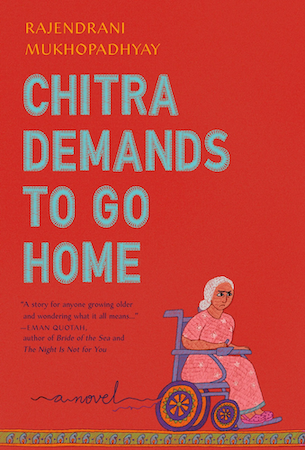
Chitra Demands to Go Home
Seventy-five-year-old Chitra is a Bengali widow who has spent much of her life caring for her family and maintaining a beloved home in Kolkata. Now, with her children grown and living their own lives, she looks forward to enjoying her independence and travelling the world. But her plans collapse when she suffers a stroke while visiting her younger son in the United States. After her son also experiences a medical emergency, Chitra finds herself in Tranquil Town, an assisted-living facility in Columbus, Ohio, surrounded by strangers and unfamiliar customs. Determined to return to India, she refuses to accept her new circumstances and relentlessly pressures her sons to take her home. Yet beneath her stubbornness lies a deeper struggle with displacement, ageing, and the loss of control over her own life. With warmth, humour, and emotional insight, Rajendrani Mukhopadhyay explores the complexities of intergenerational relationships, cultural differences, and the meaning of home. Chitra’s story challenges familiar expectations about ageing and family duty, offering a compassionate portrait of a woman determined to live on her own terms.
India
2026
2
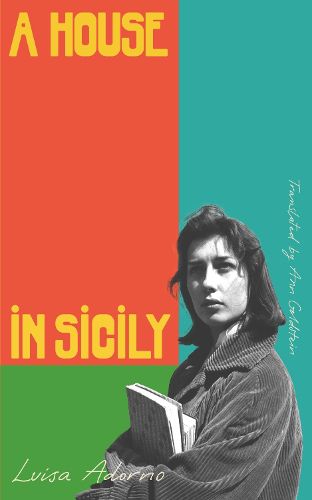
A House in Sicily
Set in postwar Japan in 1959, Twilight in Musashino begins with the discovery of a young Japanese flight attendant strangled on the icy banks of a river. As Detective Fujisawa investigates the murder, his attention turns to a foreign priest and the Guglielmo Church, a charitable Christian mission with an unsettling connection to the victim. What initially appears to be a straightforward criminal investigation gradually reveals a tangled web involving narcotics, postwar relief operations, and international diplomacy. The deeper Fujisawa digs, the more he encounters powerful institutions determined to protect their reputations and conceal uncomfortable truths. Blending meticulous police work with an incisive examination of social power, Seicho Matsumoto constructs a slow-burning mystery in which the pursuit of justice collides with political influence and institutional silence. The novel offers a compelling portrait of a society negotiating its identity in the aftermath of war, exposing the tensions between public morality and private corruption.
Italy
2026
3

My Third Life
Linda once had a life filled with work, family, friendships, and familiar routines. But after the devastating death of her seventeen-year-old daughter, Sonja, and her own cancer diagnosis, everything she once relied on begins to fall apart. Leaving her husband, Richard, and her life in Leipzig behind, Linda retreats to an old farmhouse in the Saxon countryside, where she attempts to live quietly, far removed from the world and its expectations. Her days revolve around tending the garden and caring for the house, but solitude cannot entirely protect her from grief. An unexpected connection with her neighbour, Natascha, and Natascha’s spirited young daughter, Nine, gradually opens a door to renewed human connection. With restrained, perceptive prose, Daniela Krien explores bereavement, motherhood, resilience, and the possibility of beginning again after profound loss. My Third Life is a moving reflection on how life can change irrevocably while still leaving room for hope.
Germany
2026
4
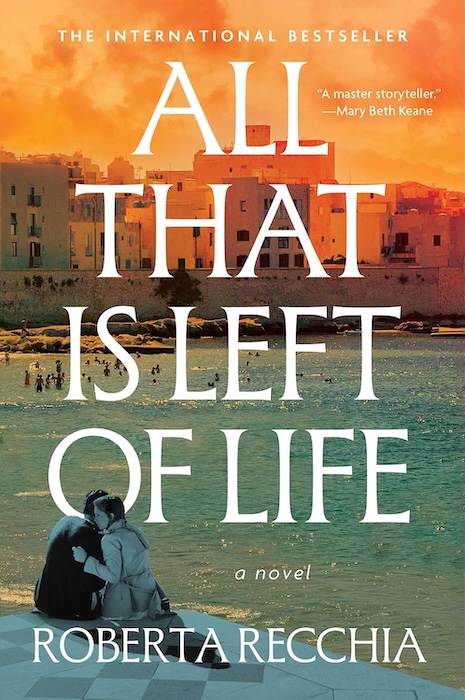
All That Is Left of Life
Three generations of the Ansaldo family grapple with the aftermath of a tragic murder in this sweeping, cinematic debut set in 1980s Rome, for fans of Elena Ferrante and Liz Moore.
It’s a sultry August night when sixteen-year-old Betta Ansaldo convinces her cousin Miriam to sneak out to the local beach for a party. Only Miriam returns. Traumatized by the violence she’s witnessed, she remains silent. The small community is riven with grief, none more so than the Ansaldos, who search for answers they cannot find. Who did Betta cross paths with on that fateful night? What was she doing there? And how could such a horrific crime happen in such a peaceful place?
As the years pass, and Betta’s murder goes unsolved, the Ansaldo family fractures under the weight of their loss. When Miriam meets Leo, a sweet-natured young man with a dark past, their romance seems to turn her life around. But when Leo starts to pull loose the threads of Betta’s story, determined to find out what really happened, his search for the truth risks unraveling everything.
Italy
2026
5

Favorita
When Fila receives a mysterious phone call informing her that her estranged mother, Magdalena, has been murdered, she must confront a family history she has spent years trying to escape. Raised by her grandmother in Switzerland, Fila has barely seen her mother since Magdalena scandalised the family by advertising her brothel in a newspaper. Now, carrying her mother’s ashes, Fila travels to Italy to retrace Magdalena’s turbulent life and discover the truth about her death.
Her journey becomes a surreal, feverish odyssey populated by feminist revolutionaries, ghosts, fascist deserters, and forgotten victims of violence. As Fila investigates her mother’s past, she uncovers a wider history of patriarchal oppression and violence against women.
Blending magical realism, dark humour, historical fiction, and feminist revenge, Favorita explores the complicated inheritance between mothers and daughters, the persistence of trauma across generations, and the struggle to reclaim women’s stories from the forces that seek to silence them.
Switzerland
2026
6
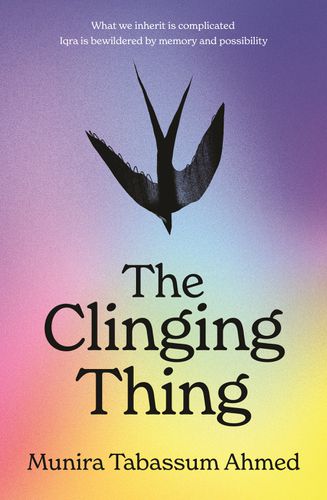
The Clinging Thing
After the loss of a pregnancy, Iqra returns to her mother’s home in the place where she grew up, seeking a way forward while struggling with grief and the weight of memory. As she revisits the stories of her parents and the generations of women who came before her, the boundaries between past and present begin to blur. Memories, dreams, and uncertainties intertwine as Iqra confronts the complicated ties that bind families together.
Set within a Bangladeshi-Australian cultural context, The Clinging Thing explores motherhood, inherited expectations, faith, and the obligations we feel toward those who shaped our lives. Through Iqra’s return to her roots, Munira Tabassum Ahmed examines the tension between honouring family history and finding the freedom to define one’s own future. Poetic and introspective, the novel reflects on grief, intergenerational relationships, and the possibility of discovering wonder even when the future remains uncertain.
Australia
2026
7
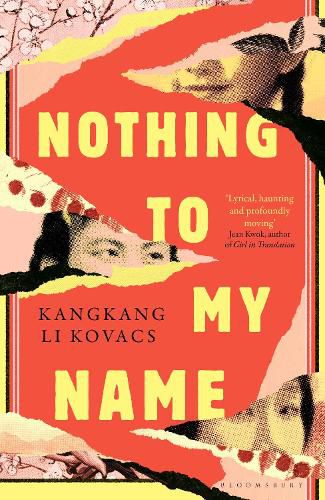
Nothing to My Name
Nothing to My Name is a multigenerational family saga following three Chinese women whose lives are shaped by political upheaval, social expectations, and the enduring bonds between mothers and daughters. Inspired by the author’s family history, the novel spans four decades of modern Chinese history, from the Communist Revolution to the aftermath of the 1989 Tiananmen Square protests.
In 1948, twelve-year-old Ah Xue grows up in a small fishing village in Zhoushan, where her mother earns a modest living combing the hair of wealthy women. As the civil war approaches, their already precarious existence becomes increasingly uncertain. Her daughter, Mimosa, later comes of age during the Cultural Revolution, when political tensions threaten to tear her family apart. In the next generation, Fei struggles with questions of gender identity under the influence of her activist father, whose expectations are shaped by China’s turbulent recent history.
Through these intertwined stories, Kovacs explores the lasting effects of trauma, the sacrifices women make to protect their families, and the ways history echoes across generations. The novel is a portrait of resilience, identity, and the complicated love that binds families together despite profound change.
China
2026
8
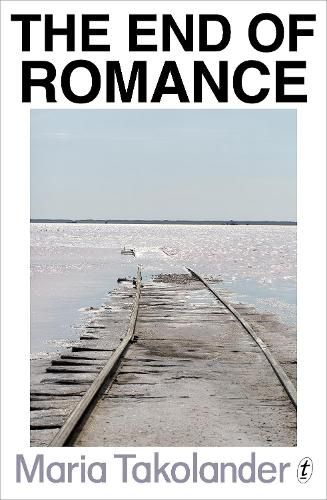
The End of Romance
Set in a dystopian future devastated by environmental collapse, The End of Romance follows a mother and her son as they struggle to survive in a world where nature has become hostile and human society is crumbling. Thorn-bearing plants dominate the landscape, toxic fogs make life increasingly dangerous, and communities face relentless hardship. While some people attempt to survive independently, others remain trapped within increasingly authoritarian systems.
The woman’s son attends a military school, like all boys his age. When he reaches sixteen, he will be sent to a distant planet known as the Promised Land to fight in a colonising war presented as humanity’s only hope for survival. Determined to protect her child, his mother begins questioning the world she has accepted. Her encounter with a mysterious young man who has somehow escaped conscription offers a possible route to sanctuary.
Combining dystopian fiction with unsettling social commentary, Takolander explores motherhood, sacrifice, environmental destruction, and the myths societies create to justify violence. The novel asks what it means to remain human when survival demands extraordinary moral compromises.
Australia
2026
9
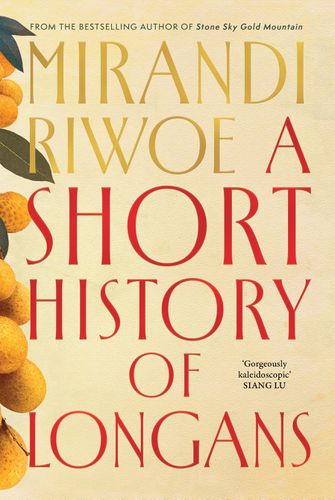
A Short History of Longans
Spanning nearly two centuries, A Short History of Longans traces the intertwined lives of four generations of an Irish-Chinese family in Australia, exploring how ancestry, memory, and historical upheaval shape a sense of belonging.
The story opens in Queensland in 2049, where Daniel, an elderly and reclusive artist, faces the destruction of his beloved longan tree after a devastating storm. When a young reporter arrives seeking answers about a troubling event in his past, Daniel’s carefully guarded life begins to unravel. The narrative then travels backwards through time, revealing the experiences of his aunt Wendy, who struggles with early-onset dementia, and Ruby Wong, a Chinese Australian actress pursuing her ambitions in 1940s Los Angeles. Finally, the novel reaches the nineteenth century, where an Irish orphan named Maria Lyons falls in love with Ah Yang, a Chinese man whose life will shape the family’s future.
Through these interconnected stories, Riwoe examines migration, racial prejudice, family secrets, and the ways identity is passed down through generations. The longan tree becomes a symbol of heritage and continuity, connecting people to the places and histories that make them who they are.
Australia
2026
10
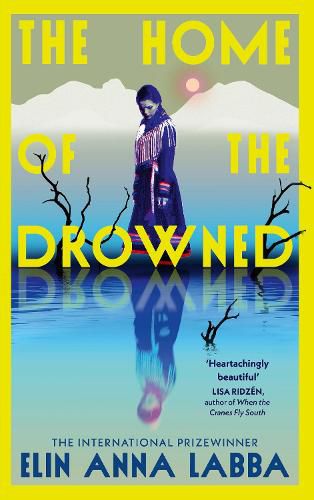
The Home of the Drowned
The Home of the Drowned tells the story of a Sámi family whose traditional way of life is threatened when a hydroelectric dam floods their ancestral settlement in northern Sweden. When thirteen-year-old Iŋgá, her mother Rávdná, and her aunt Ánne return to their summer village, they discover that their home and belongings have disappeared beneath the water.
Spanning four decades, from 1942 to 1982, the novel follows three generations of Sámi women as they confront displacement, discrimination, and the gradual destruction of their cultural heritage. Rávdná refuses to accept the loss of her home and fights to rebuild what has been taken from her, while Iŋgá longs for the freedom to live like other young people. Their conflicting responses reveal the painful tension between preserving tradition and adapting to a changing world.
Drawing on Sámi history and the consequences of colonial policies, Elin Anna Labba explores the profound connections between land, memory, identity, and belonging. The novel is a moving reflection on what makes a place a home and what happens when that home is taken away.
Sweden
2026
11
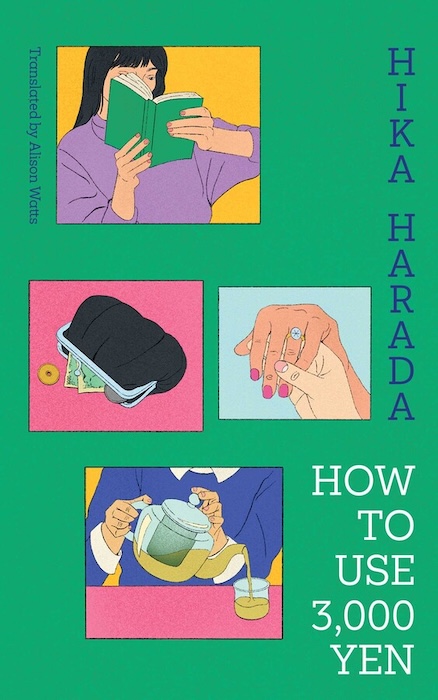
How To Use 3,000 Yen
How to Use 3,000 Yen follows three generations of women in the Mikuriya family as they navigate the financial and emotional challenges of everyday life. At the heart of the story is Miho, a young woman beginning her independent life and learning to manage her money. Her experiences connect with those of her older sister, Maho, their mother, Tomoko, and their grandmother, Kotoko, each of whom faces different questions about financial security, family responsibilities, and the future.
For the women of the Mikuriya family, money is more than a practical concern: it reflects their hopes, fears, relationships, and ideas about happiness. As they encounter unexpected expenses and major life changes, each must reconsider what it means to save wisely and live well.
With warmth and gentle humor, Hika Harada explores the relationship between money and personal freedom, showing how financial decisions shape the lives of women across generations. The novel offers a thoughtful portrait of contemporary Japanese society, where economic pressures intersect with family expectations and the desire for independence.
Japan
2026
12
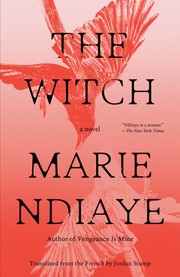
The Witch
In The Witch, Marie NDiaye tells the story of Lucie, a woman who discovers that she possesses magical powers inherited from her mother. Living in a seemingly ordinary French suburb, Lucie struggles to pass her knowledge of witchcraft on to her twin daughters while navigating an unhappy marriage and an increasingly unstable family life. As her daughters begin to develop their own powers and assert their independence, Lucie’s sense of control over her family and identity begins to unravel. Blending dark humor, psychological tension, and elements of the supernatural, NDiaye explores motherhood, female power, and the complexities of family relationships. The novel offers a subtle, unsettling examination of the desire to control others and the difficulty of understanding those closest to us.
France
2026
About this theme
- Books
- 105
- Countries
- 49
Countries with this theme
Afghanistan
Asia
Argentina
South America
Armenia
Asia
Australia
Oceania
Bosnia and Herzegovina
Europe
Botswana
Africa
Brazil
South America
Canada
North America
Central African Republic
Africa
Chile
South America
China
Asia
Colombia
South America
Croatia
Europe
Cuba
North America
Djibouti
Africa
Dominican Republic
North America
Egypt
Africa
Ethiopia
Africa
France
Europe
Georgia
Asia
Germany
Europe
Hungary
Europe
India
Asia
Iran
Asia
Iraq
Asia
Ireland
Europe
Italy
Europe
Japan
Asia
Lebanon
Asia
Libya
Africa
Mexico
North America
Netherlands
Europe
Nigeria
Africa
Norway
Europe
Oman
Asia
Pakistan
Asia
Palestine
Asia
Poland
Europe
Russia
Europe
Singapore
Asia
South Africa
Africa
South Korea
Asia
Sweden
Europe
Switzerland
Europe
Taiwan
Asia
Türkiye
Asia
United Kingdom
Europe
United States
North America
Zambia
Africa