Poetry
All countries
Austria
Azerbaijan
Bosnia and Herzegovina
Djibouti
El Salvador
India
Lebanon
Morocco
Pakistan
Palestine
Portugal
Russia
Sweden
Uzbekistan
1
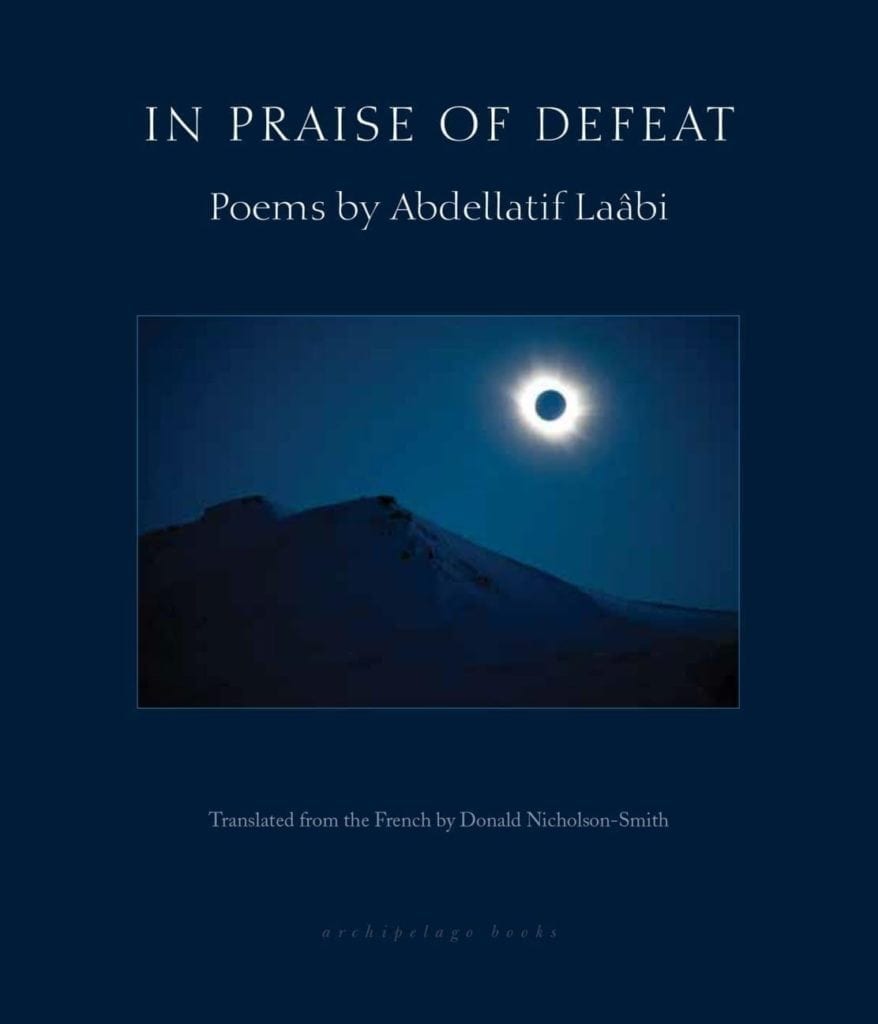
In Praise of Defeat
Spanning six decades of writing, In Praise of Defeat is a powerful collection tracing the evolution of one of Morocco’s most important contemporary poets. Through poems shaped by political imprisonment, exile, love, and the struggle for human dignity, Abdellatif Laâbi confronts the brutality of authoritarian power while insisting on the possibility of hope. His early works carry the urgency of protest, bearing witness to censorship, torture, and the silencing of dissent. Later poems become more intimate and reflective, exploring tenderness, family, spirituality, and the fragile beauty of everyday existence. Yet resistance remains at the heart of his work: for Laâbi, poetry is not an escape from reality but a way of confronting it without surrendering one’s humanity. Moving between anguish and joy, political defiance and personal vulnerability, these poems celebrate the courage to continue creating even in the face of defeat. The collection ultimately suggests that failure need not mean surrender—and that preserving one’s capacity to love, imagine, and speak freely is itself a form of victory.
Morocco
2017
2
The Rule of Barbarism
Written during his imprisonment for political dissent in Morocco, The Rule of Barbarism is a searing poetic confrontation with oppression, cruelty, and the violence embedded in human society. First published in 1976, this landmark work captures the consciousness of a society trapped between its colonial past and the brutal realities of dictatorship. Through urgent, often unsettling poetry, Abdellatif Laâbi explores the psychological and moral consequences of living under authoritarian power, where fear threatens to destroy both individual freedom and collective hope. Yet his vision extends beyond political condemnation. Laâbi also examines the capacity for barbarism within every human being, questioning how victims of cruelty might resist becoming perpetrators themselves. Anger, despair, tenderness, and compassion coexist throughout the collection, creating a powerful meditation on the struggle to preserve humanity in inhuman conditions. Written from the experience of imprisonment, The Rule of Barbarism transforms personal suffering into a universal appeal for justice, empathy, and liberation.
Morocco
2012