Memoir
All countries
Afghanistan
Albania
Algeria
Azerbaijan
Bhutan
Bosnia and Herzegovina
Botswana
Cambodia
China
Congo, Democratic Republic
Cuba
Cyprus
Egypt
El Salvador
Finland
France
Germany
Ghana
India
Iran
Ireland
Jamaica
Japan
Libya
Malta
Morocco
Pakistan
Palestine
Russia
Rwanda
Taiwan
Tanzania
Türkiye
United Kingdom
United States
Yemen
Zambia
1
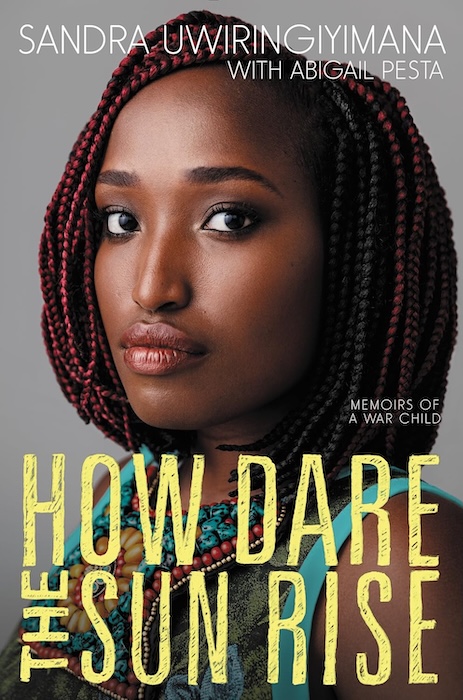
How Dare the Sun Rise
How Dare the Sun Rise is the powerful memoir of Sandra Uwiringiyimana, who recounts her childhood as a member of the Banyamulenge, a persecuted ethnic minority in the Democratic Republic of the Congo. When Sandra was ten years old, her family was living in a refugee camp in Burundi after fleeing violence in their homeland. In 2004, the camp was attacked by armed assailants, and Sandra witnessed the deaths of her mother and six-year-old sister. She narrowly escaped with her own life.
After the massacre, Sandra and her surviving family members eventually resettled in the United States, hoping to find safety and a fresh start. However, adjusting to a new country brought its own challenges, including racism, isolation, and the struggle to find a sense of belonging.
Co-written with journalist Abigail Pesta, this memoir explores trauma, displacement, identity, and resilience. Through her journey from a war-torn childhood to becoming an advocate for refugees and human rights, Sandra reflects on the power of storytelling to confront injustice and reclaim one’s voice.
Congo, Democratic Republic
2017
2
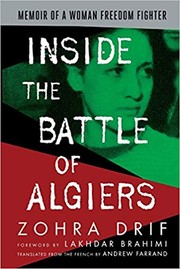
Inside the Battle of Algiers
In this memoir, Algerian revolutionary Zohra Drif recounts her experiences during Algeria’s struggle for independence from French colonial rule in the 1950s and early 1960s. A young woman studying law in Algiers, Drif joins the National Liberation Front (FLN) and becomes involved in its armed resistance alongside other women who challenge both colonial authority and traditional expectations of women’s roles in society.
Through personal recollections, she describes the political tensions, underground operations, arrests, and difficult choices that shaped the independence movement. Her account also explores the place of women in revolutionary struggle and the moral complexities of political violence. Offering a firsthand perspective on one of the defining conflicts of modern Algerian history, the memoir examines the sacrifices, convictions, and contradictions involved in fighting for national liberation.
Algeria
2017
3
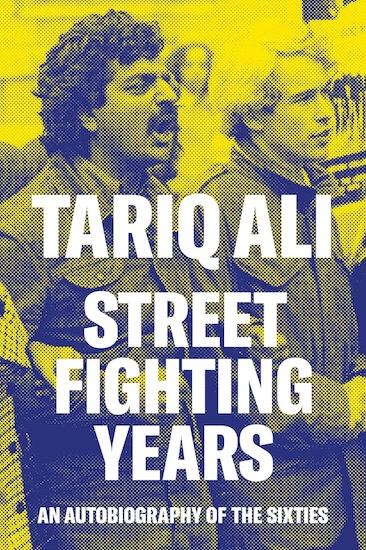
Street Fighting Years
In Street Fighting Years, Tariq Ali recounts his transformation from a young Pakistani student into one of the most prominent radical activists of the 1960s. Moving between London, Paris, Prague, Hanoi, and other centres of political upheaval, Ali offers a personal account of a decade defined by student revolts, anti-war demonstrations, revolutionary movements, and challenges to established political authority.
Through his encounters with figures such as Malcolm X, Bertrand Russell, Che Guevara, and Mick Jagger, Ali captures the energy and contradictions of a generation determined to reshape society. He reflects on the Vietnam War, the suppression of the Prague Spring, the rise of the international protest movement, and the growing opposition to Western imperialism. Blending autobiography with political history, the book explores the hopes, disagreements, and disappointments of activists who believed that collective action could transform the world. It is both a portrait of a turbulent era and a reflection on the personal costs of political commitment.
Pakistan
United Kingdom
2018
4
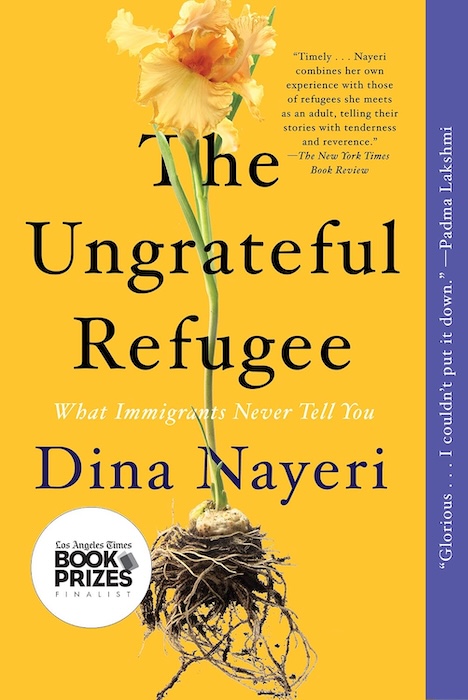
The Ungrateful Refugee
In The Ungrateful Refugee, Iranian-born writer Dina Nayeri combines her own story of displacement with the experiences of refugees and asylum seekers navigating unfamiliar countries and complicated immigration systems. At the age of eight, Nayeri fled Iran with her mother and brother after her mother converted to Christianity and faced persecution. The family spent time in a refugee camp in Italy before eventually receiving asylum in the United States.
Drawing on these experiences, Nayeri examines the emotional and psychological costs of leaving one’s homeland, rebuilding a life, and trying to belong in a new society. She also shares the stories of other displaced people, revealing the difficult choices they face when seeking protection and the pressure to prove that their suffering is genuine.
At the heart of the book is a challenge to the expectation that refugees must demonstrate constant gratitude to the countries that accept them. Nayeri questions the idea of the “good refugee” who assimilates without complaint, arguing that displaced people should not have to erase their identities or experiences to deserve safety and dignity.
Iran
2019
5
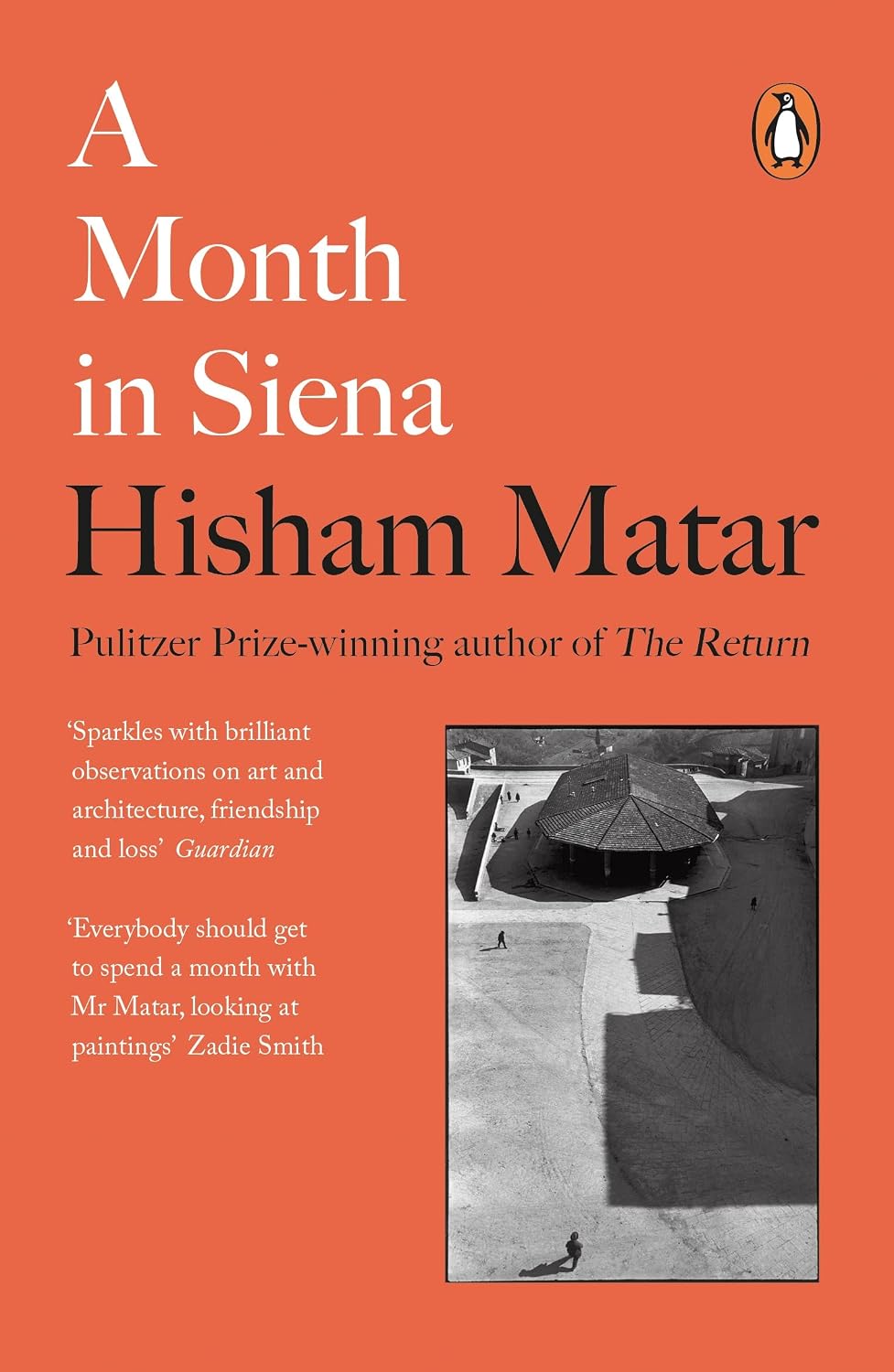
Month in Siena
A Month in Siena is a reflective memoir in which Hisham Matar explores the relationship between art, memory, and personal grief during a month spent in the Italian city of Siena. Drawn to the city’s extraordinary collection of Sienese paintings, Matar immerses himself in the works of medieval and Renaissance artists, seeking solace and understanding through their depictions of human suffering, devotion, and beauty. His observations become intertwined with reflections on his Libyan heritage, his father’s disappearance, and the emotional consequences of years spent searching for answers. Moving between the art galleries of Siena and memories of his own life, Matar considers how art can offer a form of companionship and provide a language for experiences that are otherwise difficult to express. Rather than presenting art history as a purely intellectual pursuit, he approaches painting as an intimate encounter capable of changing how we see ourselves and others. The book is a meditation on loss, exile, faith, and the quiet possibilities of healing through beauty and contemplation.
Libya
2019
6
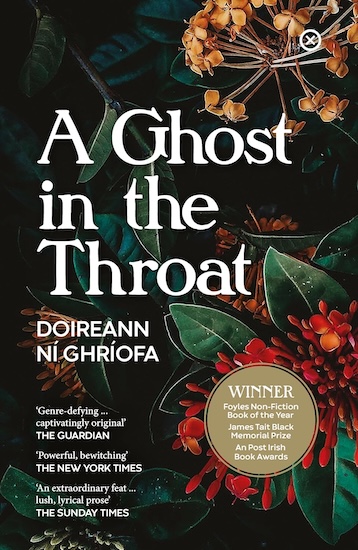
A Ghost in the Throat
When contemporary Irish poet Doireann Ní Ghríofa discovers the extraordinary work of eighteenth-century poet Eibhlín Dubh Ní Chonaill, she becomes captivated by the woman’s life and the grief that inspired her most famous poem. After discovering her husband’s murdered body, Eibhlín drank his blood and composed a devastating lament that would survive for centuries. Determined to recover the details of a life that history has largely erased, Ní Ghríofa embarks on a literary investigation that becomes deeply intertwined with her own experiences of pregnancy, motherhood, and domestic life. Moving between past and present, A Ghost in the Throat blends memoir, literary criticism, and historical research to explore female creativity, the silencing of women’s voices, and the intimate connections that can form between women separated by centuries. It is a lyrical meditation on grief, desire, motherhood, and the transformative power of discovering another woman’s story.
Ireland
2020
7
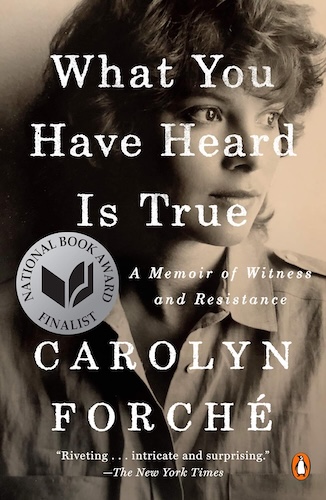
What You Have Heard Is True
In 1970s El Salvador, a young American poet is drawn into a country on the brink of civil war. When the enigmatic Leonel Gómez Vides invites twenty-seven-year-old Carolyn Forché to witness his homeland, she encounters military repression, impoverished communities, courageous clergy, and people risking their lives to resist injustice. As violence escalates and death squads hunt their opponents, Forché’s journey becomes a profound political and personal awakening. Part memoir, part testimony, this lyrical account explores the moral responsibility of bearing witness—and how confronting human suffering can transform the way we see the world. A finalist for the 2019 National Book Award, it is a powerful reflection on empathy, resistance, and the courage to speak when silence is easier.
El Salvador
2020
8
Dancing in the Mosque
Dancing in the Mosque is a memoir written as a letter from Homeira Qaderi to her young son, whom she was forced to leave behind after a painful separation. Growing up in Afghanistan during decades of political upheaval, Qaderi discovers the power of education and writing as ways to resist the restrictions imposed on girls and women. Despite the dangers surrounding her, she pursues her education and becomes a writer, determined to preserve her independence and give voice to women’s experiences. Later, under Taliban rule, her personal freedom becomes increasingly limited, and motherhood places her in an agonising position. Through intimate reflections on love, loss, and resistance, Qaderi recounts the sacrifices she makes to remain true to herself while navigating a society that seeks to control women’s lives. The memoir is a powerful exploration of maternal love, personal courage, and the cost of freedom.
Afghanistan
2020
9
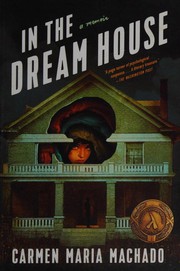
In the Dream House
In In the Dream House, Carmen Maria Machado explores an abusive same-sex relationship through a blend of memoir, cultural criticism, and experimental storytelling. She examines the complexities of love, trauma, and memory while challenging the silence surrounding abuse in LGBTQ+ relationships.
United States
2020
10
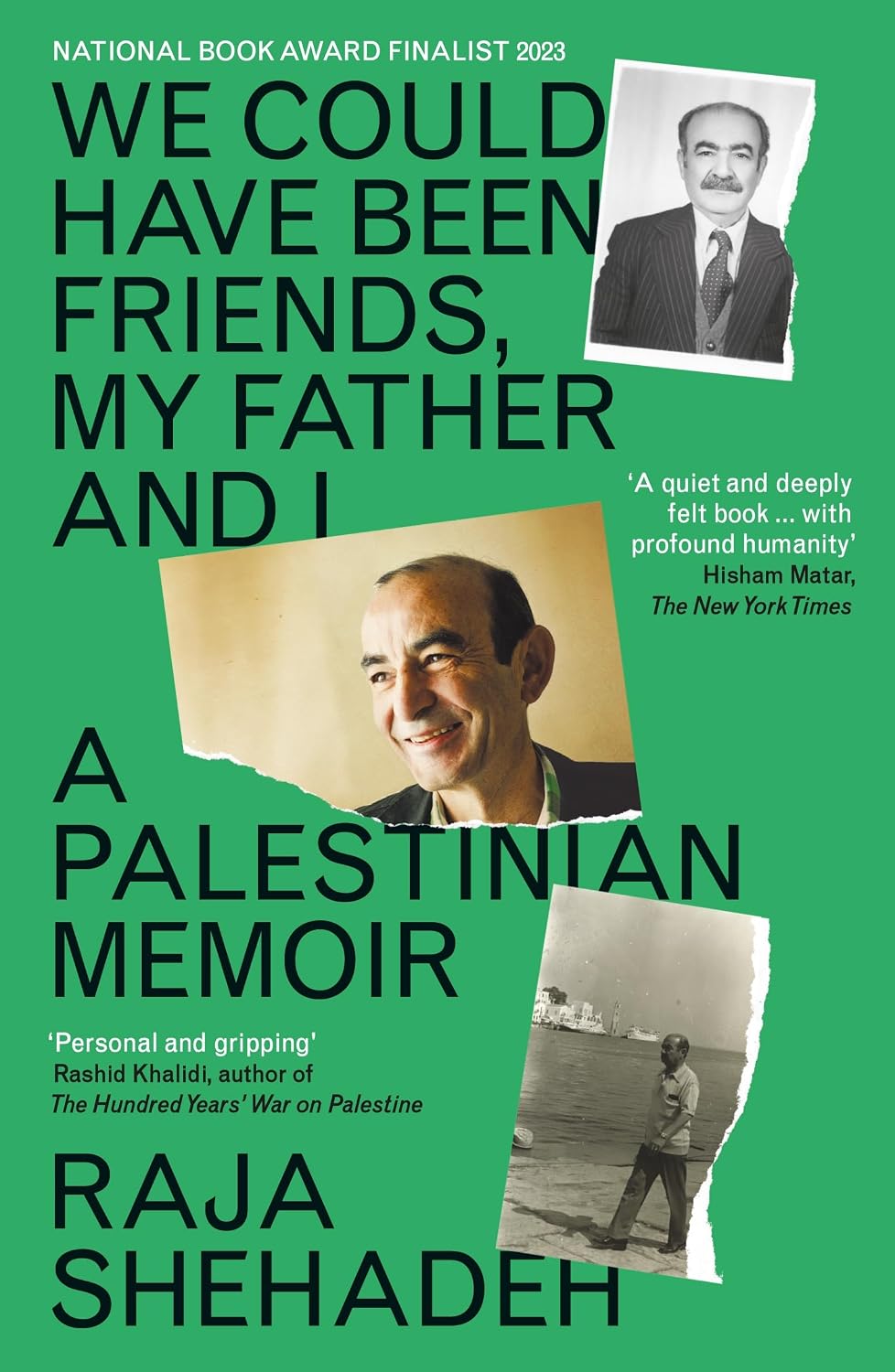
We Could Have Been Friends, My Father and I
In We Could Have Been Friends, My Father and I, Palestinian writer and human rights lawyer Raja Shehadeh reflects on his complex relationship with his father, Aziz Shehadeh, a prominent lawyer and advocate for Palestinian rights. Through personal memories, family history, and historical research, Raja reconstructs his father’s life and examines the political convictions that shaped their relationship. Aziz believed in pursuing justice through legal means and sought peaceful solutions to the Palestinian struggle, while his son developed his own understanding of resistance, identity, and belonging. Their differences often created emotional distance, leaving unspoken feelings and misunderstandings between them. Against the backdrop of British rule, the creation of Israel, and the continuing transformation of Palestinian society, Shehadeh explores how political conflict enters even the most intimate family relationships. The memoir is both a tribute to his father and an attempt to understand him more fully, asking whether shared experiences and renewed understanding can bridge the distance between generations. It offers a deeply personal meditation on family, history, reconciliation, and the possibility of connection despite profound differences.
Palestine
2022
11
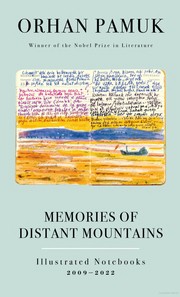
Memories of Distant Mountains
Memories of Distant Mountains is a collection of illustrated notebooks and personal reflections by Nobel Prize-winning author Orhan Pamuk, offering an intimate glimpse into his creative and everyday life. Combining handwritten notes, sketches, paintings, and observations, Pamuk moves between memories of his childhood in Istanbul, reflections on his family, and thoughts about the places, people, and experiences that have shaped his imagination.
The book reveals the relationship between writing and visual art in Pamuk’s creative process, showing how drawings and brief observations can capture moments that conventional storytelling might overlook. His notebooks also explore solitude, memory, urban life, and the passage of time, often returning to Istanbul as both a physical place and an enduring source of inspiration. Blending autobiography, travel writing, and artistic meditation, the collection offers readers access to the private world behind Pamuk’s novels. It is a reflection on how creativity emerges from paying attention to ordinary experiences and transforming fleeting impressions into lasting forms of expression.
Türkiye
2022
12
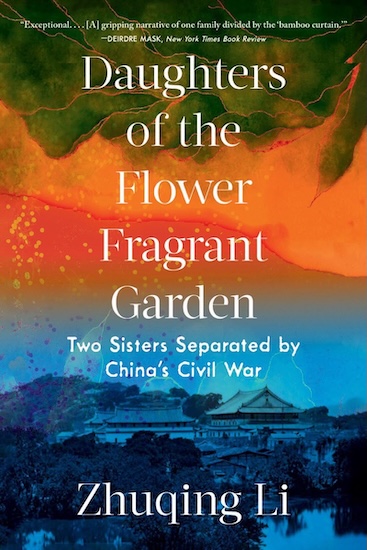
Daughters of the Flower Fragrant Garden
Born into a prominent family in southern China, sisters Jun and Hong grow up inseparable in the 1930s, surrounded by the traditions and privileges of a world on the brink of transformation. But when the Chinese Civil War ends in 1949, fate divides them between two rival political systems. Jun settles in Taiwan, marries a Nationalist general, and builds a successful business, while Hong remains on the mainland, where her family’s political background makes her vulnerable to suspicion and persecution. Despite decades of separation and silence, both women forge remarkable lives under vastly different circumstances. Drawing on family memories and historical research, Zhuqing Li tells a deeply personal story of sisterhood, resilience, and the ways political upheaval reshapes families and identities.
China
Taiwan
2023