Memoir
All countries
Afghanistan
Albania
Algeria
Azerbaijan
Bhutan
Bosnia and Herzegovina
Botswana
Cambodia
China
Congo, Democratic Republic
Cuba
Cyprus
Egypt
El Salvador
Finland
France
Germany
Ghana
India
Iran
Ireland
Jamaica
Japan
Libya
Malta
Morocco
Pakistan
Palestine
Russia
Rwanda
Taiwan
Tanzania
Türkiye
United Kingdom
United States
Yemen
Zambia
1
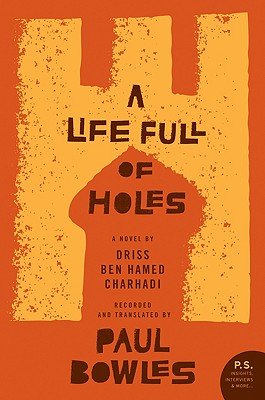
A Life Full of Holes
Set in Morocco during the mid-twentieth century, A Life Full of Holes follows Ahmed, a poor boy growing up in a society marked by poverty, inequality, and the lingering effects of colonialism. After his father disappears from his life and his mother remarries, Ahmed finds himself unwanted in his own home. Forced to fend for himself from an early age, he moves between jobs as a shepherd, labourer, baker’s assistant, and house servant, struggling to secure food, shelter, and a little dignity.
As Ahmed grows older, his experiences expose him to exploitation, police brutality, betrayal, and the harsh realities of life on the margins of Moroccan society. His journey is not a conventional story of triumph over adversity; instead, it presents survival as a daily struggle in a world where opportunities are scarce and power belongs to those who can exploit others.
The book is particularly distinctive because of its origins. Larbi Layachi dictated his life story in Moroccan Arabic to American writer Paul Bowles, who recorded and translated it into English. First published under the pseudonym Driss ben Hamed Charhadi, the narrative blurs the boundaries between autobiography and fiction, offering an intimate perspective on lives rarely represented in Western literature.
Through Ahmed’s experiences, the book explores childhood hardship, social exclusion, and the struggle to preserve one’s humanity in difficult circumstances. Its direct, unembellished storytelling gives readers a vivid portrait of everyday life in Morocco during a period of profound social and historical change.
Morocco
1964
2
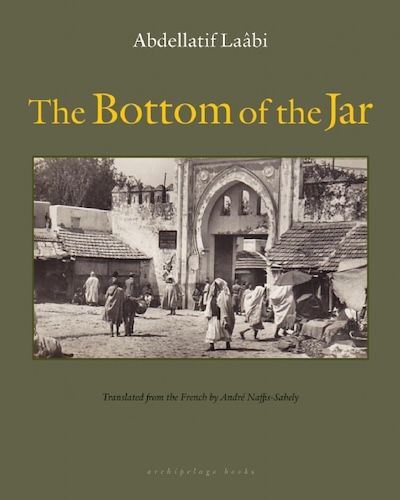
The Bottom of the Jar
Set in Fez during the 1950s, as Morocco struggles to free itself from French colonial rule, The Bottom of the Jar is a richly textured portrait of childhood, family, and a city on the threshold of transformation. Through the eyes of a young boy discovering the world around him, Abdellatif Laâbi evokes the bustling streets of the old medina, the colourful characters who inhabit them, and the intimate dramas unfolding behind closed doors. At the centre of this world is the boy’s family: a generous father, a formidable mother whose passionate prayers and sharp wit fill their home, and an eccentric uncle whose love of hashish and storytelling turns him into a kind of Homer after dark. Humorous, tender, and occasionally heartbreaking, the novel captures the contradictions of a society caught between inherited traditions and the promise of independence. Drawing on the author’s own childhood, it celebrates the imagination and resilience of ordinary people while exploring how political change reshapes private lives.
Morocco
2013