Family Saga
All countries
Algeria
Australia
Bangladesh
Barbados
Belarus
Bosnia and Herzegovina
Brazil
Canada
Chile
China
Congo, Democratic Republic
Costa Rica
Cuba
Ethiopia
France
Germany
Ghana
India
Ireland
Italy
Latvia
Madagascar
Nigeria
North Macedonia
Norway
Oman
Palestine
Puerto Rico
Saint Kitts and Nevis
Singapore
South Korea
Spain
Sri Lanka
Taiwan
Türkiye
Uganda
United Kingdom
United States
Vietnam
1

Love in Exile
In 1920s Turkey, Sabahat is a bright, determined young Muslim woman who dreams of an education and a life beyond the traditional expectations placed on women. Persuading her family to let her pursue her studies, she begins to imagine a future shaped by her own ambitions rather than an arranged marriage. But her plans take an unexpected turn when she falls in love with Aram, an Armenian Christian student.
Their feelings deepen despite the religious and cultural divisions separating their families. In a society where interfaith relationships challenge deeply rooted traditions, their love becomes a source of both hope and conflict. As family loyalties and social pressures threaten to tear them apart, Sabahat and Aram must decide how much they are willing to sacrifice to remain together.
Inspired by Ayşe Kulin’s own family history, Love in Exile is a sweeping romance set during a period of profound transformation in Turkish society. It explores forbidden love, women’s independence, religious difference, and the painful choices people face when personal happiness conflicts with family expectations.
Türkiye
2016
2
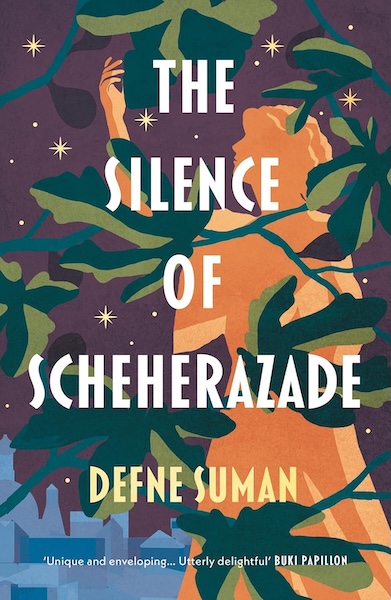
The Silence of Scheherazade
In September 1905, in the cosmopolitan Ottoman port city of Smyrna, a girl named Scheherazade is born as an Indian spy arrives with a secret mission for the British Empire. Their stories unfold alongside those of four families—a Levantine, a Greek, a Turkish, and an Armenian—whose lives are bound together by love, ambition, and the city’s extraordinary cultural diversity.
Over the following seventeen years, the families navigate political upheaval, shifting loyalties, forbidden relationships, and the growing tensions surrounding the decline of the Ottoman Empire. As war transforms the region, the world they know begins to crumble, culminating in the devastating fire that engulfs Smyrna in 1922.
Rich in historical detail and intimate human drama, The Silence of Scheherazade resurrects a lost multicultural world and gives voice to the people caught between competing nationalisms. It is a story of love, displacement, and the silences that history leaves behind.
Türkiye
2016
3
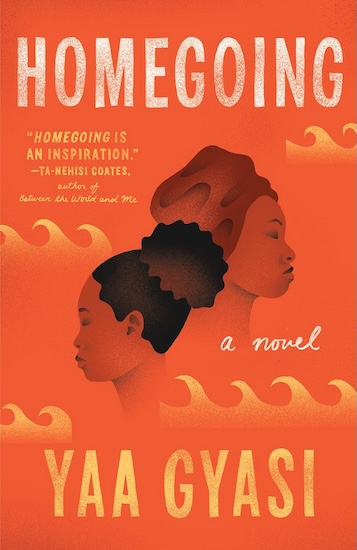
Homegoing
Two half-sisters, Effia and Esi, are born in eighteenth-century Ghana, their lives divided by the forces of slavery and colonialism. Effia marries a British slave trader and lives in comfort above the dungeons of Cape Coast Castle, unaware that her sister Esi is imprisoned below before being sold into slavery in America. From the villages of Ghana to the plantations of the American South and the streets of modern Harlem, their descendants inherit the consequences of choices, violence, and histories they never experienced themselves. Spanning eight generations and three centuries, Homegoing is a powerful exploration of how slavery reshapes families, how trauma travels across generations, and how the past continues to influence the present.
Ghana
2016
4
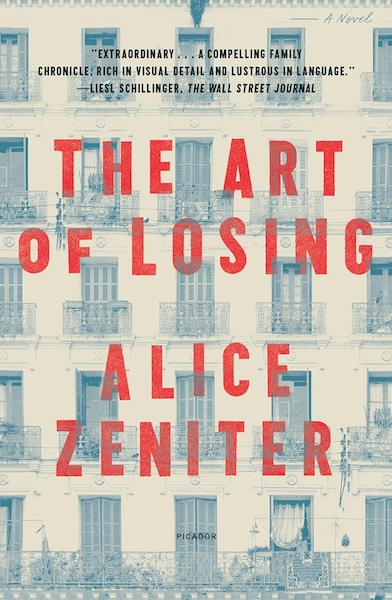
Art of Losing
Some families inherit houses, photographs, and heirlooms. Others inherit silences.
When Naïma, a young French woman of Algerian descent, begins exploring her family history, she discovers how little she knows about the country her grandparents left behind. Her grandfather, Ali, once owned land in Algeria but fled to France after the Algerian War of Independence. Her father, Hamid, grew up determined to become French, leaving painful memories and unanswered questions buried in the past.
Spanning three generations and seven decades, The Art of Losing follows a family shaped by colonialism, displacement, and the struggle to belong. As Naïma begins uncovering the truth about her ancestors, she must confront a history that is both deeply personal and politically complicated. What does it mean to inherit a past you never experienced? And can you claim an identity when the stories that might explain it have been lost?
Moving between Algeria and France, Alice Zeniter explores the invisible burdens passed from parents to children: the languages forgotten, the memories suppressed, and the connections that survive despite distance. Winner of the 2022 International Dublin Literary Award, this sweeping family saga is a powerful meditation on exile, belonging, and the stories we need to understand ourselves.
Algeria
France
2017
5

The Heart’s Invisible Furies
Spanning seven decades of Irish history, The Heart’s Invisible Furies follows Cyril Avery, a boy born in 1940s Ireland to an unmarried teenage mother who is publicly shamed by her community and forced to leave her home. Adopted by a wealthy couple in Dublin, Cyril grows up in a household where he is constantly reminded that he is not their biological son. Feeling like an outsider, he embarks on a lifelong search for love, acceptance, and a place where he truly belongs.
As Cyril moves through adulthood, his experiences unfold against the backdrop of a changing Ireland. Growing up in a deeply conservative Catholic society, he struggles to understand and accept his sexuality in a country where homosexuality is criminalised and social prejudice shapes countless lives. His journey takes him beyond Ireland, through relationships, personal losses, and difficult discoveries, before eventually bringing him back to his homeland.
Combining dark humour with moments of profound tenderness, Boyne explores the consequences of religious intolerance, social exclusion, and the silence surrounding sexuality. Through Cyril’s personal experiences, the novel also traces Ireland’s transformation from a society dominated by the Catholic Church to one increasingly willing to confront its past. Ultimately, it is a story about identity, belonging, friendship, and the possibility of finding love and reconciliation after a lifetime of struggle.
Ireland
2017
6
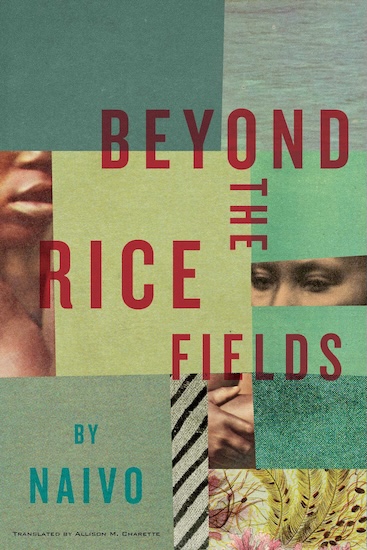
Beyond the Rice Fields
Nineteenth-century Madagascar is a kingdom on the brink of profound transformation. Tsito, a young boy enslaved after the destruction of his village, is taken to live in Sahasoa, where he develops a close bond with Fara, the daughter of his new master. As they grow older, their lives diverge: Tsito dreams of freedom, while Fara struggles with her family’s secrets and the restrictions placed upon her future. Their world is transformed by the arrival of British Christian missionaries and French industrialists, whose influence intensifies existing political and cultural tensions. As religious persecution and brutal royal purges spread across the kingdom, Tsito and Fara find themselves caught in a violent struggle over faith, power, and belonging. Through their intertwined stories, Naivo explores the legacy of slavery, the collision between Malagasy traditions and European influence, and the devastating consequences of political and religious intolerance.
Madagascar
2017
7
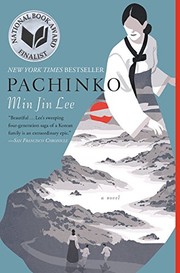
Pachinko
Pachinko follows four generations of a Korean family whose lives are transformed by migration, discrimination, and the search for belonging. The story begins in early twentieth-century Korea, where young Sunja becomes pregnant by a wealthy man who refuses to marry her. She accepts an offer of marriage from a kind-hearted minister and moves with him to Japan, hoping to build a better future. However, the family encounters widespread prejudice against Koreans living in Japan, limiting their opportunities and shaping their identities. As the story moves across generations, each family member struggles to balance personal ambition with cultural heritage and social expectations. Lee explores sacrifice, resilience, family loyalty, and the consequences of historical injustice, portraying how individuals attempt to create meaningful lives in a society that refuses to fully accept them.
South Korea
2017
8
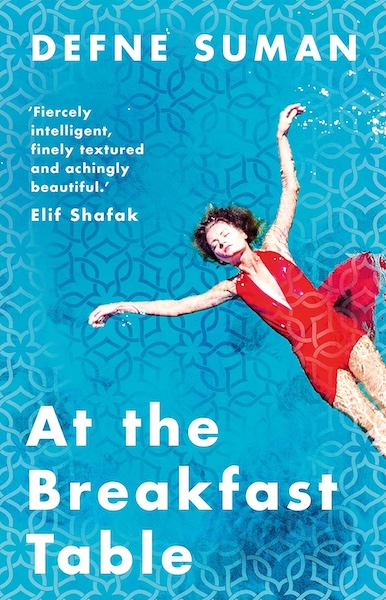
At the Breakfast Table
On Büyükada, an island off Istanbul, relatives gather in the summer of 2017 to celebrate the hundredth birthday of Şirin Saka, a celebrated artist whose long life has spanned nearly a century of political and cultural change. What should be a joyful family occasion soon becomes an encounter with the past, as the younger generations begin to question the silences that have shaped their lives.
Şirin’s grandchildren, Nur and Fikret, and her great-granddaughter, Selin, know that something painful lies beneath the family’s carefully maintained image. Hoping to uncover the truth, they invite Burak, a family friend and investigative journalist, to interview Şirin. But the elderly artist has spent decades concealing a history that reaches beyond her personal life into the suppressed memories of the country itself.
Told through four perspectives, At the Breakfast Table explores the inheritance of family secrets, the psychological cost of silence, and the courage required to confront uncomfortable truths. Defne Suman weaves together intimate family drama and Turkey’s complicated history in a novel about memory, identity, and the possibility of breaking free from the past.
Türkiye
2018
9
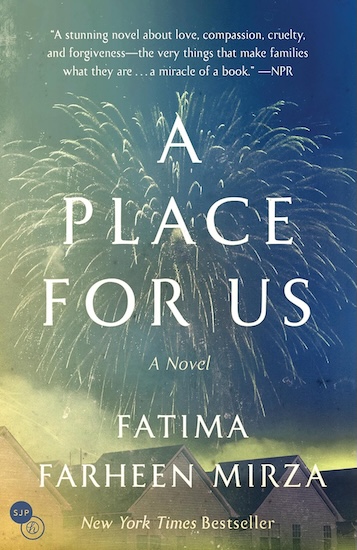
A Place for Us
A Place for Us explores the complicated bonds of an Indian-American Muslim family as its members navigate the tensions between cultural heritage, religious expectations, and personal freedom. The story begins at the wedding of Hadia, the eldest daughter of Rafiq and Layla, whose decision to marry for love rather than tradition reflects her determination to live on her own terms. The occasion also brings home her estranged younger brother, Amar, who returns to the family after three years of separation.
Through shifting perspectives and memories, Mirza gradually reveals the events that fractured the family. Rafiq and Layla emigrated from India to the United States hoping to give their children better opportunities while preserving their cultural and religious traditions. Yet their children’s experiences of growing up between two cultures create tensions that neither generation knows how to resolve. Hadia seeks independence, Huda follows her sister’s example, and Amar struggles with questions of faith, belonging, and his father’s expectations.
With tenderness and psychological insight, Mirza examines how love can coexist with disappointment, how silence can deepen family wounds, and how difficult it can be to understand those closest to us. The novel offers a nuanced portrait of the immigrant experience, exploring the challenge of building an identity that honours one’s heritage without sacrificing individuality. Ultimately, it asks whether a family can find its way back to one another after years of hurt and misunderstanding.
United States
2018
10
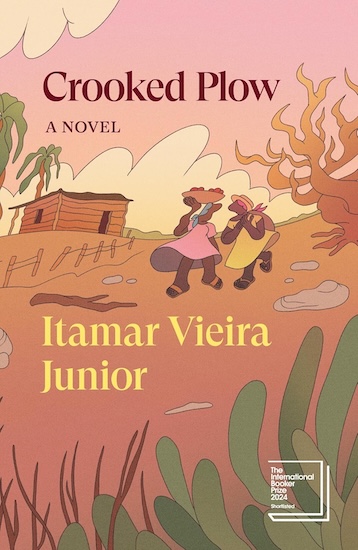
Crooked Plow
Set in the rural hinterlands of Bahia, Brazil, Crooked Plow follows Bibiana and Belonísia, two sisters growing up in a community of Black agricultural workers descended from enslaved people. Their lives change dramatically when, as children, they discover an old knife hidden beneath their grandmother’s bed. A sudden accident leaves one sister unable to speak, creating a bond between them that shapes their identities and futures.
As the sisters grow older, their paths diverge. Bibiana leaves home and becomes increasingly aware of the social and political forces that keep her community trapped in poverty, while Belonísia remains closely connected to the land and the traditions of her ancestors. Through their experiences, the novel reveals the exploitation of rural workers who cultivate land they do not own, despite generations of labour and their deep ancestral ties to it.
Blending social realism with magical elements and Afro-Brazilian spiritual traditions, Vieira Junior explores the enduring consequences of slavery, racial inequality, and land dispossession. The land itself becomes a source of both suffering and belonging, connecting the community to its history while providing the foundation for resistance. Through the sisters’ intertwined lives, the novel examines how people preserve their dignity, culture, and collective memory in the face of persistent injustice.
Brazil
2018
11
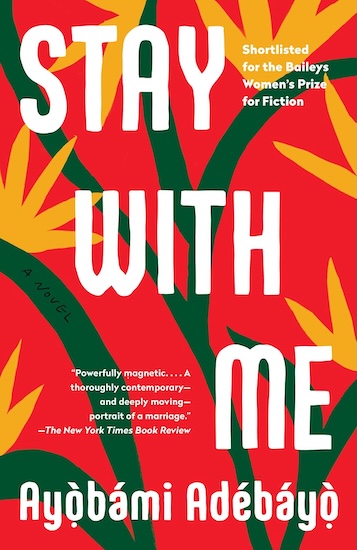
Stay with Me
Set in Nigeria during the 1980s and 1990s, Stay with Me tells the story of Yejide and Akin, a young couple whose passionate love is gradually tested by family expectations, infertility, and devastating secrets.
Having met and fallen in love at university, Yejide and Akin agree that polygamy has no place in their marriage. But after four years together without a child, pressure from Akin’s family becomes unbearable. His relatives eventually arrange for him to take a second wife, believing that another woman might succeed where Yejide has not. Humiliated and desperate to save her marriage, Yejide becomes increasingly determined to conceive.
As the couple struggle with fertility treatments, traditional remedies, and the demands of their families, their relationship begins to unravel. Decisions made out of fear and desperation lead to betrayal, grief, and consequences neither could have imagined. Meanwhile, political unrest and military upheaval provide a backdrop to their deeply personal struggles.
Told through the alternating perspectives of Yejide and Akin, the novel explores the painful intersection of love, marriage, and cultural expectations. Adebayo examines how the pressure to become parents can shape a person’s identity, how secrets can destroy even the closest relationships, and how grief changes the meaning of family. Ultimately, Stay with Me is a moving story about the sacrifices people make for love and the complicated ways they attempt to protect one another from heartbreak.
Nigeria
2018
12
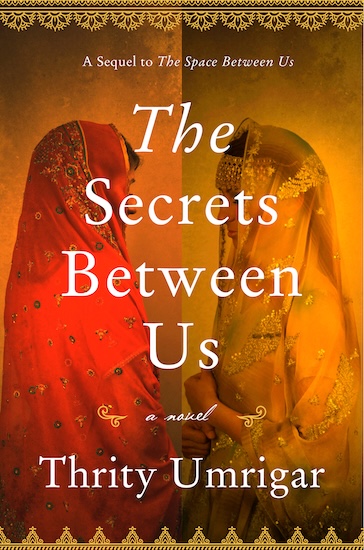
The Secrets Between Us (#2: Between Us)
In the bustling streets of Mumbai, Bhima must rebuild her life after losing the domestic job she held for more than twenty years. Poor and illiterate, she has endured tremendous hardship, and now her greatest concern is securing a better future for her granddaughter, Maya. With few options available, Bhima struggles to support them both while confronting the betrayal of the family she once served.
Her life takes an unexpected turn when she meets Parvati, an elderly homeless woman whose sharp tongue and guarded nature conceal years of suffering. Despite their initial mistrust, the two women form an unlikely partnership selling fruit and vegetables at a local market. As they gradually share their stories, they discover a friendship built on mutual understanding, resilience, and the determination to survive. Together, they begin to imagine a future beyond the limitations imposed by poverty, gender, and social status.
Set against the contrasts of modern Mumbai, The Secrets Between Us is a moving story about female solidarity, dignity, and second chances. Thrity Umrigar explores how friendship can emerge from hardship and how women who have been marginalized by society can find strength in one another.
India
2018