Classics
All countries
Antigua and Barbuda
Argentina
Armenia
Australia
Austria
Azerbaijan
Bangladesh
Barbados
Belgium
Bosnia and Herzegovina
Brazil
Chile
China
Colombia
Czech Republic
Denmark
Dominica
Dominican Republic
Egypt
Finland
France
Germany
Greece
Hungary
Iceland
India
Indonesia
Iran
Ireland
Italy
Japan
Kenya
Kyrgyzstan
Lebanon
Lithuania
Mexico
Netherlands
Norway
Pakistan
Palestine
Peru
Portugal
Romania
Russia
Saudi Arabia
Spain
Sudan
Sweden
Switzerland
Taiwan
Türkiye
Ukraine
United Kingdom
United States
1
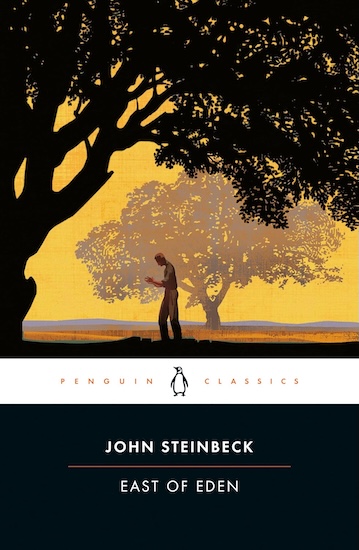
East of Eden
Set in California’s Salinas Valley, East of Eden follows the intertwined lives of the Trask and Hamilton families across several generations. At its heart is a conflict between two brothers, Cal and Aron Trask, whose relationship echoes the biblical story of Cain and Abel. Their struggles with jealousy, parental expectations, love, and belonging raise questions about whether people are destined to repeat the mistakes of their ancestors. Exploring the tension between good and evil, Steinbeck’s epic suggests that individuals are not entirely defined by their past or their nature. They retain the power to make choices that shape their own lives and the lives of those around them.
United States
1952
2
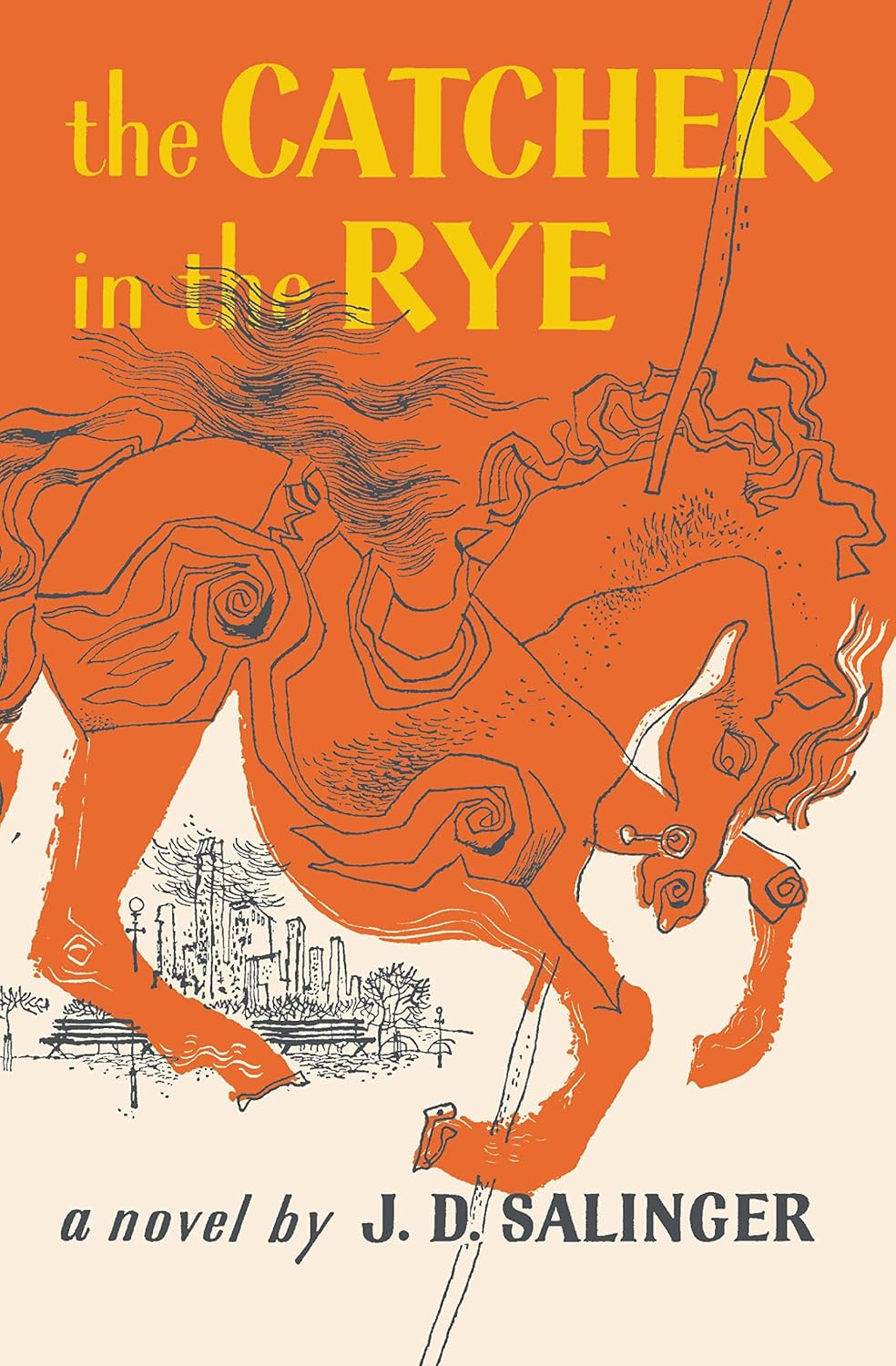
The Catcher in the Rye
The Catcher in the Rye follows Holden Caulfield, a sixteen-year-old who has been expelled from his preparatory school and spends several days wandering around New York City. Alienated from the adults around him, Holden sees the world as dishonest and superficial, yet struggles to understand his own emotions and relationships. Beneath his sarcasm and criticism lies a profound sense of loneliness, grief, and fear of growing up. His encounters with strangers, former classmates, and his younger sister reveal his longing for genuine human connection. Through Holden’s distinctive voice, Salinger captures the confusion and vulnerability of adolescence, exploring the difficult transition from childhood innocence to adulthood.
United States
1951
3
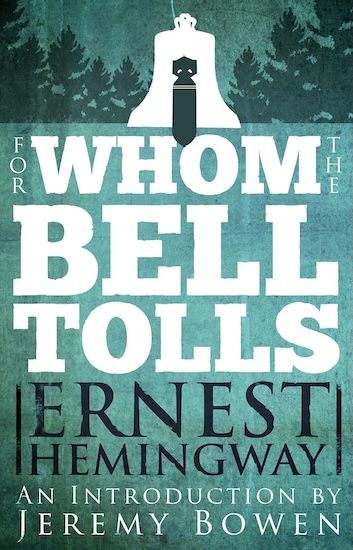
For Whom the Bell Tolls
For Whom the Bell Tolls follows Robert Jordan, an American volunteer fighting alongside Republican guerrillas during the Spanish Civil War. Assigned to destroy a strategically important bridge ahead of a military offensive, Jordan joins a small group of fighters in the mountains. As he prepares for the operation, he develops a relationship with María, a young woman traumatised by violence, and forms complicated bonds with the guerrillas who support his mission. Their preparations expose the divisions, fears, and conflicting loyalties within the Republican cause. As the operation approaches, Jordan must weigh his commitment to the wider struggle against the lives of the people around him. Hemingway explores courage, sacrifice, love, and the moral costs of war, questioning how individuals can preserve their humanity while participating in a conflict that demands violence and obedience.
United States
1940
4
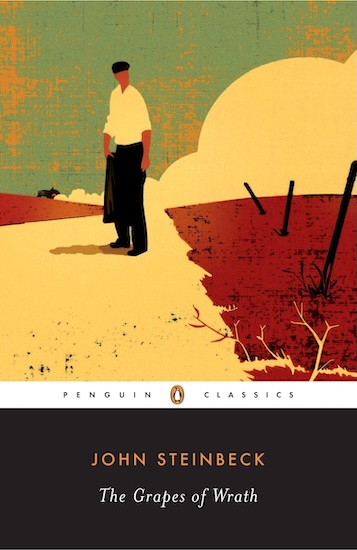
The Grapes of Wrath
The Grapes of Wrath follows the Joad family, tenant farmers driven from their Oklahoma home during the Great Depression and the Dust Bowl. Hoping to find work and a better future, they travel west to California, joining thousands of other migrants searching for survival. Instead of prosperity, they encounter exploitation, overcrowded camps, low wages, and hostility from landowners who fear the growing number of desperate workers. As the family’s circumstances deteriorate, Tom Joad and his mother struggle to preserve their dignity and solidarity in the face of injustice. Steinbeck portrays the human cost of economic collapse, revealing how powerful institutions can profit from the vulnerability of ordinary people. The novel explores poverty, migration, collective resistance, and the importance of community, arguing that human survival depends not only on individual determination but also on mutual responsibility and social justice.
United States
1939
5
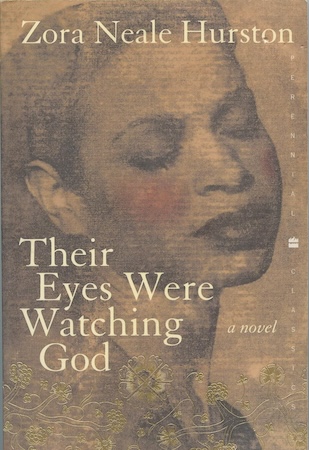
Their Eyes Were Watching God
Set in the early twentieth-century American South, Their Eyes Were Watching God follows Janie Crawford, an African American woman searching for love, independence, and a life she can call her own. Returning to her hometown of Eatonville, Florida, after a long absence, Janie faces the curiosity and judgment of her neighbours. Through a conversation with her friend Pheoby, she begins to recount the experiences that have shaped her.
Raised by her grandmother, who dreams of securing her future through marriage, Janie enters a series of relationships that teach her painful lessons about power, gender, and self-worth. Her first two marriages offer security and social status but leave little room for her voice or desires. It is only when she meets Tea Cake, a younger man who introduces her to a world of spontaneity, friendship, and adventure, that she begins to experience a more expansive kind of love.
Hurston’s novel is a landmark of African American literature, celebrated for its rich use of Black Southern dialect, folklore, and storytelling traditions. Through Janie’s journey, it explores the intersections of race, gender, class, and personal freedom, ultimately affirming a woman’s right to define herself beyond the expectations of others.
United States
1937
6
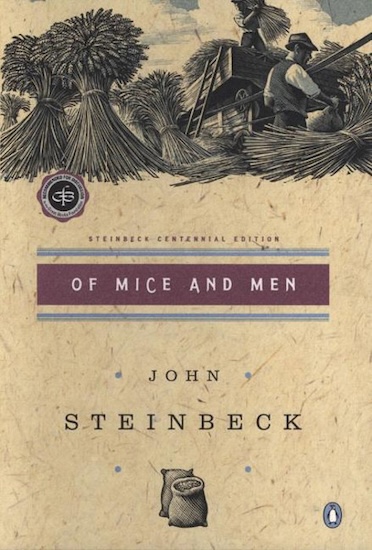
Of Mice and Men
Of Mice and Men follows George Milton and Lennie Small, two migrant workers travelling through California during the Great Depression in search of employment. George is intelligent and practical, while Lennie is physically powerful but has an intellectual disability that makes it difficult for him to understand the consequences of his actions. Despite their differences, the two men share a dream of owning a small farm where they can live independently and escape the insecurity of migrant labour. When they find work on a ranch, their hopes appear briefly within reach, but tensions among the workers and Lennie’s inability to control his strength create mounting danger. Steinbeck explores friendship, loneliness, poverty, and the fragility of the American dream. The novella portrays how economic hardship and social isolation can undermine the hopes of people seeking dignity and security.
United States
1937
7
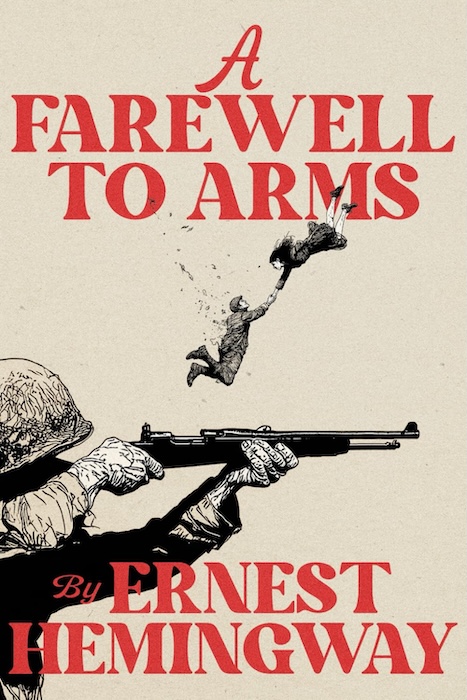
A Farewell to Arms
A Farewell to Arms follows Frederic Henry, an American ambulance officer serving with the Italian army during the First World War. While stationed near the front, he falls in love with Catherine Barkley, a British nurse whose emotional support offers him an escape from the brutality surrounding them. Their relationship deepens as the war intensifies, and Frederic becomes increasingly disillusioned with military duty and patriotic rhetoric. After a chaotic retreat from the front, he deserts the army and attempts to build a peaceful life with Catherine. However, their hopes for a future together are threatened by circumstances beyond their control. Hemingway explores love as a refuge from violence, while revealing its vulnerability in a world governed by chance and loss. The novel examines disillusionment, sacrifice, and the difficulty of finding lasting meaning in a time of war.
United States
1929
8
Sun Also Rises
The Sun Also Rises follows a group of American and British expatriates living in Europe after the First World War. Its narrator, Jake Barnes, is a journalist whose war injury has left him unable to pursue a conventional romantic relationship with Lady Brett Ashley, a charismatic woman whose independence and restlessness affect everyone around her. Their circle travels from Paris to the Spanish countryside, where fishing trips and the festivities of Pamplona’s bullfighting season offer temporary escape from emotional uncertainty. Beneath the characters’ drinking, flirtation, and restless movement lies a profound sense of disillusionment. Hemingway captures a generation struggling to find meaning after war, exploring unfulfilled desire, damaged masculinity, and the loneliness that can persist even among friends.
United States
1926
9
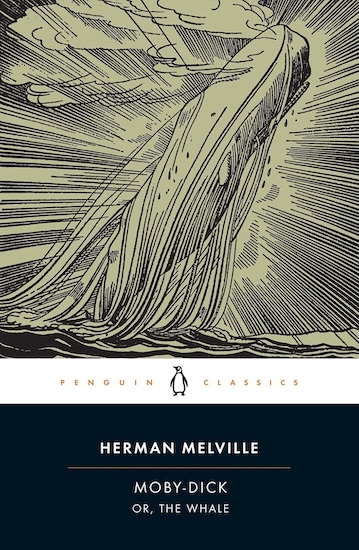
Moby-Dick, or, The whale
Narrated by the sailor Ishmael, Moby-Dick recounts a whaling voyage aboard the Pequod, commanded by the obsessive Captain Ahab. Ahab is determined to hunt down Moby Dick, a massive white whale that previously injured him. As the ship travels across the oceans, the voyage becomes increasingly dominated by the captain’s consuming desire for revenge. Blending maritime adventure with philosophical reflection, Melville explores humanity’s relationship with nature, the limits of knowledge, and the dangers of allowing obsession to govern one’s life. The novel’s detailed descriptions of whaling are interwoven with questions about fate, faith, and the meaning of existence, transforming a pursuit of a whale into a profound meditation on the human condition.
United States
1851