Classics
All countries
Antigua and Barbuda
Argentina
Armenia
Australia
Austria
Azerbaijan
Bangladesh
Barbados
Belgium
Bosnia and Herzegovina
Brazil
Chile
China
Colombia
Czech Republic
Denmark
Dominica
Dominican Republic
Egypt
Finland
France
Germany
Greece
Hungary
Iceland
India
Indonesia
Iran
Ireland
Italy
Japan
Kenya
Kyrgyzstan
Lebanon
Lithuania
Mexico
Netherlands
Norway
Pakistan
Palestine
Peru
Portugal
Romania
Russia
Saudi Arabia
Spain
Sudan
Sweden
Switzerland
Taiwan
Türkiye
Ukraine
United Kingdom
United States
1

The Year of the Death of Ricardo Reis
Set in Lisbon in 1936, The Year of the Death of Ricardo Reis follows Ricardo Reis, a doctor and poet who returns to Portugal after sixteen years in Brazil, having learned of the death of the poet Fernando Pessoa. Reis is one of Pessoa’s fictional literary alter egos, brought to life by Saramago as a character who must navigate a world increasingly shaped by political turmoil.
Staying in a Lisbon hotel, Reis spends his days wandering the city, reading newspapers, writing poetry, and becoming involved with two women: Lídia, a hotel maid, and Marcenda, a young woman with a paralysed left hand. He is also visited by the ghost of Pessoa, with whom he discusses literature, life, and death.
Beyond Reis’s private existence, Portugal is living under António de Oliveira Salazar’s authoritarian regime, while fascism is spreading across Europe and the Spanish Civil War is approaching. Through Reis’s detached observations, Saramago examines the tension between individual contemplation and historical responsibility. Blending philosophical reflection, political commentary, and the uncanny, the novel explores mortality, isolation, and the difficulty of remaining a passive observer in a world marked by injustice.
Portugal
1984
2
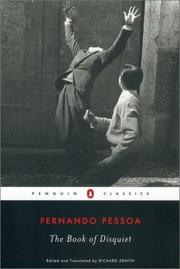
The Book of Disquiet
The Book of Disquiet is a fragmentary, deeply introspective work attributed to Bernardo Soares, an assistant bookkeeper living a quiet, unremarkable life in Lisbon. Through a series of diary-like reflections, philosophical meditations, and poetic observations, Soares examines his inner world, revealing a profound sense of alienation from society and an ongoing struggle to understand his own existence. Ordinary experiences, from walking through Lisbon’s streets to sitting at his desk, become starting points for reflections on dreams, identity, time, and the distance between the self and the world.
Rather than following a conventional narrative, Fernando Pessoa’s work unfolds as an intimate record of consciousness, capturing the contradictions and uncertainties of being human. The narrator finds both refuge and imprisonment in his imagination, often preferring the richness of dreams to the demands of reality. Blurring the boundaries between autobiography, fiction, and philosophy, The Book of Disquiet is a haunting meditation on loneliness, the fragmented nature of identity, and the quiet beauty of an uneventful life.
Note: Although Pessoa began writing the fragments decades earlier, the book was first published posthumously in Portuguese in 1982.
Portugal
1982