Classics
All countries
Antigua and Barbuda
Argentina
Armenia
Australia
Austria
Azerbaijan
Bangladesh
Barbados
Belgium
Bosnia and Herzegovina
Brazil
Chile
China
Colombia
Czech Republic
Denmark
Dominica
Dominican Republic
Egypt
Finland
France
Germany
Greece
Hungary
Iceland
India
Indonesia
Iran
Ireland
Italy
Japan
Kenya
Kyrgyzstan
Lebanon
Lithuania
Mexico
Netherlands
Norway
Pakistan
Palestine
Peru
Portugal
Romania
Russia
Saudi Arabia
Spain
Sudan
Sweden
Switzerland
Taiwan
Türkiye
Ukraine
United Kingdom
United States
1
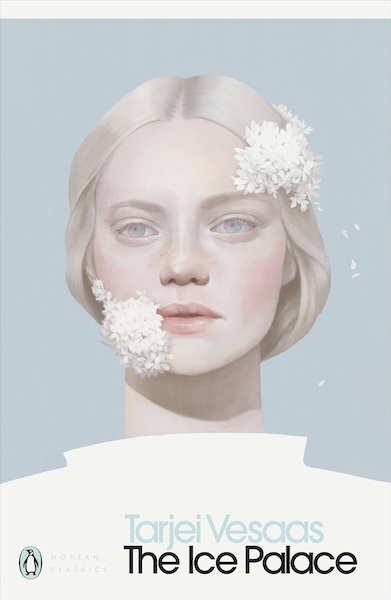
The Ice Palace
Two girls. One unforgettable encounter. A frozen world hiding secrets that words cannot express.
Eleven-year-old Siss is confident, outgoing, and well-liked by her classmates. Unn, who has recently arrived in their small Norwegian village to live with her aunt, is her opposite: withdrawn, mysterious, and burdened by a private grief. When the girls spend an evening together, they form an intense connection that neither can fully understand. But the following day, Unn disappears after venturing into a spectacular frozen waterfall known as the Ice Palace—a labyrinth of shimmering chambers sculpted by winter itself.
As the village searches for Unn, Siss struggles with the loss of a friendship that had barely begun. Unable to explain what passed between them, she withdraws into silence, carrying Unn’s memory like a secret of her own.
With hauntingly beautiful prose, Tarjei Vesaas transforms the Norwegian winter landscape into a reflection of loneliness, grief, and the mysteries of human connection. The Ice Palace is a quiet, deeply moving novel about childhood, loss, and the invisible bonds that can change us forever. It won the Nordic Council Literature Prize in 1964.
Norway
2025
2
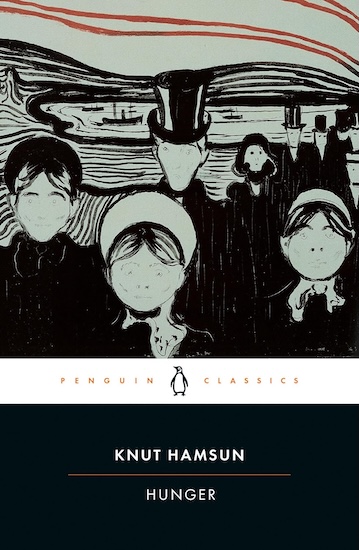
Hunger
Hunger follows an unnamed young writer wandering the streets of Kristiania, the city now known as Oslo, as he struggles with poverty and starvation. Determined to preserve his dignity and independence, he refuses to accept assistance even as his physical condition deteriorates. His hunger intensifies his emotional instability, leading to moments of grandiosity, shame, generosity, and irrational behaviour. Through his fragmented thoughts and unpredictable actions, Hamsun portrays the inner life of an individual whose desperate circumstances make ordinary social interactions increasingly difficult. The narrator’s pride becomes both a source of resistance and an obstacle to survival, revealing the psychological costs of extreme deprivation. The novel explores isolation, artistic ambition, and the fragile relationship between body and mind, offering an influential early example of psychological fiction that focuses on subjective experience rather than conventional plot.
Norway
1890