Books from Uganda
Suggest a book
All genres
Historical Fiction
Literary Fiction
Fantasy
Romance
Horror
Thriller
Non-Fiction
Mystery
Memoir
Classics
History
Sci-Fi
Contemporary Fiction
Science Fiction
Fiction
Poetry
Essays
Family Saga
Magical Realism
Family Drama
Dark Academia
Psychological Fiction
Dark Comedy
Political Writing
Feminist Fiction
Satire
Campus Fiction
Cultural Studies
Biography
Philosophy
Comedy
Drama
Young Adult
Gothic
Dystopia
Crime
Children's Books
Short Stories
Mythology
Cozy
Retellings
Humour
Adventure
All themes
Love & Passion
Adventure & Journey
Identity & Belonging
War & Conflict
Freedom & Resistance
Family & Heritage
Nature & Landscape
Society & Class
Spirituality & Faith
Solitude & Exile
Coming of Age
Revolution & Change
Friendship
History
Immigration
Myths and Retellings
Colonialism
Women & Society
Mental Health
Motherhood
1
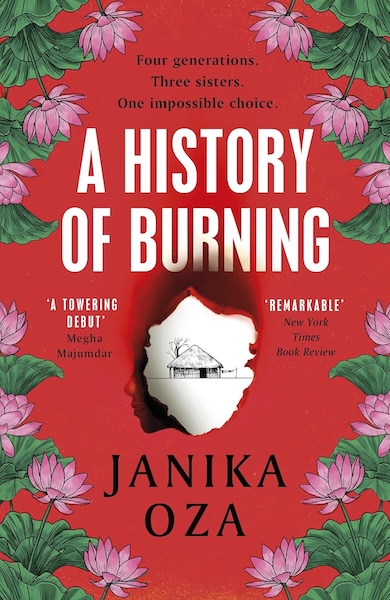
A History of Burning
In 1898, thirteen-year-old Pirbhai leaves his village in India, lured by the promise of work in East Africa. Instead, he is forced into labour on the British railway, where a desperate act committed in the name of survival becomes a secret that will haunt his descendants for generations.
Years later, Pirbhai builds a family with Sonal in Uganda. Their children and grandchildren grow up amid the final years of British colonial rule, the country’s struggle for independence, and the political turmoil that follows. Among the next generation are three sisters, each with her own ambitions and understanding of what it means to belong. When Idi Amin orders Uganda’s Asian population to leave in 1972, the family is scattered across continents, carrying with them the memories, silences, and secrets of their past.
Spanning more than a century and moving between India, East Africa, and Canada, A History of Burning traces how one act of survival reverberates through generations. Janika Oza weaves together colonial exploitation, political upheaval, family loyalty, and the search for home in an intimate multigenerational saga about the stories families preserve—and those they struggle to forget.
2023
2
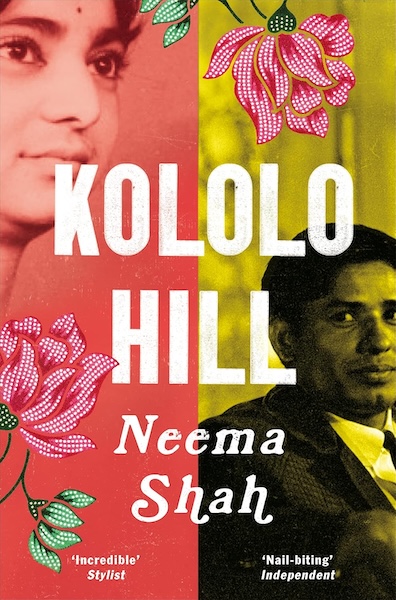
Kololo Hill
In 1972, Ugandan Asians are given just ninety days to leave the country under President Idi Amin’s expulsion order. For Asha and Pran, newly married and working to secure their future, the decree means abandoning the family business and the life they have built. Pran’s mother, Jaya, must also leave the home she has known for decades. As violence escalates in Kampala and people begin disappearing, the family faces an uncertain journey to Britain, where refuge does not necessarily mean belonging.
Arriving in a country that feels unfamiliar, they must rebuild their lives while carrying the emotional weight of everything they have lost. But their struggle is complicated by a devastating secret surrounding their expulsion—one that threatens to fracture the family just when they need one another most.
Moving between the green hills of Kampala and the terraced streets of London, Kololo Hill explores displacement, family loyalty, and the meaning of home. Inspired by the history of Uganda’s Asian community and the author’s own family heritage, this moving novel reveals how political upheaval can reshape lives across generations.
2021
3
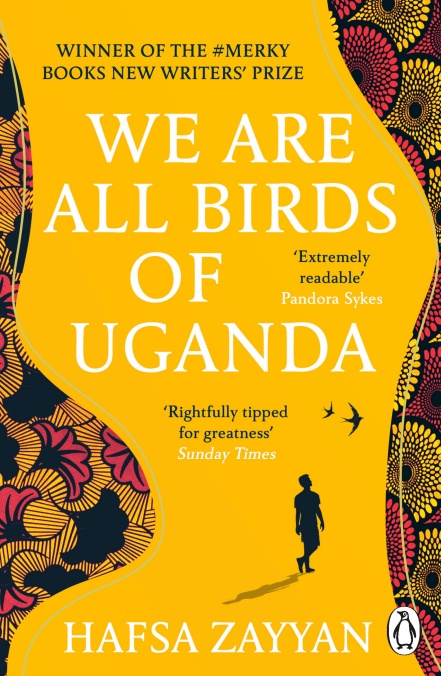
We Are All Birds Of Uganda
In 1960s Uganda, Hasan is struggling to rebuild his life after the death of his wife. Just as he begins to find his footing, political upheaval and rising racial prejudice threaten everything he has worked for. As a member of Uganda’s South Asian community, Hasan faces an uncertain future in a country his family has long called home. The political climate deteriorates further under Idi Amin’s regime, which ultimately forces many South Asians to leave Uganda.
Decades later, in London, Sameer appears to have everything: a successful career as a lawyer and the future he once dreamed of. Yet beneath his achievements lies a persistent sense of emptiness. An unexpected family tragedy draws him back into his family’s history, revealing the sacrifices, losses, and unanswered questions that shaped his identity.
Moving between generations and continents, We Are All Birds of Uganda explores displacement, racial prejudice, inherited trauma, and the complicated meaning of belonging. Through Hasan and Sameer’s intertwined stories, Hafsa Zayyan examines how migration reshapes families and how the past continues to influence those who inherit its consequences.
2021
4

Kintu
Set across several centuries of Ugandan history, Kintu is an ambitious family saga that reimagines the history, mythology, and cultural traditions of the Buganda kingdom. The story begins in 1750, when Kintu Kidda, a powerful provincial governor, travels to the capital to pledge allegiance to the new king. During the journey, a tragic incident sets a curse in motion, bringing suffering to his descendants for generations.
Centuries later, members of the Kintu family struggle with personal tragedies, fractured relationships, and unexplained misfortunes. As they confront their shared history, they must decide whether their suffering stems from an ancestral curse, historical circumstances, or the unresolved conflicts passed down through generations.
Blending Ugandan oral traditions, mythology, spirituality, and historical storytelling, Makumbi challenges conventional approaches to African history. The novel places indigenous Ugandan perspectives at its centre, exploring how colonialism, religious change, and modernisation have transformed cultural identity. It is both a multigenerational family epic and a powerful exploration of the relationship between personal memory and national history.
2014