Books from Tanzania
Suggest a book
All genres
Historical Fiction
Literary Fiction
Fantasy
Romance
Horror
Thriller
Non-Fiction
Mystery
Memoir
Classics
History
Sci-Fi
Contemporary Fiction
Science Fiction
Fiction
Poetry
Essays
Family Saga
Magical Realism
Family Drama
Dark Academia
Psychological Fiction
Dark Comedy
Political Writing
Feminist Fiction
Satire
Campus Fiction
Cultural Studies
Biography
Philosophy
Comedy
Drama
Young Adult
Gothic
Dystopia
Crime
Children's Books
Short Stories
Mythology
Cozy
Retellings
Humour
Adventure
All themes
Love & Passion
Adventure & Journey
Identity & Belonging
War & Conflict
Freedom & Resistance
Family & Heritage
Nature & Landscape
Society & Class
Spirituality & Faith
Solitude & Exile
Coming of Age
Revolution & Change
Friendship
History
Immigration
Myths and Retellings
Colonialism
Women & Society
Mental Health
Motherhood
1
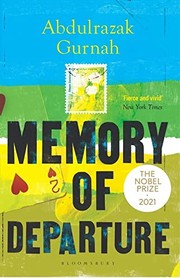
Memory of Departure
Memory of Departure, Gurnah’s debut novel, follows Hassan Omar, a young man growing up in a poor coastal community in East Africa. Intelligent and ambitious, Hassan dreams of escaping the limitations of his environment through education and opportunities abroad. However, his family life is marked by poverty, violence, and disappointment, making his desire to leave both a personal ambition and an attempt to escape an oppressive reality. As Hassan navigates difficult relationships and confronts the harshness of the world around him, he begins to understand the emotional and moral costs of pursuing a different future. The novel explores the struggle between hope and disillusionment, examining how family circumstances, social inequality, and colonial legacies shape the possibilities available to young people seeking independence.
1987
2

Paradise
Paradise follows Yusuf, a twelve-year-old boy growing up in East Africa at the beginning of the twentieth century. When his father falls into debt, Yusuf is handed over to Aziz, a wealthy merchant, as repayment. Taken away from his family, Yusuf begins working for the merchant and gradually discovers a world shaped by trade, cultural exchange, religious traditions, and colonial expansion. His journeys through towns and trading routes expose him to the inequalities and tensions of a society on the brink of profound change. As Yusuf grows older, he struggles to understand his place in a world where freedom is limited by economic dependence, social hierarchies, and the ambitions of powerful men. Drawing on East African history and the region’s diverse cultural influences, Gurnah explores exploitation, displacement, desire, and the loss of innocence. The novel’s title evokes a promised paradise that remains elusive, revealing the gap between the beauty of the natural world and the harsh realities of human power and domination.
1994