Books from Türkiye
Suggest a book
All genres
Historical Fiction
Literary Fiction
Fantasy
Romance
Horror
Thriller
Non-Fiction
Mystery
Memoir
Classics
History
Sci-Fi
Contemporary Fiction
Science Fiction
Fiction
Poetry
Essays
Family Saga
Magical Realism
Family Drama
Dark Academia
Psychological Fiction
Dark Comedy
Political Writing
Feminist Fiction
Satire
Campus Fiction
Cultural Studies
Biography
Philosophy
Comedy
Drama
Young Adult
Gothic
Dystopia
Crime
Children's Books
Short Stories
Mythology
Cozy
Retellings
Humour
Adventure
All themes
Love & Passion
Adventure & Journey
Identity & Belonging
War & Conflict
Freedom & Resistance
Family & Heritage
Nature & Landscape
Society & Class
Spirituality & Faith
Solitude & Exile
Coming of Age
Revolution & Change
Friendship
History
Immigration
Myths and Retellings
Colonialism
Women & Society
Mental Health
Motherhood
1
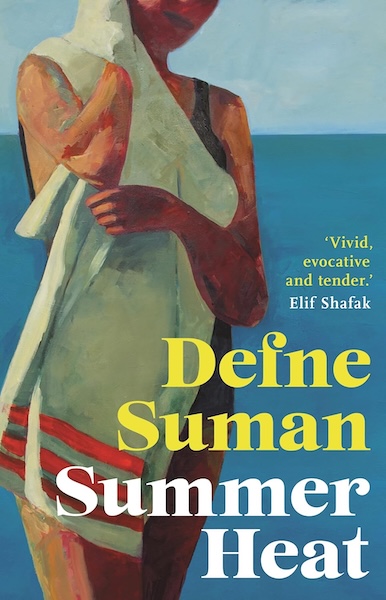
Summer Heat
In 1974, young Melike senses that something is terribly wrong. Her parents’ political gatherings have stopped, and whispered conversations about prison, invasion, and military coups fill the family home in Istanbul. Hoping to escape the growing unrest, the family moves to a quiet village in southern Turkey. For a while, life seems peaceful—until Melike’s beloved father disappears.
Nearly thirty years later, Melike has built a respectable life as an art historian in Istanbul. She has a comfortable home and a devoted husband, yet a persistent dissatisfaction follows her. When she meets Petro, a mysterious and captivating stranger, she believes a new chapter is beginning. But Petro’s concealed identity forces her to confront the past she has spent years trying to leave behind.
Against the backdrop of the 1974 Turkish military intervention in Cyprus and its political aftermath, Summer Heat explores family secrets, desire, and the long shadow of historical violence. It is a story about the identities we construct, the truths we bury, and the past’s power to disrupt even the most carefully arranged lives.
2023
2
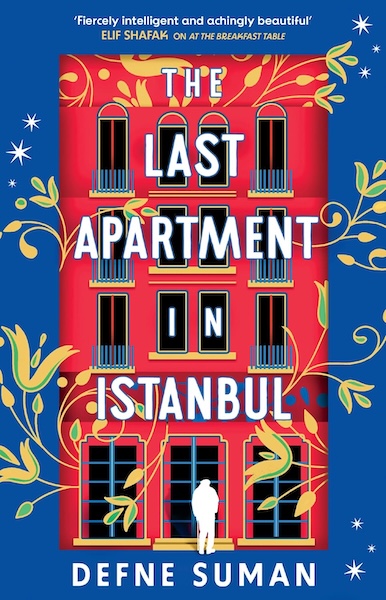
The Last Apartment in Istanbul
Pericles Drakos has lived his entire seventy-five years in Istanbul’s elegant Circle Building, watching the city transform around him. Once home to a thriving, multicultural community, his neighbourhood has gradually changed, its old inhabitants pushed aside by political tensions and gentrification. When the COVID-19 pandemic deepens his isolation, Pericles finds an unexpected connection with Leyla, a younger woman who moves into the building and happens to be a writer.
Drawn to Leyla, Pericles begins writing down the story of his life—not the version others remember, but the complicated truth of the man he once was. Through memories of love, jealousy, betrayal, and loss, he revisits the experiences of a Greek man living in Turkey, where political oppression and hostility have shaped both his personal history and his sense of belonging.
Spanning decades of Istanbul’s turbulent history, The Last Apartment in Istanbul is a poignant exploration of memory, identity, and the fragile coexistence of different communities. Defne Suman brings to life a city where private lives are inseparable from public history, asking what remains of a person when the world they knew disappears.
2022
3
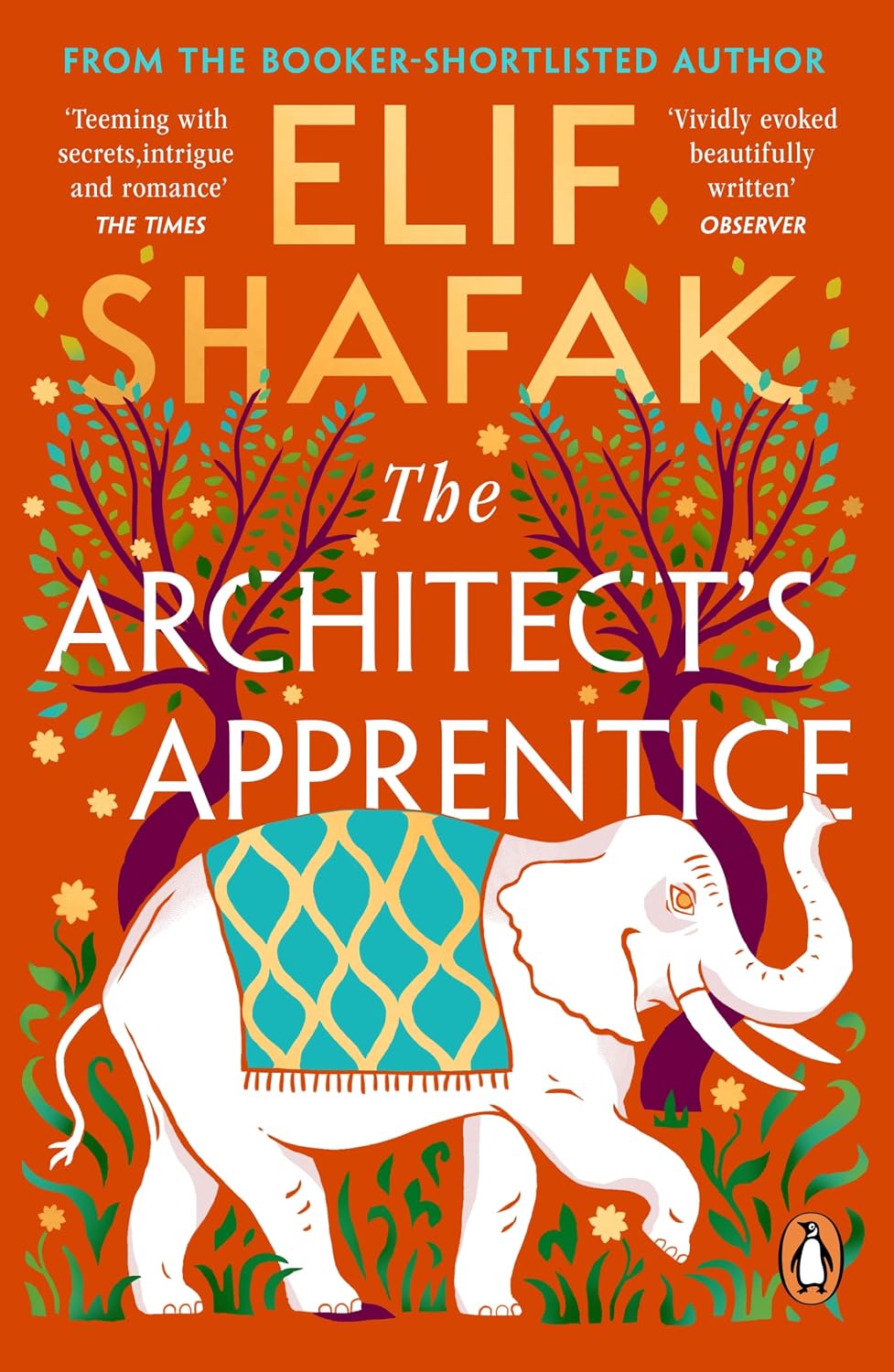
Architect's Apprentice
Set in the sixteenth-century Ottoman Empire, The Architect’s Apprentice follows Jahan, a twelve-year-old boy who arrives in Istanbul with Chota, an extraordinary white elephant intended for the sultan’s menagerie. As Jahan becomes involved in palace life, he encounters the celebrated imperial architect Mimar Sinan, who eventually takes him under his wing. Jahan enters a world of magnificent buildings, political intrigue, artistic ambition, and dangerous rivalries among the architect’s apprentices. As he grows older, his experiences expose him to the contradictions of an empire where beauty and intellectual achievement coexist with cruelty, jealousy, and the struggle for power. Shafak combines historical detail with an imaginative coming-of-age story, exploring loyalty, creativity, and the desire to find one’s place in the world. The novel celebrates architecture as both an artistic achievement and a lasting expression of human imagination.
2006
4
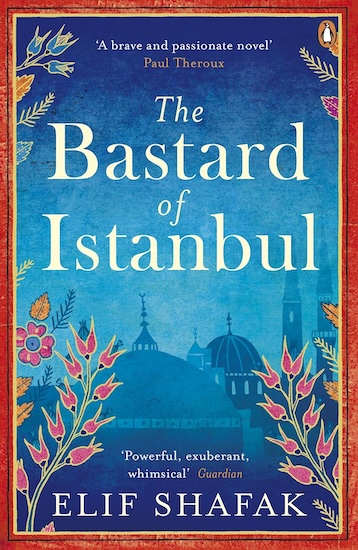
The Bastard of Istanbul
The Bastard of Istanbul centres on two young women whose lives connect through a complicated family history shaped by Turkish and Armenian experiences. Asya Kazancı grows up in Istanbul in a household dominated by women, surrounded by family secrets and conflicting interpretations of the past. Meanwhile, Armanoush, an Armenian American teenager, travels secretly to Istanbul in search of her cultural roots and a better understanding of her family’s history. When the two meet, their friendship brings buried memories and long-suppressed truths to the surface, particularly those connected to the Armenian genocide and its legacy. Through humour, food, family relationships, and competing memories, Shafak examines the relationship between personal identity and collective history. The novel explores how silence and denial can shape generations, while asking whether individuals can build meaningful connections across cultural and historical divisions.
2006
5
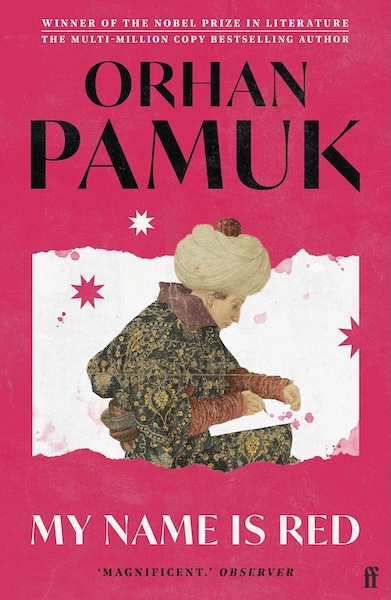
My Name Is Red
Set in sixteenth-century Istanbul during the Ottoman Empire, My Name Is Red follows a group of miniature painters commissioned to create an illustrated book for the sultan. Their work becomes controversial because it incorporates European artistic techniques that challenge traditional Islamic approaches to representation. When one of the artists is murdered, the investigation exposes rivalries, jealousy, and competing ideas about art, religion, and cultural identity. The story unfolds through multiple narrators, including artists, objects, and even a corpse, creating a complex picture of a society caught between established traditions and new influences. Pamuk explores the relationship between artistic expression and political authority, asking whether adopting foreign ideas represents progress or the loss of cultural heritage. The novel combines a murder mystery with a philosophical examination of how people understand themselves through art and tradition.
2002
6
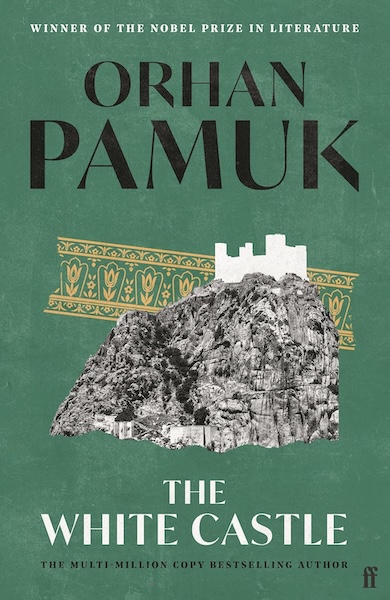
The White Castle
In the seventeenth century, a young Italian scholar travelling from Venice is captured by pirates and taken to Constantinople, where he becomes a slave. His new master, Hoja, is an Ottoman scholar fascinated by Western science and technology. But their relationship becomes increasingly strange when they discover that they look almost exactly alike.
As the Italian teaches Hoja everything he knows about astronomy, medicine, and engineering, their intellectual partnership develops into a psychological struggle. Each man becomes obsessed with understanding the other, probing his memories, fears, and deepest secrets. Gradually, the boundaries between master and slave begin to blur, raising an unsettling question: if two people know everything about each other, can they exchange identities?
Set against the grandeur and brutality of the Ottoman Empire, The White Castle is a philosophical tale about selfhood, cultural differences, and the fragile boundaries separating East from West.
1985