Singapore

Asia
Singapore
4
books
4
authors

Books from Singapore

1
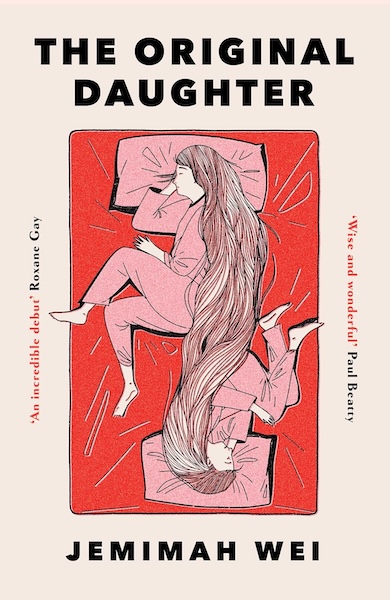
The Original Daughter
In 1996 Singapore, eight-year-old Genevieve Yang has always been an only child. That changes when Arin, a girl from a secret second family her grandfather left behind in Malaysia, comes to live with them. Initially uncertain of each other, the girls gradually become inseparable, forging a sisterhood that helps them navigate life in a working-class household and a society where academic achievement is seen as the path to a better future. As they grow older, Gen and Arin pursue their ambitions in different ways. But in a rapidly modernising Singapore, where success can mean everything and failure feels unforgivable, their once-unbreakable bond begins to fracture. Jealousy, resentment, and betrayal complicate their relationship, forcing them to confront what they owe their family—and what they owe themselves. Spanning years of changing relationships and personal reinvention, The Original Daughter is an intimate portrait of sisterhood, ambition, and the complicated nature of love. Jemimah Wei captures the pressures of social mobility and the longing to be seen, asking whether we can become our own people without losing those who helped shape us.
2025
2
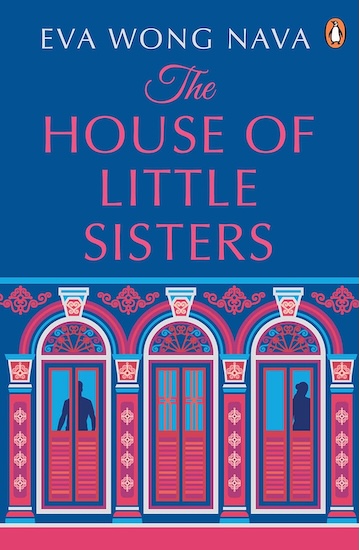
The House of Little Sisters
Singapore, 1931. Sixteen-year-old Ah Mei is sold into domestic servitude, becoming one of the mui tsai—young Chinese girls forced to serve wealthy households. When she encounters the ghost of another young servant, she begins to uncover the hidden stories of women whose lives have been shaped by exploitation and silence. As Ah Mei falls in love with Hassan, an aspiring poet, she must find the courage to challenge the social hierarchies that threaten to determine her future. Blending historical fiction, romance, and supernatural elements, this is a haunting story of resilience, forbidden love, and the struggle for freedom.
2022
3
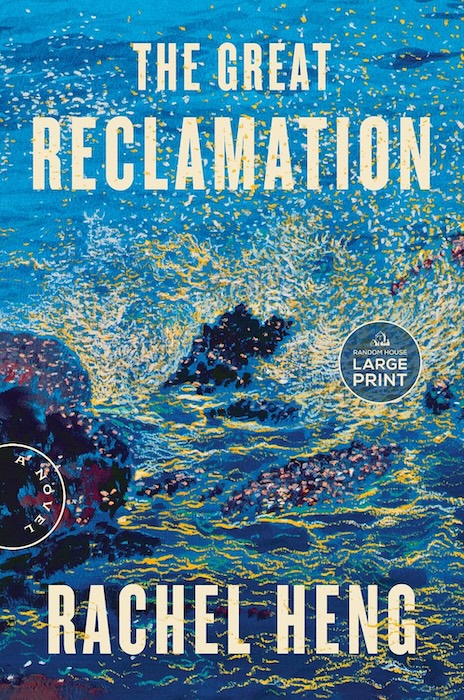
The Great Reclamation
Set against the dramatic transformation of twentieth-century Singapore, The Great Reclamation follows Lee Ah Boon, a gentle boy growing up in a coastal fishing village during the final years of British colonial rule. More interested in playing with his childhood companion, Siok Mei, than in fishing, Boon discovers he possesses an extraordinary ability: he can locate mysterious, shifting islands rich with fish that no one else can find. His discovery gives him a newfound purpose within his community and deepens his connection to Siok Mei. But history soon disrupts their sheltered world. The Japanese occupation during the Second World War, the rise of political resistance, and Singapore’s journey towards independence bring profound changes to the village. As the government pursues ambitious land reclamation projects in the name of progress, Boon and Siok Mei find themselves on opposing sides of an increasingly divided society. Blending historical fiction, magical realism, and an intimate love story, Heng’s novel explores the costs of modernisation, the legacies of colonialism, and the tension between personal loyalty and collective progress. Through Boon’s journey, the novel asks what it means to call a place home when the land itself—and the society built upon it—is constantly changing.
2023
4
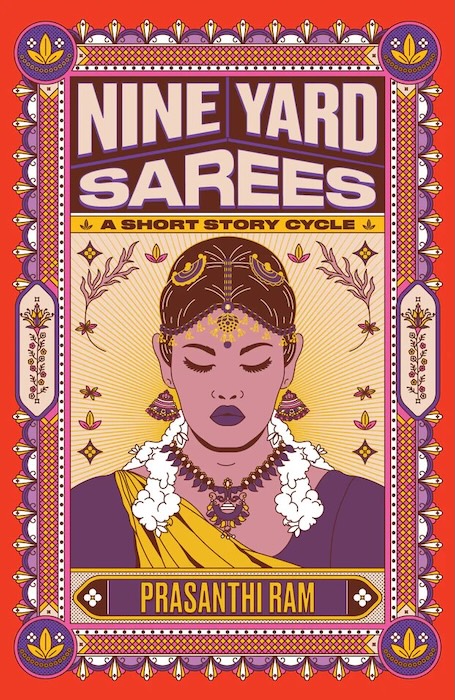
Nine Yard Sarees
Nine Yard Sarees
Nine Yard Sarees is a collection of eleven interconnected stories following nine women across three generations of the Srinivasan family, a Tamil Brahmin family whose history stretches from India to Singapore, Australia, and the United States. Spanning nearly seven decades, from 1950 to 2019, the stories explore how migration, tradition, and changing social expectations shape women’s lives. At the heart of the collection are women negotiating the demands of family and community while trying to define themselves on their own terms. Raji, the family matriarch, struggles with life away from her homeland, while her daughter Padma attempts to raise her children according to traditional values. In the younger generation, Keerthana approaches marriage and the prospect of wearing the nine-yard saree, a garment symbolizing womanhood and cultural heritage. Through stories of love, grief, prejudice, and personal transformation, Ram examines the tensions between tradition and independence. She addresses patriarchy, caste discrimination, sexuality, and the complexities of belonging in the diaspora. Moving between generations and continents, the collection celebrates women’s resilience and solidarity while revealing the emotional costs of preserving cultural identity in a changing world. The book won the 2024 Singapore Literature Prize for English Fiction.
2023

Famous authors from Singapore

About Singapore

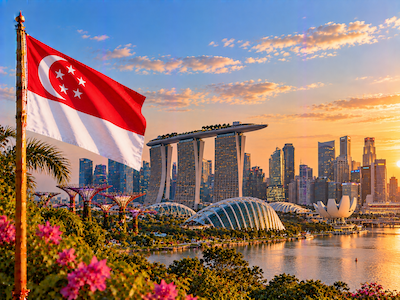
Singapore is a small island country in Southeast Asia, located at the southern tip of the Malay Peninsula. Despite its compact size, it features a striking mix of tropical gardens, coastal landscapes, historic neighborhoods, and modern architecture. The city-state is known for its distinctive skyline, waterfront districts, and green urban spaces such as Gardens by the Bay. Singapore’s cultural identity reflects the traditions of Chinese, Malay, Indian, and Eurasian communities, shaped by centuries of maritime trade and migration. English, Malay, Mandarin Chinese, and Tamil are its four official languages.

Region
Asia
Literary Context

Singaporean literature reflects the country’s multilingual, multicultural identity and history as a major trading port. Oral storytelling, Malay pantun poetry, Chinese literary traditions, and Indian storytelling have all contributed to its cultural heritage. Modern Singaporean writing developed across English, Chinese, Malay, and Tamil, often exploring the relationship between different communities and the rapid transformation of society. Important writers include Edwin Thumboo, a pioneering English-language poet whose work explores national identity and belonging; S. Rajaratnam, known for his essays and political writing; Catherine Lim, whose stories examine social expectations, class, and cultural traditions; and Alfian Sa’at, a playwright and writer who explores identity, language, and social boundaries. Other notable voices include Amanda Lee Koe, whose fiction engages with Singapore’s history and urban life. Contemporary Singaporean literature frequently examines migration, memory, language, family, social conformity, multiculturalism, and the tension between tradition and modernity. Its diverse literary traditions offer multiple perspectives on what it means to belong to a rapidly changing city-state.

Asia