Sudan

Africa
Sudan
4
books
3
authors

Books from Sudan

1
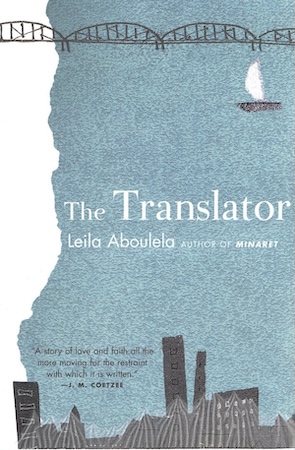
The Translator
The Translator
Alone in the grey streets of Aberdeen, Sudanese widow Sammar struggles to find meaning after losing her husband and being separated from her young son. Her quiet, isolated life begins to change when she falls in love with Rae, a Scottish academic whose intellectual curiosity about Islam cannot bridge the gap between understanding a faith and truly believing in it. As their relationship deepens, Sammar faces an impossible choice between the man she loves and the spiritual convictions that give her life meaning. Moving between Scotland and Sudan, The Translator is a tender exploration of love, grief, and the search for belonging, asking whether two people can build a life together when their deepest beliefs pull them in different directions.
1999
2
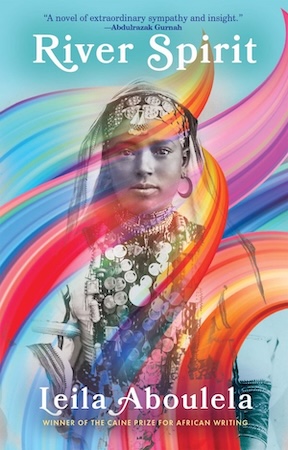
River Spirit
River Spirit
Set in nineteenth-century Sudan during the turbulent years surrounding the Mahdist uprising against Egyptian and British-backed rule, River Spirit explores a society transformed by war, faith, and the struggle for independence. At the heart of the novel is a group of interconnected characters whose lives are swept up in political upheaval. Among them is Akuany, a young woman whose experiences of violence, displacement, and loss shape her understanding of freedom and belonging. As the conflict spreads, personal loyalties collide with religious conviction and competing visions of Sudan’s future. Through the characters’ intertwined journeys, Aboulela examines how ordinary people endure extraordinary circumstances and how love and compassion can survive amid brutality. The Nile provides a powerful backdrop to this story of a nation in transition. Drawing on Sudanese history and Islamic traditions, Aboulela offers a nuanced perspective on a frequently overlooked chapter of African history. Rather than presenting the uprising solely as a political struggle, she explores its human consequences, illuminating the complex relationships between faith, identity, colonial power, and resistance.
2024
3
At Sea
At Sea
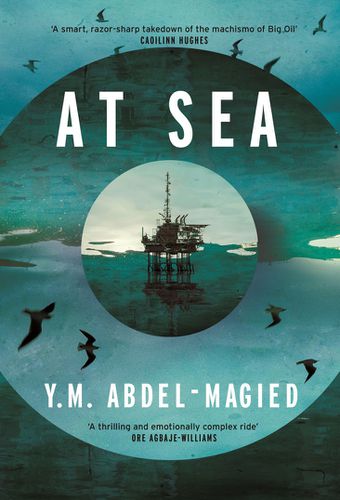
Zainab is an expert driller accustomed to working in an industry where women must constantly prove their competence. When she is offered the opportunity to oversee a high-stakes offshore oil rig operation, she leaves behind her pregnant sister and heads out to sea, determined to demonstrate that she has earned her place at the top. But the assignment quickly becomes a test of both her professional abilities and her moral convictions. She is the only woman among a crew of hardened men who resent her authority, and the rig itself is teetering on the edge of disaster. As Zainab investigates the technical problems threatening the operation, she discovers that the danger extends beyond the machinery. Corporate greed, careless decision-making, and the crew’s determination to complete the job as cheaply and quickly as possible threaten everyone’s lives. With her warnings repeatedly dismissed, she must decide how far she is willing to go to prevent a catastrophe. Drawing on the author’s own experience as a drilling engineer, this gripping literary thriller explores sexism, ambition, environmental responsibility, and the human cost of unchecked capitalism. Against the vast and unpredictable power of the ocean, Zainab confronts a world in which professional authority and ethical responsibility are constantly at odds. The novel asks what it means to stand by one’s principles when the people in power refuse to listen.
2026
4
Season of Migration to the North
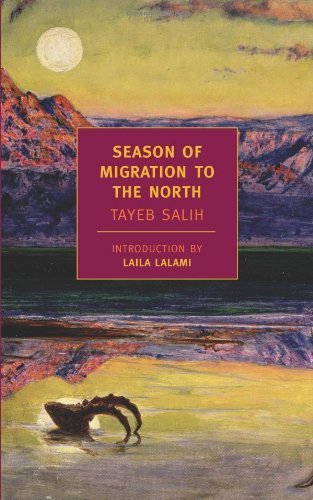
Season of Migration to the North follows an unnamed Sudanese narrator who returns to his village beside the Nile after studying in England. Hoping to resume a familiar life, he becomes intrigued by Mustafa Sa’eed, a mysterious newcomer whose intelligence and European education conceal a disturbing past. As the narrator gradually uncovers Mustafa’s history, he learns about the man’s experiences in colonial London, where his relationships with European women became entangled with questions of power, desire, and cultural identity. Through the parallel lives of these two men, Tayeb Salih examines the psychological consequences of colonialism and the complicated relationship between Africa and Europe. The novel challenges simplistic divisions between coloniser and colonised, revealing how both cultures can shape and unsettle individual identities. Set against the traditions of a Sudanese village undergoing social change, the story also explores masculinity, gender, and the tension between inherited values and modern influences. Provocative and psychologically complex, the novel asks whether returning home can ever resolve the conflicts created by migration and cultural displacement.
1966

Famous authors from Sudan

About Sudan

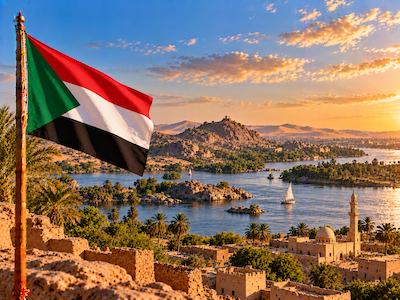
Sudan lies in northeastern Africa, where the Sahara Desert meets the savannas of the south and the Nile River flows through the country toward Egypt. Its landscapes range from arid plains and rugged mountains to fertile riverbanks dotted with villages, farms, and palm groves. Khartoum, at the historic confluence of the Blue Nile and White Nile, has long been an important center of trade and culture. Sudan’s heritage reflects the ancient kingdoms of Kush and Nubia, Arab and African traditions, and centuries of cultural exchange. Arabic is the country’s official language, while numerous Indigenous languages reflect its remarkable ethnic and linguistic diversity.

Region
Africa
Literary Context

Sudanese literature brings together African, Arab, and Islamic influences, drawing on oral storytelling, poetry, songs, proverbs, and a rich tradition of written Arabic literature. Writers have explored questions of identity, colonialism, social change, migration, and the tensions between tradition and modernity. Sudan’s diverse communities and complex political history have also shaped literary works concerned with belonging, displacement, and the experience of conflict. Among Sudan’s most celebrated writers is Tayeb Salih, whose novel Season of Migration to the North examines colonialism, cultural identity, and the encounter between Sudan and Europe. Leila Aboulela, known for The Translator and Minaret, explores faith, migration, and the lives of Sudanese Muslims navigating different cultural worlds. Amir Tag Elsir, a novelist and poet, often draws on Sudanese society, history, and political realities. Bushra al-Fadil, known for his short fiction, combines surrealism and satire to examine social and political life. Together, these writers offer perspectives on Sudan’s cultural complexity, historical transformations, and connections to the wider world.
Africa