Books from Russia
Suggest a book
All genres
Historical Fiction
Literary Fiction
Fantasy
Romance
Horror
Thriller
Non-Fiction
Mystery
Memoir
Classics
History
Sci-Fi
Contemporary Fiction
Science Fiction
Fiction
Poetry
Essays
Family Saga
Magical Realism
Family Drama
Dark Academia
Psychological Fiction
Dark Comedy
Political Writing
Feminist Fiction
Satire
Campus Fiction
Cultural Studies
Biography
Philosophy
Comedy
Drama
Young Adult
Gothic
Dystopia
Crime
Children's Books
Short Stories
Mythology
Cozy
Retellings
Humour
Adventure
All themes
Love & Passion
Adventure & Journey
Identity & Belonging
War & Conflict
Freedom & Resistance
Family & Heritage
Nature & Landscape
Society & Class
Spirituality & Faith
Solitude & Exile
Coming of Age
Revolution & Change
Friendship
History
Immigration
Myths and Retellings
Colonialism
Women & Society
Mental Health
Motherhood
1
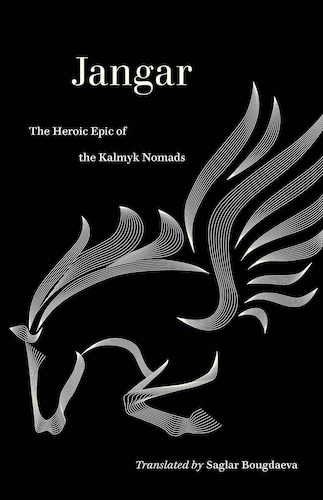
Jangar: The Heroic Epic of the Kalmyk Nomads
For centuries, the Kalmyk people of the Eurasian steppe have preserved Jangar, a magnificent heroic epic celebrating courage, loyalty, and the survival of their nomadic culture. At its centre is Jangar, the legendary ruler of Bumba, a mythical land of abundance and harmony where seventy kingdoms unite under his leadership. Surrounded by extraordinary warriors, Jangar defends his homeland against formidable enemies, monstrous giants, and rival rulers. His companions undertake daring quests, rescue captives, defeat powerful adversaries, and demonstrate remarkable feats of strength and bravery. Blending fantastical adventures with lyrical descriptions of horses, feasts, battles, and the steppe landscape, the epic reflects the ideals and aspirations of the Kalmyk people. Preserved through generations of oral performance by traditional storytellers, Jangar also bears witness to a culture that has endured conquest, displacement, and political repression. Saglar Bougdaeva’s English translation introduces international readers to this remarkable literary heritage, restoring a largely overlooked masterpiece of Eurasian oral literature to the world.
2023
2

Cynics
Set in Moscow during the turbulent years following the Russian Revolution, Cynics is a darkly comic portrait of love, survival, and moral compromise under Bolshevik rule. At its center is Vladimir, an idealistic intellectual hopelessly in love with Olga, a woman whose priorities are shaped increasingly by the struggle to obtain food, warmth, and security. When Olga becomes interested in serving the revolution, Vladimir introduces her to his brother Sergei, a Bolshevik official. Their relationships develop into a painful love triangle in which personal desires collide with political ambition and material necessity.
Written in a sharp, fragmented style, Marienhof’s novel juxtaposes intimate emotions with the absurdities and brutality of everyday life during War Communism and the New Economic Policy. Its characters navigate a society where ideological convictions often conceal self-interest, and basic necessities can outweigh romantic ideals. Through biting satire, grotesque humor, and cinematic scenes, Marienhof exposes the contradictions of revolutionary life without romanticizing either the old order or the new regime. Initially published in Berlin because Soviet censorship prevented its domestic publication, Cynics remains a striking exploration of how political upheaval reshapes private morality and human relationships.
1973
3
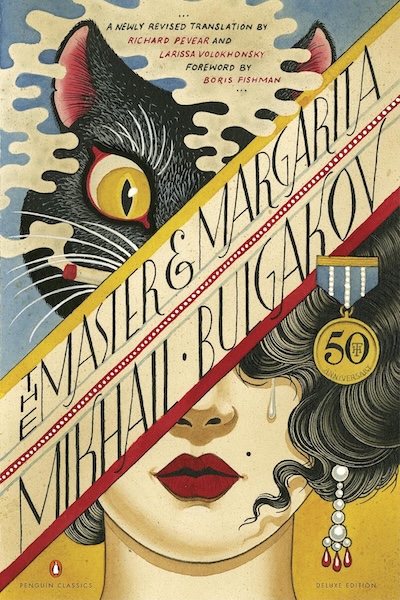
The Master and Margarita
The Master and Margarita is a surreal, satirical novel in which the Devil arrives in Moscow accompanied by a bizarre entourage, including a giant talking black cat. Their supernatural antics expose the hypocrisy, greed, cowardice, and corruption of Soviet society, throwing the city’s literary establishment and ordinary citizens into chaos.
Alongside this fantastical story, the novel follows the Master, a writer whose novel about Pontius Pilate has brought him persecution, and Margarita, the woman who loves him and refuses to abandon him. Desperate to find the Master, Margarita enters a dangerous bargain that leads her into the Devil’s extraordinary world. Interwoven with their story are chapters retelling the trial and execution of Jesus through the perspective of Pontius Pilate, who struggles with fear, conscience, and moral responsibility.
Blending fantasy, political satire, romance, and philosophical reflection, Bulgakov’s masterpiece explores the conflict between truth and authority, the power of love, artistic freedom, and the enduring struggle between good and evil.
1966
4
Doctor Zhivago
Doctor Zhivago follows Yuri Zhivago, a physician and poet whose life is transformed by the Russian Revolution and the civil war that follows. As political upheaval destroys established institutions and divides communities, Yuri struggles to reconcile his personal beliefs with the demands of the new order. His marriage to Tonya and his passionate relationship with Lara become entangled with the violence and uncertainty of the era. Forced to move between cities and rural settlements, Yuri witnesses the suffering of ordinary people caught between competing political forces. Pasternak explores the relationship between individual conscience and historical events, examining how love, art, and personal freedom endure under oppressive circumstances. The novel portrays a society in which private lives are repeatedly disrupted by ideological conflict, while poetry becomes a means of preserving human dignity amid destruction.
1957
5
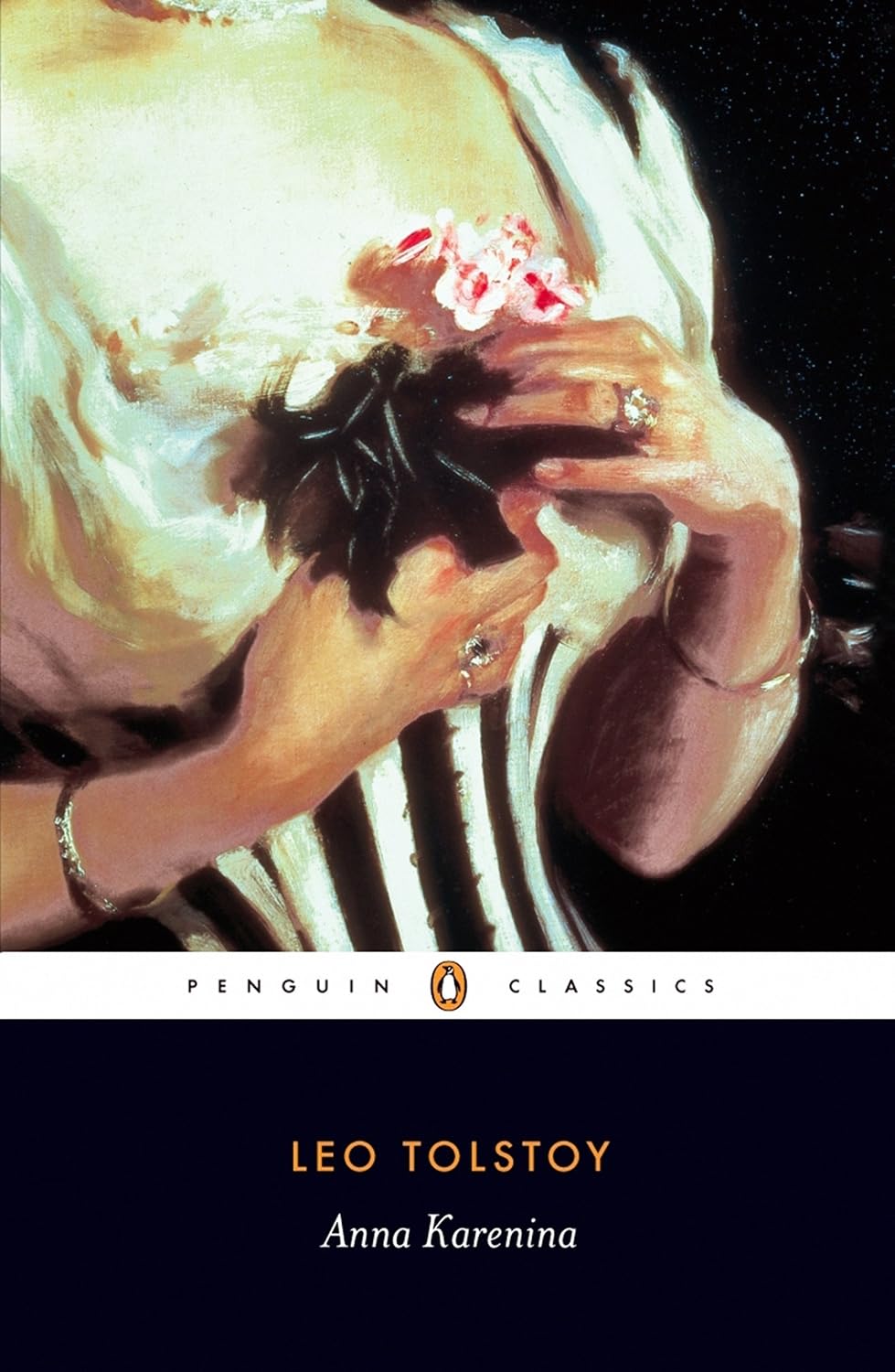
Anna Karenina
Anna Karenina explores love, marriage, family, and social expectations in nineteenth-century Russian society. Anna, an aristocratic woman trapped in an unhappy marriage, falls passionately in love with Count Vronsky, a military officer. Their relationship challenges the conventions of a society that grants men and women very different freedoms, exposing Anna to scandal and increasing isolation. Alongside her story, the novel follows Konstantin Levin, a landowner searching for meaning through work, family life, and spiritual reflection. As their lives unfold, Tolstoy examines the contradictions between personal happiness and social duty, revealing the consequences of hypocrisy and rigid moral standards. Through its complex characters and detailed portrayal of Russian life, the novel considers whether genuine fulfilment can be achieved within the expectations imposed by society.
1878
6
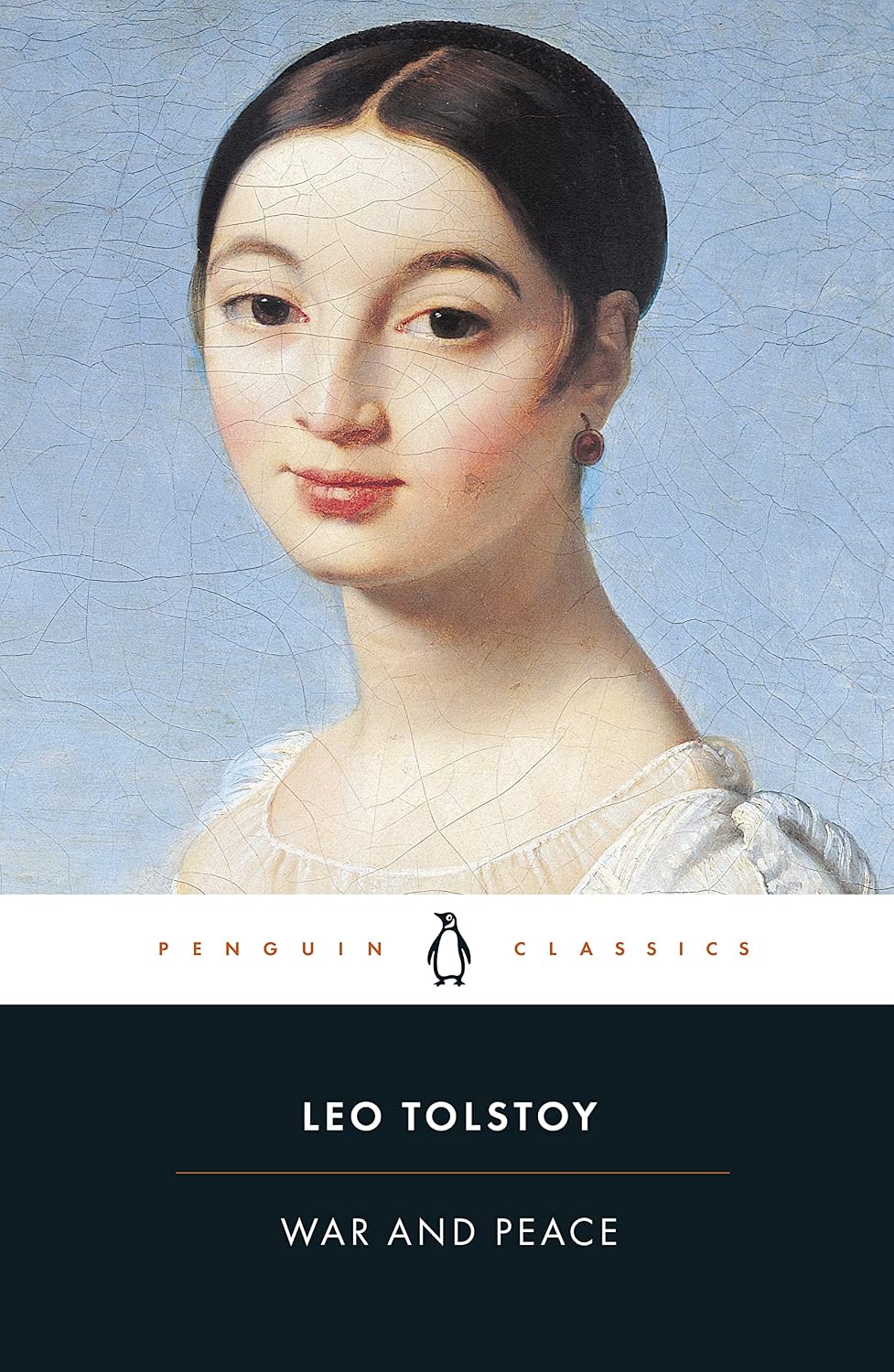
War and Peace
Set in Russia during the Napoleonic Wars, War and Peace follows the lives of several aristocratic families as their personal struggles unfold against the backdrop of invasion, political upheaval, and social transformation. The novel centres on three main characters: Pierre Bezukhov, an idealistic and searching young man; Prince Andrei Bolkonsky, a disillusioned aristocrat seeking meaning and glory; and Natasha Rostova, a spirited young woman whose experiences of love and loss shape her coming of age. As Napoleon’s army advances into Russia, the characters confront the devastating realities of war, the fragility of human ambition, and the unpredictability of fate. Blending intimate family dramas with sweeping historical events, Tolstoy questions the idea that history is shaped by a handful of powerful individuals, instead emphasising the countless ordinary choices that influence the world. The novel is a profound exploration of love, mortality, freedom, and the search for meaning amid the chaos of history.
1869
7
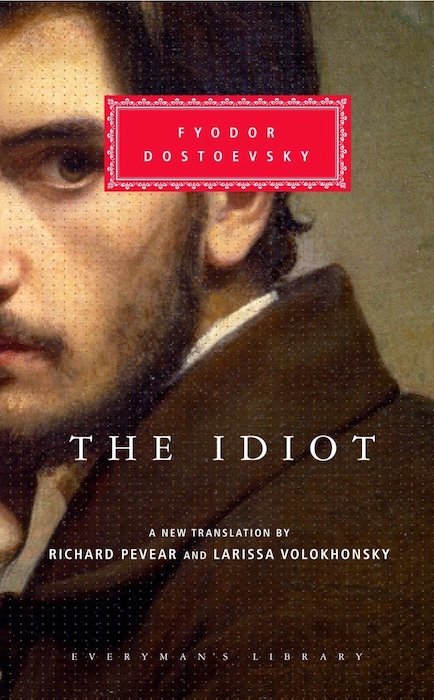
The Idiot
The Idiot follows Prince Lev Myshkin, a gentle and compassionate young man who returns to Russia after spending several years in a Swiss sanatorium receiving treatment for epilepsy. His sincerity, honesty, and lack of social pretension set him apart in the sophisticated but morally compromised world of St. Petersburg’s aristocracy, where his kindness is often mistaken for weakness or foolishness.
Myshkin becomes entangled in the lives of two women: Nastasya Filippovna, a beautiful woman haunted by past abuse and social humiliation, and Aglaya Yepanchina, a young woman drawn to the prince’s unusual character. As jealousy, romantic rivalry, and competing social ambitions intensify, Myshkin struggles to reconcile his ideal of unconditional compassion with the destructive realities of human behaviour.
Through its psychologically complex characters, Dostoevsky examines innocence, faith, suffering, pride, and the contradictions of human nature. The novel asks whether genuine goodness can survive in a society shaped by vanity, greed, and cruelty.
1869
8
Crime and Punishment
Set in the impoverished streets of nineteenth-century St. Petersburg, Crime and Punishment follows Rodion Raskolnikov, a former student who develops a theory that extraordinary individuals may be entitled to transgress moral laws for a greater purpose. Driven by poverty, pride, and his desire to prove his own superiority, he commits a brutal double murder. However, rather than achieving the freedom he imagined, Raskolnikov becomes consumed by guilt, paranoia, and psychological torment. As he struggles to conceal his crime, he encounters people who challenge his worldview, particularly Sonya Marmeladova, a young woman whose faith and compassion offer him a possible path toward redemption. Through intense psychological exploration, Dostoevsky examines morality, free will, suffering, and the conflict between intellectual justification and human conscience. The novel asks whether anyone can rise above ordinary moral obligations and explores how confronting one’s own humanity may be the first step toward transformation.
1866
9
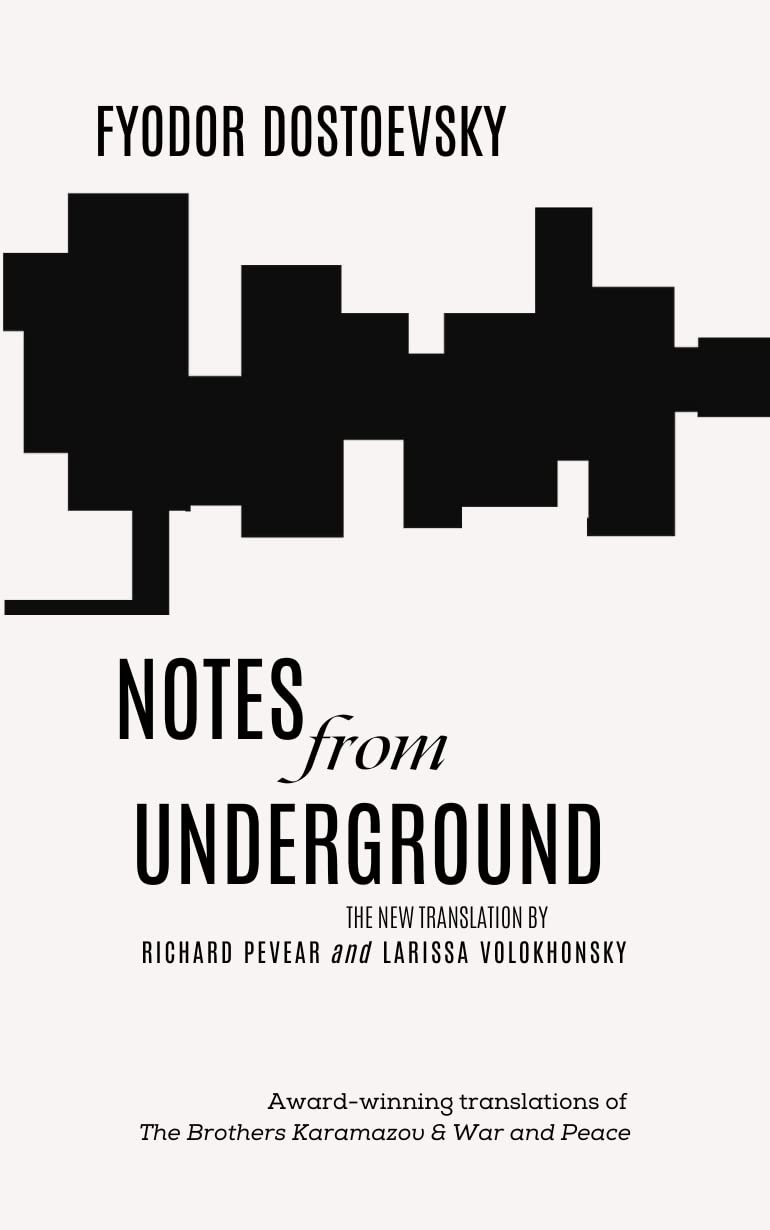
Notes from Underground
Notes from Underground is a psychological novella narrated by a bitter, isolated former civil servant living in St. Petersburg. Known only as the Underground Man, he addresses the reader directly, reflecting on his resentment toward society, his own contradictions, and his inability to form meaningful relationships. In the first part, he challenges the belief that human behaviour can be explained entirely through reason and self-interest, arguing that people may deliberately act against their own interests simply to assert their freedom.
The second part recounts episodes from his earlier life, including a humiliating encounter with former schoolmates and a disturbing relationship with Liza, a young woman working in a brothel. Although he briefly experiences the possibility of genuine human connection, his pride and fear of vulnerability lead him to reject it.
Through its unreliable narrator and intense introspection, Dostoevsky explores alienation, free will, self-sabotage, and the conflict between the desire for connection and the impulse to withdraw from the world.
1864