Books from Palestine
Suggest a book
All genres
Historical Fiction
Literary Fiction
Fantasy
Romance
Horror
Thriller
Non-Fiction
Mystery
Memoir
Classics
History
Sci-Fi
Contemporary Fiction
Science Fiction
Fiction
Poetry
Essays
Family Saga
Magical Realism
Family Drama
Dark Academia
Psychological Fiction
Dark Comedy
Political Writing
Feminist Fiction
Satire
Campus Fiction
Cultural Studies
Biography
Philosophy
Comedy
Drama
Young Adult
Gothic
Dystopia
Crime
Children's Books
Short Stories
Mythology
Cozy
Retellings
Humour
Adventure
All themes
Love & Passion
Adventure & Journey
Identity & Belonging
War & Conflict
Freedom & Resistance
Family & Heritage
Nature & Landscape
Society & Class
Spirituality & Faith
Solitude & Exile
Coming of Age
Revolution & Change
Friendship
History
Immigration
Myths and Retellings
Colonialism
Women & Society
Mental Health
Motherhood
1
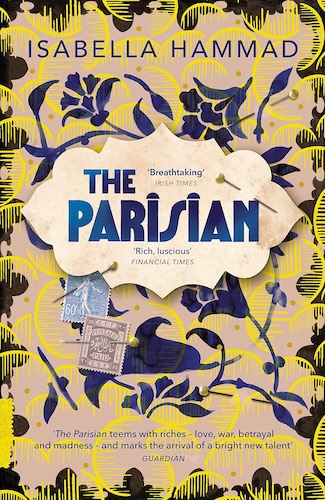
The Parisian
A young Palestinian man leaves home to study in France, believing the world is full of possibilities. But as war reshapes Europe and colonial rule transforms his homeland, Midhat Kamal discovers that belonging is far more complicated than he imagined. Beginning in 1914, this sweeping historical novel follows Midhat from the salons of Montpellier and Paris to Nablus, where British rule and rising nationalist movements challenge everything he thought he knew. Torn between cultures, romantic ideals, and conflicting loyalties, he must find his place in a world on the brink of transformation. Rich in historical detail and intimate human drama, The Parisian explores how personal lives become entangled with the making of nations—and how the past continues to shape the present.
2019
2
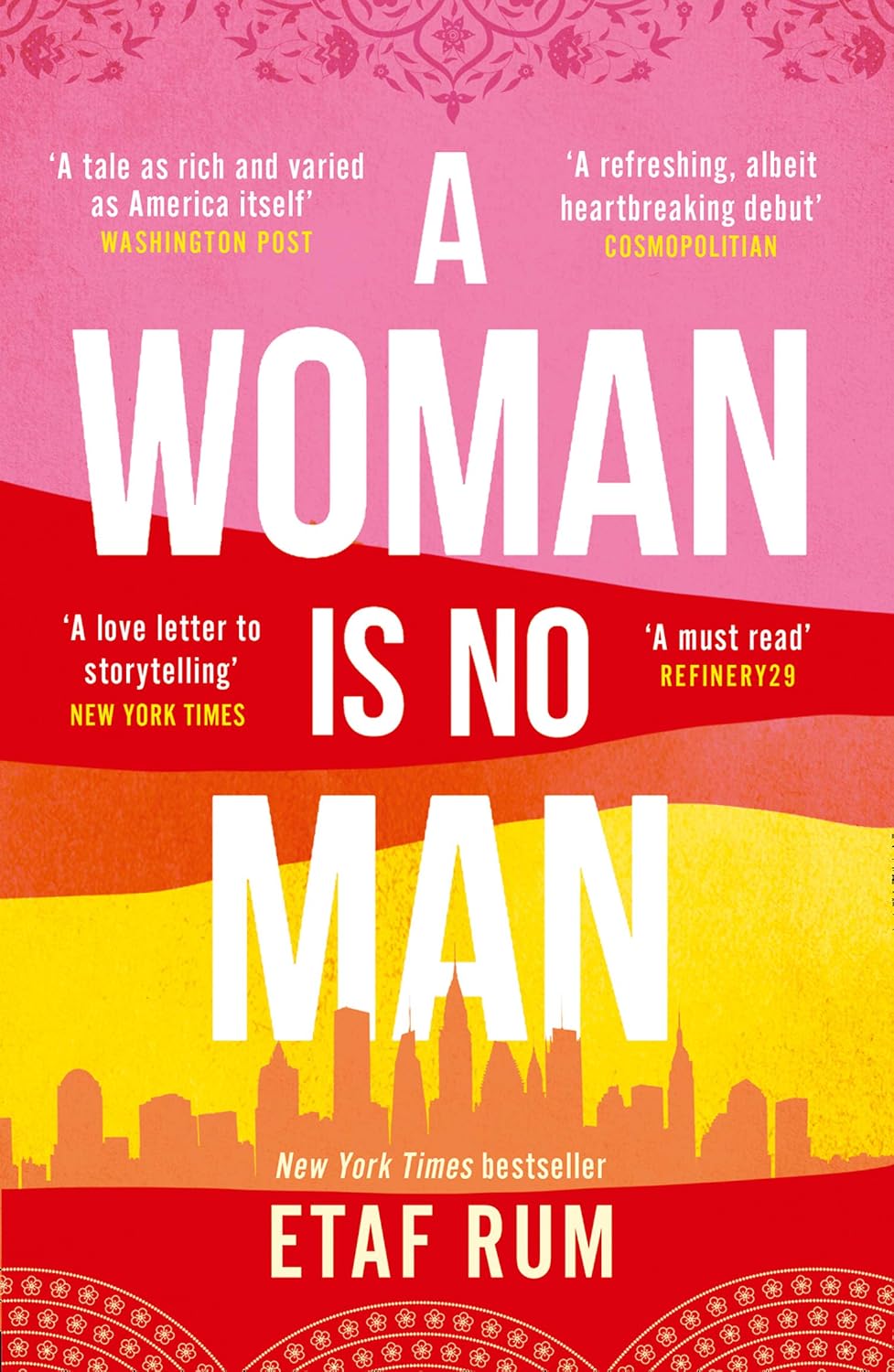
Woman Is No Man
A Woman Is No Man follows three generations of Palestinian women whose lives are shaped by family expectations, cultural traditions, and the struggle for independence. In 1990s Brooklyn, seventeen-year-old Isra marries Adam, a Palestinian American man, and leaves her home in Palestine to begin a new life in the United States. Instead of the freedom she hopes to find, she encounters strict expectations about marriage, motherhood, and obedience. Years later, her daughter Deya grows up under similar pressures, uncertain about her future and the secrets surrounding her mother’s life. As Deya begins to question the stories she has been told, hidden truths emerge that challenge her understanding of family and tradition. Rum explores intergenerational trauma, gender inequality, and the difficult choices women face when personal aspirations conflict with inherited expectations.
2019
3
Salt Houses
Salt Houses follows several generations of the Palestinian Yacoub family as political upheaval repeatedly forces them to leave their homes and rebuild their lives elsewhere. Beginning in Nablus in the 1960s, the story traces the family’s experiences through the Six-Day War, the displacement caused by regional conflicts, and the subsequent lives of their descendants across the Middle East, Europe, and the United States. Each generation inherits a complicated relationship with Palestine, balancing memories of a lost homeland with the practical demands of creating a future in unfamiliar places. As family members develop different ideas about belonging, identity, and home, their relationships are shaped by both shared history and personal choices. Alyan explores the intergenerational effects of displacement, revealing how exile can become part of family identity even for those who have never experienced their ancestral homeland themselves.
2018
4
Time of White Horses
Set in Palestine, before the creation of the state of Israel, this lyrical and deftly written novel spans three generations living in the small village of Hadiya. Reaching back into the late nineteenth and early twentieth centuries, the immense history of this period is brought into focus by the very human stories of Hajj Mahmoud, his son Khaled, and grandson Naji. As the cruel hand of history hovers above them, their destinies are shaped by outside forces - first the crumbling Ottoman Empire, then the British Mandate, and finally the Nakba. Nasrallah's elegant and epic tale is one of both suffering and survival, heart-break and hope.
2016
5
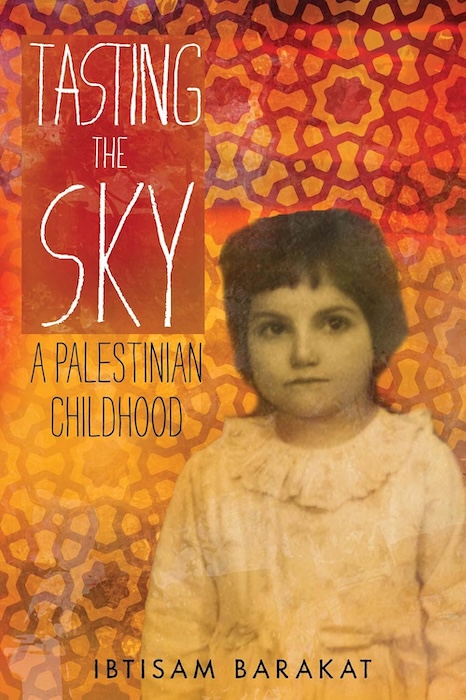
Tasting the Sky
Tasting the Sky: A Palestinian Childhood is a memoir recounting Ibtisam Barakat’s childhood during and after the 1967 Six-Day War. Growing up in Ramallah in the occupied West Bank, Barakat experiences the fear and confusion of war as her family flees their home, leaving behind the familiar world of her early years. Through the eyes of a young girl, she describes the uncertainty of displacement, the separation of families, and the emotional challenges of growing up amid political conflict. Despite the hardship surrounding her, Barakat discovers refuge in language, reading, and education, gradually finding ways to understand and express her experiences. Written in lyrical, accessible prose, the memoir captures how a child makes sense of violence and loss while holding on to curiosity and hope. It offers an intimate perspective on Palestinian history, exploring the relationship between memory, identity, language, and belonging, and demonstrating how storytelling can become a means of survival and self-discovery.
2016
6
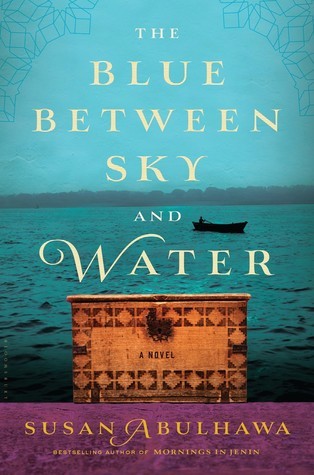
The Blue Between Sky and Water
In 1947, the Baraka family lives in Beit Daras, a Palestinian village surrounded by olive groves and fertile farmland. When their home is destroyed and the family is forced to flee during the Nakba, siblings Nazmiyeh and Mamdouh embark on separate journeys that will shape the lives of generations to come. In Gaza, Nazmiyeh struggles to rebuild her life in a refugee community, preserving her family’s traditions and nurturing the people around her despite repeated hardships. Meanwhile, Mamdouh eventually settles in the United States, where his granddaughter Nur grows up far from her ancestral homeland, struggling with loneliness and a fractured sense of belonging. Decades later, Nur travels to Gaza, where she encounters Alwan and her son Khaled, whose mysterious condition connects their families in unexpected ways. Blending Palestinian history, magical realism, and the intimate stories of several generations, Susan Abulhawa’s novel explores displacement, inherited trauma, family bonds, and the enduring longing for home.
2015
7
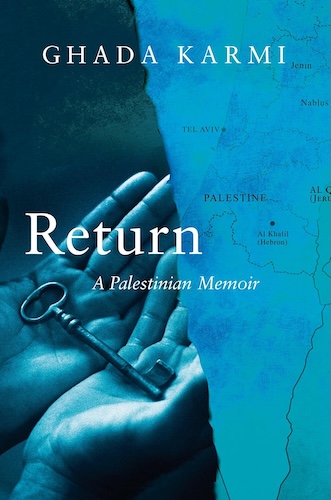
Return: A Palestinian Memoir
What happens when you finally return to the homeland you were forced to leave as a child—and discover that it no longer feels like home? More than fifty years after her family fled Jerusalem during the 1948 Nakba, Palestinian-British doctor and writer Ghada Karmi returns to Palestine, hoping to contribute to the struggle for peace and Palestinian statehood. Working with the Palestinian Authority in Ramallah, she encounters the realities of occupation, military restrictions, political bureaucracy, and a homeland transformed beyond recognition. As she revisits places connected to her childhood and confronts the loss of her family home, Karmi wrestles with a deeply personal question: can exile ever truly end? An intimate memoir of displacement and belonging, Return explores the painful distance between the homeland preserved in memory and the reality of returning to it.
2015
8
The Book of Disappearance
The Book of Disappearance imagines a startling alternative reality: one morning, all Palestinians living within Israel suddenly vanish without explanation. The disappearance transforms the country, leaving behind empty homes, abandoned workplaces, and a society forced to confront the absence of a population whose presence has shaped its history and everyday life. At the centre of the novel is Alaa, a Palestinian journalist living in Tel Aviv, whose Israeli friend Ariel discovers Alaa’s abandoned diary and begins reading it. Through their intertwined perspectives, the novel explores memory, displacement, belonging, and the political tensions surrounding Palestinian identity. As Ariel searches for meaning in the disappearance, Alaa’s diary reveals the intimate experiences and historical wounds that official narratives often overlook. Blending speculative fiction with social and political commentary, Ibtisam Azem challenges readers to imagine how history, identity, and power might look if those who have been marginalised were suddenly impossible to ignore.
2014
9
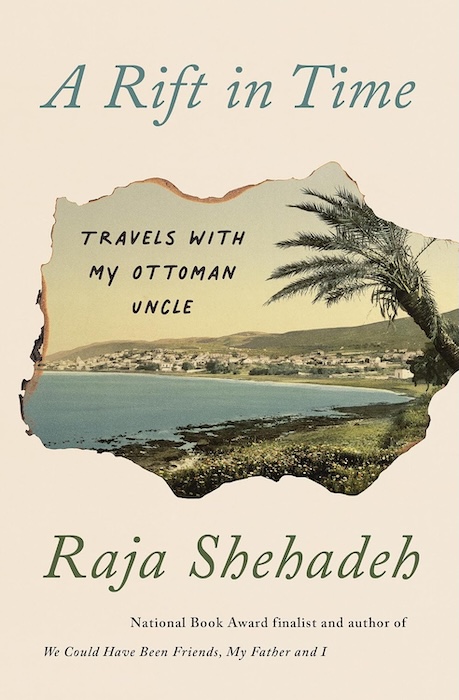
A Rift in Time: Travels with My Ottoman Uncle
In A Rift in Time: Travels with My Ottoman Uncle, Palestinian writer and human rights lawyer Raja Shehadeh explores the connections between family history, national identity, and the changing political landscape of the Middle East. Inspired by the life of his great-uncle Najib Nassar, a Palestinian journalist who lived during the final decades of the Ottoman Empire, Shehadeh traces the journey of a man who witnessed the collapse of an empire and the emergence of a new political order. Moving between historical research, personal reflection, and travel writing, the author examines how the experiences of earlier generations continue to shape contemporary Palestinian life. Through his uncle’s story, Shehadeh reflects on the meaning of belonging, the fragility of historical memory, and the ways political borders transform people’s relationships with their homeland. The book offers an intimate exploration of the past, revealing how an individual’s life can illuminate the wider forces that shape a nation’s history and collective identity.
2010
10
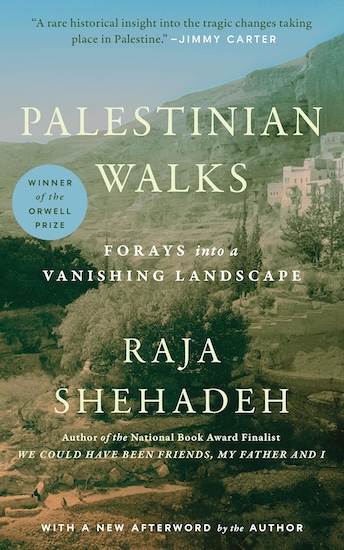
Palestinian Walks
Palestinian Walks is a lyrical memoir in which Palestinian lawyer and writer Raja Shehadeh recounts years of walking through the hills and valleys of the West Bank. Through six walks taken over several decades, Shehadeh explores a landscape he has known since childhood, documenting its natural beauty, ancient paths, wildflowers, and rocky hillsides. As he returns to familiar places, he witnesses how expanding settlements, roads, and political restrictions transform the countryside and limit access to land that once felt open and familiar. Combining personal reflection, nature writing, and historical observation, Shehadeh examines the relationship between landscape, memory, and belonging. His walks become both a way of reconnecting with the natural world and a means of understanding the changes reshaping Palestinian life. The book offers an intimate portrait of a threatened environment, revealing how the loss of familiar places can also mean the erosion of cultural memory, personal freedom, and a sense of home.
2008
11
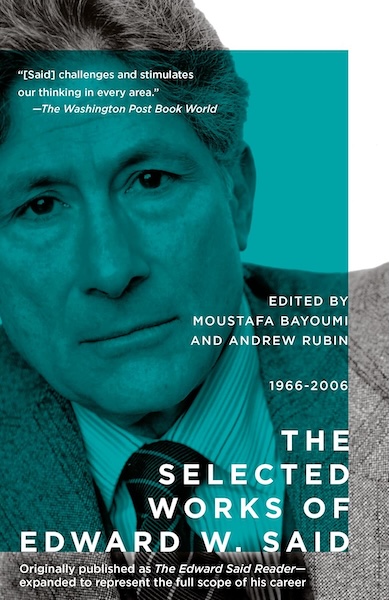
The Selected Works of Edward Said, 1966 - 2006
How do literature, culture, and politics shape the way we understand the world? And whose voices are missing from the stories history tells?
The Selected Works of Edward Said brings together key writings from four decades of one of the most influential intellectuals of the twentieth century. Edited by Moustafa Bayoumi and Andrew Rubin, this expanded collection traces Said’s thinking across subjects ranging from colonialism and Palestinian identity to literature, music, media, and the responsibilities of intellectuals.
Featuring selections from Orientalism, Culture and Imperialism, and Out of Place, alongside important essays and later writings, the collection offers an overview of Said’s evolving ideas about power, representation, and cultural identity.
Essential for understanding Said’s intellectual legacy, this volume reveals how cultural narratives influence political realities—and why questioning dominant perspectives remains vital.
2007
12
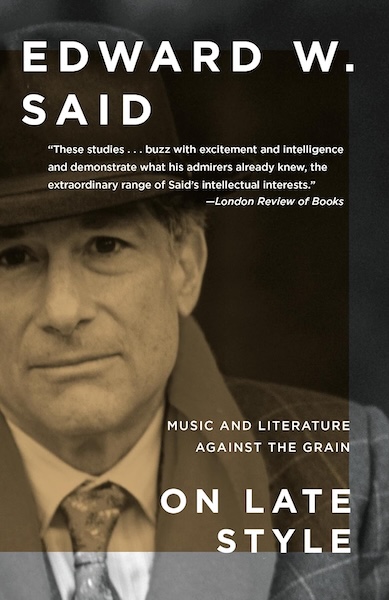
On Late Style: Music and Literature Against the Grain
What happens when great artists approach the end of their lives—and begin creating works that refuse to offer comfort, harmony, or easy answers?
In On Late Style, Edward W. Said explores the final works of celebrated composers, writers, and artists, including Beethoven, Mozart, Thomas Mann, and Jean Genet. He challenges the assumption that artistic maturity naturally leads to wisdom and reconciliation, arguing instead that some creators produce their most challenging work late in life, embracing contradiction, resistance, and unresolved tensions.
Drawing on music, literature, opera, and film, Said examines how artists confront their own mortality while remaining at odds with the cultural expectations of their time. The result is a compelling reflection on creativity, ageing, and the courage to resist conventional ideas of artistic perfection.
Published posthumously in 2006, this unfinished final work reflects Said’s own lifelong commitment to intellectual independence and the power of art to challenge established assumptions.
2006