Books from Pakistan
Suggest a book
All genres
Historical Fiction
Literary Fiction
Fantasy
Romance
Horror
Thriller
Non-Fiction
Mystery
Memoir
Classics
History
Sci-Fi
Contemporary Fiction
Science Fiction
Fiction
Poetry
Essays
Family Saga
Magical Realism
Family Drama
Dark Academia
Psychological Fiction
Dark Comedy
Political Writing
Feminist Fiction
Satire
Campus Fiction
Cultural Studies
Biography
Philosophy
Comedy
Drama
Young Adult
Gothic
Dystopia
Crime
Children's Books
Short Stories
Mythology
Cozy
Retellings
Humour
Adventure
All themes
Love & Passion
Adventure & Journey
Identity & Belonging
War & Conflict
Freedom & Resistance
Family & Heritage
Nature & Landscape
Society & Class
Spirituality & Faith
Solitude & Exile
Coming of Age
Revolution & Change
Friendship
History
Immigration
Myths and Retellings
Colonialism
Women & Society
Mental Health
Motherhood
1
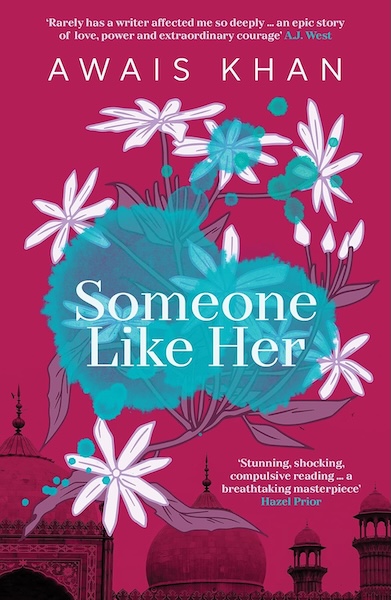
Someone Like Her
Someone Like Her explores the lives of women navigating the social expectations, gender inequalities, and cultural pressures of contemporary Pakistan. Through interconnected personal experiences, Awais Khan examines how family honour, class divisions, and traditional ideas about femininity shape women’s choices and relationships. The characters struggle to reconcile their private desires with the demands placed upon them by their families and communities, often confronting difficult decisions about love, independence, and their futures.
Set against the contrasting worlds of privilege and vulnerability, the novel examines the unequal power structures that influence women’s lives and the consequences of challenging established conventions. Khan’s storytelling highlights the emotional complexity behind outward appearances, revealing the compromises people make to protect themselves and those they love. At its heart, Someone Like Her considers what it means for a woman to claim her own identity in a society that often defines her worth through her relationships, reputation, and conformity to expectations.
2023
2
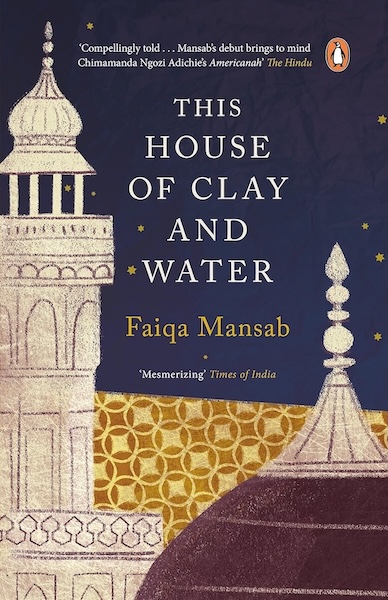
This House of Clay and Water
This House of Clay and Water follows two women whose lives intersect in contemporary Lahore, where social expectations, religious traditions, and personal desires shape the choices available to them. Nida is the wife of a police officer, living a life of privilege that conceals profound loneliness and dissatisfaction. When she encounters Bhanggi, a transgender woman living on the margins of society, an unexpected friendship develops between them. Their connection challenges the boundaries imposed by class, gender, and respectability.
Through their intertwined stories, Faiqa Mansab explores the search for belonging in a society where people who defy conventional expectations often face exclusion and violence. The novel also follows Sasha, a young man whose own emotional struggles become entangled with the women’s lives, adding further complexity to the story’s exploration of love and identity. Against the backdrop of Lahore’s vibrant yet deeply divided social landscape, the novel examines faith, desire, gender, and the human need for acceptance. It asks whether genuine connection can survive in a world determined to categorise people and dictate how they should live.
2017
3
The Reluctant Fundamentalist
The Reluctant Fundamentalist follows Changez, a young Pakistani man who achieves professional success in New York after graduating from Princeton University. Recruited by an elite financial firm, he embraces the promise of the American dream and begins a relationship with Erica, a wealthy American woman struggling with grief. However, the attacks of September 11, 2001, transform the way Changez experiences life in the United States. Increasingly aware of the suspicion and hostility directed towards him because of his Pakistani identity, he begins to question his professional ambitions and his place in American society. Years later, he recounts his experiences to an American visitor in Lahore, leaving the reader uncertain about the encounter’s true nature. Hamid explores belonging, nationalism, prejudice, and the psychological consequences of living between cultures in a world divided by political fear.
2007