Books from Norway
Suggest a book
All genres
Historical Fiction
Literary Fiction
Fantasy
Romance
Horror
Thriller
Non-Fiction
Mystery
Memoir
Classics
History
Sci-Fi
Contemporary Fiction
Science Fiction
Fiction
Poetry
Essays
Family Saga
Magical Realism
Family Drama
Dark Academia
Psychological Fiction
Dark Comedy
Political Writing
Feminist Fiction
Satire
Campus Fiction
Cultural Studies
Biography
Philosophy
Comedy
Drama
Young Adult
Gothic
Dystopia
Crime
Children's Books
Short Stories
Mythology
Cozy
Retellings
Humour
Adventure
All themes
Love & Passion
Adventure & Journey
Identity & Belonging
War & Conflict
Freedom & Resistance
Family & Heritage
Nature & Landscape
Society & Class
Spirituality & Faith
Solitude & Exile
Coming of Age
Revolution & Change
Friendship
History
Immigration
Myths and Retellings
Colonialism
Women & Society
Mental Health
Motherhood
1

Repetition
As winter settles over Norway, a chance encounter prompts a woman to revisit the events of her sixteenth year. At the time, she was navigating the familiar upheavals of adolescence: first experiences of alcohol and sex, growing independence, and the uneasy distance between herself and her parents. Her mother watched her anxiously, while her father remained emotionally remote. Yet beneath these ordinary teenage experiences lay something more disturbing, an event that reshaped the family and led to a silence that endured for decades. Looking back as an adult, the narrator struggles to understand what happened and how her family’s response influenced her sense of self. With psychological precision and an unflinching examination of memory, Hjorth explores the lasting power of childhood experiences, the stories families suppress, and the difficulty of recovering a past that may never be fully understood.
2026
2
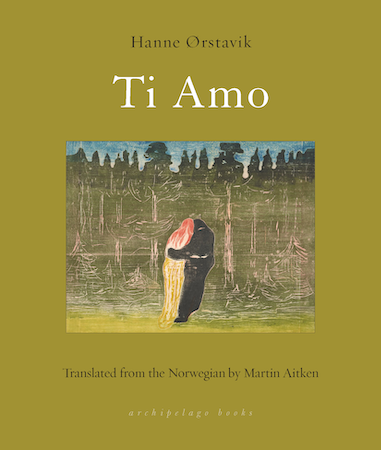
Ti Amo
Can love survive when the person you love is disappearing before your eyes? In this intimate, autobiographical novel, a woman in her fifties discovers that her husband has cancer. As they confront his illness together, their shared life takes on a new intensity, and ordinary moments become charged with tenderness, fear, and impending loss. The Italian words ti amo—“I love you”—become a quiet expression of devotion in the face of something neither of them can control. Through spare, precise prose, Hanne Ørstavik explores the strange isolation of caring for someone who is dying, the vulnerability of the body, and the ways love changes when time becomes painfully limited. Neither sentimental nor detached, the novel captures the contradictions of grief before death has even arrived: the desire to hold on, the exhaustion of caregiving, and the desperate wish to make every remaining moment count.
2022
3
Scenes from a Childhood
Scenes from a Childhood brings together a series of short prose pieces by Norwegian writer Jon Fosse, offering glimpses into the memories, experiences, and inner life of a boy growing up in rural Norway. Through seemingly ordinary moments—family encounters, childhood fears, religious experiences, and observations of the surrounding landscape—Fosse reveals how early experiences shape a person’s understanding of the world.
Written in his characteristic minimalist style, the collection relies on repetition, silence, and subtle shifts in perspective rather than conventional storytelling. Memories appear fragmented and sometimes dreamlike, reflecting the uncertain nature of recollection and the persistence of childhood emotions into adulthood. Beneath the quiet surface, the stories explore family relationships, loneliness, spirituality, and the tension between belonging and isolation. Fosse transforms small, everyday events into moments of profound significance, suggesting that the foundations of identity are often formed through experiences that seem insignificant at the time but remain with us long after childhood has passed.
2018
4
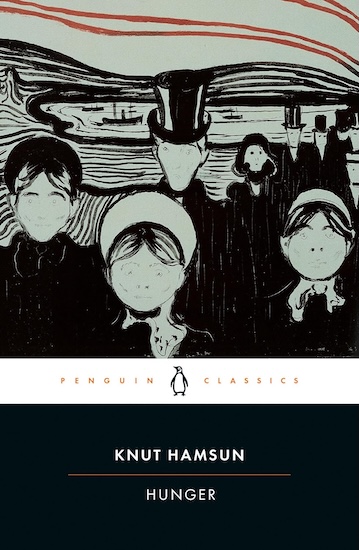
Hunger
Hunger follows an unnamed young writer wandering the streets of Kristiania, the city now known as Oslo, as he struggles with poverty and starvation. Determined to preserve his dignity and independence, he refuses to accept assistance even as his physical condition deteriorates. His hunger intensifies his emotional instability, leading to moments of grandiosity, shame, generosity, and irrational behaviour. Through his fragmented thoughts and unpredictable actions, Hamsun portrays the inner life of an individual whose desperate circumstances make ordinary social interactions increasingly difficult. The narrator’s pride becomes both a source of resistance and an obstacle to survival, revealing the psychological costs of extreme deprivation. The novel explores isolation, artistic ambition, and the fragile relationship between body and mind, offering an influential early example of psychological fiction that focuses on subjective experience rather than conventional plot.
1890