Books from Norway
Suggest a book
All genres
Historical Fiction
Literary Fiction
Fantasy
Romance
Horror
Thriller
Non-Fiction
Mystery
Memoir
Classics
History
Sci-Fi
Contemporary Fiction
Science Fiction
Fiction
Poetry
Essays
Family Saga
Magical Realism
Family Drama
Dark Academia
Psychological Fiction
Dark Comedy
Political Writing
Feminist Fiction
Satire
Campus Fiction
Cultural Studies
Biography
Philosophy
Comedy
Drama
Young Adult
Gothic
Dystopia
Crime
Children's Books
Short Stories
Mythology
Cozy
Retellings
Humour
Adventure
All themes
Love & Passion
Adventure & Journey
Identity & Belonging
War & Conflict
Freedom & Resistance
Family & Heritage
Nature & Landscape
Society & Class
Spirituality & Faith
Solitude & Exile
Coming of Age
Revolution & Change
Friendship
History
Immigration
Myths and Retellings
Colonialism
Women & Society
Mental Health
Motherhood
1
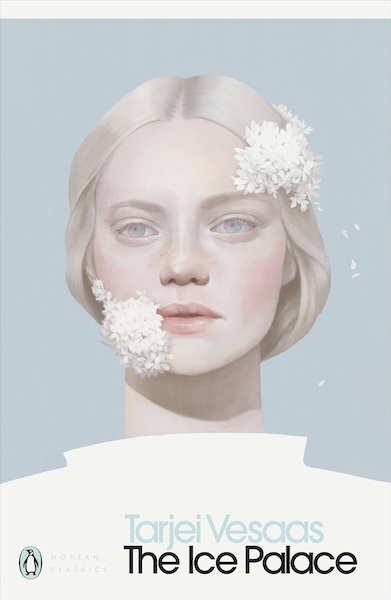
The Ice Palace
Two girls. One unforgettable encounter. A frozen world hiding secrets that words cannot express.
Eleven-year-old Siss is confident, outgoing, and well-liked by her classmates. Unn, who has recently arrived in their small Norwegian village to live with her aunt, is her opposite: withdrawn, mysterious, and burdened by a private grief. When the girls spend an evening together, they form an intense connection that neither can fully understand. But the following day, Unn disappears after venturing into a spectacular frozen waterfall known as the Ice Palace—a labyrinth of shimmering chambers sculpted by winter itself.
As the village searches for Unn, Siss struggles with the loss of a friendship that had barely begun. Unable to explain what passed between them, she withdraws into silence, carrying Unn’s memory like a secret of her own.
With hauntingly beautiful prose, Tarjei Vesaas transforms the Norwegian winter landscape into a reflection of loneliness, grief, and the mysteries of human connection. The Ice Palace is a quiet, deeply moving novel about childhood, loss, and the invisible bonds that can change us forever. It won the Nordic Council Literature Prize in 1964.
2025
2
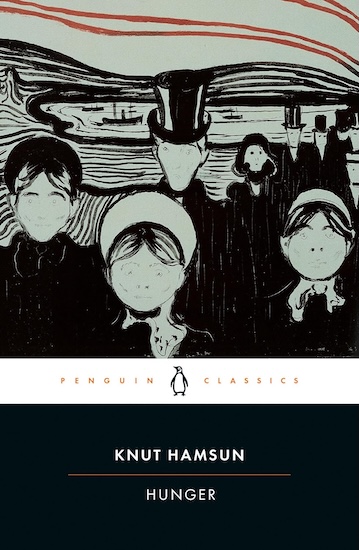
Hunger
Hunger follows an unnamed young writer wandering the streets of Kristiania, the city now known as Oslo, as he struggles with poverty and starvation. Determined to preserve his dignity and independence, he refuses to accept assistance even as his physical condition deteriorates. His hunger intensifies his emotional instability, leading to moments of grandiosity, shame, generosity, and irrational behaviour. Through his fragmented thoughts and unpredictable actions, Hamsun portrays the inner life of an individual whose desperate circumstances make ordinary social interactions increasingly difficult. The narrator’s pride becomes both a source of resistance and an obstacle to survival, revealing the psychological costs of extreme deprivation. The novel explores isolation, artistic ambition, and the fragile relationship between body and mind, offering an influential early example of psychological fiction that focuses on subjective experience rather than conventional plot.
1890