Books from Nigeria
Suggest a book
All genres
Historical Fiction
Literary Fiction
Fantasy
Romance
Horror
Thriller
Non-Fiction
Mystery
Memoir
Classics
History
Sci-Fi
Contemporary Fiction
Science Fiction
Fiction
Poetry
Essays
Family Saga
Magical Realism
Family Drama
Dark Academia
Psychological Fiction
Dark Comedy
Political Writing
Feminist Fiction
Satire
Campus Fiction
Cultural Studies
Biography
Philosophy
Comedy
Drama
Young Adult
Gothic
Dystopia
Crime
Children's Books
Short Stories
Mythology
Cozy
Retellings
Humour
Adventure
All themes
Love & Passion
Adventure & Journey
Identity & Belonging
War & Conflict
Freedom & Resistance
Family & Heritage
Nature & Landscape
Society & Class
Spirituality & Faith
Solitude & Exile
Coming of Age
Revolution & Change
Friendship
History
Immigration
Myths and Retellings
Colonialism
Women & Society
Mental Health
Motherhood
1
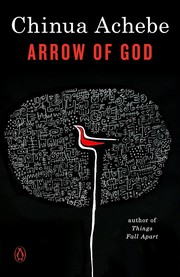
Arrow of God
Arrow of God is set in the Igbo communities of southeastern Nigeria during the early twentieth century, as British colonial rule and Christian missionary activity begin to transform traditional society. At the centre of the novel is Ezeulu, the chief priest of Ulu, the most powerful deity of six neighbouring villages. Proud, intelligent, and deeply committed to his religious responsibilities, Ezeulu sees himself as the guardian of his people’s spiritual and cultural traditions. However, his growing conflicts with colonial administrators, Christian missionaries, and rival community leaders gradually undermine his authority.
When Ezeulu refuses to cooperate with the British authorities, his decision creates a crisis that threatens both his position and the unity of his people. His personal pride and religious convictions become entangled with broader struggles over power, belief, and cultural survival. Through Ezeulu’s tragic story, Chinua Achebe examines the consequences of colonialism, the tensions between tradition and change, and the dangers of political and spiritual inflexibility. The novel offers a nuanced portrait of a society confronting profound transformation from within and without.
1964
2
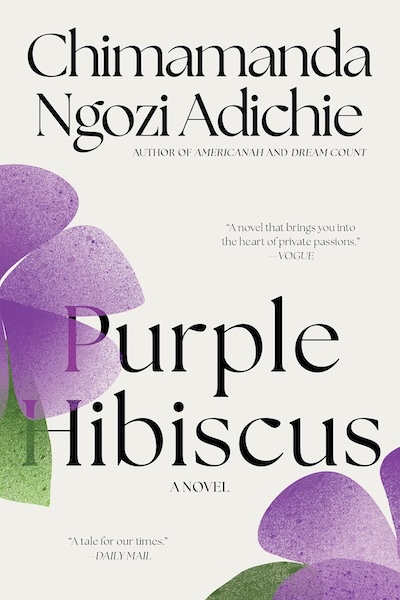
Purple Hibiscus
Purple Hibiscus follows fifteen-year-old Kambili Achike, who grows up in a wealthy Nigerian family ruled by her father, Eugene, a respected businessman and devout Catholic. In public, Eugene is admired for his generosity and outspoken opposition to political corruption. At home, however, his rigid religious beliefs and authoritarian behaviour create an atmosphere of fear and violence. Kambili and her brother, Jaja, learn to remain silent and obedient to avoid their father’s anger.
Their lives begin to change when they visit their aunt Ifeoma, a university lecturer who raises her children in a household filled with debate, laughter, and intellectual freedom. Through this experience, Kambili gradually discovers her own voice and begins to question the beliefs that have shaped her childhood. Set against the political instability of postcolonial Nigeria, the novel explores religious fanaticism, domestic abuse, freedom, and the courage required to challenge authority. With sensitivity and psychological depth, Adichie portrays a family’s struggle to break free from fear and rediscover the possibility of love and independence.
1980
3
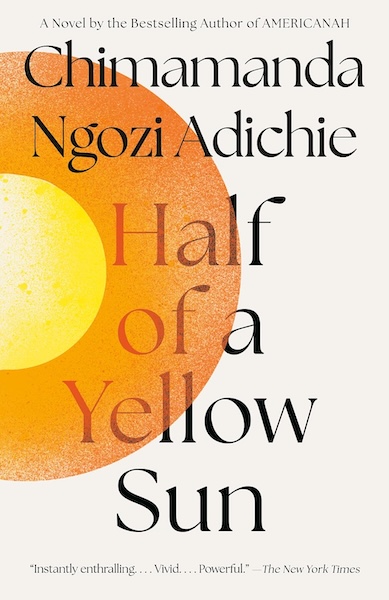
Half of a Yellow Sun
Half of a Yellow Sun is set in Nigeria during the 1960s, as the country moves from independence toward the devastating Biafran War. The novel follows three interconnected characters: Ugwu, a young houseboy who enters the service of a university professor; Olanna, the professor’s educated and politically engaged partner; and Richard, a British writer fascinated by Igbo culture who becomes involved with Olanna’s twin sister, Kainene. Through their experiences, Adichie portrays a society filled with intellectual ambition, political hope, and personal relationships that are gradually torn apart by ethnic tensions and conflict.
As the war intensifies and the independent state of Biafra struggles to survive, the characters face displacement, hunger, violence, and profound moral dilemmas. Their private lives become inseparable from the wider tragedy unfolding around them. Blending intimate storytelling with historical detail, the novel examines colonial legacies, ethnic identity, loyalty, and the devastating human cost of war. The title refers to the half-sun symbol on Biafra’s flag, representing a nation whose hopes for independence were ultimately shattered by conflict.
2007
4
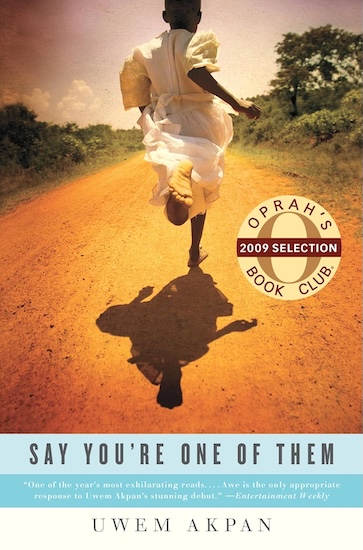
Say You're One of Them
Say You’re One of Them is a collection of five interconnected-in-spirit stories set in different African countries, exploring the lives of children caught in circumstances far beyond their control. Through the eyes of young narrators, Uwem Akpan portrays the devastating effects of poverty, religious conflict, human trafficking, and political violence on families and communities.
Written with emotional intensity and compassion, the collection challenges readers to look beyond headlines and statistics to recognise the individual lives behind Africa’s social and political crises. Rather than reducing its characters to victims, Akpan gives them distinctive voices, relationships, and hopes, creating a powerful portrait of childhood under extreme circumstances.
2009
5
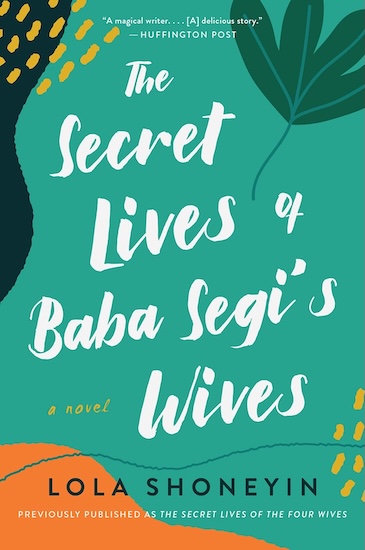
The Secret Lives of Baba Segi's Wives
Set in contemporary Ibadan, Nigeria, The Secret Lives of Baba Segi’s Wives explores the complicated dynamics of a polygamous household where jealousy, ambition, and long-buried secrets threaten to destroy the family’s carefully maintained balance.
Bolanle, a young university graduate, becomes the fourth wife of Baba Segi, a wealthy businessman whose large family is a source of pride and proof of his masculinity. Hoping to find security and acceptance, she enters a household already governed by three wives, each with her own personality, ambitions, and strategies for survival. However, Bolanle’s education and independence make her a source of suspicion and resentment, particularly when she offers to teach the other wives to read.
When Bolanle struggles to conceive, Baba Segi takes her to the hospital to discover the reason for her childlessness. The investigation threatens to expose a secret that the other wives have carefully protected for years. As the truth begins to emerge, the family must confront the consequences of deception and the fragile foundations upon which their relationships have been built.
Told through the perspectives of Baba Segi and his wives, Shoneyin’s novel combines dark humour with an incisive examination of marriage, motherhood, female rivalry, and patriarchal expectations. Beneath its entertaining portrayal of domestic life lies a deeper exploration of the ways women navigate restrictive social structures, compete for security, and find agency within a system that often measures their worth by their ability to bear children.
2010
6
The Thing Around Your Neck
The Thing Around Your Neck is a collection of twelve short stories exploring the experiences of Nigerians living both at home and abroad, particularly in the United States. Adichie portrays characters negotiating cultural expectations, family obligations, gender inequality, political instability, and the complicated realities of immigration. In the title story, a young Nigerian woman moves to America, where her hopes for a better life are challenged by loneliness, financial insecurity, and the feeling of being misunderstood. Other stories examine strained marriages, religious divisions, family secrets, and the gap between how people perceive Nigeria and how Nigerians experience their own country. With emotional precision and understated humour, Adichie explores the tension between tradition and modernity, revealing how migration and cultural encounters can transform people’s understanding of themselves and their relationships.
2010
7
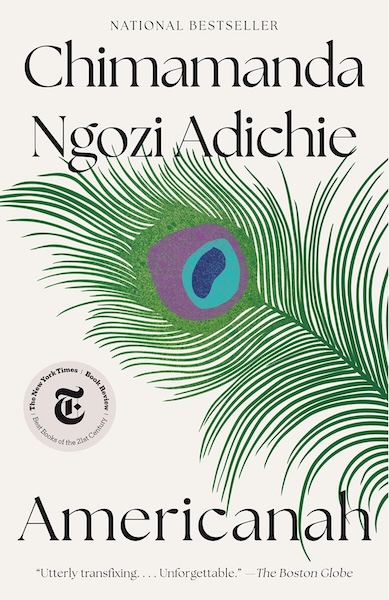
Americanah
Americanah follows Ifemelu and Obinze, two young Nigerians whose love story unfolds across continents as they navigate migration, race, and the search for belonging. As a university student, Ifemelu moves to the United States, where she confronts the realities of being Black in a society that forces her to reconsider her identity. Through her experiences with relationships, work, and cultural differences, she develops a popular blog examining race and everyday life in America. Meanwhile, Obinze hopes to build a future in Britain but encounters a very different set of obstacles as an undocumented immigrant.
Years later, Ifemelu returns to Nigeria, bringing with her a transformed understanding of home and the person she has become. As the two reconnect, they must confront the ways their experiences have changed them and consider whether their relationship can survive the passage of time. Blending romance with sharp social commentary, Chimamanda Ngozi Adichie explores race, immigration, class, cultural identity, and the complex meaning of home in an interconnected world.
2013
8
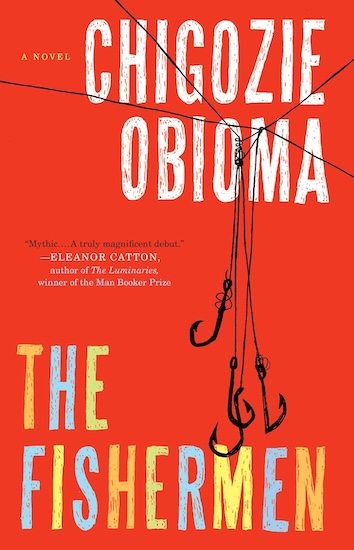
The Fishermen
In 1990s Nigeria, four brothers— Ikenna, Boja, Obembe, and Benjamin—enjoy a close bond until their father leaves their hometown of Akure for work. Taking advantage of his absence, the boys skip school to fish at a forbidden river. There, they encounter Abulu, a local man believed to be mad, who delivers a terrifying prophecy: the eldest brother, Ikenna, will be killed by one of his own siblings.
The prediction plants a seed of suspicion that gradually poisons the brothers’ relationship. As Ikenna becomes increasingly consumed by fear and paranoia, the family struggles to understand the forces tearing them apart. Narrated by nine-year-old Benjamin, the novel follows the devastating consequences of a single prophecy, exploring how belief, fear, and resentment can transform love into violence.
Blending Nigerian folklore, biblical allusions, and the structure of Greek tragedy, The Fishermen is both an intimate portrait of a family in crisis and a broader meditation on fate, brotherhood, and the fragility of human relationships.
2015
9
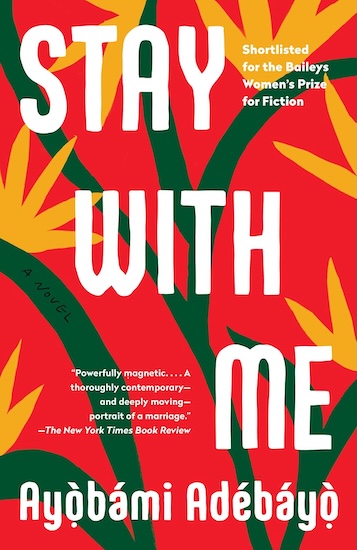
Stay with Me
Set in Nigeria during the 1980s and 1990s, Stay with Me tells the story of Yejide and Akin, a young couple whose passionate love is gradually tested by family expectations, infertility, and devastating secrets.
Having met and fallen in love at university, Yejide and Akin agree that polygamy has no place in their marriage. But after four years together without a child, pressure from Akin’s family becomes unbearable. His relatives eventually arrange for him to take a second wife, believing that another woman might succeed where Yejide has not. Humiliated and desperate to save her marriage, Yejide becomes increasingly determined to conceive.
As the couple struggle with fertility treatments, traditional remedies, and the demands of their families, their relationship begins to unravel. Decisions made out of fear and desperation lead to betrayal, grief, and consequences neither could have imagined. Meanwhile, political unrest and military upheaval provide a backdrop to their deeply personal struggles.
Told through the alternating perspectives of Yejide and Akin, the novel explores the painful intersection of love, marriage, and cultural expectations. Adebayo examines how the pressure to become parents can shape a person’s identity, how secrets can destroy even the closest relationships, and how grief changes the meaning of family. Ultimately, Stay with Me is a moving story about the sacrifices people make for love and the complicated ways they attempt to protect one another from heartbreak.
2018
10
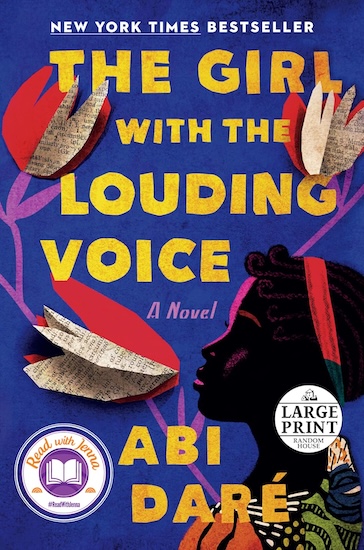
The Girl with the Louding Voice
Fourteen-year-old Adunni dreams of receiving an education, becoming a teacher, and giving her family a better life. Growing up in a poor rural village in Nigeria, she believes that education will give her the power to speak for herself and choose her own future. Her mother calls this her louding voice—the ability to make herself heard in a world that expects girls to remain silent.
When Adunni’s father marries her off to a much older man in exchange for a bride price, her dreams of going to school are shattered. After a devastating tragedy, she escapes to Lagos, hoping to find freedom and a new beginning. Instead, she becomes a domestic servant in the household of a wealthy, controlling woman known as Big Madam. There, Adunni encounters exploitation, abuse, and the harsh realities faced by girls whose poverty leaves them vulnerable to others’ power.
Despite repeated setbacks, Adunni refuses to abandon her ambition. As she uncovers the truth about another young domestic worker who disappeared before her arrival, she begins to understand that finding her voice means more than fighting for herself—it also means speaking up for girls whose suffering has been ignored.
Told in Adunni’s distinctive, expressive voice, the novel combines humour, heartbreak, and hope to examine child marriage, gender inequality, poverty, and the transformative power of education. It is a moving story about a young woman’s determination to reclaim her future and challenge the social structures that seek to silence her.
2020
11
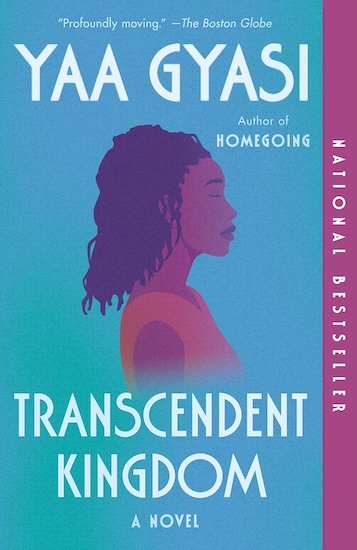
Transcendent Kingdom
Gifty, a Ghanaian American neuroscience PhD student at Stanford, searches for answers in the science of addiction while struggling to understand the tragedies that have shaped her family. Her brother Nana, once a promising athlete, died after developing an addiction to opioids, and her deeply religious mother has fallen into a debilitating depression. Torn between the evangelical faith of her childhood and the scientific world she inhabits, Gifty investigates the mechanisms of reward and suffering, hoping to uncover why people hurt themselves and those they love. Intimate and quietly devastating, Transcendent Kingdom explores grief, addiction, faith, and the limits of what science can explain about the human heart.
2020
12
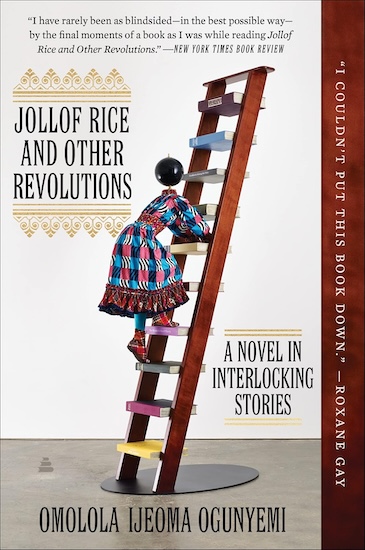
Jollof Rice and Other Revolutions
Spanning more than 150 years, from 1897 to an imagined 2050, Jollof Rice and Other Revolutions follows generations of Nigerian women as they navigate friendship, family, ambition, and the struggle to determine their own futures. Moving between Nigeria and the United States, the interconnected stories explore how personal choices and historical events shape women’s lives across generations.
At the heart of the collection are Nonso, Remi, Aisha, and Solape, four girls who form a powerful bond while attending an all-girls boarding school in Nigeria during the 1980s. Their friendship is tested when they participate in a rebellion against their school’s principal, an event whose consequences continue to affect them long after they leave adolescence behind.
As the women grow older, their lives take different directions. Nonso moves to the United States and falls in love with an African American man, discovering new possibilities alongside the challenges of building a life between cultures. Remi confronts painful family experiences while navigating love and relationships, while Aisha struggles with guilt over the events of their schooldays. Their stories extend into the lives of their relatives and descendants, revealing how the past continues to shape the present.
Through its shifting perspectives and leaps across time, Ogunyemi’s debut explores the complicated relationships between women, the consequences of silence, and the meaning of belonging. It offers a nuanced portrait of Nigerian women’s experiences, examining how friendship, family loyalty, and the pursuit of independence can become sources of both strength and conflict.
2022