Books from Nigeria
Suggest a book
All genres
Historical Fiction
Literary Fiction
Fantasy
Romance
Horror
Thriller
Non-Fiction
Mystery
Memoir
Classics
History
Sci-Fi
Contemporary Fiction
Science Fiction
Fiction
Poetry
Essays
Family Saga
Magical Realism
Family Drama
Dark Academia
Psychological Fiction
Dark Comedy
Political Writing
Feminist Fiction
Satire
Campus Fiction
Cultural Studies
Biography
Philosophy
Comedy
Drama
Young Adult
Gothic
Dystopia
Crime
Children's Books
Short Stories
Mythology
Cozy
Retellings
Humour
Adventure
All themes
Love & Passion
Adventure & Journey
Identity & Belonging
War & Conflict
Freedom & Resistance
Family & Heritage
Nature & Landscape
Society & Class
Spirituality & Faith
Solitude & Exile
Coming of Age
Revolution & Change
Friendship
History
Immigration
Myths and Retellings
Colonialism
Women & Society
Mental Health
Motherhood
1
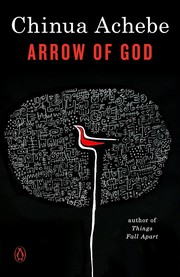
Arrow of God
Arrow of God is set in the Igbo communities of southeastern Nigeria during the early twentieth century, as British colonial rule and Christian missionary activity begin to transform traditional society. At the centre of the novel is Ezeulu, the chief priest of Ulu, the most powerful deity of six neighbouring villages. Proud, intelligent, and deeply committed to his religious responsibilities, Ezeulu sees himself as the guardian of his people’s spiritual and cultural traditions. However, his growing conflicts with colonial administrators, Christian missionaries, and rival community leaders gradually undermine his authority.
When Ezeulu refuses to cooperate with the British authorities, his decision creates a crisis that threatens both his position and the unity of his people. His personal pride and religious convictions become entangled with broader struggles over power, belief, and cultural survival. Through Ezeulu’s tragic story, Chinua Achebe examines the consequences of colonialism, the tensions between tradition and change, and the dangers of political and spiritual inflexibility. The novel offers a nuanced portrait of a society confronting profound transformation from within and without.
1964
2
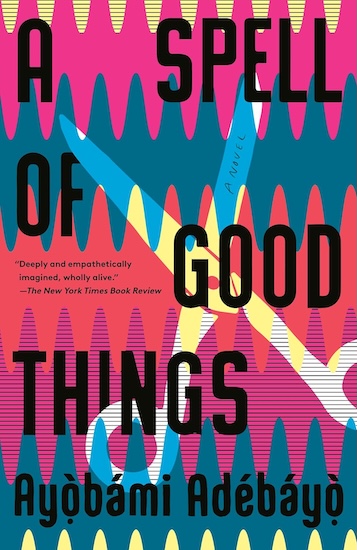
A Spell of Good Things
Set in contemporary Nigeria, A Spell of Good Things follows two young people from vastly different social backgrounds whose lives become entangled amid growing political tensions, family pressures, and personal struggles.
Ẹniọlá is a sixteen-year-old boy whose family has fallen into poverty after his father loses his job as a teacher. Once accustomed to a more comfortable life, he now struggles to pay his school fees and preserve his dignity. He runs errands, works for a local tailor, and occasionally begs on the streets, all while holding on to his dreams of a better future.
Wúràọlá, meanwhile, comes from a wealthy and influential family. A talented young doctor in her first year of practice, she is exhausted by the demands of her profession and trapped in an increasingly troubling relationship with Kúnlé, the son of a powerful politician. Although her privileged background offers financial security, it cannot protect her from the pressures and dangers of her personal life.
When a local politician takes an interest in Ẹniọlá and violence erupts during a family celebration, the lives of the two young people become unexpectedly connected. Their stories unfold against a backdrop of political corruption, social inequality, and a society approaching a moment of crisis.
Through these intersecting narratives, Adébáyọ̀ examines the relationship between wealth and power, the vulnerability of women, and the ways social class shapes people’s opportunities and choices. The novel reveals how the struggles of seemingly different individuals are connected by the structures surrounding them, offering a nuanced portrait of contemporary Nigerian society.
2024
3
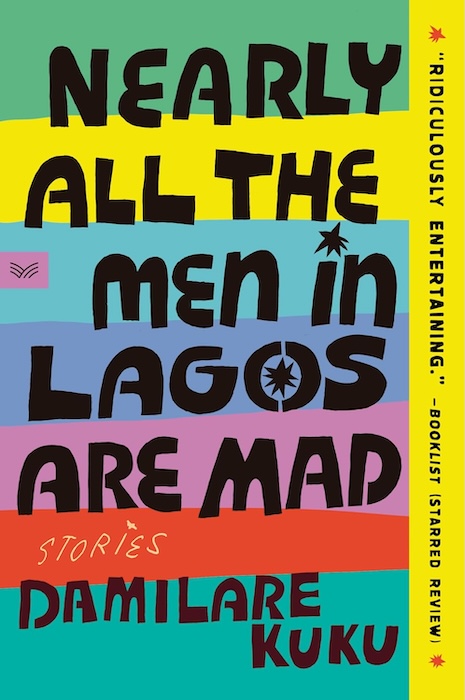
Nearly All the Men in Lagos Are Mad
In this remarkable and darkly humorous short story collection, Damilare Kuku takes us deep into the heart of modern Lagos, Nigeria’s largest city, and the lives of a collection of audacious women who cope with romantic difficulties by brilliantly turning the tables on the men who wrong them.
One hardworking married woman calmly threatens sharp-edged revenge on her lazy, hypocritical husband. Another skillfully protects her own business interests by shielding her pastor-husband from allegations of cheating that may or may not be true. A group of wealthy wives deceived by their husbands join forces in a WhatsApp support group called the Virtuous Wives Guild. And a discerning dater fed up with Nigerian men makes a vow to date only oyibos before discovering that white men can act just as badly.
A bestseller in Damilare Kuku’s native Nigeria, Nearly All the Men in Lagos Are Mad is a raunchy, satisfying, and outrageous example of contemporary African fiction steeped in the chaos and allure of sub-Saharan Africa’s largest city. It’s also a love letter to Nigerian women: the women in these stories may be confronted at every turn with liars, scammers, and cheaters in their quests for love, but they always figure out how to come out victorious.
2025