Books from Lebanon
Suggest a book
All genres
Historical Fiction
Literary Fiction
Fantasy
Romance
Horror
Thriller
Non-Fiction
Mystery
Memoir
Classics
History
Sci-Fi
Contemporary Fiction
Science Fiction
Fiction
Poetry
Essays
Family Saga
Magical Realism
Family Drama
Dark Academia
Psychological Fiction
Dark Comedy
Political Writing
Feminist Fiction
Satire
Campus Fiction
Cultural Studies
Biography
Philosophy
Comedy
Drama
Young Adult
Gothic
Dystopia
Crime
Children's Books
Short Stories
Mythology
Cozy
Retellings
Humour
Adventure
All themes
Love & Passion
Adventure & Journey
Identity & Belonging
War & Conflict
Freedom & Resistance
Family & Heritage
Nature & Landscape
Society & Class
Spirituality & Faith
Solitude & Exile
Coming of Age
Revolution & Change
Friendship
History
Immigration
Myths and Retellings
Colonialism
Women & Society
Mental Health
Motherhood
1
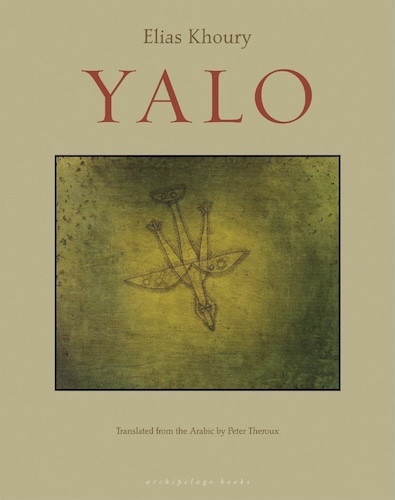
Yalo
Set in Beirut in the aftermath of Lebanon’s long civil war, Yalo follows Daniel Habil Abyad, a young Lebanese man of Assyrian Christian background whose life has been shaped by violence, displacement, and fractured family relationships. Known as Yalo, he is arrested and accused of rape and armed robbery, then subjected to brutal interrogation and torture. His interrogators demand a confession, forcing him to write and rewrite the story of his life until his memories become entangled with their expectations. As he revisits his childhood, his troubled relationship with his mother, and his obsessive pursuit of a woman named Shireen, the boundaries between truth, guilt, and imposed identity begin to dissolve. Through this disturbing psychological journey, Elias Khoury examines how violence distorts memory and how authoritarian power can manufacture a person’s identity. Both unsettling and deeply humane, Yalo asks whether we can ever truly understand ourselves when our stories are shaped by fear, desire, and the need to survive.
2015
2
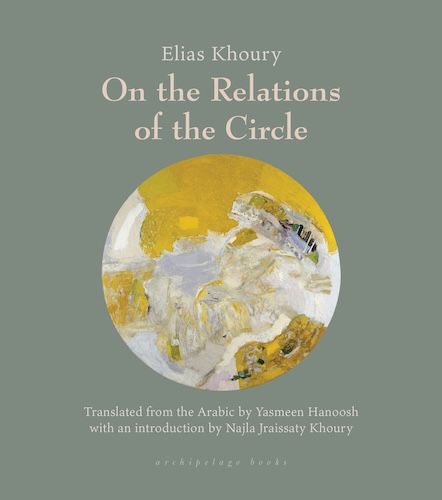
On the Relations of the Circle
In Beirut on the eve of the Lebanese Civil War, a young orphan named Mansour searches for the fragments of his identity: his origins, his family name, and the father he has never known. Yet his journey unfolds in a world where reality and imagination constantly overlap. Birds speak, trees become companions, and ordinary objects seem to possess lives of their own. Through dreamlike episodes, shifting perspectives, and stories that circle back upon themselves, Elias Khoury creates a portrait of a city poised on the edge of catastrophe. Published in 1975, the same year the Lebanese Civil War began, the novel explores how individuals construct their identities amid uncertainty and how storytelling can preserve a sense of belonging when history threatens to destroy it. Both playful and haunting, this experimental work introduces themes that would become central to Khoury’s writing: memory, displacement, fractured identity, and the enduring power of imagination.
2026