South Korea

Asia
South Korea
11
books
14
authors

Books from South Korea

1
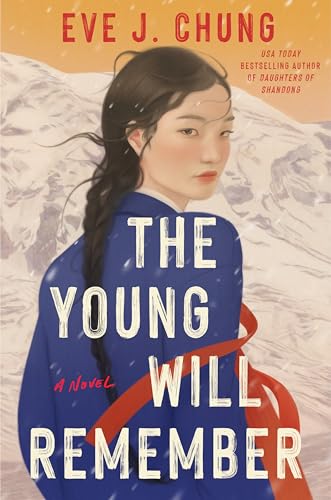
The Young Will Remember
In the frozen winter of 1950, a plane carrying Chinese American journalist Ellie Chang is shot down over North Korea. Stranded behind enemy lines during the Korean War, Ellie fears she will never see her family again—until a mysterious woman steps forward and claims her as her missing daughter. The woman, who calls herself Emma, has spent years searching for her own child, lost in the aftermath of an earlier war. Although she knows Ellie is not her daughter, she refuses to leave another woman’s child to die. Taken in by Emma and a pastor’s family, Ellie must navigate a dangerous landscape where trust is scarce and survival depends on unlikely alliances. As American bombing intensifies, the group begins a perilous journey south. Along the way, their lives become entwined with the fate of Emma’s missing daughter and the buried traumas of the past. Through these women, Eve J. Chung reveals the human cost of war beyond the battlefield: the families torn apart, the lives forgotten by history, and the extraordinary courage required to protect one another. Moving and deeply compassionate, The Young Will Remember explores motherhood, sacrifice, and the bonds that can form between strangers amid unimaginable suffering.
2026
2
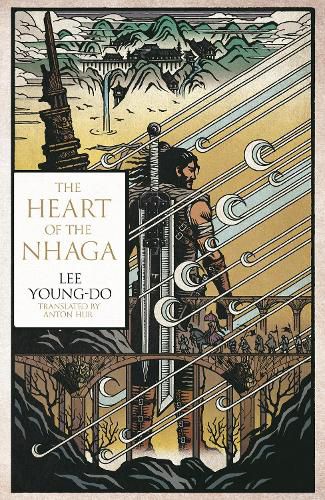
The Heart of the Nhaga
In The Heart of the Nhaga, the first volume of Lee Young-do’s celebrated epic fantasy series The Bird That Drinks Tears, four distinct peoples inhabit a world divided by the mysterious Line of Limit. To the north live humans, the Tokkebi, who wield fire as both a weapon and an illusion, and the Rekon, powerful birdlike warriors. To the south dwell the Nhaga, reptilian beings who surrender their hearts in exchange for immortality. When a Nhaga is sent on a mission northward, three companions—one from each northern people—are tasked with ensuring his safe passage. Their journey quickly becomes more complicated than expected: the Tokkebi is a scholar rather than an adventurer, the formidable Rekon fears water, and the human hunts Nhaga for food. When their original charge is murdered and replaced by another Nhaga who still possesses his heart, the group faces an even more dangerous expedition. As the unlikely companions struggle to survive, they must confront their prejudices and discover the true purpose of their mission. Combining imaginative world-building, political intrigue, humor, and philosophical questions about identity and mortality, Lee creates an epic fantasy that draws on Korean cultural influences while exploring universal themes of difference, cooperation, and belonging.
2026
3
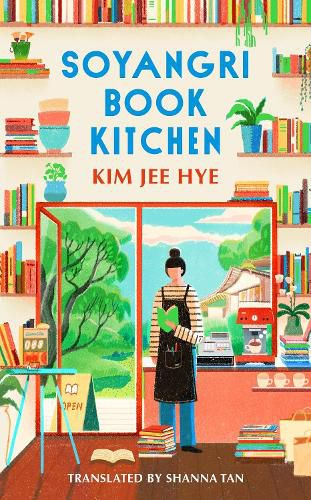
Soyangri Book Kitchen
After leaving behind the pressures of city life in Seoul, Yoojin unexpectedly opens the Book Kitchen in Soyangri, a peaceful village in the South Korean countryside. Part bookshop, part café and part guesthouse, this welcoming retreat offers visitors a place to rest, enjoy homemade food and rediscover the comfort of books. Over the course of a year, as the seasons change, people arrive at the Book Kitchen during difficult turning points in their lives. Among them are a singer struggling with an identity crisis, a promising lawyer facing a troubling medical diagnosis, and a young musical director whose dreams have been diminished by repeated failures. Through quiet conversations, shared meals and the stories found on the shelves, each visitor begins to reconsider their circumstances and imagine new possibilities. With its gentle atmosphere and interconnected characters, the novel celebrates the restorative power of literature, the kindness of strangers and the importance of finding a place where one can pause, reflect and begin again.
2025
4
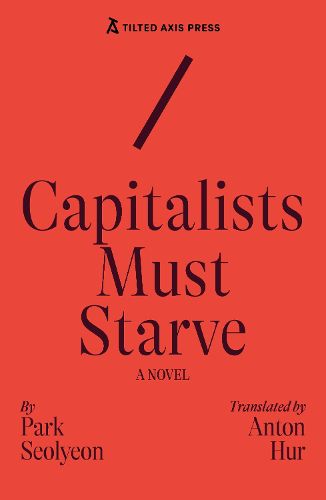
Capitalists Must Starve
Set in Korea under Japanese colonial rule, Capitalists Must Starve reimagines the life of Kang Juryong, a real-life labour activist who challenged the exploitation of workers in the early twentieth century. Born into poverty, Juryong dreams of becoming a modern, educated woman, but financial hardship and restrictive social expectations repeatedly obstruct her ambitions. After her husband’s death, she refuses to accept her family’s plans for her future and leaves for Pyongyang, where she finds work at a rubber factory. There, she becomes involved in the labour movement, confronting factory owners over their treatment of workers and joining the struggle for collective rights. Her determination culminates in a daring act of protest that makes her a symbol of resistance. Blending historical events with feminist storytelling, Park explores the intersections of gender, class and colonial oppression. With a sharp-tongued heroine, dark humour and emotional depth, the novel celebrates the courage of working-class women who refuse to remain silent in a society designed to suppress them.
2025
5
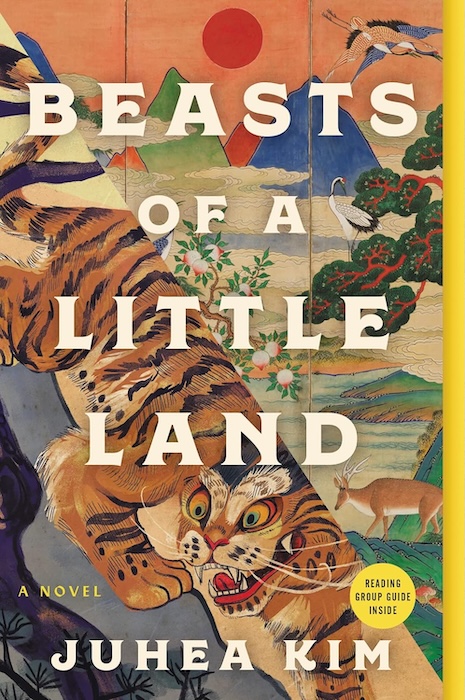
Beasts of a Little Land
In 1917, Korea is under Japanese colonial rule, and the lives of its people are shaped by poverty, violence, and the struggle for independence. When ten-year-old Jade is sold by her desperate family to a courtesan school in Pyongyang, she enters a world where survival depends on learning to navigate rigid social hierarchies. After fleeing to Seoul, she meets JungHo, an orphan boy struggling to survive on the streets. Their bond becomes a defining force in both their lives, even as their paths diverge and JungHo becomes involved in the resistance movement. Spanning five decades, from the final years of the Korean Empire through colonial occupation and the upheavals of the twentieth century, this sweeping historical novel follows a cast of interconnected characters whose destinies are shaped by love, ambition, betrayal, and political turmoil. Moving between courtesan houses, bustling cities, and battle-scarred forests, the story explores what it means to fight for personal dignity and national freedom when the world seems determined to take both away.
2021

Famous authors from South Korea

About South Korea

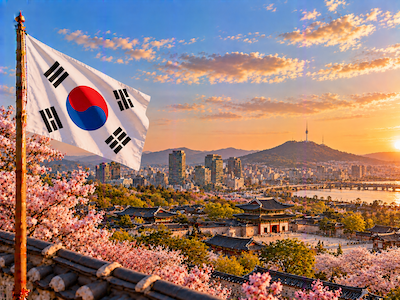
South Korea occupies the southern part of the Korean Peninsula in East Asia. Its landscape combines mountain ranges, forested national parks, coastal islands, and densely populated urban centers. Seoul, the capital, brings together historic royal palaces, traditional hanok neighborhoods, and a modern skyline, while cities such as Busan and Gyeongju reflect the country’s maritime heritage and ancient history. South Korean culture is shaped by centuries of Korean traditions, Confucian philosophy, Buddhism, and contemporary global influences, with a strong emphasis on family, education, food, and artistic expression.

Region
Asia
Literary Context

Korean literature has a long history of oral storytelling, mythology, poetry, historical chronicles, and philosophical writing. Traditional forms include sijo, a concise poetic genre, as well as folk tales and narratives about legendary heroes. Classical Korean literature developed alongside Chinese literary traditions, while the creation of Hangul, the Korean alphabet, in the 15th century expanded opportunities for writing in the Korean language. Modern Korean literature has been shaped by Japanese colonial rule, the division of the peninsula, the Korean War, rapid industrialization, and changing social values. Han Kang, winner of the 2024 Nobel Prize in Literature, is known for works such as The Vegetarian and Human Acts, which explore violence, memory, and the human body. Other influential writers include Kim Sowol, celebrated for his lyrical poetry; Hwang Sok-yong, whose novels examine history and social change; Park Wan-suh, known for writing about war and family life; and Cho Nam-joo, whose novel Kim Jiyoung, Born 1982 sparked international discussion about gender and inequality. Contemporary South Korean literature frequently explores identity, trauma, family expectations, class, gender, loneliness, and the pressures of modern life, offering perspectives on a society balancing tradition with rapid change.
Asia