Books from South Korea
Suggest a book
All genres
Historical Fiction
Literary Fiction
Fantasy
Romance
Horror
Thriller
Non-Fiction
Mystery
Memoir
Classics
History
Sci-Fi
Contemporary Fiction
Science Fiction
Fiction
Poetry
Essays
Family Saga
Magical Realism
Family Drama
Dark Academia
Psychological Fiction
Dark Comedy
Political Writing
Feminist Fiction
Satire
Campus Fiction
Cultural Studies
Biography
Philosophy
Comedy
Drama
Young Adult
Gothic
Dystopia
Crime
Children's Books
Short Stories
Mythology
Cozy
Retellings
Humour
Adventure
All themes
Love & Passion
Adventure & Journey
Identity & Belonging
War & Conflict
Freedom & Resistance
Family & Heritage
Nature & Landscape
Society & Class
Spirituality & Faith
Solitude & Exile
Coming of Age
Revolution & Change
Friendship
History
Immigration
Myths and Retellings
Colonialism
Women & Society
Mental Health
Motherhood
1
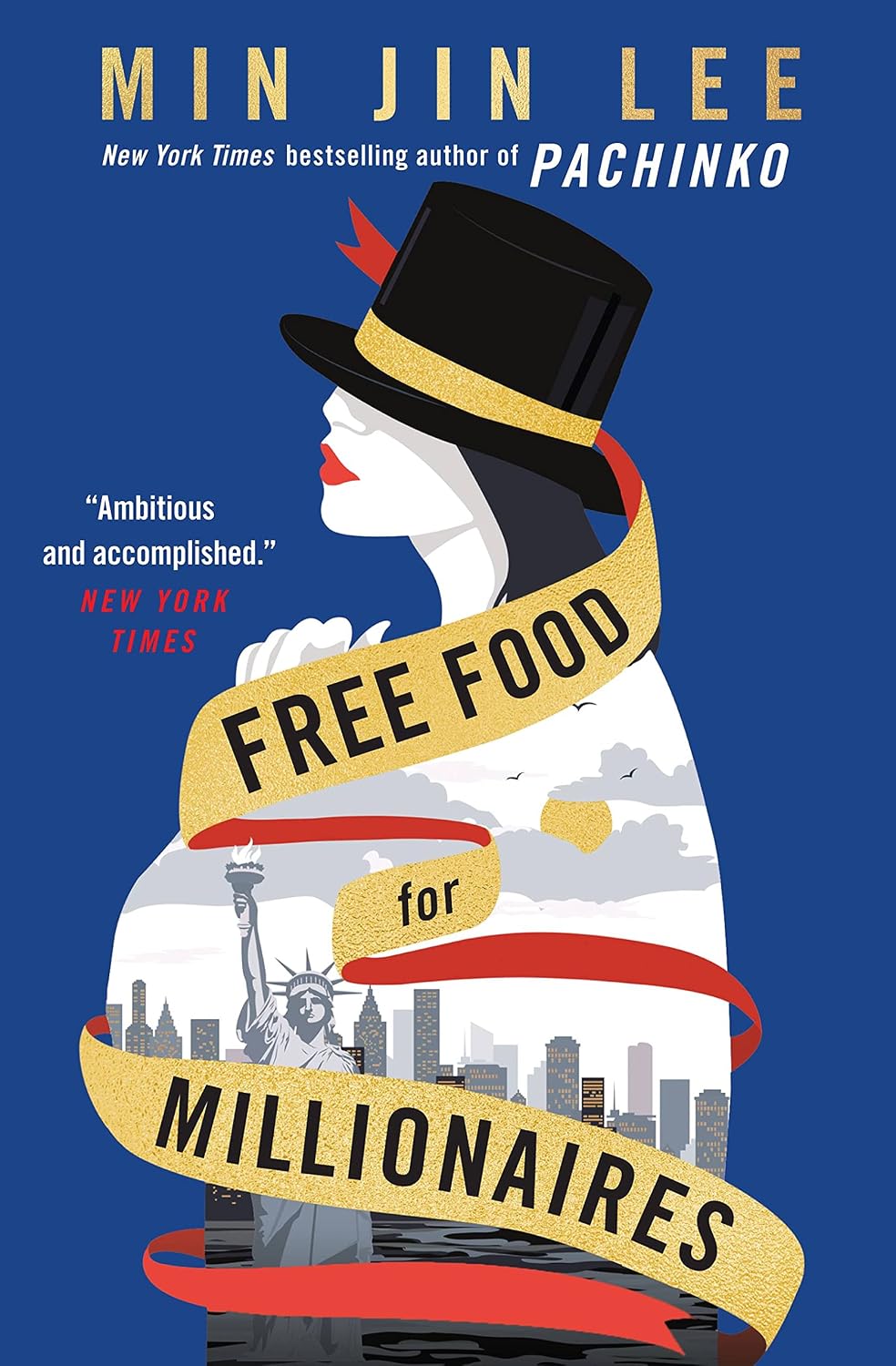
Free Food for Millionaires
Free Food for Millionaires follows Casey Han, a young Korean American woman who graduates from Princeton University and attempts to establish herself in New York City. Raised by immigrant parents with traditional expectations, Casey longs for independence, financial security, and entry into the glamorous world of Manhattan’s elite. Yet her expensive tastes, mounting debts, and complicated romantic relationships threaten to undermine her ambitions. As she navigates professional setbacks and social pressures, Casey struggles to reconcile her desire for personal freedom with the values instilled in her by her family. Through her experiences and those of the people around her, Lee examines class inequality, cultural assimilation, gender expectations, and the pursuit of success. The novel offers a portrait of immigrant life in which ambition can create opportunities while also deepening the conflict between inherited traditions and individual desires.
2007
2
The Vegetarian
The Vegetarian tells the story of Yeong-hye, an ordinary South Korean woman whose decision to stop eating meat after experiencing disturbing dreams sets off a chain of increasingly unsettling events. Her husband initially sees her refusal as an inconvenience, while her family responds with anger and attempts to force her back into conformity. As Yeong-hye withdraws from conventional expectations, her behaviour becomes increasingly radical, challenging the roles imposed on her as a wife, daughter, and woman. Told through the perspectives of her husband, brother-in-law, and sister, the novel gradually reveals the psychological and emotional pressures beneath her transformation. Han Kang explores bodily autonomy, violence, desire, and the struggle to resist a society that demands obedience. The novel raises unsettling questions about whether rejecting social conventions can become an act of liberation, even when that resistance carries devastating consequences.
2007
3
Pachinko
Pachinko follows four generations of a Korean family whose lives are transformed by migration, discrimination, and the search for belonging. The story begins in early twentieth-century Korea, where young Sunja becomes pregnant by a wealthy man who refuses to marry her. She accepts an offer of marriage from a kind-hearted minister and moves with him to Japan, hoping to build a better future. However, the family encounters widespread prejudice against Koreans living in Japan, limiting their opportunities and shaping their identities. As the story moves across generations, each family member struggles to balance personal ambition with cultural heritage and social expectations. Lee explores sacrifice, resilience, family loyalty, and the consequences of historical injustice, portraying how individuals attempt to create meaningful lives in a society that refuses to fully accept them.
2017
4
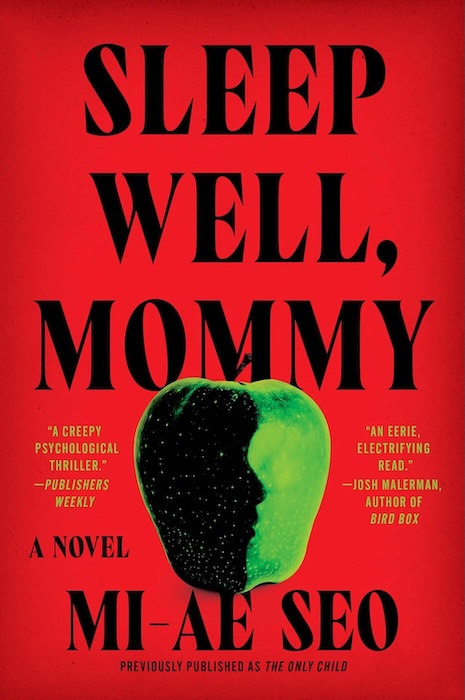
Sleep Well, Mommy
Sleep Well, Mommy, also published in English as The Only Child, is a psychological thriller that explores the disturbing connections between childhood, violence, and the origins of evil.
Seonkyeong, a criminal psychologist, receives an unexpected opportunity when Yi Byeongdo, a notorious serial killer who has refused to speak publicly, agrees to be interviewed by her. At the same time, her husband brings his eleven-year-old daughter, Hayeong, to live with them following the mysterious deaths of the grandparents who had been raising her. Seonkyeong initially tries to welcome the girl into their home, but Hayeong’s unsettling behaviour soon begins to trouble her.
As Seonkyeong investigates the pasts of both the killer and her stepdaughter, she discovers disturbing similarities between them. The more she learns, the more she questions what she thought she understood about Hayeong and the circumstances surrounding her family’s deaths.
Blending domestic suspense with criminal psychology, Seo’s novel examines the relationship between childhood trauma, family secrets, and the nature of evil.
2020
5
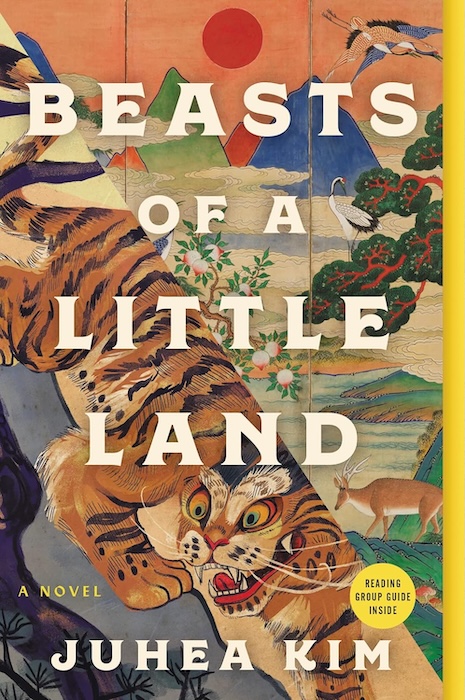
Beasts of a Little Land
In 1917, Korea is under Japanese colonial rule, and the lives of its people are shaped by poverty, violence, and the struggle for independence. When ten-year-old Jade is sold by her desperate family to a courtesan school in Pyongyang, she enters a world where survival depends on learning to navigate rigid social hierarchies. After fleeing to Seoul, she meets JungHo, an orphan boy struggling to survive on the streets. Their bond becomes a defining force in both their lives, even as their paths diverge and JungHo becomes involved in the resistance movement.
Spanning five decades, from the final years of the Korean Empire through colonial occupation and the upheavals of the twentieth century, this sweeping historical novel follows a cast of interconnected characters whose destinies are shaped by love, ambition, betrayal, and political turmoil. Moving between courtesan houses, bustling cities, and battle-scarred forests, the story explores what it means to fight for personal dignity and national freedom when the world seems determined to take both away.
2021
6
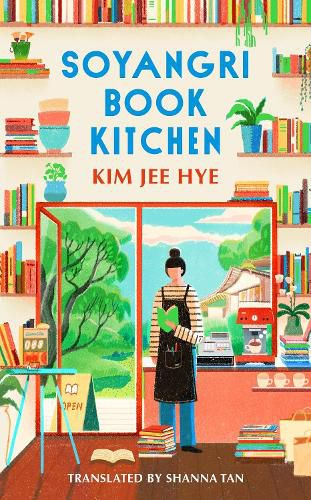
Soyangri Book Kitchen
After leaving behind the pressures of city life in Seoul, Yoojin unexpectedly opens the Book Kitchen in Soyangri, a peaceful village in the South Korean countryside. Part bookshop, part café and part guesthouse, this welcoming retreat offers visitors a place to rest, enjoy homemade food and rediscover the comfort of books. Over the course of a year, as the seasons change, people arrive at the Book Kitchen during difficult turning points in their lives. Among them are a singer struggling with an identity crisis, a promising lawyer facing a troubling medical diagnosis, and a young musical director whose dreams have been diminished by repeated failures. Through quiet conversations, shared meals and the stories found on the shelves, each visitor begins to reconsider their circumstances and imagine new possibilities. With its gentle atmosphere and interconnected characters, the novel celebrates the restorative power of literature, the kindness of strangers and the importance of finding a place where one can pause, reflect and begin again.
2025
7
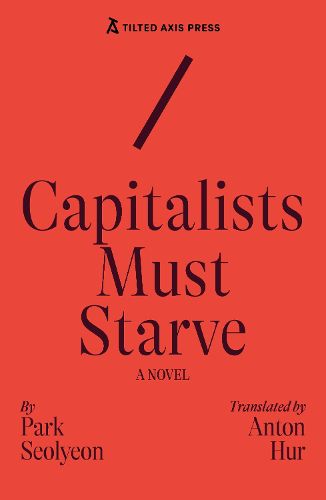
Capitalists Must Starve
Set in Korea under Japanese colonial rule, Capitalists Must Starve reimagines the life of Kang Juryong, a real-life labour activist who challenged the exploitation of workers in the early twentieth century. Born into poverty, Juryong dreams of becoming a modern, educated woman, but financial hardship and restrictive social expectations repeatedly obstruct her ambitions. After her husband’s death, she refuses to accept her family’s plans for her future and leaves for Pyongyang, where she finds work at a rubber factory. There, she becomes involved in the labour movement, confronting factory owners over their treatment of workers and joining the struggle for collective rights. Her determination culminates in a daring act of protest that makes her a symbol of resistance. Blending historical events with feminist storytelling, Park explores the intersections of gender, class and colonial oppression. With a sharp-tongued heroine, dark humour and emotional depth, the novel celebrates the courage of working-class women who refuse to remain silent in a society designed to suppress them.
2025