Books from Japan
Suggest a book
All genres
Historical Fiction
Literary Fiction
Fantasy
Romance
Horror
Thriller
Non-Fiction
Mystery
Memoir
Classics
History
Sci-Fi
Contemporary Fiction
Science Fiction
Fiction
Poetry
Essays
Family Saga
Magical Realism
Family Drama
Dark Academia
Psychological Fiction
Dark Comedy
Political Writing
Feminist Fiction
Satire
Campus Fiction
Cultural Studies
Biography
Philosophy
Comedy
Drama
Young Adult
Gothic
Dystopia
Crime
Children's Books
Short Stories
Mythology
Cozy
Retellings
Humour
Adventure
All themes
Love & Passion
Adventure & Journey
Identity & Belonging
War & Conflict
Freedom & Resistance
Family & Heritage
Nature & Landscape
Society & Class
Spirituality & Faith
Solitude & Exile
Coming of Age
Revolution & Change
Friendship
History
Immigration
Myths and Retellings
Colonialism
Women & Society
Mental Health
Motherhood
1
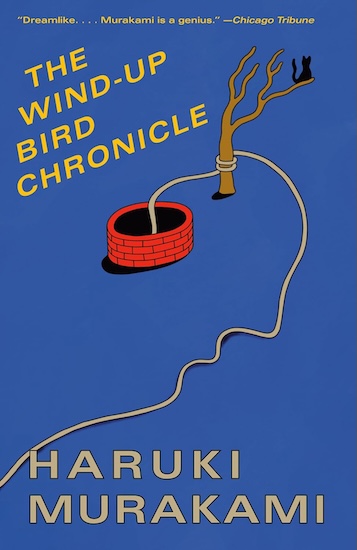
The Wind-up Bird Chronicle
The Wind-Up Bird Chronicle follows Toru Okada, an unemployed man whose ordinary life begins to unravel when his wife disappears and a series of increasingly strange events takes place in his Tokyo neighbourhood. His search leads him into encounters with enigmatic strangers, disturbing memories, and stories connected to Japan’s wartime history. As Toru investigates his wife’s disappearance, he finds himself drawn into a hidden world where dreams, violence, and psychological experience overlap. The novel gradually reveals the emotional distance within his marriage and the unresolved histories that shape the people around him. Murakami blends surrealism with historical reflection, examining alienation, power, and the difficulty of understanding one’s own life. Toru’s journey becomes an exploration of the hidden forces that influence human relationships and the fragile boundary between the familiar world and the unknown.
1994
2
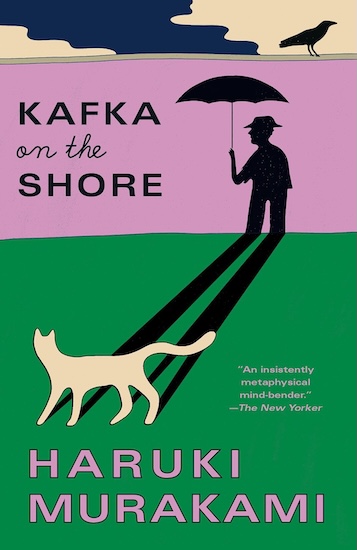
Kafka on the Shore
Kafka on the Shore weaves together the stories of Kafka Tamura, a fifteen-year-old boy who runs away from home, and Nakata, an elderly man whose unusual abilities emerged after a mysterious childhood incident. Kafka travels to a quiet library in Takamatsu, where he encounters people who help him confront questions about his family, his memories, and his destiny. Meanwhile, Nakata embarks on a journey of his own, following strange events that seem to connect him to Kafka’s life. As their stories unfold, dreams, myths, talking animals, and supernatural occurrences blur the boundaries between reality and imagination. Murakami explores fate, memory, loneliness, and the search for identity, creating a mysterious narrative in which the characters must confront aspects of themselves that resist ordinary explanation.
2002
3
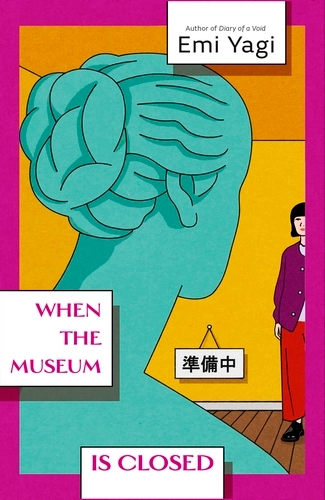
When the Museum is Closed
Rika Horauchi has spent much of her life hiding from the world behind an invisible yellow raincoat, an imaginary barrier that protects her from unwanted attention and human interaction. Working in a frozen-food warehouse and spending her evenings watching livestreams, she leads a quiet, isolated existence. Everything changes when she accepts an unusual part-time job at a museum: conversing in Latin with a statue of Venus on Mondays, when the museum is closed. Initially intimidated by the goddess’s beauty, Rika gradually discovers a surprising connection with her. As their conversations deepen, Venus becomes a companion who challenges Rika’s assumptions about beauty, desire, and the way women are perceived by others. Their relationship develops into an unconventional love story that opens up new possibilities for Rika, encouraging her to reconsider her isolation and imagine a different kind of freedom. Blending surrealism, dark humour, and feminist commentary, Emi Yagi’s novel explores loneliness, queer desire, and the transformative power of being understood. Beneath its whimsical premise lies a thoughtful examination of how society shapes women’s identities and how intimacy can help us break free from expectations.
2023