Books from Japan
Suggest a book
All genres
Historical Fiction
Literary Fiction
Fantasy
Romance
Horror
Thriller
Non-Fiction
Mystery
Memoir
Classics
History
Sci-Fi
Contemporary Fiction
Science Fiction
Fiction
Poetry
Essays
Family Saga
Magical Realism
Family Drama
Dark Academia
Psychological Fiction
Dark Comedy
Political Writing
Feminist Fiction
Satire
Campus Fiction
Cultural Studies
Biography
Philosophy
Comedy
Drama
Young Adult
Gothic
Dystopia
Crime
Children's Books
Short Stories
Mythology
Cozy
Retellings
Humour
Adventure
All themes
Love & Passion
Adventure & Journey
Identity & Belonging
War & Conflict
Freedom & Resistance
Family & Heritage
Nature & Landscape
Society & Class
Spirituality & Faith
Solitude & Exile
Coming of Age
Revolution & Change
Friendship
History
Immigration
Myths and Retellings
Colonialism
Women & Society
Mental Health
Motherhood
1
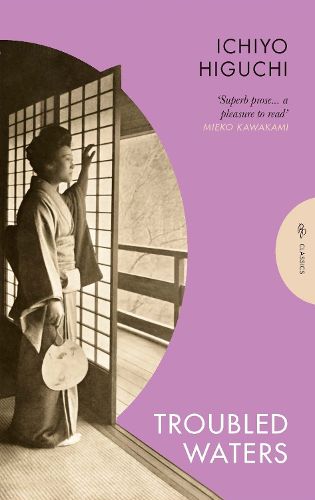
Troubled Waters
Set in the pleasure district of Meiji-era Japan, Troubled Waters (Nigorie) portrays the troubled life of Oriki, a popular courtesan at the Kikunoi establishment. Beautiful and admired by her customers, Oriki conceals a deep unhappiness rooted in poverty, social exclusion, and the limited choices available to women in her position. Her past is intertwined with Genshichi, a former customer whose obsessive devotion to her has cost him his business and left his wife and child in desperate circumstances. Although Oriki has begun seeing another wealthy patron, she remains haunted by the consequences of her earlier relationship.
Through fragmented conversations and shifting perspectives, Higuchi gradually reveals the emotional burdens carried by Oriki and those around her. The story examines the destructive effects of poverty, the unequal power dynamics between men and women, and the social structures that trap individuals in seemingly inescapable circumstances. With psychological subtlety and compassion, Higuchi gives voice to people marginalized by respectable society. Troubled Waters remains a powerful portrait of female vulnerability and the human cost of a world in which economic hardship and social expectations constrain personal freedom.
Publication note: The original Japanese story, Nigorie, appeared in 1895. English translations have been published under several titles, including Muddy Bay (1958) and Troubled Waters (1981). A new translation by Bryan Karetnyk is included in a 2026 collection of Higuchi’s stories published by Pushkin Press.
1981
2
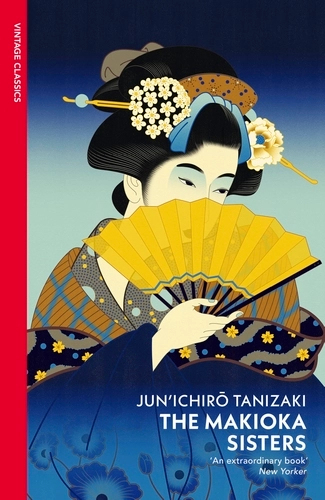
The Makioka Sisters
Set in Osaka and its surrounding areas during the years leading up to the Second World War, The Makioka Sisters follows four women from a once-prosperous merchant family struggling to preserve their social standing as Japanese society undergoes profound change. The story centers on the sisters’ efforts to arrange a suitable marriage for Yukiko, the quiet and reserved third daughter, whose future is complicated by family expectations, social conventions, and a series of unsuccessful matchmaking attempts. Meanwhile, the youngest sister, Taeko, pursues a more independent life, challenging the traditional values that govern her family’s decisions.
Through the sisters’ daily routines, seasonal celebrations, family gatherings, and romantic entanglements, Tanizaki captures the tensions between tradition and modernity in prewar Japan. Beneath the novel’s elegant descriptions of clothing, festivals, and landscapes lies a poignant portrait of a family confronting the gradual erosion of its privilege and influence. The novel explores the bonds between sisters, the pressures of social conformity, and the difficulty of adapting to a changing world. Rich in cultural detail and psychological insight, it is both an intimate family saga and an elegy for a disappearing way of life.
1957
3
Snow Country
Snow Country follows Shimamura, a wealthy Tokyo man who repeatedly visits a remote hot-spring town in Japan’s snowy mountains. There he develops a complicated relationship with Komako, a young geisha whose emotional commitment contrasts with his detached approach to life. Their encounters unfold against a landscape of snow-covered villages, quiet inns, and winter journeys that intensify the novel’s atmosphere of beauty and isolation. Shimamura is also fascinated by Yōko, another woman whose presence complicates his relationship with Komako. Through restrained dialogue and delicate descriptions of the natural world, Kawabata explores desire, loneliness, and the distance between people who cannot fully understand one another. The novel examines the tension between emotional attachment and detachment, revealing how beauty can coexist with sadness and how fleeting encounters can leave lasting impressions.美的に抽出されて描かれている。
1937