Books from Italy
Suggest a book
All genres
Historical Fiction
Literary Fiction
Fantasy
Romance
Horror
Thriller
Non-Fiction
Mystery
Memoir
Classics
History
Sci-Fi
Contemporary Fiction
Science Fiction
Fiction
Poetry
Essays
Family Saga
Magical Realism
Family Drama
Dark Academia
Psychological Fiction
Dark Comedy
Political Writing
Feminist Fiction
Satire
Campus Fiction
Cultural Studies
Biography
Philosophy
Comedy
Drama
Young Adult
Gothic
Dystopia
Crime
Children's Books
Short Stories
Mythology
Cozy
Retellings
Humour
Adventure
All themes
Love & Passion
Adventure & Journey
Identity & Belonging
War & Conflict
Freedom & Resistance
Family & Heritage
Nature & Landscape
Society & Class
Spirituality & Faith
Solitude & Exile
Coming of Age
Revolution & Change
Friendship
History
Immigration
Myths and Retellings
Colonialism
Women & Society
Mental Health
Motherhood
1
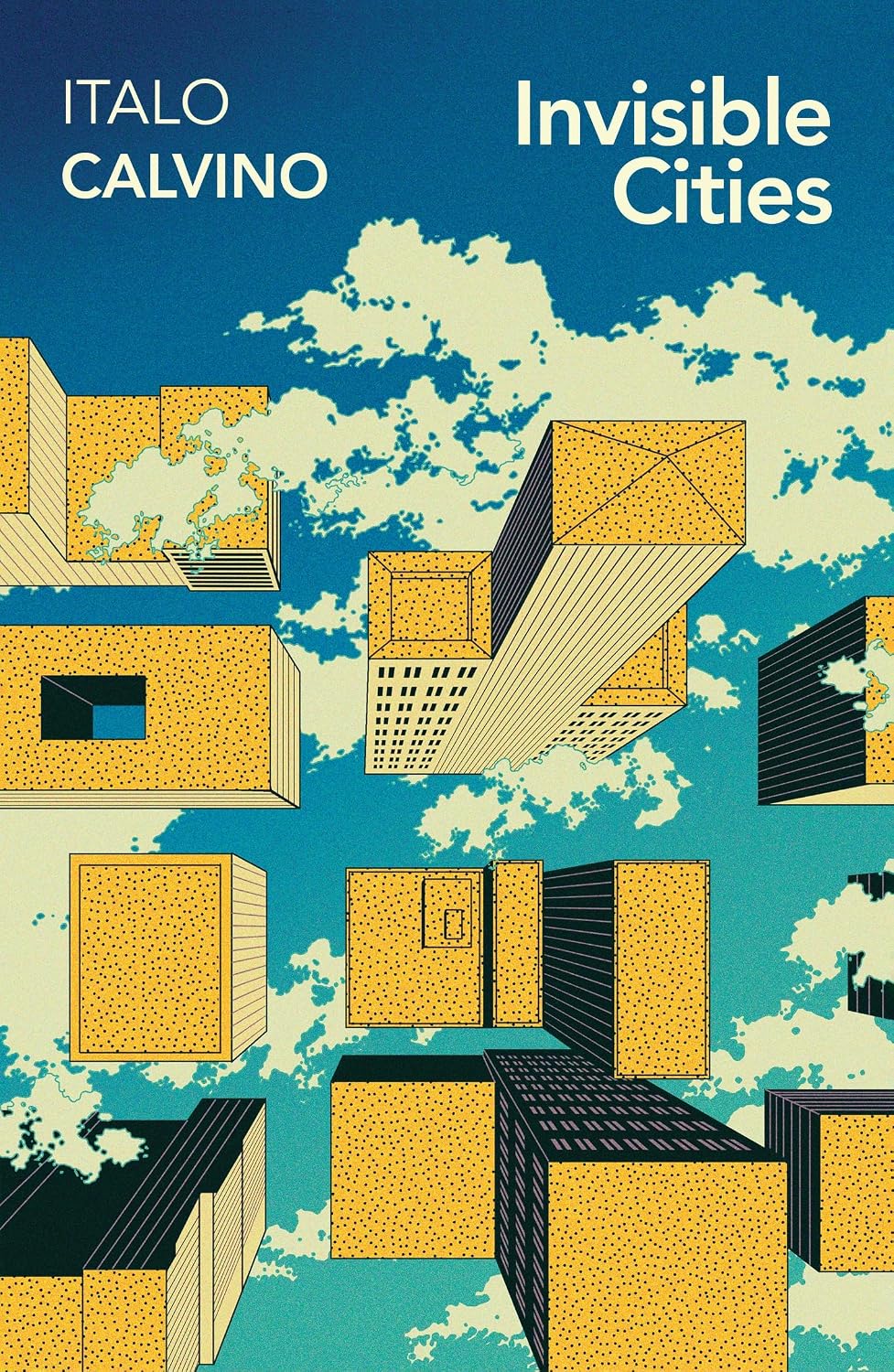
Invisible Cities
Invisible Cities imagines a series of conversations between the Venetian traveller Marco Polo and the Mongol emperor Kublai Khan. Polo describes extraordinary cities he claims to have visited, each possessing distinctive customs, architecture, memories, and relationships with time. Some cities seem suspended between life and death; others are organised around desire, exchange, or the endless accumulation of objects. Gradually, the descriptions become less like conventional travel accounts and more like meditations on human experience. Khan attempts to understand the vastness of his empire through Polo’s stories, while the traveller uses language to explore places that may reflect aspects of Venice itself. Calvino combines fantasy, philosophy, and poetic imagery to examine memory, communication, urban life, and the relationship between imagination and reality. The book invites readers to consider how cities express the hopes, fears, and contradictions of the people who inhabit them.
1972
2
Moon and the Bonfires
The Moon and the Bonfires follows Anguilla, a man who returns to the rural village in northern Italy where he grew up after spending years abroad, including a period in America. Born into poverty and raised by foster parents, he left his homeland in search of a better life. Now successful but unsettled, he hopes to reconnect with his past and understand the forces that shaped his identity.
As Anguilla revisits familiar landscapes and reconnects with his childhood friend Nuto, memories of his youth mingle with the painful realities of wartime Italy. The countryside he remembers has been transformed by poverty, political violence, and the consequences of the Resistance. Through these encounters, Cesare Pavese explores belonging, exile, memory, and the impossibility of truly returning home. The title refers to rural rituals associated with the changing seasons, evoking a world where ancient traditions coexist with modern upheaval. Both a personal quest and a reflection on Italy’s troubled history, the novel asks whether a person can ever recover the place they once called home.
1950