Books from Italy
Suggest a book
All genres
Historical Fiction
Literary Fiction
Fantasy
Romance
Horror
Thriller
Non-Fiction
Mystery
Memoir
Classics
History
Sci-Fi
Contemporary Fiction
Science Fiction
Fiction
Poetry
Essays
Family Saga
Magical Realism
Family Drama
Dark Academia
Psychological Fiction
Dark Comedy
Political Writing
Feminist Fiction
Satire
Campus Fiction
Cultural Studies
Biography
Philosophy
Comedy
Drama
Young Adult
Gothic
Dystopia
Crime
Children's Books
Short Stories
Mythology
Cozy
Retellings
Humour
Adventure
All themes
Love & Passion
Adventure & Journey
Identity & Belonging
War & Conflict
Freedom & Resistance
Family & Heritage
Nature & Landscape
Society & Class
Spirituality & Faith
Solitude & Exile
Coming of Age
Revolution & Change
Friendship
History
Immigration
Myths and Retellings
Colonialism
Women & Society
Mental Health
Motherhood
1
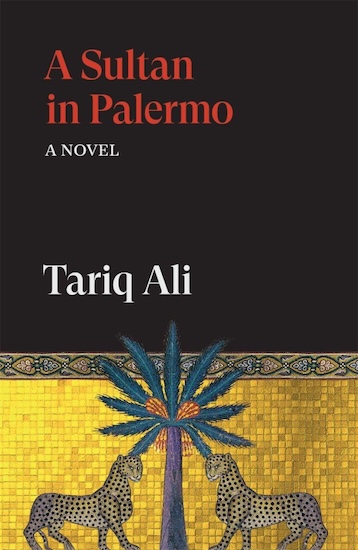
A Sultan in Palermo (The Islam Quintet)
Set in Sicily in 1153, A Sultan in Palermo explores a fascinating period when Norman rulers governed an island deeply shaped by Arab and Muslim culture. Palermo is a flourishing centre of learning, where Arabic language and intellectual traditions remain influential despite the political dominance of Christian rulers. At the heart of the novel is Muhammad al-Idrisi, a celebrated Muslim cartographer and scholar, who serves King Roger II of Sicily, known to his Muslim subjects as Sultan Rujari.
As Idrisi navigates his friendship with the ageing ruler, he becomes increasingly torn between loyalty to the royal court and solidarity with fellow Muslims who are resisting Norman rule or preparing to leave the island. Surrounded by political intrigue, religious tensions, and personal desires, he must confront the moral compromises of life under an increasingly unstable regime. Blending historical figures with imaginative storytelling, Tariq Ali explores cultural coexistence, the struggle for power, and the fragile relationship between political authority and personal conscience. The novel is the fourth book in Ali’s Islam Quintet.
2026
2
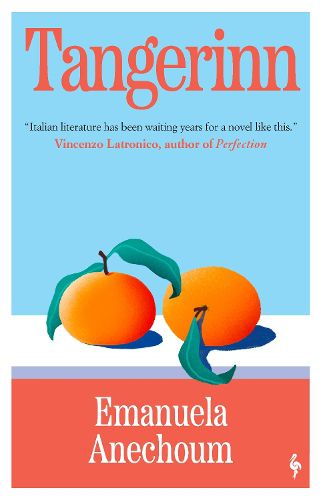
Tangerinn
Tangerinn follows Mina, a thirty-year-old woman who has built a carefully controlled life in London in an attempt to escape her past. When her Moroccan-born father, Omar, dies unexpectedly, she returns to her childhood home in Calabria, southern Italy, intending to attend his funeral. Instead, she finds herself staying longer than planned, drawn back into the family and community she once left behind.
Omar ran a small beach bar called the Tangerinn, a gathering place for migrants and outsiders who struggled to find acceptance in their new home. As Mina reconnects with the people who knew her father, she begins to uncover the complexities of his past and question how well she truly understood him. Her journey becomes an exploration of the parallels between their lives: both left home in search of something better, yet neither could entirely escape the pull of their origins.
Moving between Italy, Morocco, and London, Anechoum explores migration, family inheritance, cultural identity, and the elusive meaning of belonging. The novel asks whether we can ever fully escape our past or whether understanding where we come from is essential to discovering who we are.
2026
3
Perfection
In Perfection, Anna and Tom are a young creative couple living in Berlin, where they enjoy a carefully curated lifestyle of remote work, minimalist interiors, cultural experiences, and seemingly effortless happiness. Surrounded by the aesthetics of contemporary urban life, they appear to have achieved the freedom and fulfillment they desire. Yet beneath their polished routines lies a growing sense of emptiness and dissatisfaction. Through precise, detached prose, Vincenzo Latronico examines the contradictions of digital nomadism, gentrification, consumer culture, and the pursuit of an ideal life shaped by social media. The novel offers a sharp portrait of a generation caught between the desire for authenticity and the pressure to make every aspect of life look perfect.
2025
4
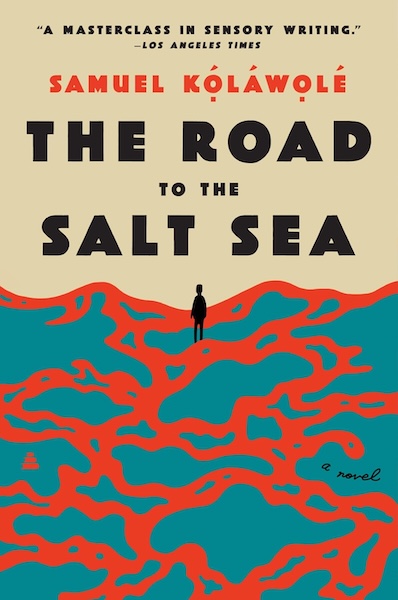
The Road to the Salt Sea
Able God is a bright young Nigerian man with an engineering degree, a love of chess, and hopes for a better future. But instead of building the life he imagined, he works long hours delivering room service at a luxury hotel, serving wealthy guests while struggling to make ends meet. When an encounter with a powerful and dangerous hotel guest turns violent, Able God finds himself caught in a situation that leaves him with few options. Fearing the consequences, he flees Nigeria and joins a group of migrants travelling across the Sahara toward Europe.
Led by a charismatic religious figure, the travellers embark on a perilous journey through Niger and Libya, hoping to reach a place where they can begin again. Instead, they encounter human traffickers, starvation, exploitation, and violence. As survival becomes his only priority, Able God is forced to question his beliefs about morality, faith, and the possibility of a better life. In The Road to the Salt Sea, Samuel Kolawole offers a powerful portrait of migration, exposing the human cost of inequality and the desperate choices made by those seeking safety and opportunity beyond their homeland.
2024
5
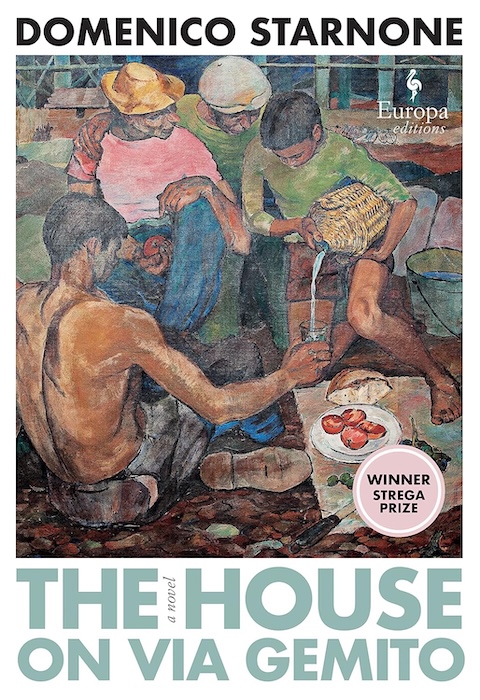
House on Via Gemito
Domenico Starnone is an Italian novelist, screenwriter, and journalist, born in 1943 in Naples. Before establishing himself as a novelist, he worked as a teacher and wrote for newspapers and satirical publications, often drawing on his experiences in the Italian education system. His fiction is known for its psychological precision, sharp humour, and exploration of the tensions underlying family relationships, marriage, and personal identity. Starnone frequently examines how people construct narratives about themselves and others, revealing the contradictions between memory, truth, and self-deception. His notable works include Ties, Trick, and The House on Via Gemito, which won the prestigious Strega Prize in 2001. His writing often combines intimate domestic conflicts with broader reflections on social expectations, masculinity, ageing, and artistic ambition. Internationally acclaimed for his subtle, layered storytelling, Starnone has become an important voice in contemporary Italian literature.
2024
6
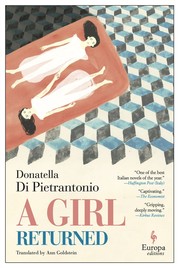
A Girl Returned
A Girl Returned follows a thirteen-year-old girl who is suddenly sent back to the family she barely remembers after being raised by a couple she believed were her parents. Without explanation, she finds herself living with her biological family in a crowded apartment in a poor rural community in southern Italy. Surrounded by unfamiliar siblings and a mother who feels like a stranger, she struggles to understand why she was given away and why she has now been returned.
As she adjusts to her new circumstances, the girl develops a complicated relationship with her younger sister, Adriana, whose boldness and resourcefulness offer both companionship and conflict. Through the protagonist’s perspective, Donatella Di Pietrantonio explores the emotional consequences of abandonment, the divisions between social classes, and the meaning of motherhood and belonging. Written in a restrained, powerful style, the novel captures the vulnerability of adolescence and the lasting impact of secrets within families. It asks whether family is defined by blood, love, or the people who choose to stay.
2017
7
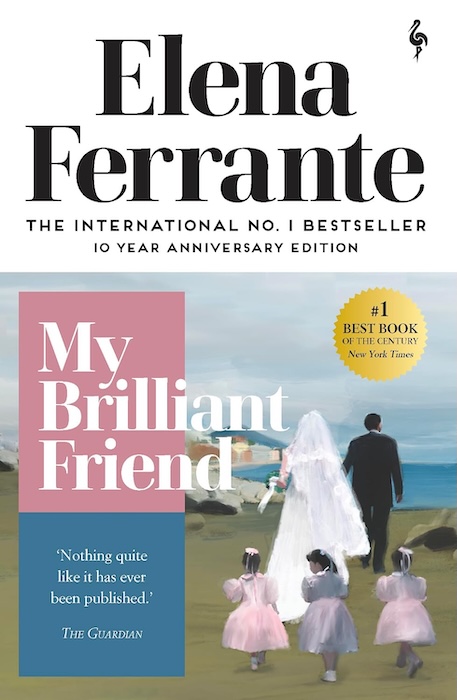
My Brilliant Friend
My Brilliant Friend follows Elena Greco and Raffaella Cerullo, known as Lila, two intelligent and ambitious girls growing up in a poor neighborhood of Naples in the 1950s. Despite their contrasting personalities, they develop a complex friendship shaped by admiration, rivalry, jealousy, and affection. As they navigate childhood and adolescence, both confront the limitations imposed by poverty, gender expectations, and a society marked by violence and rigid social hierarchies. While Elena continues her education, Lila’s opportunities are increasingly restricted, creating a tension that follows them as their lives take different directions. Through their evolving relationship, Ferrante explores female friendship, ambition, identity, and the transformative power of education. The novel is the first installment of the Neapolitan series, offering an intimate portrait of growing up and discovering oneself in a changing Italy.
2011