Books from Ireland
Suggest a book
All genres
Historical Fiction
Literary Fiction
Fantasy
Romance
Horror
Thriller
Non-Fiction
Mystery
Memoir
Classics
History
Sci-Fi
Contemporary Fiction
Science Fiction
Fiction
Poetry
Essays
Family Saga
Magical Realism
Family Drama
Dark Academia
Psychological Fiction
Dark Comedy
Political Writing
Feminist Fiction
Satire
Campus Fiction
Cultural Studies
Biography
Philosophy
Comedy
Drama
Young Adult
Gothic
Dystopia
Crime
Children's Books
Short Stories
Mythology
Cozy
Retellings
Humour
Adventure
All themes
Love & Passion
Adventure & Journey
Identity & Belonging
War & Conflict
Freedom & Resistance
Family & Heritage
Nature & Landscape
Society & Class
Spirituality & Faith
Solitude & Exile
Coming of Age
Revolution & Change
Friendship
History
Immigration
Myths and Retellings
Colonialism
Women & Society
Mental Health
Motherhood
1
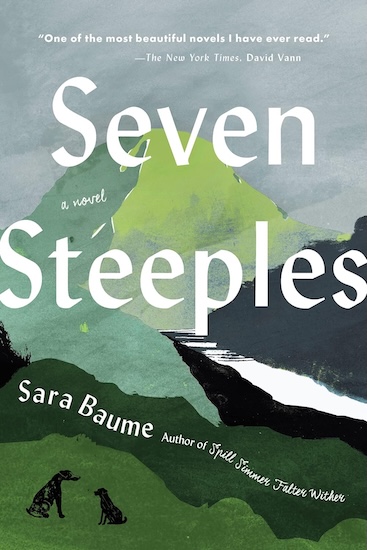
Seven Steeples
Bell and Sigh are a young couple who decide to abandon conventional life and retreat to a remote house in the Irish countryside with their dogs. Leaving behind the city, their friends, and their families, they build a quiet world of their own, shaped by daily rituals, changing seasons, and the rhythms of the natural landscape. Nearby stands a mountain they are told offers a view of seven standing stones, seven schools, and seven church steeples. They promise to climb it, but year after year, the mountain remains unconquered.
Spanning seven years, Seven Steeples follows the couple as their lives become increasingly intertwined with the land around them. With lyrical prose and a keen eye for the overlooked details of ordinary existence, Sara Baume explores solitude, intimacy, and the uneasy boundary between freedom and isolation. It is a contemplative novel about stepping away from society to discover what it means to build a life—and whether withdrawing from the world can ever truly bring us closer to ourselves.
2022
2
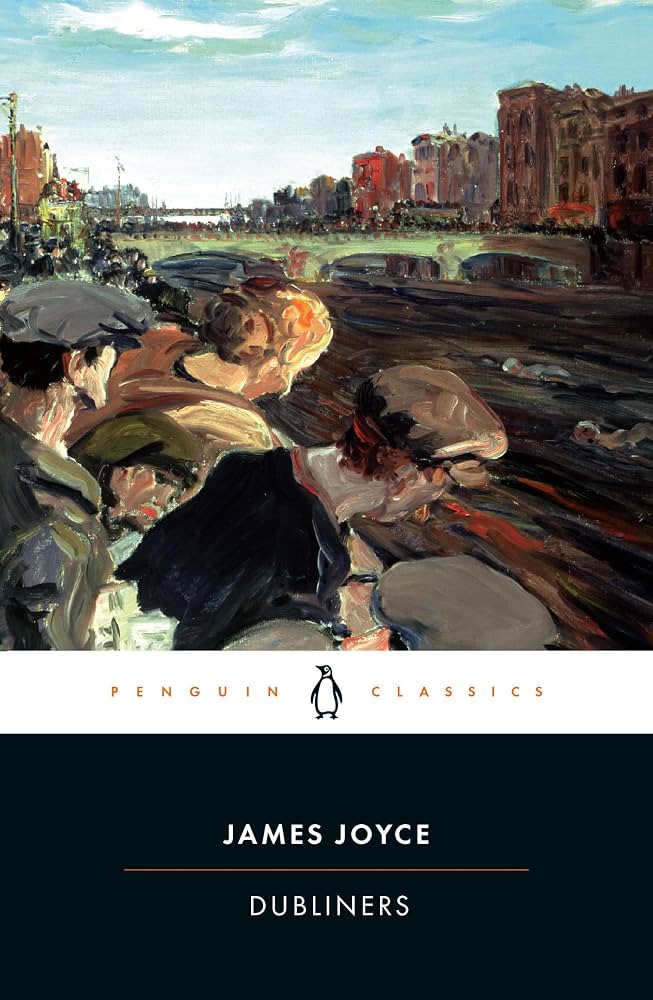
Dubliners
Dubliners is a collection of fifteen short stories portraying the lives of ordinary people in Dublin at the beginning of the twentieth century. The stories follow children, adolescents, adults, and elderly characters as they confront family obligations, unfulfilled ambitions, religious expectations, and the limitations of their social environment. Some experience moments of sudden insight that reveal the compromises and disappointments shaping their lives, while others remain trapped by fear, habit, or economic necessity. Joyce presents Dublin as a city where political stagnation, social conventions, and the influence of the Catholic Church affect even the most private decisions. His restrained prose captures the significance of everyday encounters and seemingly minor events. The collection explores paralysis, longing, and the desire for escape, offering a powerful portrait of individuals who recognise the possibility of change but often struggle to act upon it.
2022
3
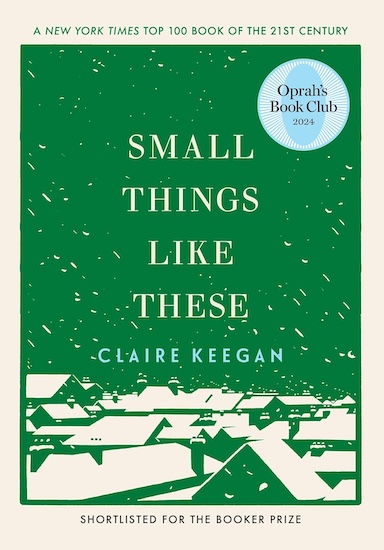
Small Things Like These
It is 1985 in a small Irish town, and coal merchant Bill Furlong is preparing for the busiest weeks of the year. A devoted husband and father of five daughters, he has built a modest but stable life through hard work. Yet as Christmas approaches, a delivery to the local convent reveals something deeply troubling: girls are being confined there under the authority of the Catholic Church, their suffering concealed behind respectable walls.
The discovery forces Bill to confront uncomfortable memories of his own childhood and the kindness that once helped him survive. In a community where the Church holds enormous power and silence protects those in authority, speaking out could jeopardise his livelihood and his family’s security. With remarkable economy and emotional depth, Small Things Like These explores complicity, moral courage, and the quiet choices that define a person’s character. It is a powerful story about the cost of doing what is right when looking away would be easier.
2021
4
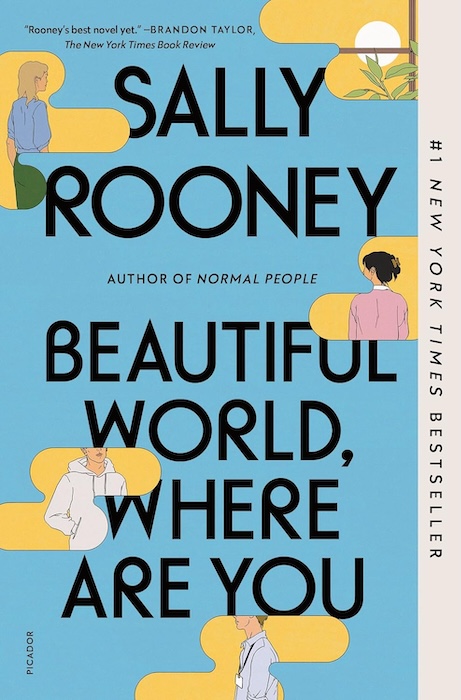
Beautiful World, Where Are You
Beautiful World, Where Are You follows Alice, a successful novelist, and Eileen, her childhood friend, as they navigate love, friendship, and uncertainty in their late twenties. After experiencing a mental health crisis, Alice moves to a small coastal town in Ireland, where she meets Felix, a warehouse worker with whom she begins an unpredictable relationship. Meanwhile, Eileen remains in Dublin, working at a literary magazine and reconnecting with Simon, a childhood friend whose feelings for her are complicated by years of shared history.
Through emails exchanged between Alice and Eileen, the novel explores their anxieties about relationships, work, politics, and the future of a world marked by inequality and environmental crisis. Rooney examines the tension between private desires and broader social concerns, asking how people can pursue intimacy and meaning amid uncertainty. The result is a thoughtful portrait of contemporary adulthood, emotional vulnerability, and the search for beauty in an imperfect world.
2021
5
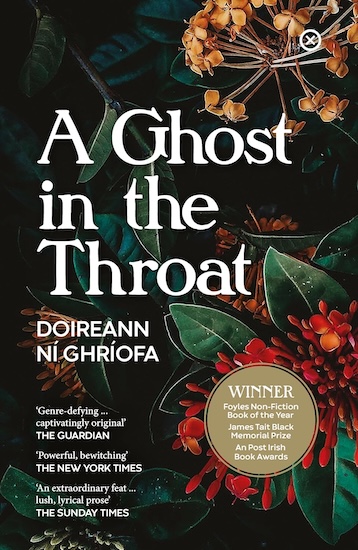
A Ghost in the Throat
When contemporary Irish poet Doireann Ní Ghríofa discovers the extraordinary work of eighteenth-century poet Eibhlín Dubh Ní Chonaill, she becomes captivated by the woman’s life and the grief that inspired her most famous poem. After discovering her husband’s murdered body, Eibhlín drank his blood and composed a devastating lament that would survive for centuries. Determined to recover the details of a life that history has largely erased, Ní Ghríofa embarks on a literary investigation that becomes deeply intertwined with her own experiences of pregnancy, motherhood, and domestic life. Moving between past and present, A Ghost in the Throat blends memoir, literary criticism, and historical research to explore female creativity, the silencing of women’s voices, and the intimate connections that can form between women separated by centuries. It is a lyrical meditation on grief, desire, motherhood, and the transformative power of discovering another woman’s story.
2020
6
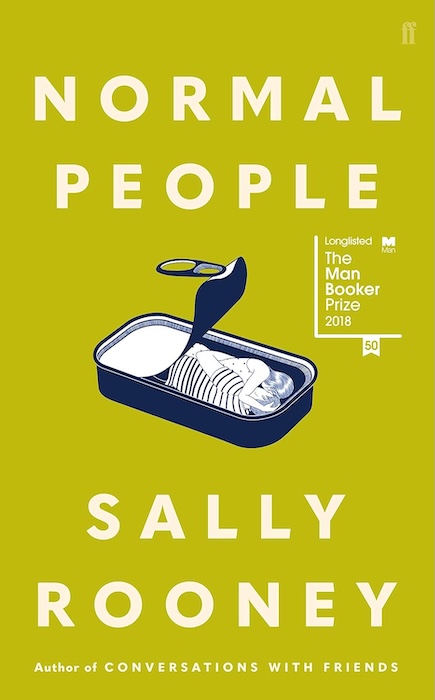
Normal People
Normal People follows Connell Waldron and Marianne Sheridan, two teenagers from the same small town in County Sligo, Ireland, whose lives become intertwined during their final years of secondary school and their time at Trinity College Dublin. Connell is popular and well-liked, while Marianne is intelligent, outspoken, and socially isolated. Despite their differences, they develop a deep connection, beginning a complicated relationship that neither fully understands.
As they move from adolescence into adulthood, their positions gradually reverse. Marianne finds a sense of belonging at university, while Connell struggles to navigate his place in a more privileged social environment. Their relationship is repeatedly shaped by misunderstandings, insecurity, social class, and their difficulty expressing what they truly need from each other.
Through intimate, understated prose, Rooney explores the ways people influence one another’s development and the lasting effects of love, vulnerability, and emotional miscommunication. The novel captures the uncertainty of growing up and the struggle to understand oneself through relationships with others. Shortlisted for the 2018 Booker Prize, Normal People became one of the defining novels of contemporary Irish fiction.
2018
7
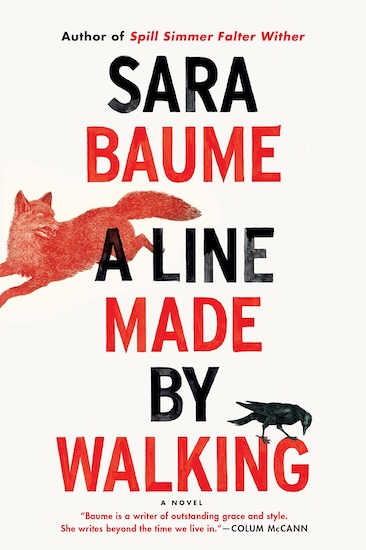
A Line Made By Walking
In her twenties and struggling to find her place in the world, Frankie retreats from urban life to her late grandmother’s empty house in the Irish countryside. An aspiring artist, she feels increasingly disconnected from her ambitions, her relationships, and herself. Surrounded by fields, abandoned objects, and the quiet presence of wild animals, she begins photographing dead creatures she encounters along her walks, turning these unsettling discoveries into an attempt to make sense of life and death.
As Frankie observes the landscape and revisits memories of her past, the ordinary details of rural existence become a way to examine grief, anxiety, and the uncertainty of adulthood. A Line Made by Walking is a contemplative novel about the fragile process of recovery and the difficulty of finding meaning when familiar ideas about success and happiness no longer seem convincing. With her characteristic attention to nature and overlooked details, Baume explores the uneasy relationship between artistic ambition, emotional vulnerability, and the desire to begin again.
2017
8
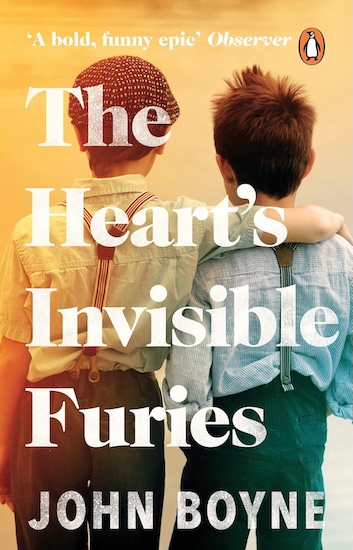
The Heart’s Invisible Furies
Spanning seven decades of Irish history, The Heart’s Invisible Furies follows Cyril Avery, a boy born in 1940s Ireland to an unmarried teenage mother who is publicly shamed by her community and forced to leave her home. Adopted by a wealthy couple in Dublin, Cyril grows up in a household where he is constantly reminded that he is not their biological son. Feeling like an outsider, he embarks on a lifelong search for love, acceptance, and a place where he truly belongs.
As Cyril moves through adulthood, his experiences unfold against the backdrop of a changing Ireland. Growing up in a deeply conservative Catholic society, he struggles to understand and accept his sexuality in a country where homosexuality is criminalised and social prejudice shapes countless lives. His journey takes him beyond Ireland, through relationships, personal losses, and difficult discoveries, before eventually bringing him back to his homeland.
Combining dark humour with moments of profound tenderness, Boyne explores the consequences of religious intolerance, social exclusion, and the silence surrounding sexuality. Through Cyril’s personal experiences, the novel also traces Ireland’s transformation from a society dominated by the Catholic Church to one increasingly willing to confront its past. Ultimately, it is a story about identity, belonging, friendship, and the possibility of finding love and reconciliation after a lifetime of struggle.
2017
9
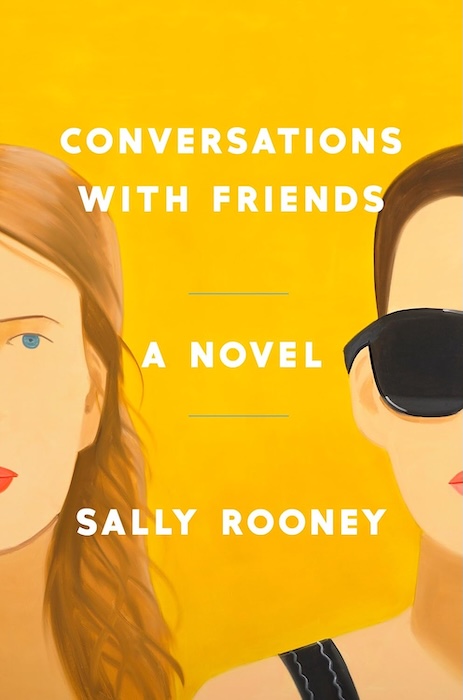
Conversations with Friends
Conversations with Friends follows Frances and Bobbi, two young women in Dublin who were once romantically involved and remain close friends. During a poetry performance, they meet Melissa, an established writer, and her husband, Nick, an actor. What begins as a new social connection gradually develops into a complicated web of attraction, secrecy, and emotional dependency.
Frances, a reserved and intellectually sharp university student, finds herself drawn into an affair with Nick while struggling to understand her own feelings and boundaries. As the relationships between the four characters shift, Frances must confront her ideas about intimacy, loyalty, and self-worth.
With her characteristic precision and understated humor, Sally Rooney explores the uncertainties of young adulthood, the gap between intellectual understanding and emotional experience, and the ways people negotiate power and vulnerability in relationships. The novel offers an intimate portrait of love and identity in contemporary Ireland.
2017
10
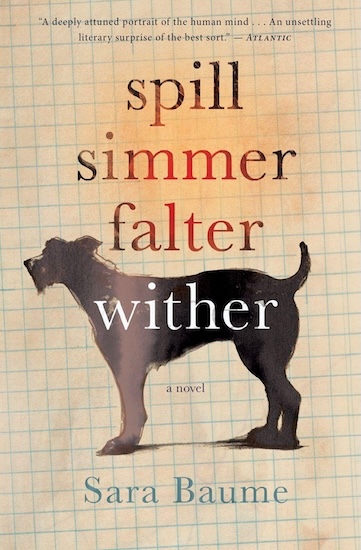
Spill Simmer Falter Wither
Ray is a solitary, middle-aged man who has spent most of his life isolated from the world. When he adopts One Eye, a small, scarred dog with a troubled past, the two unlikely companions begin to build a fragile life together. Both are outsiders, accustomed to being misunderstood and keeping their distance from others. But when an unfortunate incident turns their quiet existence upside down, they leave their coastal village and set out on the road, travelling through the Irish countryside.
Told in an intimate, unconventional voice addressed to the dog, Spill Simmer Falter Wither traces a year through the changing seasons. Sara Baume combines lyrical descriptions of the natural world with a moving portrait of loneliness, vulnerability, and unexpected companionship. This tender yet unsentimental novel asks whether two damaged souls can find belonging in one another when the wider world has little room for either of them.
2015
11
The South
Set in the 1950s, The South follows Katherine Proctor, an Irish Protestant woman who leaves her husband, young son, and home in Ireland to begin a new life in Barcelona. Determined to become a painter, she immerses herself in the city’s artistic community, where she meets Miguel, an anarchist and veteran of the Spanish Civil War. Their relationship leads her to a remote village in the Pyrenees, where she attempts to reconcile her artistic ambitions with her desire for love and independence. However, the past continues to shape her choices, forcing her to confront the complexities of her marriage, family ties, and cultural identity. Through Katherine’s journey, Colm Tóibín explores exile, self-discovery, and the difficult pursuit of personal freedom against the weight of social expectations and historical conflict.
2012
12
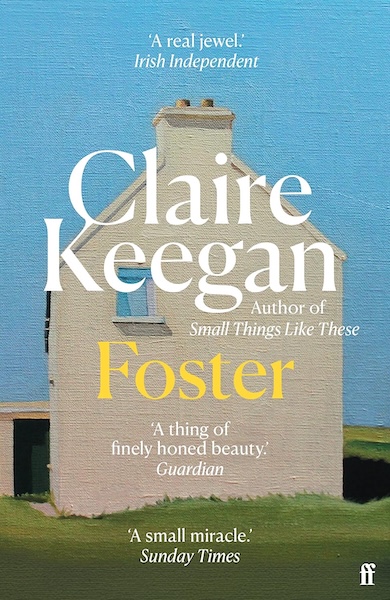
Foster
During the summer of 1981, an unnamed young girl is sent from her crowded family home to live with relatives in rural County Wexford while her mother prepares to give birth. Quiet and observant, she arrives at the Kinsellas’ farm uncertain of what awaits her. But unlike the home she has left behind, this household offers her tenderness, attention, and a sense of belonging she has never experienced before.
As the summer unfolds, the girl discovers the transformative power of being cared for. Yet beneath the peaceful routines of farm life lies a grief the Kinsellas rarely discuss. Through small gestures, unspoken truths, and the child’s growing awareness of the adult world, Claire Keegan creates a moving portrait of childhood and the complicated bonds between parents and children. Foster is a beautifully restrained novella about the families we are born into, the love we find unexpectedly, and the lasting impact of being seen and valued.
2010