Books from United Kingdom
Suggest a book
All genres
Historical Fiction
Literary Fiction
Fantasy
Romance
Horror
Thriller
Non-Fiction
Mystery
Memoir
Classics
History
Sci-Fi
Contemporary Fiction
Science Fiction
Fiction
Poetry
Essays
Family Saga
Magical Realism
Family Drama
Dark Academia
Psychological Fiction
Dark Comedy
Political Writing
Feminist Fiction
Satire
Campus Fiction
Cultural Studies
Biography
Philosophy
Comedy
Drama
Young Adult
Gothic
Dystopia
Crime
Children's Books
Short Stories
Mythology
Cozy
Retellings
Humour
Adventure
All themes
Love & Passion
Adventure & Journey
Identity & Belonging
War & Conflict
Freedom & Resistance
Family & Heritage
Nature & Landscape
Society & Class
Spirituality & Faith
Solitude & Exile
Coming of Age
Revolution & Change
Friendship
History
Immigration
Myths and Retellings
Colonialism
Women & Society
Mental Health
Motherhood
1
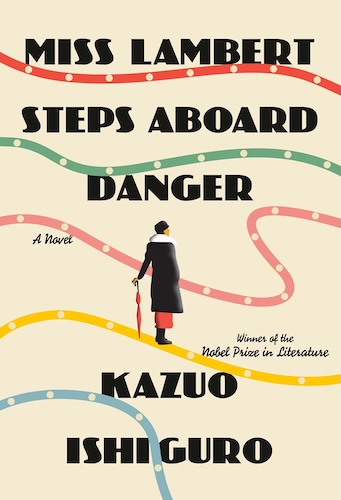
Miss Lambert Steps Aboard Danger
London, 1938. After a music hall performance, Richard Hadley encounters the mysterious Miss Lambert, a woman who seems to have attracted the attention of dangerous forces. Intrigued and determined to protect her, Richard follows her to a secretive gathering in the English countryside and eventually boards a train bound for Scotland. As old acquaintances, political figures, and suspicious strangers enter the picture, he finds himself caught up in a puzzling adventure whose true stakes he can barely comprehend. Blending espionage, eccentric characters, music, and understated humour, Nobel laureate Kazuo Ishiguro delivers a playful period mystery in which nothing is quite as it seems.
2027
2
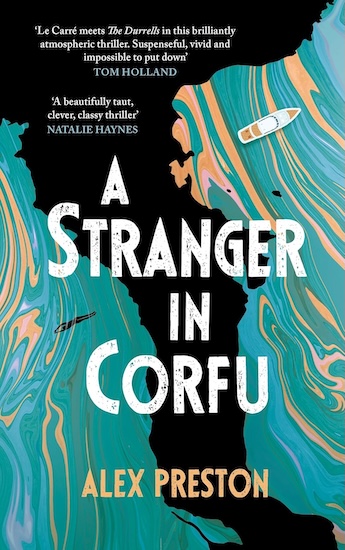
A Stranger in Corfu
On the Greek island of Vidos, just off the coast of Corfu, a secluded community of former MI6 officers lives in enforced retirement. These men and women have been exiled from the intelligence service—some too damaged by their past, others too compromised to be trusted. Surrounded by the beauty of the Ionian Sea, they attempt to settle old grudges, rekindle lost relationships, and forget the dangerous lives they once led.
But their fragile peace collapses when one of the residents is found dead. As suspicion spreads through the community, former allies begin questioning one another, and buried secrets from decades of espionage threaten to surface. The island becomes a trap for people who have spent their lives deceiving others, where old betrayals carry deadly consequences and nobody’s version of the past can be trusted.
Inspired by the hidden history of British intelligence, A Stranger in Corfu combines an atmospheric Mediterranean setting with the moral ambiguity of Cold War espionage. Alex Preston explores loyalty, betrayal, and the difficulty of escaping one’s past, asking what remains of people whose entire lives have been built around secrets.
2026
3
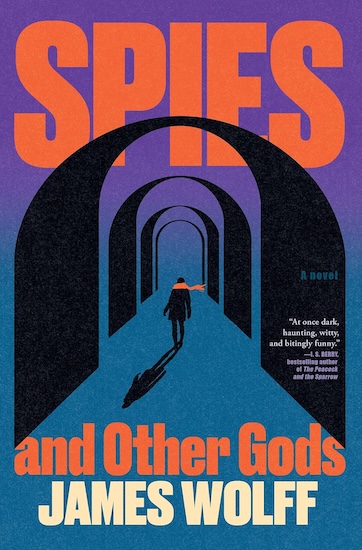
Spies and Other Gods
The head of British Intelligence, Sir William Rentoul, is only six months away from retirement when an anonymous complaint threatens to expose a disastrous covert operation. Already struggling with an increasingly unreliable memory, he must now contend with parliamentary scrutiny, a trail of assassinations, and secrets that could bring the intelligence establishment to its knees.
Enter Aphra McQueen, a sharp and unconventional parliamentary researcher tasked with investigating the complaint. Her inquiry leads her into a covert operation involving CASPIAN, an elusive assassin responsible for killing Iranian dissidents across Europe. As the investigation unfolds, Aphra discovers that the case is far more complicated than it first appears—and that she herself may be concealing crucial information. With intelligence agencies scrambling to contain the fallout, an unsuspecting British-Syrian dentist becomes entangled in a dangerous international conspiracy.
Told in part through the sardonic voice of an almost omniscient narrator known as the “spirit of spying,” Spies and Other Gods combines espionage, dark humour, and institutional satire. James Wolff examines the uneasy relationship between secrecy and accountability, revealing the human weaknesses and moral compromises behind the machinery of intelligence.
2026
4
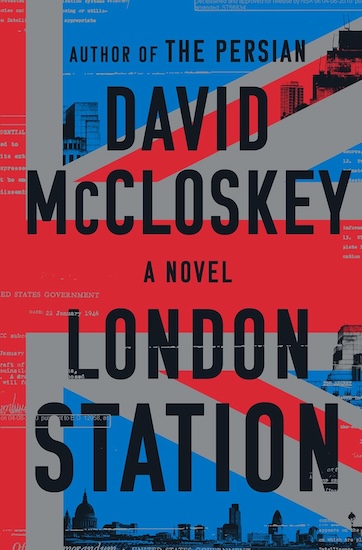
London Station
London becomes a battleground when the long-standing alliance between American and British intelligence begins to unravel. A new CIA director arrives determined to disrupt the agency and rethink its relationship with MI6. When the veteran chief of the CIA’s London Station is forced out, he makes an extraordinary decision: to work for the British instead. His betrayal is uncovered by his successor, Artemis Aphrodite Procter, who suddenly finds herself caught between a treacherous former superior and an increasingly ruthless leadership back in Washington.
As intelligence sources begin dying and the identities of covert agents are exposed, Procter and her team must uncover who is leaking secrets—and why. Their investigation draws them into a dangerous world of private intelligence companies, technological surveillance, and competing agendas, where allies become adversaries and loyalty can be fatal.
In this fifth novel featuring Artemis Procter, David McCloskey explores the fragile relationship between intelligence agencies and the political forces that shape their work. Combining intricate espionage operations with a story of institutional betrayal, London Station asks what happens when serving your country means disobeying the people who claim to represent it.
2026
5
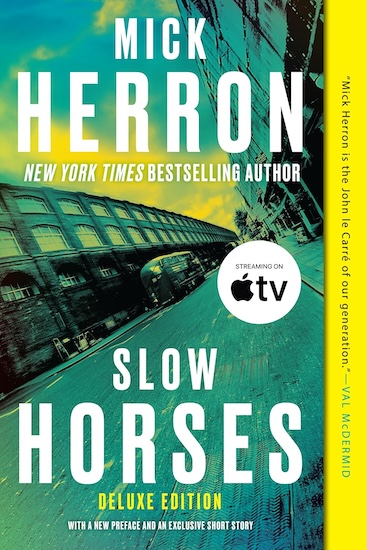
Slow Horses
At the edge of London’s intelligence world lies Slough House, a drab office where MI5 sends agents who have made career-ending mistakes. Known as the “slow horses,” these disgraced spies spend their days drowning in paperwork, enduring humiliating assignments, and dreaming of returning to serious intelligence work. Their miserable existence is overseen by Jackson Lamb, a brilliant but abrasive veteran whose apparent laziness conceals a formidable understanding of the spying business.
River Cartwright, a promising young agent whose career collapses after a disastrous training exercise, finds himself among them. When a young man is kidnapped and his captors threaten to broadcast his execution online, the slow horses see an opportunity to prove their worth. But as they investigate, they begin to suspect that the kidnapping may be part of a much larger game—and that powerful people within the intelligence establishment have their own reasons for wanting the truth to remain hidden.
Combining tense espionage with dark humour and political satire, Slow Horses offers a refreshingly unglamorous portrait of intelligence work. Mick Herron explores ambition, professional failure, and institutional corruption, revealing how the people dismissed as useless can sometimes see what the powerful refuse to acknowledge.
2010
6
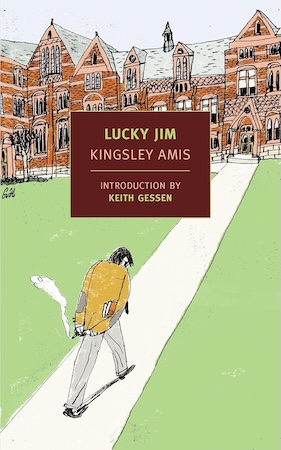
Lucky Jim
Jim Dixon is a young history lecturer at a provincial English university, and he is spectacularly ill-suited to the world of academic pretension surrounding him. Desperate to keep his job, he must endure pompous professors, tedious social gatherings, an exhausting relationship, and the looming disaster of a lecture he can barely bring himself to prepare. When he falls for Christine, the girlfriend of his employer’s son, his already chaotic life becomes even more complicated. Sharp, irreverent, and gloriously funny, Lucky Jim skewers class snobbery, intellectual pretension, and the absurd rituals of professional life. A landmark of postwar British literature, it remains a delightfully rebellious portrait of an ordinary man trying not to lose his mind in a world of fools.
1954
7
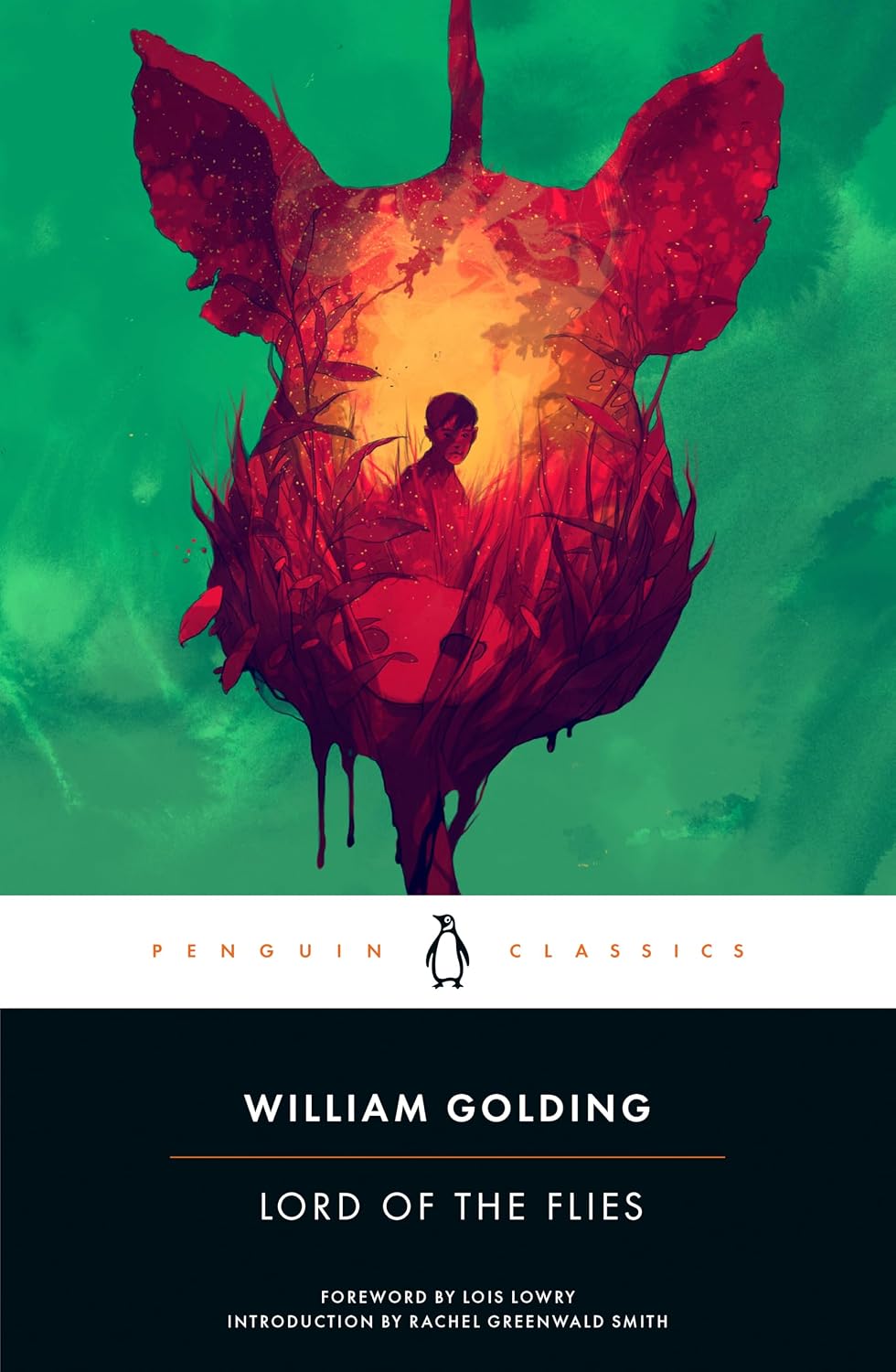
Lord of the Flies
Lord of the Flies follows a group of British schoolboys stranded on an uninhabited tropical island after a plane crash. Without adults to supervise them, the boys attempt to establish rules, distribute responsibilities, and organise their survival. Ralph advocates cooperation and order, while Jack becomes increasingly obsessed with hunting and personal power. As fear spreads and the boys become preoccupied with a mysterious beast they believe inhabits the island, their fragile society begins to collapse into violence. Golding uses their experience to examine the relationship between civilisation and human aggression, questioning whether social rules restrain darker impulses or merely conceal them. The novel explores leadership, fear, conformity, and the vulnerability of collective order, suggesting that the desire for power can destroy cooperation even among people who initially share the same goals.
1954
8
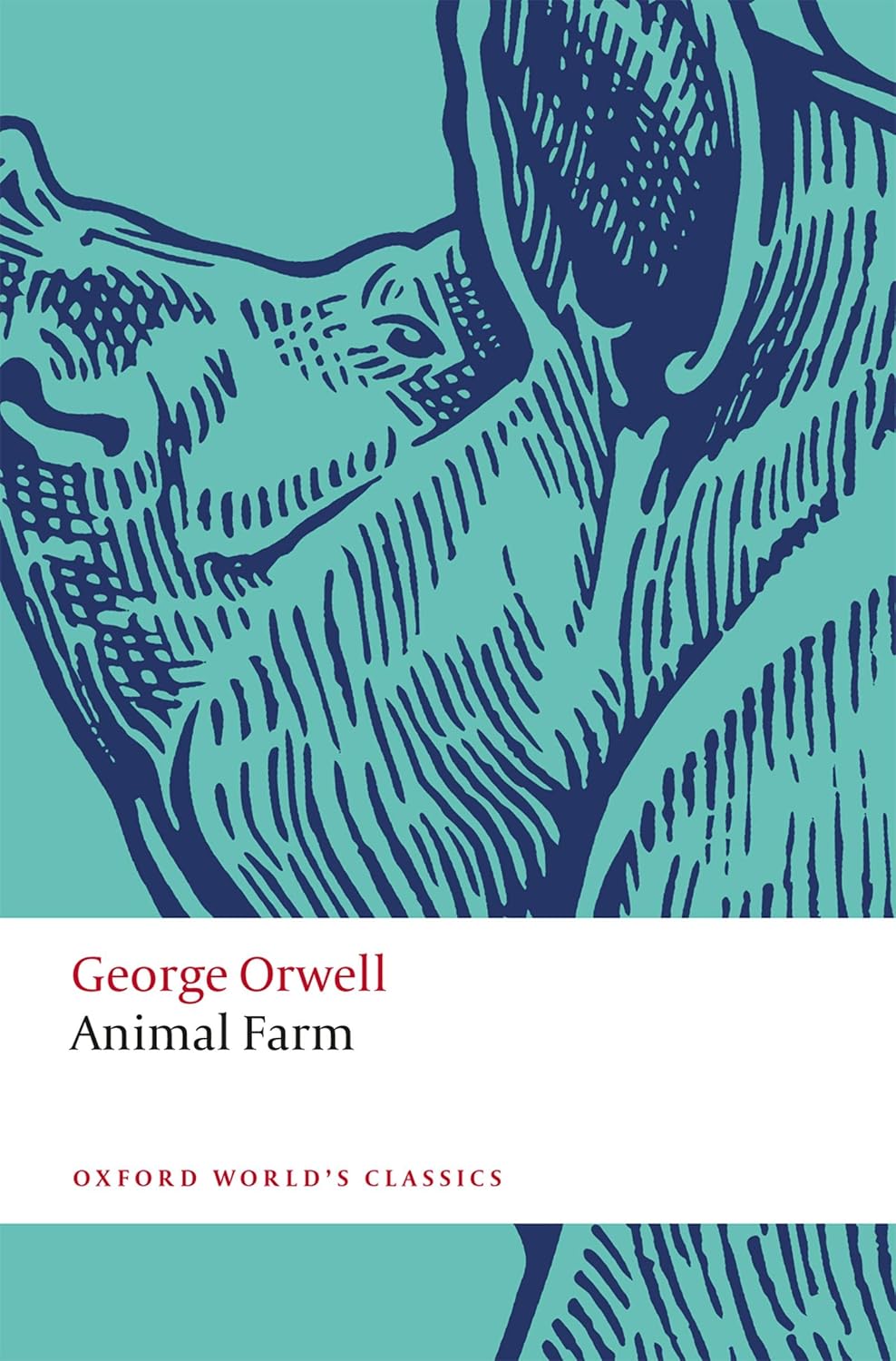
Animal Farm
Animal Farm is a political allegory about a group of farm animals who rebel against their human owner, hoping to establish a society based on equality and shared labour. Initially inspired by the promise of freedom, the animals create their own system of government under the leadership of the pigs. However, Napoleon gradually consolidates power, using propaganda, intimidation, and manipulated rules to suppress opposition. As the pigs adopt the privileges once enjoyed by humans, the original ideals of the revolution are abandoned. Through the animals’ experiences, Orwell examines how political movements can be corrupted by authoritarian ambition and how language can be used to justify inequality. The novella critiques the betrayal of revolutionary ideals, demonstrating how societies seeking liberation can reproduce the very systems of oppression they originally opposed.
1945
9
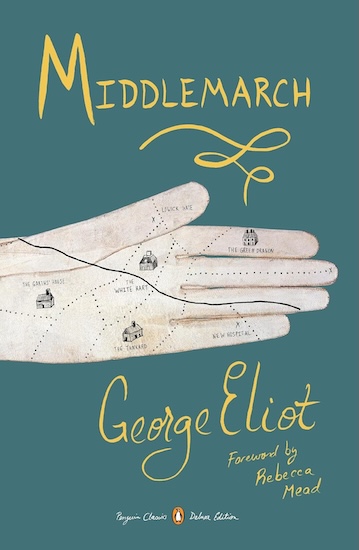
Middlemarch
Middlemarch portrays life in a provincial English town during the early nineteenth century, following a wide network of characters whose ambitions and relationships reveal the complexities of social change. Dorothea Brooke, an idealistic young woman, longs to lead a meaningful life but finds herself trapped in a disappointing marriage to the elderly scholar Edward Casaubon. Meanwhile, the ambitious doctor Tertius Lydgate hopes to reform medical practice but becomes increasingly constrained by financial pressures and social expectations. Their stories intersect with those of other residents whose decisions reflect the influence of class, money, reputation, and political change. Eliot examines the gap between personal aspirations and the realities of everyday life, showing how even well-intentioned individuals can cause harm through ignorance or pride. The novel explores marriage, moral responsibility, and the quiet ways people influence one another’s futures.
1871
10
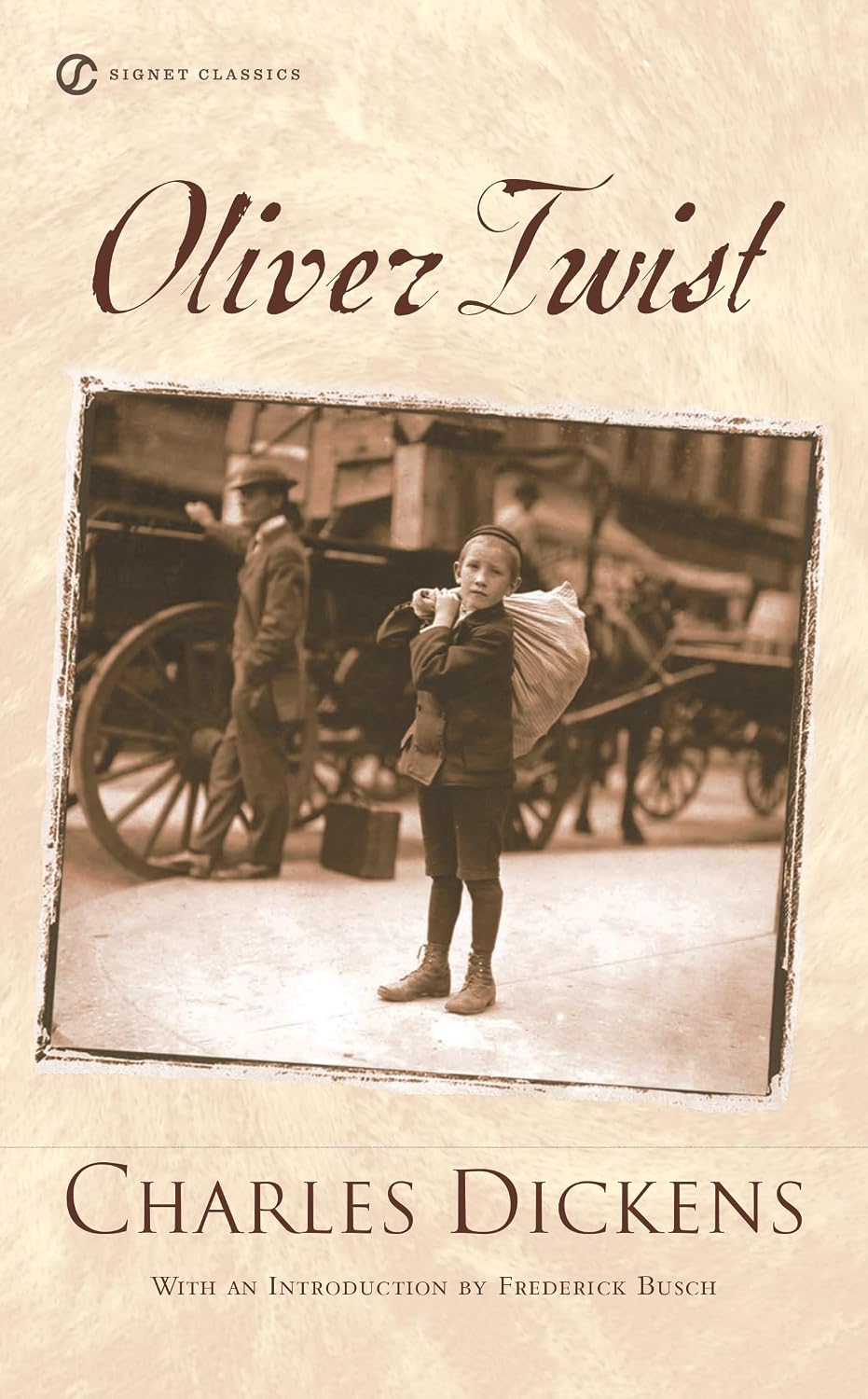
Oliver Twist: Or the Parish Boy's Progress
Oliver Twist follows an orphaned boy who grows up in the brutal conditions of a Victorian workhouse. After asking for more food, Oliver is punished and eventually sent away to work, but he escapes to London in search of a better life. There he falls into the company of a group of young thieves controlled by the criminal Fagin. Although Oliver is repeatedly exposed to exploitation and violence, he retains his kindness and honesty. His circumstances eventually bring him into contact with people who recognise his innocence and attempt to protect him. Dickens exposes the cruelty of institutions that punish poverty rather than alleviate it, highlighting the vulnerability of children in a society marked by inequality. The novel explores justice, compassion, and the possibility of moral goodness surviving even in deeply corrupt environments.
1838