Books from United Kingdom
Suggest a book
All genres
Historical Fiction
Literary Fiction
Fantasy
Romance
Horror
Thriller
Non-Fiction
Mystery
Memoir
Classics
History
Sci-Fi
Contemporary Fiction
Science Fiction
Fiction
Poetry
Essays
Family Saga
Magical Realism
Family Drama
Dark Academia
Psychological Fiction
Dark Comedy
Political Writing
Feminist Fiction
Satire
Campus Fiction
Cultural Studies
Biography
Philosophy
Comedy
Drama
Young Adult
Gothic
Dystopia
Crime
Children's Books
Short Stories
Mythology
Cozy
Retellings
Humour
Adventure
All themes
Love & Passion
Adventure & Journey
Identity & Belonging
War & Conflict
Freedom & Resistance
Family & Heritage
Nature & Landscape
Society & Class
Spirituality & Faith
Solitude & Exile
Coming of Age
Revolution & Change
Friendship
History
Immigration
Myths and Retellings
Colonialism
Women & Society
Mental Health
Motherhood
1
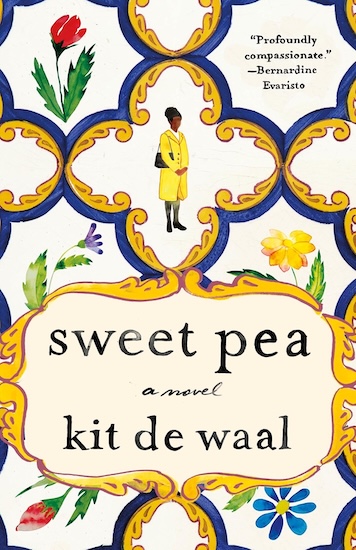
Sweet Pea
Sometimes, the family that saves us is the one we never expected to find.
When Paulette arrives in England as a young girl, she leaves behind the grandmother who calls her Sweet Pea and teaches her that love and forgiveness should guide her life. Years later, at twenty-nine, Paulette seems close to everything she has dreamed of: a loving partner, a child, and a home of her own. But when tragedy shatters her plans, she is left to navigate grief and motherhood while trying to build a future for herself and her son, Bird.
Then an unexpected encounter brings her face-to-face with Frank, the man responsible for the accident that killed the man she loved. Frank is struggling to raise his own young grandson, Nellie, alone. Despite the pain connecting their lives, Paulette finds herself drawn into the boy’s world, offering him the care and tenderness he desperately needs.
As the children grow and the two families become intertwined, Paulette must confront the complicated boundaries between anger and compassion, justice and forgiveness. Set in 1970s England, Sweet Pea is a tender, emotionally rich story about motherhood, migration, grief, and the unexpected ways love can transform a life. It asks whether forgiveness means forgetting the past—or finding the strength to make room for something new.
2026
2
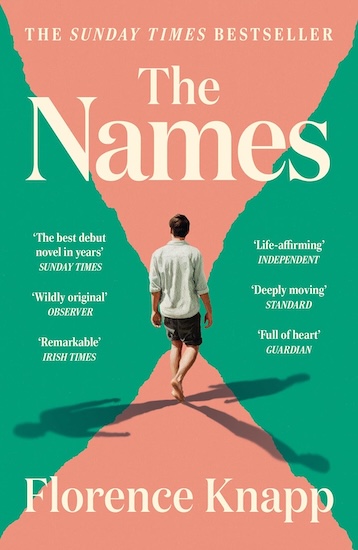
The Names
England, 1987. As a great storm rages outside, Cora sets out to register the birth of her son. Her controlling husband expects her to name the baby after him, continuing a family tradition passed down through generations of domineering men. But Cora hesitates. Should her son inherit a name that represents everything she fears, or should she choose a different future for him?
Her decision creates three possible lives for her son: Bear, a name chosen by his older sister in the hope that he will grow up brave and kind; Julian, the name Cora believes will allow him to become his own person; or Gordon, named after his father and raised in his cruel image. Through three interwoven timelines, Florence Knapp explores how a single decision can shape an entire family, revealing the lasting effects of domestic abuse alongside the possibilities of love, resilience, and redemption. The Names is a moving novel about the power of choice, the courage to break generational cycles, and the uncertain relationship between identity and fate.
2026
3
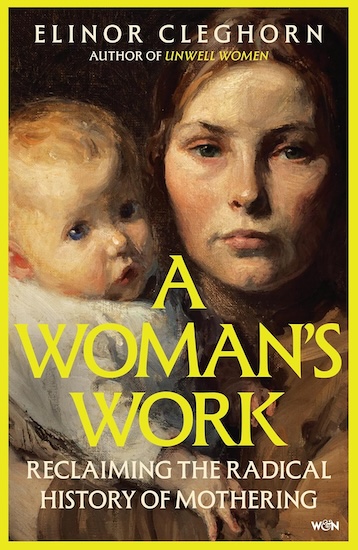
A Woman’s Work: Reclaiming the Radical History of Mothering
Motherhood has shaped human history, yet the women who have raised children, challenged injustice, and fought for reproductive freedom have often been written out of it. From ancient childbirth rituals to the struggles of unmarried mothers in seventeenth-century England, Elinor Cleghorn traces the lives of women who resisted society’s attempts to control their bodies and define their roles. Through the stories of midwives, writers, activists, and community leaders, she reveals how mothering has always been an act of labour, resistance, and transformation. Reclaiming motherhood as more than a biological function or private responsibility, this compelling history challenges the patriarchal systems that have devalued women’s work and asks what it would mean to finally recognize and support the people who care for others.
2026
4
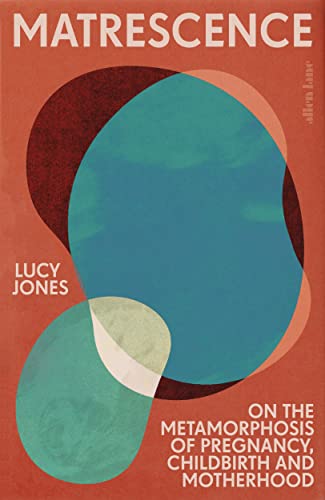
Matrescence
Becoming a mother changes you in ways that are far deeper than most people ever explain. But what if this transformation were understood not simply as a life event, but as a profound biological, psychological, and social metamorphosis?
In Matrescence, journalist Lucy Jones explores the extraordinary transition into motherhood, drawing parallels with adolescence. Through neuroscience, evolutionary biology, psychology, and sociology, she investigates how pregnancy, childbirth, and early motherhood reshape the brain, body, emotions, and sense of identity.
Blending scientific research with her own experiences of motherhood, Jones challenges the idealised image of maternal bliss. She examines exhaustion, ambivalence, identity loss, and the immense pressures placed on mothers by a society that often undervalues caregiving while expecting women to do it all.
Both deeply personal and scientifically informed, Matrescence offers a new language for understanding the transformation of becoming a parent. It asks why such a universal experience has been so overlooked—and what might change if motherhood were better understood, supported, and valued. The book was longlisted for the 2024 Women’s Prize for Non-Fiction.
2023