Books from United Kingdom
Suggest a book
All genres
Historical Fiction
Literary Fiction
Fantasy
Romance
Horror
Thriller
Non-Fiction
Mystery
Memoir
Classics
History
Sci-Fi
Contemporary Fiction
Science Fiction
Fiction
Poetry
Essays
Family Saga
Magical Realism
Family Drama
Dark Academia
Psychological Fiction
Dark Comedy
Political Writing
Feminist Fiction
Satire
Campus Fiction
Cultural Studies
Biography
Philosophy
Comedy
Drama
Young Adult
Gothic
Dystopia
Crime
Children's Books
Short Stories
Mythology
Cozy
Retellings
Humour
Adventure
All themes
Love & Passion
Adventure & Journey
Identity & Belonging
War & Conflict
Freedom & Resistance
Family & Heritage
Nature & Landscape
Society & Class
Spirituality & Faith
Solitude & Exile
Coming of Age
Revolution & Change
Friendship
History
Immigration
Myths and Retellings
Colonialism
Women & Society
Mental Health
Motherhood
1
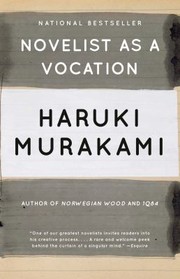
Novelist As a Vocation
Novelist as a Vocation offers Haruki Murakami’s reflections on the craft of writing, the life of a novelist, and the habits that sustain a long creative career. Drawing on his own experiences, Murakami discusses how he became a writer, the importance of originality, and the discipline required to transform ideas into finished novels. He considers the relationship between imagination and reality, explaining how writers develop distinctive voices and create fictional worlds that feel convincing to readers.
Beyond practical advice, Murakami reflects on literary recognition, criticism, education, and the pressures of the publishing industry. He questions conventional ideas about literary talent and argues that persistence, curiosity, and a willingness to work consistently are essential to creative development. The book also reveals aspects of Murakami’s personal philosophy, including his commitment to routine, physical exercise, and independent thinking. Part memoir and part meditation on artistic practice, it offers insight into how a novelist builds a sustainable relationship with writing while protecting the freedom to follow an individual creative vision.
2015
2
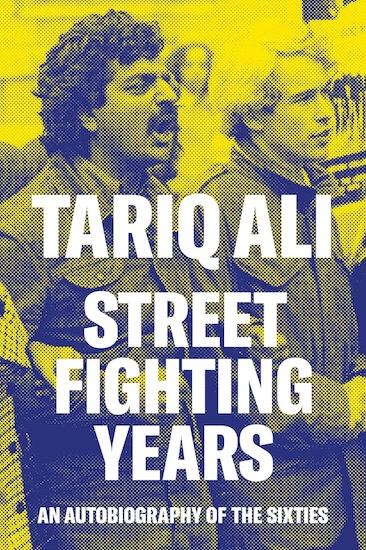
Street Fighting Years
In Street Fighting Years, Tariq Ali recounts his transformation from a young Pakistani student into one of the most prominent radical activists of the 1960s. Moving between London, Paris, Prague, Hanoi, and other centres of political upheaval, Ali offers a personal account of a decade defined by student revolts, anti-war demonstrations, revolutionary movements, and challenges to established political authority.
Through his encounters with figures such as Malcolm X, Bertrand Russell, Che Guevara, and Mick Jagger, Ali captures the energy and contradictions of a generation determined to reshape society. He reflects on the Vietnam War, the suppression of the Prague Spring, the rise of the international protest movement, and the growing opposition to Western imperialism. Blending autobiography with political history, the book explores the hopes, disagreements, and disappointments of activists who believed that collective action could transform the world. It is both a portrait of a turbulent era and a reflection on the personal costs of political commitment.
2018
3
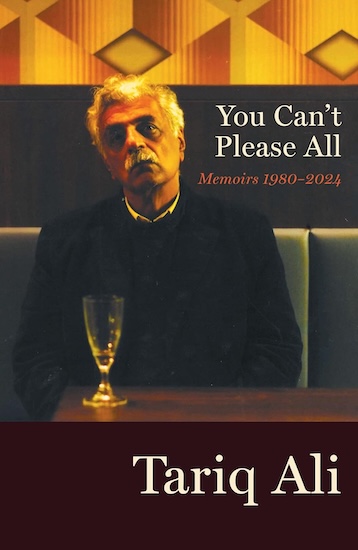
You Can’t Please All
In You Can’t Please All, Tariq Ali reflects on more than four decades of political activism, intellectual debate, and cultural life, continuing the story begun in his earlier memoir, Street Fighting Years. Moving between continents and pivotal historical moments, Ali recounts witnessing the collapse of the Soviet Union, meeting political figures such as Hugo Chávez, and campaigning against the wars in Iraq and Afghanistan as a prominent critic of Western foreign policy.
Combining personal recollections, political commentary, anecdotes, and reflections on literature, theatre, and film, the memoir also offers intimate portraits of influential writers, activists, and friends, including Edward Said and Benazir Bhutto. Ali explores the relationship between personal convictions and public life, tracing the changing fortunes of the political left from the aftermath of the revolutionary movements of the 1960s to the conflicts and ideological struggles of the twenty-first century. The book also looks back at his family’s experiences in the early years of Pakistan, connecting his personal history with the broader political forces that shaped his life.
2024
4

Prodigal
What does it mean to return home when the place you left has become a stranger—and the past you are returning to is full of unanswered questions?
In Prodigal, award-winning poet Kayo Chingonyi traces the journey from a childhood shaped by loss to an adult reckoning with his Zambian heritage. In 1993, following his father’s death, six-year-old Kayo is sent from Zambia to Newcastle, England. Growing up in Britain, he gradually learns the circumstances surrounding his parents’ deaths from HIV-related illnesses. The stigma surrounding their deaths leaves him carrying grief, shame, and questions about a family history he struggles to understand.
Nearly twenty-five years later, a message from a cousin in Zambia prompts Chingonyi to reconsider the distance separating him from his birthplace. His return becomes an opportunity to piece together fragments of memory, confront the silences surrounding his childhood, and reconsider what he has inherited from the people he lost.
Moving between Zambia and Britain, Chingonyi explores migration, bereavement, cultural belonging, and the complicated process of making peace with one’s past. Music, poetry, and family memories become ways of reconnecting with what has been lost. Prodigal is an intimate memoir about discovering that returning home is not simply about retracing your steps—it is about learning to understand the person you have become.
2027