Books from United Kingdom
Suggest a book
All genres
Historical Fiction
Literary Fiction
Fantasy
Romance
Horror
Thriller
Non-Fiction
Mystery
Memoir
Classics
History
Sci-Fi
Contemporary Fiction
Science Fiction
Fiction
Poetry
Essays
Family Saga
Magical Realism
Family Drama
Dark Academia
Psychological Fiction
Dark Comedy
Political Writing
Feminist Fiction
Satire
Campus Fiction
Cultural Studies
Biography
Philosophy
Comedy
Drama
Young Adult
Gothic
Dystopia
Crime
Children's Books
Short Stories
Mythology
Cozy
Retellings
Humour
Adventure
All themes
Love & Passion
Adventure & Journey
Identity & Belonging
War & Conflict
Freedom & Resistance
Family & Heritage
Nature & Landscape
Society & Class
Spirituality & Faith
Solitude & Exile
Coming of Age
Revolution & Change
Friendship
History
Immigration
Myths and Retellings
Colonialism
Women & Society
Mental Health
Motherhood
1
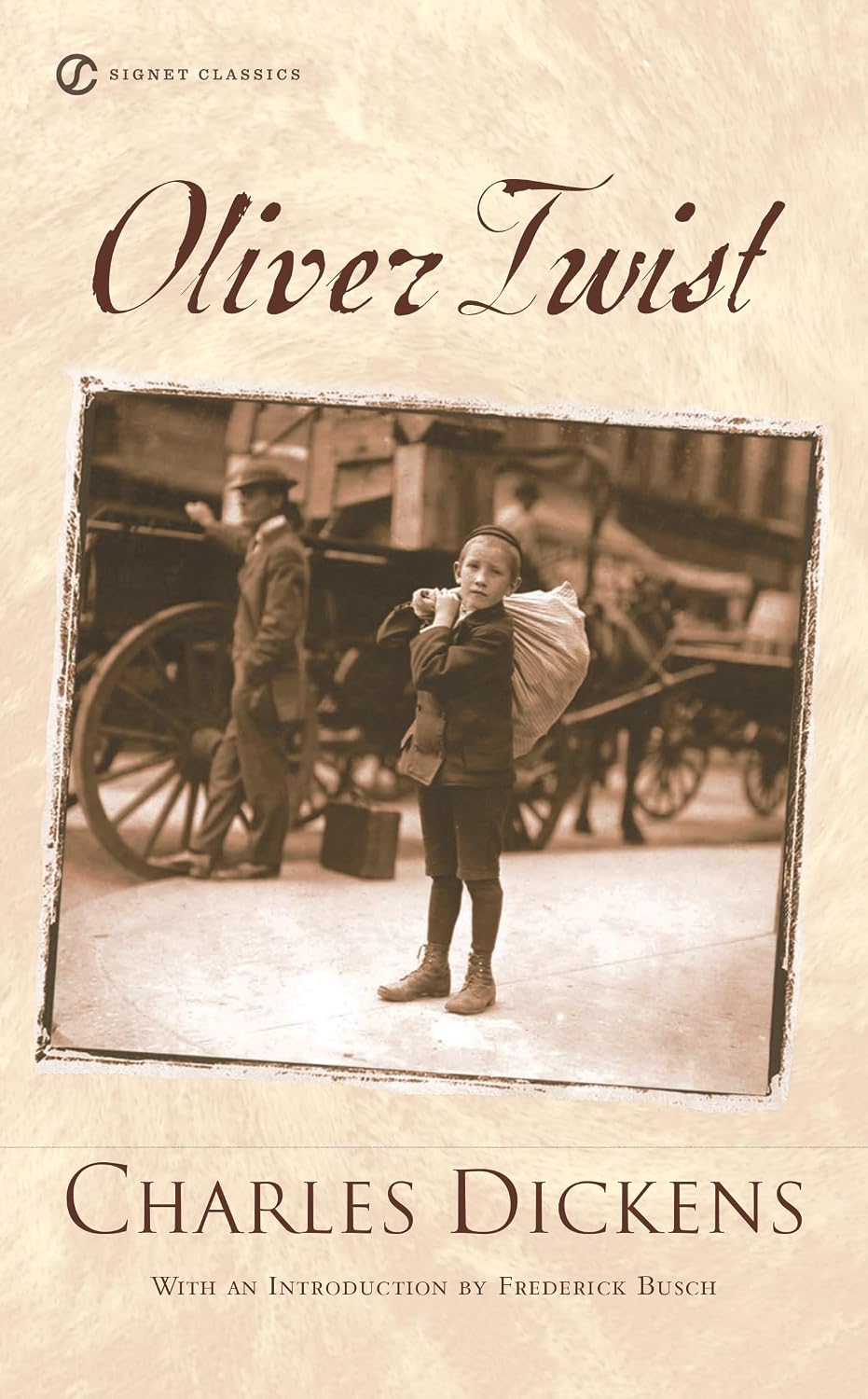
Oliver Twist: Or the Parish Boy's Progress
Oliver Twist follows an orphaned boy who grows up in the brutal conditions of a Victorian workhouse. After asking for more food, Oliver is punished and eventually sent away to work, but he escapes to London in search of a better life. There he falls into the company of a group of young thieves controlled by the criminal Fagin. Although Oliver is repeatedly exposed to exploitation and violence, he retains his kindness and honesty. His circumstances eventually bring him into contact with people who recognise his innocence and attempt to protect him. Dickens exposes the cruelty of institutions that punish poverty rather than alleviate it, highlighting the vulnerability of children in a society marked by inequality. The novel explores justice, compassion, and the possibility of moral goodness surviving even in deeply corrupt environments.
1838
2
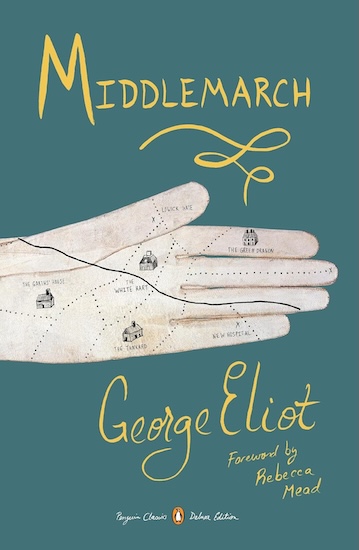
Middlemarch
Middlemarch portrays life in a provincial English town during the early nineteenth century, following a wide network of characters whose ambitions and relationships reveal the complexities of social change. Dorothea Brooke, an idealistic young woman, longs to lead a meaningful life but finds herself trapped in a disappointing marriage to the elderly scholar Edward Casaubon. Meanwhile, the ambitious doctor Tertius Lydgate hopes to reform medical practice but becomes increasingly constrained by financial pressures and social expectations. Their stories intersect with those of other residents whose decisions reflect the influence of class, money, reputation, and political change. Eliot examines the gap between personal aspirations and the realities of everyday life, showing how even well-intentioned individuals can cause harm through ignorance or pride. The novel explores marriage, moral responsibility, and the quiet ways people influence one another’s futures.
1871
3
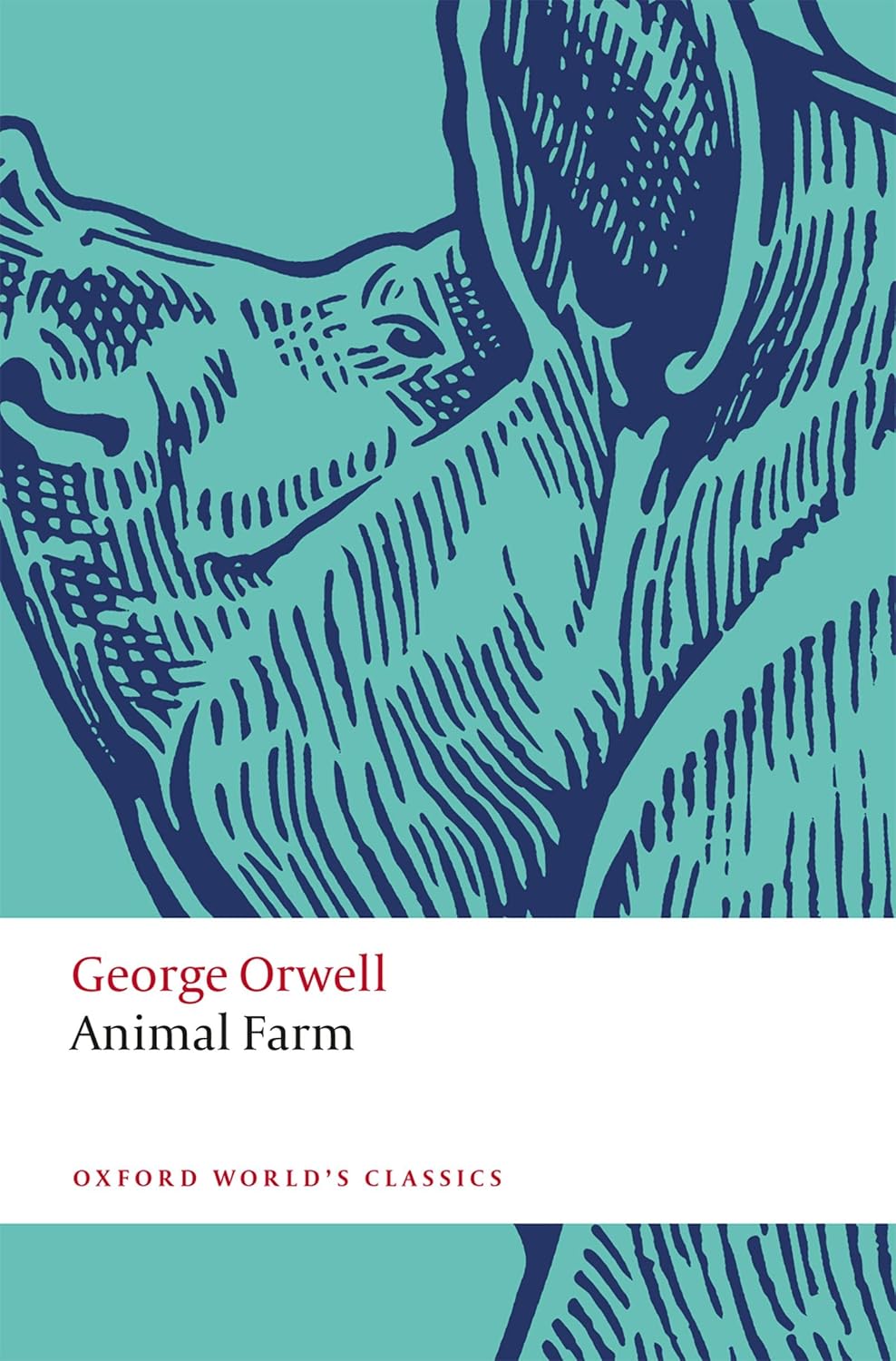
Animal Farm
Animal Farm is a political allegory about a group of farm animals who rebel against their human owner, hoping to establish a society based on equality and shared labour. Initially inspired by the promise of freedom, the animals create their own system of government under the leadership of the pigs. However, Napoleon gradually consolidates power, using propaganda, intimidation, and manipulated rules to suppress opposition. As the pigs adopt the privileges once enjoyed by humans, the original ideals of the revolution are abandoned. Through the animals’ experiences, Orwell examines how political movements can be corrupted by authoritarian ambition and how language can be used to justify inequality. The novella critiques the betrayal of revolutionary ideals, demonstrating how societies seeking liberation can reproduce the very systems of oppression they originally opposed.
1945
4
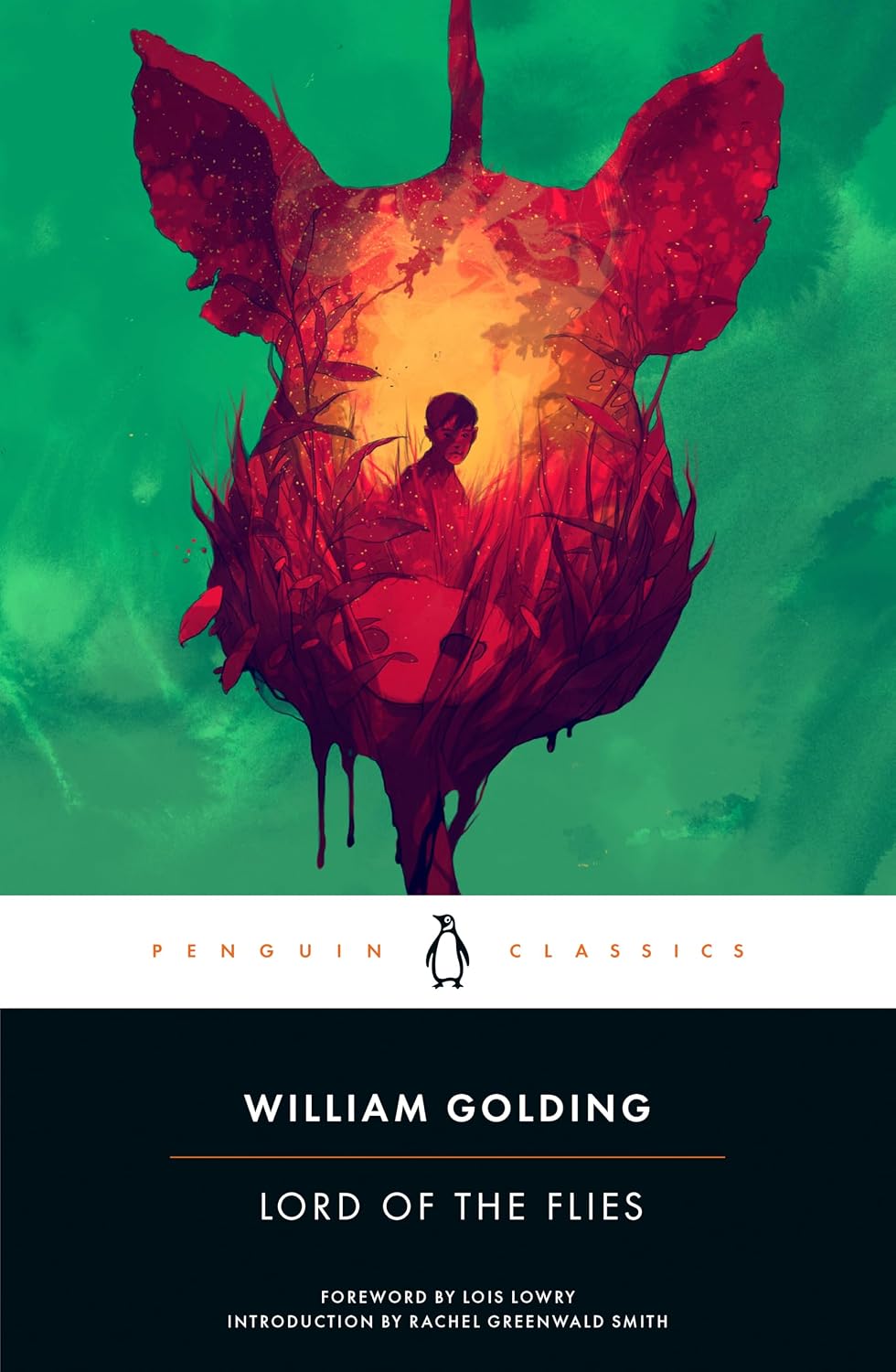
Lord of the Flies
Lord of the Flies follows a group of British schoolboys stranded on an uninhabited tropical island after a plane crash. Without adults to supervise them, the boys attempt to establish rules, distribute responsibilities, and organise their survival. Ralph advocates cooperation and order, while Jack becomes increasingly obsessed with hunting and personal power. As fear spreads and the boys become preoccupied with a mysterious beast they believe inhabits the island, their fragile society begins to collapse into violence. Golding uses their experience to examine the relationship between civilisation and human aggression, questioning whether social rules restrain darker impulses or merely conceal them. The novel explores leadership, fear, conformity, and the vulnerability of collective order, suggesting that the desire for power can destroy cooperation even among people who initially share the same goals.
1954