Books from France
Suggest a book
All genres
Historical Fiction
Literary Fiction
Fantasy
Romance
Horror
Thriller
Non-Fiction
Mystery
Memoir
Classics
History
Sci-Fi
Contemporary Fiction
Science Fiction
Fiction
Poetry
Essays
Family Saga
Magical Realism
Family Drama
Dark Academia
Psychological Fiction
Dark Comedy
Political Writing
Feminist Fiction
Satire
Campus Fiction
Cultural Studies
Biography
Philosophy
Comedy
Drama
Young Adult
Gothic
Dystopia
Crime
Children's Books
Short Stories
Mythology
Cozy
Retellings
Humour
Adventure
All themes
Love & Passion
Adventure & Journey
Identity & Belonging
War & Conflict
Freedom & Resistance
Family & Heritage
Nature & Landscape
Society & Class
Spirituality & Faith
Solitude & Exile
Coming of Age
Revolution & Change
Friendship
History
Immigration
Myths and Retellings
Colonialism
Women & Society
Mental Health
Motherhood
1
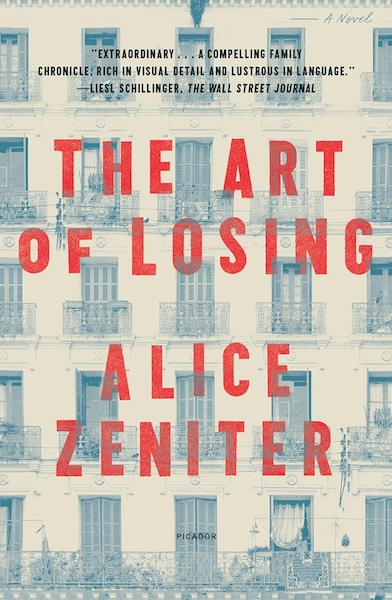
Art of Losing
Some families inherit houses, photographs, and heirlooms. Others inherit silences.
When Naïma, a young French woman of Algerian descent, begins exploring her family history, she discovers how little she knows about the country her grandparents left behind. Her grandfather, Ali, once owned land in Algeria but fled to France after the Algerian War of Independence. Her father, Hamid, grew up determined to become French, leaving painful memories and unanswered questions buried in the past.
Spanning three generations and seven decades, The Art of Losing follows a family shaped by colonialism, displacement, and the struggle to belong. As Naïma begins uncovering the truth about her ancestors, she must confront a history that is both deeply personal and politically complicated. What does it mean to inherit a past you never experienced? And can you claim an identity when the stories that might explain it have been lost?
Moving between Algeria and France, Alice Zeniter explores the invisible burdens passed from parents to children: the languages forgotten, the memories suppressed, and the connections that survive despite distance. Winner of the 2022 International Dublin Literary Award, this sweeping family saga is a powerful meditation on exile, belonging, and the stories we need to understand ourselves.
2017
2
Adèle
Adèle follows Adèle Robinson, a married woman living in Paris with her husband and young son. Despite her comfortable middle-class life and successful career as a journalist, she is consumed by compulsive sexual behavior that threatens to destroy her family and sense of self. As she becomes increasingly unable to control her impulses, her carefully maintained public image begins to unravel, exposing the emptiness and dissatisfaction beneath her seemingly ordinary existence. Through Adèle’s struggles, Leïla Slimani examines desire, addiction, repression, and the pressures of conventional domestic life. Written in a stark, unsentimental style, the novel explores the tension between social respectability and private compulsions, questioning how well people can truly understand themselves and the hidden forces that shape their behavior.
2014
3
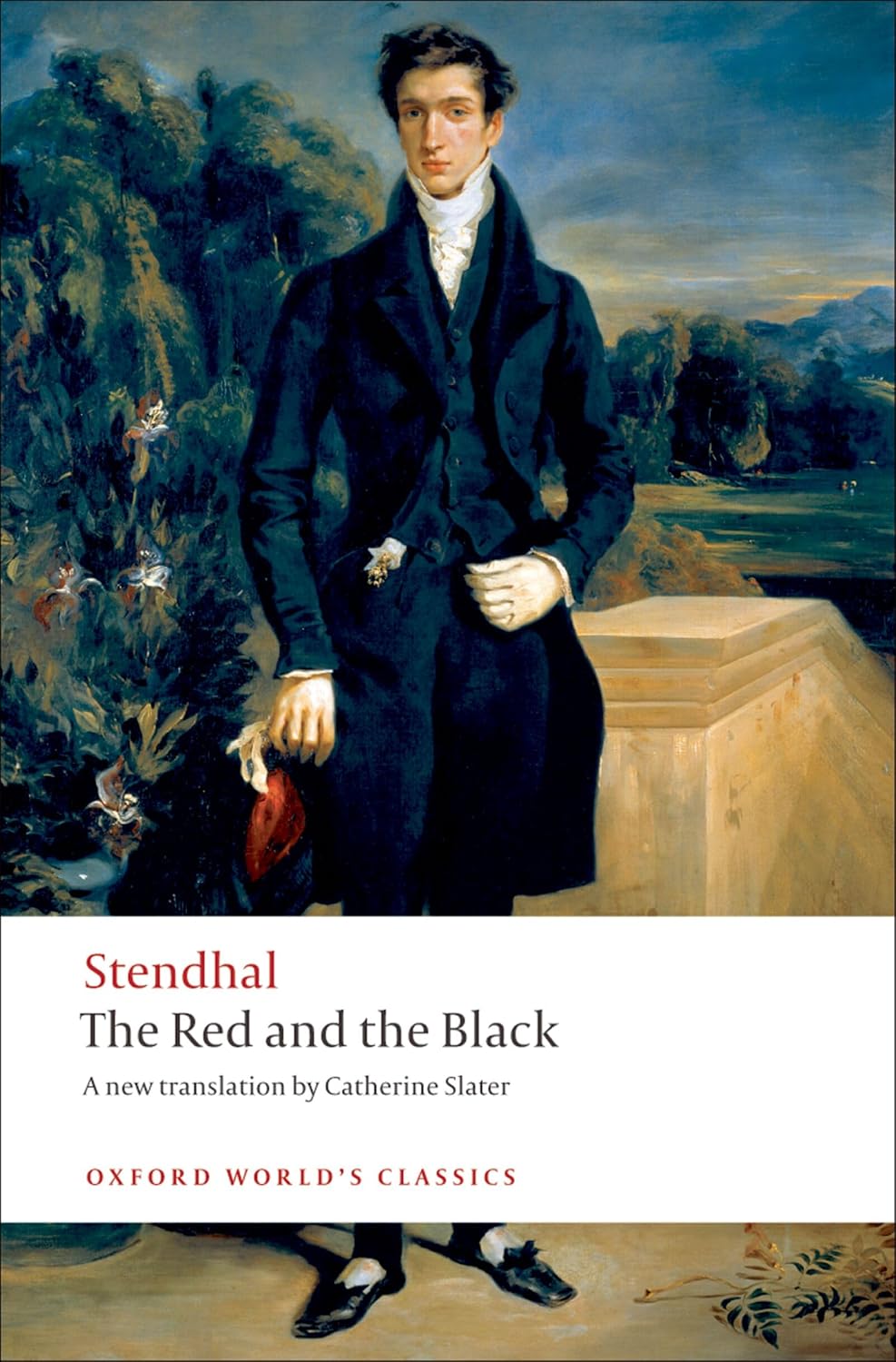
The Red and the Black
The Red and the Black follows Julien Sorel, an ambitious young man from a poor provincial family who dreams of rising through French society. Intelligent and determined, Julien sees the Church and the military as possible routes to power, studying religious doctrine while secretly admiring the military glory associated with Napoleon. His relationships with Madame de Rênal, the wife of his employer, and Mathilde de La Mole, the daughter of an aristocrat, become entangled with his social ambitions. As Julien moves between different social environments, he struggles to reconcile genuine feelings with his desire for status and recognition. Stendhal uses his story to examine class divisions, hypocrisy, and the limitations imposed by nineteenth-century French society. The novel portrays a talented individual attempting to overcome the circumstances of his birth, revealing how ambition can both challenge and reproduce the inequalities of the world he hopes to conquer.
2009
4
Three Strong Women
The story of three women who say no: Norah, a French-born lawyer who finds herself in Senegal, summoned by her estranged father to save another victim of his paternity; Fanta, who leaves a contented life as a teacher in Dakar to follow her boyfriend back to France, where his depression and dislocation poison everything; and Khady, a penniless widow put out by her husband's family with nothing but the name of a distant cousin in France. As these three lives intertwine, each woman manages an astonishing feat of self-preservation against those who have made themselves the fastest-growing and most-reviled people in Europe. In Marie NDiaye's stunning narration we see the progress by which ordinary women discover unimagined reserves of strength.
2009
5

A Leopard-Skin Hat
Some people remain impossible to understand, no matter how deeply we love them. In this intimate, unconventional novel, an unnamed narrator recounts his lifelong friendship with Fanny, a brilliant, rebellious, and deeply troubled woman whose inner world remains beyond his grasp. Bound to her by affection and concern, he witnesses her struggle with profound psychological difficulties, moving between moments of hope and periods of despair. Yet Fanny refuses to be reduced to her suffering: she is unpredictable, spirited, and fiercely individual. Told through brief, lyrical scenes, the novel explores the fragile boundaries between love and helplessness, understanding and mystery. Written in the wake of the death of Serre’s younger sister, this moving work becomes both a tribute to a life cut short and a meditation on grief, memory, and the limits of our ability to truly know another person.
2008
6
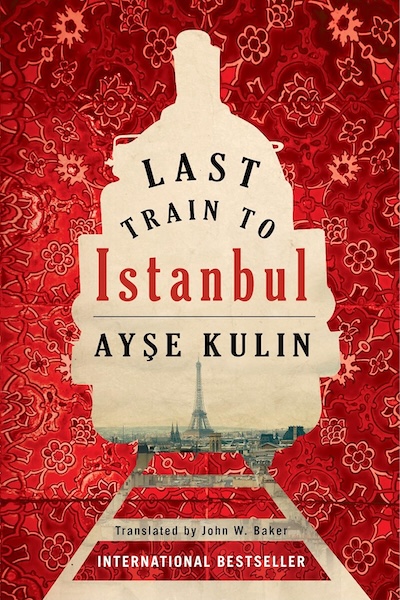
Last Train to Istanbul
As the Second World War threatens to engulf Europe, Selva, the daughter of a prominent Ottoman family, falls in love with Rafael Alfandari, a young Jewish man. Their relationship defies the expectations of both families, forcing them to leave Turkey and begin a new life together in France. But when the Nazis occupy the country, their happiness is overshadowed by the growing danger facing Jewish communities across Europe.
As persecution intensifies, Selva and Rafael find themselves trapped in a hostile world where their love and their young family may not be enough to keep them safe. Meanwhile, Turkish diplomats work behind the scenes to rescue Jewish people stranded in occupied Europe, arranging a perilous journey towards freedom. With time running out, the fate of Selva and Rafael becomes intertwined with the courage of those willing to risk their lives to save strangers.
Moving between Ankara, Istanbul, Paris, and other wartime cities, Last Train to Istanbul combines an intimate family story with a little-known chapter of Holocaust history. Inspired by accounts of Turkish diplomats who helped rescue Jews during the war, the novel explores love across cultural boundaries, moral courage, and the extraordinary acts of humanity that can emerge in the darkest times.
2002
7
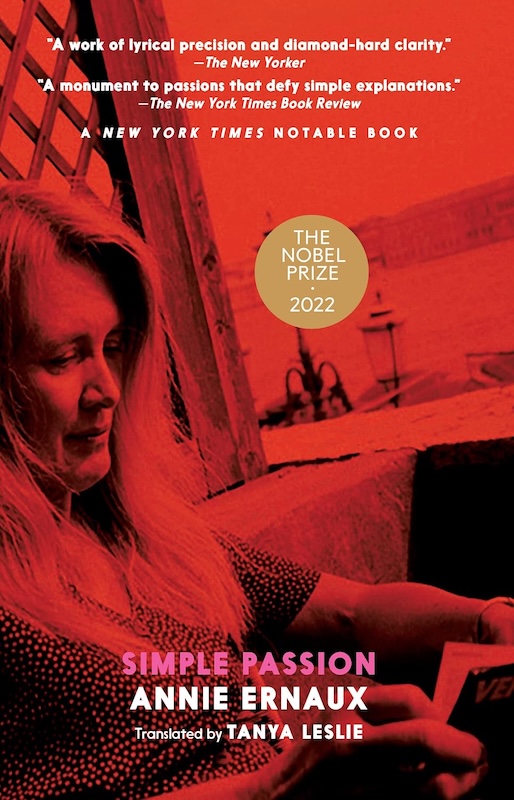
Simple Passion
Simple Passion is a concise, intensely personal account of a woman’s consuming affair with a married man. The narrator, an educated French woman, describes how her relationship gradually takes over her existence, shaping her thoughts, routines, and sense of time. Waiting for her lover’s phone calls and anticipating their meetings become the organising principles of her life, while ordinary activities lose their significance in comparison with the possibility of seeing him again.
Drawing on her own experiences, Annie Ernaux examines desire with remarkable honesty and emotional precision, refusing to romanticise or condemn the narrator’s obsession. She explores the vulnerability of surrendering oneself to another person, as well as the ways passion can disrupt independence and alter one’s perception of reality. Blending autobiography with detached observation, the book challenges conventional ideas about female desire, dignity, and romantic love. Its direct, unembellished prose transforms a deeply private experience into a broader reflection on the power of longing and the consuming nature of passion.
1991
8

The Stranger
The Stranger follows Meursault, an emotionally detached French Algerian who lives in Algiers and seems indifferent to the social conventions that govern those around him. After attending his mother’s funeral without displaying the expected signs of grief, he returns to his ordinary routine, beginning a relationship with Marie and becoming involved in the affairs of his neighbour, Raymond. During a seemingly unremarkable day at the beach, a confrontation leads Meursault to commit a sudden act of violence that changes the course of his life.
As he faces trial, the focus gradually shifts from the crime itself to his unconventional behaviour and apparent refusal to conform to society’s expectations. Through Meursault’s experience, Camus explores alienation, morality, justice, and the absurdity of human existence. Set in colonial Algeria, the novel also reflects the inequalities and tensions of the period. Written in a spare, detached style, The Stranger questions whether society judges people for their actions or for their failure to express the emotions and beliefs it considers acceptable.
1989
9
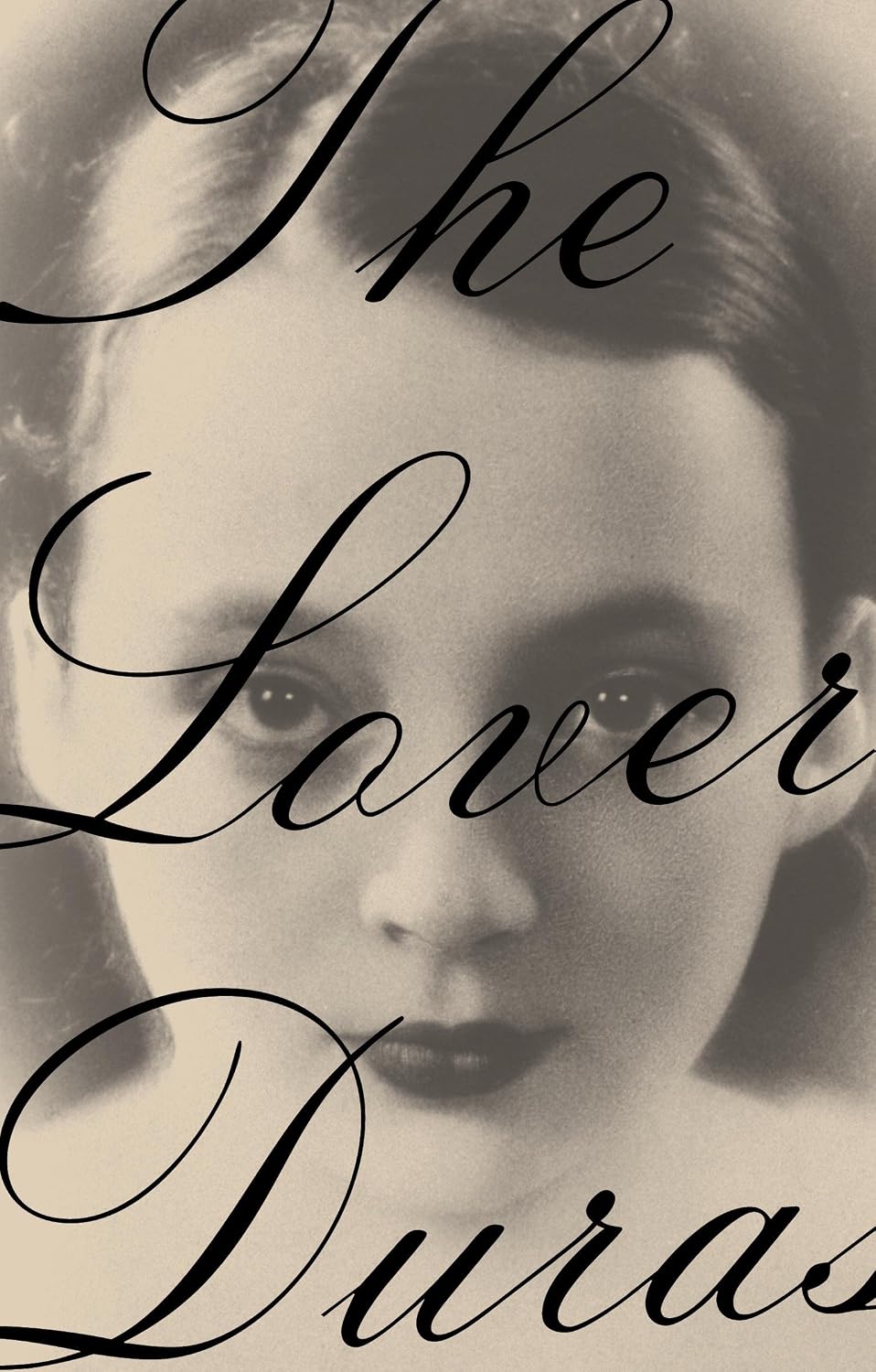
The Lover
The Lover is an autobiographical novel set in French colonial Indochina in the late 1920s. It follows a fifteen-year-old French girl from a financially struggling family who begins a relationship with a wealthy Chinese man several years older than her. Their encounter takes place against a backdrop of racial divisions, colonial hierarchies, and social conventions that shape their lives and determine how their relationship is perceived.
Through fragmented memories and lyrical, introspective prose, Marguerite Duras explores desire, shame, power, and the complicated dynamics of intimacy. The narrator’s relationship with her lover becomes entangled with her difficult family life, particularly her strained relationship with her mother and brothers. As she reflects on the experience from adulthood, memory transforms the story into an examination of how love and sexuality shape identity. Both intimate and unsentimental, the novel reveals the inequalities embedded in colonial society while questioning the boundaries between personal history, desire, and the stories people tell about their past.
1984
10

The Day of the Jackal
France, 1963. Following repeated attempts to assassinate President Charles de Gaulle, a militant organisation determined to overthrow him hires a professional killer known only by his codename: the Jackal. Brilliant, meticulous, and almost impossible to identify, the assassin begins preparing an elaborate plan to kill the French president. He obtains false identities, arranges specialised equipment, and carefully studies the security measures surrounding his target.
When French intelligence discovers the conspiracy, the authorities launch a desperate hunt for the unknown assassin. Commissaire Claude Lebel, a methodical detective with an exceptional ability to follow small clues, is assigned to lead the investigation. As the Jackal moves closer to his target, Lebel must navigate political pressure, bureaucratic obstacles, and a trail of deception stretching across Europe.
Combining painstaking procedural detail with relentless suspense, The Day of the Jackal explores the deadly intersection of political extremism, state security, and individual ambition. Frederick Forsyth transforms a fictional assassination plot into a gripping contest between two professionals, each determined to outwit the other before time runs out.
1971
11

The Woman Destroyed
The Woman Destroyed is a collection of three novellas exploring the emotional crises of women confronting ageing, betrayal, and the collapse of the lives they have built around others. In the title story, Monique, a middle-aged wife and mother, struggles to cope when her husband reveals his infidelity, forcing her to question her marriage and her own sense of self. The other stories portray women facing disillusionment, professional frustration, and the painful realization that their expectations have not matched reality. Through intimate diaries and first-person narratives, Simone de Beauvoir examines the ways women can lose their identities by defining themselves through their relationships, families, and social roles. The collection offers a powerful reflection on independence, self-deception, and the difficult process of rebuilding a life when familiar certainties disappear.
1967
12
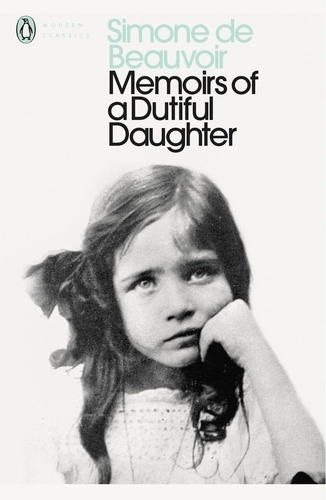
Memoirs of a Dutiful Daughter
Growing up in a respectable Parisian family, Simone de Beauvoir is taught to be a devout Catholic, an obedient daughter, and a woman destined for marriage. But as she discovers philosophy, literature, and the pleasure of independent thought, the beliefs that once defined her world begin to crumble. Questioning religion, challenging social conventions, and resisting her family’s expectations, she gradually realises that intellectual freedom comes at a price. Her journey towards independence is also a story of loneliness, friendship, and the painful discovery that the people we love can become obstacles to our becoming ourselves. Intimate and thought-provoking, this memoir captures the moment a young woman begins to break free from the life society has chosen for her.
1958