Books from Spain
Suggest a book
All genres
Historical Fiction
Literary Fiction
Fantasy
Romance
Horror
Thriller
Non-Fiction
Mystery
Memoir
Classics
History
Sci-Fi
Contemporary Fiction
Science Fiction
Fiction
Poetry
Essays
Family Saga
Magical Realism
Family Drama
Dark Academia
Psychological Fiction
Dark Comedy
Political Writing
Feminist Fiction
Satire
Campus Fiction
Cultural Studies
Biography
Philosophy
Comedy
Drama
Young Adult
Gothic
Dystopia
Crime
Children's Books
Short Stories
Mythology
Cozy
Retellings
Humour
Adventure
All themes
Love & Passion
Adventure & Journey
Identity & Belonging
War & Conflict
Freedom & Resistance
Family & Heritage
Nature & Landscape
Society & Class
Spirituality & Faith
Solitude & Exile
Coming of Age
Revolution & Change
Friendship
History
Immigration
Myths and Retellings
Colonialism
Women & Society
Mental Health
Motherhood
1
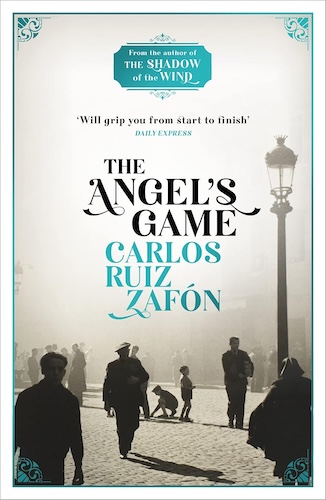
The Angel’s Game
In the dark, atmospheric streets of 1920s Barcelona, David Martín makes his living writing sensational crime stories under a pseudonym. Haunted by a troubled childhood and an impossible love, he finds refuge in literature and in a decaying mansion whose sinister history gradually begins to consume him. When a mysterious French publisher named Andreas Corelli offers him an extraordinary sum of money to write a book unlike any other, David accepts, believing the commission could transform his life.
But as he begins his work, unsettling connections emerge between the book he is writing, the secrets hidden within his mansion, and the strange events unfolding around him. What initially appears to be a dream opportunity becomes an increasingly dangerous mystery, blurring the boundaries between fiction and reality, faith and deception, and creation and destruction.
Returning to the shadowy literary universe of the Cemetery of Forgotten Books, Zafón crafts a Gothic thriller filled with secret passages, forbidden knowledge, obsessive love, and supernatural menace. Beneath its intricate mysteries lies a meditation on the power of storytelling and the price of artistic ambition. The Angel’s Game asks whether a writer can truly control the stories he creates—or whether some stories have the power to control their creators.
2008
2
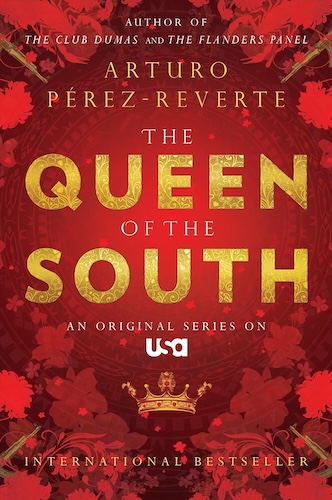
Queen of the South
When the phone rings, Teresa Mendoza knows her life is about to change forever. Her boyfriend, a pilot who smuggles drugs for the Mexican cartels, has warned her that if she ever receives that call, she must run for her life. When he is murdered, Teresa flees Mexico, leaving behind everything she knows and entering an unfamiliar world where survival depends on intelligence, courage, and the ability to trust no one.
Her journey takes her from Mexico to Spain, where she becomes involved in the dangerous business of smuggling hashish across the Strait of Gibraltar. Initially an outsider in a ruthless, male-dominated criminal world, Teresa gradually discovers her talent for negotiation, strategy, and business. As she builds her own network and accumulates wealth and influence, she transforms herself from a frightened young woman into a formidable criminal leader.
Spanning continents and more than a decade, Pérez-Reverte’s novel combines crime thriller, political intrigue, and a powerful portrait of female ambition. Inspired in part by real-world drug-trafficking networks, the story explores loyalty, betrayal, identity, and the price of power. Teresa’s rise challenges conventional ideas about femininity and authority, while revealing the brutal realities of a world where survival often demands becoming the very person one once feared.
2002
3
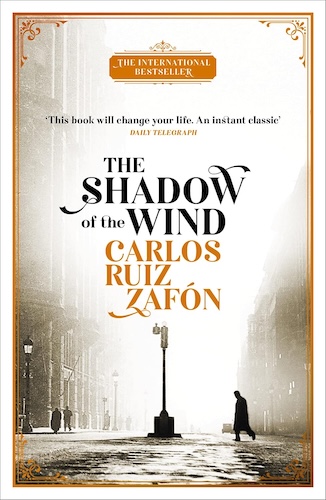
The Shadow of the Wind
Set in post-war Barcelona, The Shadow of the Wind begins when a young boy named Daniel Sempere discovers a forgotten novel by an obscure author, Julián Carax. Fascinated by the book, Daniel sets out to learn more about its creator, only to discover that someone has been systematically destroying every copy of Carax’s work. His investigation leads him into a web of hidden identities, tragic romances, family secrets, and the lingering wounds of Spain’s turbulent past. As Daniel grows older, the mystery becomes increasingly connected to his own life. Blending Gothic atmosphere, historical fiction, and suspense, Zafón celebrates the power of books while exploring how stories can preserve forgotten lives and reveal truths that others desperately want to conceal.
2001
4
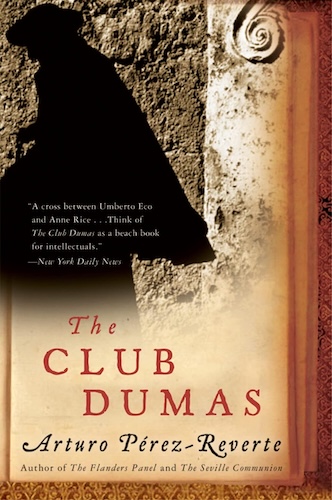
The Club Dumas
Lucas Corso is a cynical, resourceful book detective who makes his living tracking down rare editions for wealthy collectors. When he is hired to authenticate a manuscript believed to be a chapter from Alexandre Dumas’s The Three Musketeers, he finds himself drawn into a mystery involving a suspicious death, literary forgery, and a secret society of Dumas enthusiasts. But another assignment soon takes him into even darker territory: a wealthy collector wants him to verify a rare book entitled The Nine Doors of the Kingdom of Shadows, a mysterious volume said to contain instructions for summoning the Devil.
As Corso travels between Madrid, Toledo, and Paris, he encounters obsessive bibliophiles, enigmatic women, and individuals whose fascination with forbidden knowledge borders on madness. The two investigations begin to intertwine, blurring the boundaries between literary scholarship and the occult. With every clue, Corso becomes less certain about whom he can trust—or whether the dangers surrounding him are entirely human.
Combining intellectual mystery, Gothic suspense, and a playful exploration of literary history, Pérez-Reverte creates a thrilling tribute to the power of books and the obsessions they inspire. The Club Dumas asks whether rare books are merely objects to possess or gateways to worlds that might be better left unexplored.
1996
5
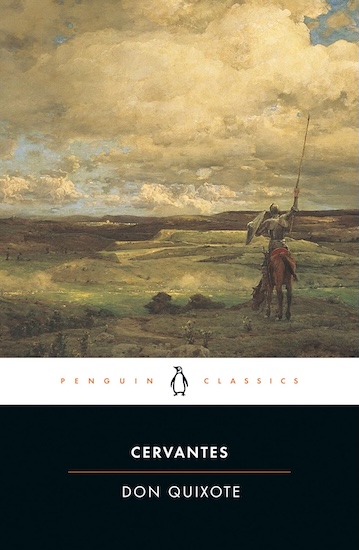
Don Quixote
Don Quixote follows Alonso Quixano, an ageing country gentleman who becomes so absorbed in tales of chivalry that he decides to become a knight-errant. Taking the name Don Quixote, he sets out across Spain to defend the helpless, challenge injustice, and perform heroic deeds. Accompanied by his practical squire, Sancho Panza, he repeatedly mistakes ordinary situations for extraordinary adventures, famously imagining windmills to be giants. Their contrasting perspectives create both comic misunderstandings and moments of unexpected wisdom. Cervantes uses their journey to explore the relationship between imagination and reality, questioning the values of honour, heroism, and social convention. Beneath its humour, the novel considers the dignity of idealism and the difficulties faced by people who refuse to accept the world as it is.
1609